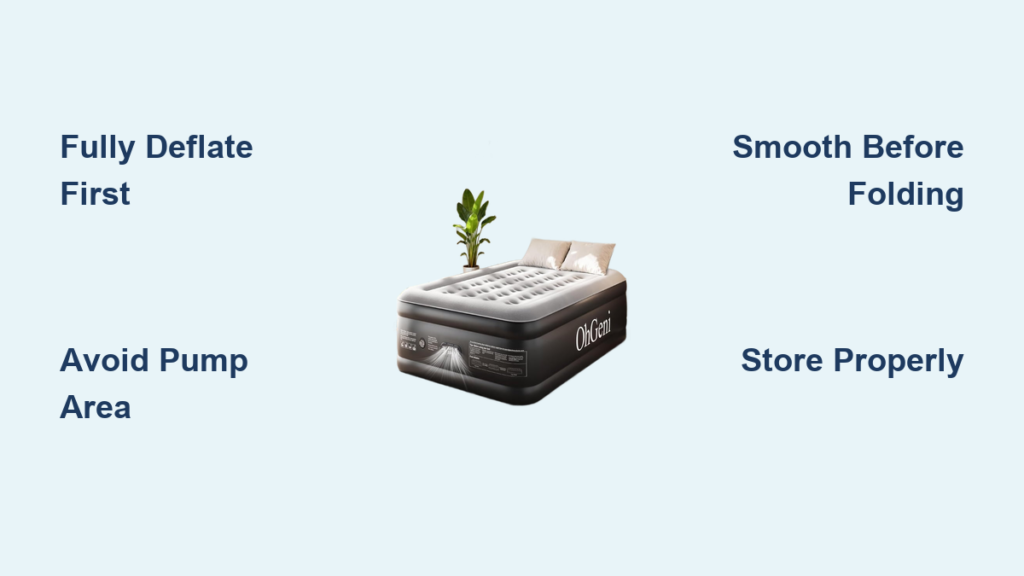
You’ve just packed up camp, ended a guest stay, or finished a road trip. Now it’s time to fold your air mattress with built-in pump, but you’re struggling with bulges, trapped air, or a stiff pump block that won’t compress. Many users damage their mattress by folding it incorrectly, leading to leaks, seam stress, or even pump failure. The key isn’t just deflating. It’s how you fold around the pump and store the unit.
This guide delivers professional-grade folding techniques used by manufacturers to extend the life of every air mattress with built-in pump. You’ll learn step-by-step how to deflate, flatten, fold, and store your mattress safely, plus why proper technique protects internal structure and electrical components.
Activate Deflation Mode Fully
Using the built-in pump’s exhaust function is the first critical step. Place the mattress on a flat, clean surface. Turn on the deflation mode, which most built-in pumps have as a reverse function that actively pulls air out. Let the pump run until no more air is expelled and the surface fully collapses.
Use Built-In Pump to Release All Air
Start by placing the mattress on a flat, clean surface. Turn on the exhaust or deflation mode. Most built-in pumps have a reverse function that actively pulls air out. Let the pump run until no more air is expelled and the surface fully collapses. Do not rush this step. Residual pressure makes folding difficult and can strain internal seams when compressed.
Pro Tip: Wait until the motor stops pulling air. Some models take 2 to 3 minutes depending on size and pump power. If your mattress still feels puffy after deflation, it may have internal chambers that trap air.
Avoid Manual Compression During Deflation
Never press down or roll the mattress while the pump is running. This can overload the motor or force air into secondary chambers. Allow gravity and the pump to do the work first. Premature folding increases wear on both the fabric and the pump mechanism.
Open All Air Valves Completely
Some air mattresses include auxiliary valves in addition to the main pump port. These are often located near the foot or sides and help release trapped air from I-beam or air column support systems. Manually opening each valve after deflation ensures even collapse across the entire surface.
Check for Secondary Valves
Some air mattresses include auxiliary valves in addition to the main pump port. These are often located near the foot or sides and help release trapped air from I-beam or air column support systems. Manually open each valve after deflation to ensure even collapse across the entire surface.
Release Internal Chamber Pressure
Internal support structures like I-beams or wave baffles can hold pockets of air even after the main chamber deflates. Opening all valves helps equalize pressure and prevents bulging during storage. Close valves only after the mattress is fully folded and ready to pack.
Smooth Surface Before Folding
Once fully deflated, the surface needs preparation before any folding begins. Gentle hand pressure removes remaining air pockets, and flattening weld lines prevents creases that could damage the material over time.
Remove Trapped Air by Hand
Once fully deflated, gently press from the head to the foot of the mattress. Use flat hands to push out any remaining air, especially around the pump housing and edges. Avoid using elbows or sharp pressure. This can damage internal welds or the pump casing.
Flatten Weld Lines and Seams
Run your hands over raised seams and welded joints to ensure they lie flat. These areas are structurally reinforced and prone to creasing if folded improperly. A smooth surface ensures cleaner folds and reduces stress on material bonds.
Fold Around Pump Housing Safely
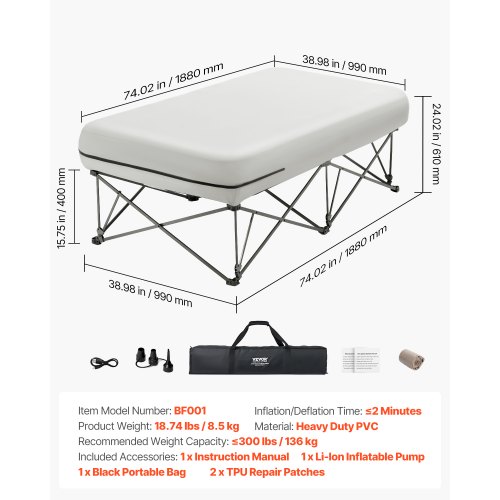
The pump area is a structural weak point during folding. Never fold the mattress directly over the pump or create a tight crease within 6 inches of its edges. Instead, allow the pump zone to remain slightly rounded or buffered in the final roll.
Fold Lengthwise First
Begin by folding the mattress lengthwise, bringing one side toward the center. Repeat with the other side so the mattress forms a long, narrow strip. This minimizes bending directly over the pump and protects its rigid housing.
Avoid Sharp Creases Near Pump
The pump area is a structural weak point during folding. Never fold the mattress directly over the pump or create a tight crease within 6 inches of its edges. Instead, allow the pump zone to remain slightly rounded or buffered in the final roll.
Leave Clearance Around Electrical Components
Ensure wires, control panels, and air intakes are not pinched or bent. Most built-in pumps have a sealed compartment. Folding too tightly can crack the housing or disconnect internal wiring over time.
Roll From Foot to Pump End
After folding lengthwise, the rolling technique matters. Starting from the opposite end pushes residual air toward the exhaust port and prevents airlock. Apply even, firm pressure as you roll, but don’t twist or tilt the mattress.
Start Rolling at the Opposite End
After folding lengthwise, begin rolling from the foot end toward the pump. This pushes residual air toward the exhaust port and prevents airlock. Apply even, firm pressure as you roll. Don’t twist or tilt the mattress.
Maintain Even Compression
Keep the roll tight but not forced. An uneven roll creates bulges that stress seams and make storage difficult. Aim for a compact cylinder that fits neatly into its carry bag.
Stop Before Compressing the Pump
When you reach the pump housing, do not roll over it completely. Instead, tuck the final edge under or secure it with straps. The pump should remain partially exposed or gently curved. Never flatten or fold it in half.
Store in Climate-Controlled Conditions
PVC and composite materials degrade when exposed to heat, cold, or moisture. Store your folded air mattress in a dry, temperature-stable environment. Ideally between 50°F and 80°F. Avoid attics, garages, or vehicle trunks in extreme weather.
Keep Away From Extreme Temperatures
PVC and composite materials degrade when exposed to heat, cold, or moisture. Store your folded air mattress in a dry, temperature-stable environment. Ideally between 50°F and 80°F. Avoid attics, garages, or vehicle trunks in extreme weather.
Use Ventilated Storage Bag
Never store the mattress in a sealed plastic bag. Use the included breathable carry bag or a cotton storage sack to allow airflow and prevent mold or material breakdown. If storing long-term, leave it slightly unrolled for a few hours every few months to relieve compression stress.
Position Horizontally, Not Vertically
Store the mattress lying flat or on its side. Never stack heavy objects on top. Vertical storage with weight on top can deform the pump housing or crush internal air channels.
Why Proper Folding Prevents Damage
Proper folding technique protects several critical components. The welded seams, pump mechanism, and internal support beams all rely on careful handling to maintain their integrity over time.
Protects Internal Welded Seams
Air mattresses rely on high-frequency welded seams to maintain airtight integrity. Repeated sharp folds or creases at stress points, especially near the pump, weaken these bonds over time. This increases the risk of leaks and reduces the mattress lifespan significantly.
Extends Pump Lifespan
The built-in pump is sealed within a rigid housing, but it’s still vulnerable to mechanical stress. Folding too tightly can crack the casing, disconnect wiring, or misalign internal fans. Proper rolling technique isolates pressure away from electrical components and extends pump functionality.
Maintains Structural Support Beams
I-beam or coil-beam internal structures are designed to flex, not compress flat. Improper folding collapses support beams unevenly, leading to permanent deformation and reduced comfort over time. This damage often goes unnoticed until the mattress feels lumpy or loses support.
Common Folding Mistakes to Avoid
Knowing what not to do is just as important as knowing the correct technique. These common errors cause most of the damage seen in air mattresses with built-in pumps.
Forcing the Mattress Closed While Inflated
Even small amounts of trapped air create internal pressure that strains seams during folding. Always confirm full deflation before starting. Residual air is the primary cause of seam failure during storage.
Folding Directly Over the Pump
This is the number one cause of pump housing cracks and electrical failure. The rigid block cannot flex like the rest of the mattress. Treat it as a no-fold zone and always leave buffer space around the pump compartment.
Using Excessive Force to Shrink Size
Kneading, stomping, or sitting on the roll may make it smaller temporarily, but it damages material layers and weld points. A well-folded mattress should fit its bag without brute force. Let the technique do the work.
Storing While Damp or Dirty
Moisture trapped in folds leads to mold, mildew, and material degradation. Always clean and dry the surface completely before folding. Wipe down the pump controls and air ports to prevent corrosion over time.
How Manufacturers Test Folding Durability

Professional manufacturers run rigorous tests to ensure their air mattresses can withstand repeated folding. Understanding these tests helps you appreciate why proper technique matters so much.
500+ Fold Cycle Simulations
Professional manufacturers run automated fold tests simulating 500 or more folding cycles to ensure long-term reliability. This verifies that seams, pump mounts, and materials withstand repeated use without degradation or failure.
Inflation Stability and Leak Testing
Every unit undergoes a 24-hour inflation test to detect micro-leaks. This ensures that proper folding doesn’t compromise airtight performance over time. Units that fail are redesigning before reaching consumers.
Pump Endurance Validation
Built-in pumps are tested for continuous operation, typically 3 to 5 hours, to confirm motor and fan durability. Units that fail are redesigned for better heat dissipation and structural support around the pump housing.
What to Look for in a Quality Air Mattress
When purchasing an air mattress with built-in pump, certain features indicate better durability and easier folding. These design elements directly affect how well the mattress handles repeated storage cycles.
Reinforced Pump Housing
A well-designed mattress includes a rigid, impact-resistant casing around the pump to protect it during transport and folding. Look for models with rubberized edges or raised borders that provide extra protection.
Strategic Seam Placement
High-quality units position seams away from high-stress folding zones. Diagonal or offset weld lines reduce crease concentration and improve longevity. Check where seams are located before purchasing.
Dual-Function Pump with Auto Shut-Off
Advanced models include smart pumps that automatically switch to deflation mode and shut off when air is fully released. This prevents overuse and ensures complete deflation every time you pack up.
Maintenance Tips for Longevity
Regular care extends the life of your air mattress significantly. These simple maintenance steps prevent damage and keep your mattress performing like new for years.
Clean After Each Use
Wipe the surface with a damp cloth and mild soap. Avoid harsh chemicals that degrade PVC. Dry thoroughly before folding to prevent mold and material breakdown.
Inspect for Wear Before and After Folding
Check for punctures, loose valves, or pump damage each time you set up or pack away the mattress. Early detection prevents bigger issues and costly repairs down the line.
Re-Inflate Occasionally During Storage
If storing for more than a month, inflate and re-deflate the mattress every 4 to 6 weeks. This maintains material elasticity and prevents permanent creasing that can weaken seams over time.
Frequently Asked Questions About Folding Air Mattresses with Built-In Pumps
How long does it take to fully deflate an air mattress with built-in pump?
Most built-in pumps take 2 to 3 minutes to fully deflate a standard air mattress. Larger or thicker models may take longer. Wait until the motor stops running to ensure complete deflation.
Can I fold my air mattress while it’s still slightly inflated?
No. Even small amounts of trapped air create internal pressure that strains seams during folding. Always confirm full deflation before starting. Residual pressure is the number one cause of damage during storage.
Should I store my air mattress in its original bag?
Use the included breathable carry bag or a cotton storage sack. Never use sealed plastic bags, as they trap moisture and promote mold growth. The bag should allow airflow to keep the material dry.
How often should I re-inflate my air mattress during long-term storage?
Re-inflate and deflate the mattress every 4 to 6 weeks if storing for more than a month. This maintains material elasticity and prevents permanent creasing that can weaken the internal structure.
Why does my air mattress still feel puffy after deflation?
Your mattress likely has internal chambers that trap air, such as I-beam or wave baffle support systems. Open any auxiliary valves near the foot or sides to release trapped air from these compartments.
What temperature is ideal for storing an air mattress with built-in pump?
Store between 50°F and 80°F in a dry, temperature-stable environment. Avoid attics, garages, or vehicle trunks that experience extreme heat or cold. Temperature fluctuations degrade PVC and electronic components.
Key Takeaways for Folding Your Air Mattress with Built-In Pump
Folding an air mattress with built-in pump isn’t just about saving space. It’s about preserving performance and extending the lifespan of your investment. The most critical points to remember are fully deflating using the pump’s exhaust mode, never folding directly over the pump housing, and storing in a climate-controlled environment.
By following manufacturer-grade techniques, you protect the pump mechanism, prevent seam damage, and maintain the internal support structures that keep your mattress comfortable. Whether for camping, guest rooms, or travel, proper folding ensures your air mattress remains reliable, airtight, and ready for the next use.
Always prioritize smooth rolling over forced creasing, and store with care. Your mattress will last years longer when you treat the pump area as a protected zone and keep the material away from extreme temperatures and moisture. With these techniques, your air mattress with built-in pump will provide countless comfortable nights for years to come.