Is your mattress too soft? Do you wake up with back pain or feel like you’re sinking into a pit? You’re not alone. Over time, even high-quality mattresses lose firmness due to compression, wear, and environmental factors. The good news: you don’t need to buy a new one yet. There are multiple effective, tested ways to make a mattress firmer, many of which cost under $50 or are completely free.
This guide reveals 13 science-backed, expert-approved methods to restore firmness and support. Whether you sleep on memory foam, hybrid, or innerspring, these solutions target the real causes of softness: sagging, weak support, temperature sensitivity, and worn layers. You’ll learn exactly what works, what to avoid, and how to extend your mattress’s life without wasting money on gimmicks.
Fix Sag With a Bunkie Board

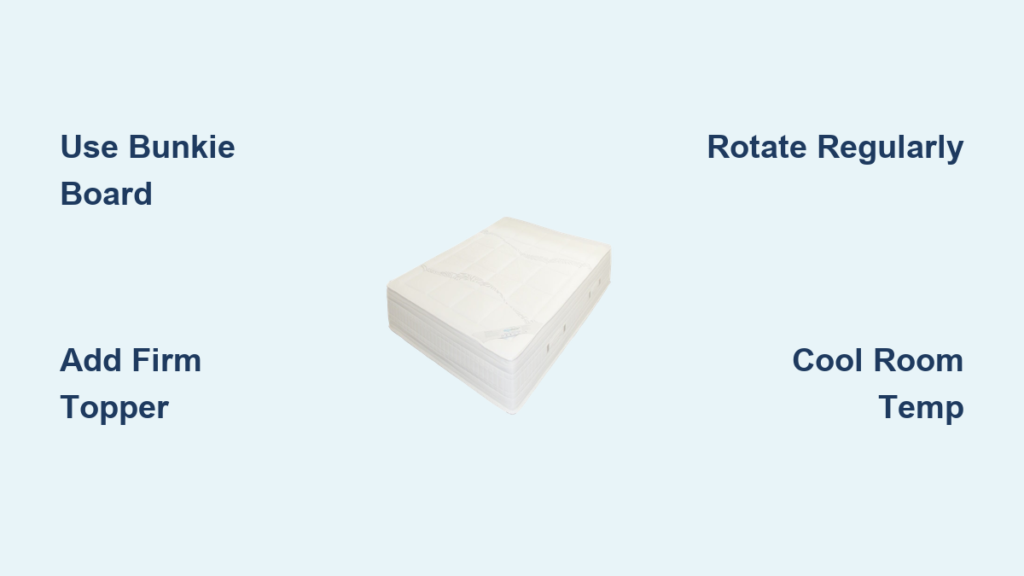
A bunkie board is one of the most effective ways to firm up a soft or sagging mattress. It’s a thin, solid layer, usually 1 to 2 inches thick, placed between your mattress and bed frame. Made from plywood, particleboard, or high-density foam, it adds structural support where your mattress needs it most.
Use a Rigid Support Panel
When your mattress rests on slats that are too far apart (over 3 inches), it flexes and sags over time. A bunkie board bridges those gaps, distributing weight evenly and reducing sinkage. This is especially helpful for foam and hybrid mattresses, which rely heavily on a stable base.
Best applications for this fix include mattresses with center sag, platform beds with wide slat spacing, and memory foam or latex models losing support. The board creates a solid surface that prevents the foam from compressing into gaps between slats.
Install a DIY Plywood Sheet
Cannot find a bunkie board? Cut a sheet of ¾-inch plywood to match your mattress size. This budget-friendly alternative costs just $20 to $50 at any hardware store. Sand the edges smooth to prevent fabric tears, then slide it under the mattress.
For localized sag in the middle, use a 47″x25″x2″ high-density foam insert like the Sagging Mattress Support Fix. It lifts the depressed area without over-firming the entire surface. Ensure the plywood fits snugly within the bed frame with no overhang that could snag sheets.
Avoid using cardboard, thin foam, or flexible materials. They will not provide enough resistance and will simply compress under weight.
Add a Firm Mattress Topper
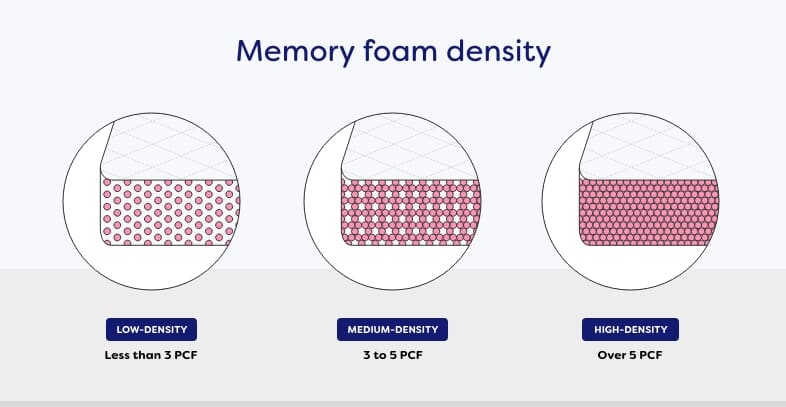
A firm mattress topper is the fastest way to change how your bed feels. While most toppers soften a firm mattress, firm or extra-firm models add resistance and reduce body sinkage, ideal for back and stomach sleepers.
Choose High-Density Foam or Latex
Look for a topper that is 3 inches thick for noticeable firmness. Foam density should be at least 5 lbs per cubic foot for high-density memory foam. For latex, look for an ILD (Indentation Load Deflection) of 6 or higher.
Cooling features like gel infusion or bamboo covers help prevent heat retention. Top performers include the PERLECARE 3″ Firm Topper and BEDLORE 4″ Memory Foam Topper, both with CertiPUR-US and OEKO-TEX certification for safety and durability.
Opt for Dual-Firmness for Couples
If you and your partner have different preferences, a split-king or split-queen dual-firmness topper lets each side feel different. One side can be soft while the other is extra firm, with no compromises.
Brands like Spindle and Nest Bedding Sparrow take customization further by allowing you to swap internal layers over time. Spindle offers replacement latex layers at 30% off within 25 years, perfect if your firmness needs change with age or weight.
Warning: Do not use a topper on Purple mattresses. Their GelFlex Grid is designed to work without added layers. Adding a topper can dull responsiveness and void performance benefits.
Rotate or Flip for Even Wear
Uneven compression makes a mattress feel softer in high-pressure zones like hips and shoulders. Rotating your mattress 180 degrees every 3 to 6 months redistributes wear and can restore firmness in underused areas.
Rotate Every 3 to 6 Months
Most manufacturers recommend rotation at least once per year. For hybrid or latex models, biannual rotation extends lifespan and maintains support. If one end of your bed looks flatter or more indented, rotation will help balance it.
Flip Only if Double-Sided
True flippable mattresses are rare but valuable. Models like the Brooklyn Bedding Plank Firm and Lila Original have different firmness levels on each side, perfect for adjusting feel without new purchases.
Never flip a one-sided mattress. The bottom layer lacks comfort padding and will feel uncomfortably hard. It may also void your warranty.
Cool the Room to Firm Memory Foam
Memory foam softens with heat. If your bedroom runs warm (above 70°F), your mattress likely feels softer at night. Lowering the room temperature to 60 to 67°F makes the foam denser and firmer.
Lower Temp by 2 to 5°F
This is a free, immediate fix that works within hours. Use a fan or AC unit, breathable bedding like cotton or bamboo, and cooling mattress toppers with gel infusion.
At cooler temperatures, foam molecules contract, increasing resistance. At higher temperatures, they expand and soften. Best results are seen in hot sleepers or those using electric blankets. Avoid heated pads if firmness is a priority.
Replace Worn Comfort Layers
Some mattresses let you refresh or replace internal layers, a game-changer for long-term firmness. Brands like Spindle and Nest Bedding Sparrow offer this as a built-in feature.
Swap Top Layer for Firmer Feel
With Spindle, you get three reversible latex layers (soft, medium, firm). Over time, order a new firm layer at 30% off and install it yourself, no need to replace the whole mattress.
Nest Sparrow has a Lifetime Exchange Renewal program: send back your worn top foam and get a new one anytime. This works best if your mattress feels soft due to compressed comfort layers, you want a cost-effective upgrade, and you prefer customization over full replacement.
Limitation: Only works with open-cell or zippered designs. Most glued or sealed mattresses cannot be modified.
Upgrade Bed Frame and Slats
Your mattress is only as firm as its foundation. A wobbly frame, broken slats, or sagging box spring can make even a firm mattress feel soft.
Inspect Your Setup
Check if slats are cracked or spaced more than 3 inches apart. See if the center of the bed dips when you sit. Listen for creaking from the frame.
Reinforce With Solid Support
Replace damaged parts immediately. Use solid wood or steel slats no more than 3 inches apart. Add a center support leg for beds over 54 inches wide. Upgrade to a solid foundation instead of a bouncy box spring.
Platform beds benefit from a bunkie board over slats for continuous support. Adjustable bases also allow you to tweak firmness via elevation. Raising the head or feet changes pressure distribution.
Air Out Mattress to Reduce Softness
Foam absorbs moisture from sweat, spills, and humid air. Over time, this softens the material and accelerates wear.
Remove Trapped Moisture
Strip all bedding and open windows or use fans. Let the mattress breathe for 6 to 12 hours. Run a dehumidifier to keep indoor humidity below 50%.
This simple step can restore some original firmness, especially in coastal or humid climates. It also reduces odor, mold risk, and allergens. Repeat seasonally or after heavy night sweats.
Tighten Sheets for Surface Tension
Tightly tucked sheets apply light downward pressure, slightly firming the surface. It is a minor but real psychological and physical tweak, like tightening a drumhead.
Create a Drumhead Effect
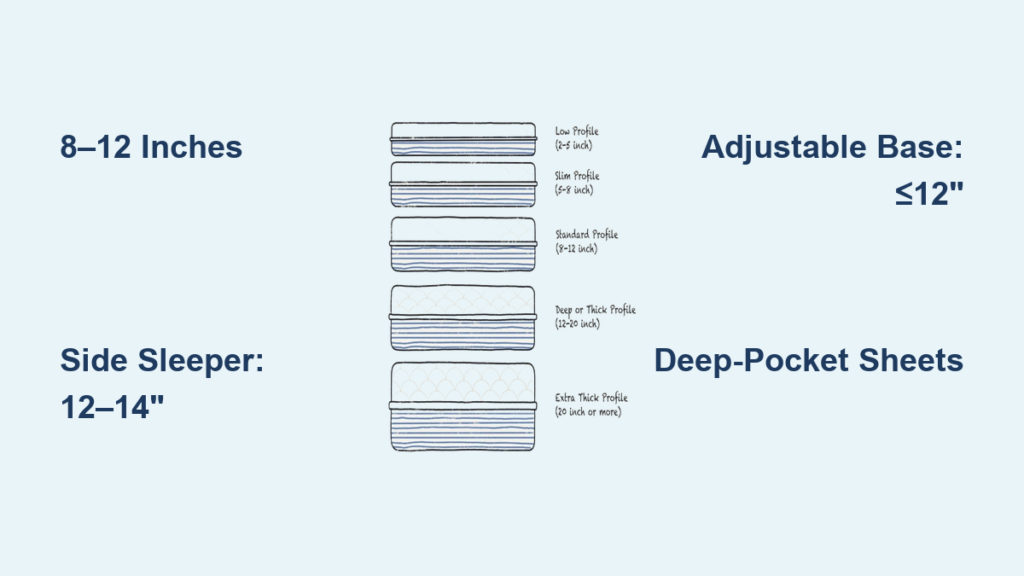
Use deep-pocket, stretchable fitted sheets (16 to 18 inches) to pull the fabric taut. Tuck flat sheets and comforters tightly at the foot.
This will not fix deep sag, but it helps when combined with other methods. Think of it as the finishing touch. Avoid loose or sagging protectors because they do the opposite.
Check Warranty for Exchange or Return
Most online mattresses come with 90 to 100 night sleep trials and 10-year warranties. If your bed never felt firm enough, contact customer service and ask about firmness exchange programs.
Use Trial Periods Wisely
Some brands let you swap for a firmer model. Even after the trial, companies may offer solutions if you report pain or discomfort.
Document everything. Take photos of sagging over 1 inch depth. Note sleep quality and pain levels. Keep original packaging if returns are required.
Upgrade to Solid Mattress Foundation
Traditional box springs wear out in 5 to 7 years. They compress, sag, and lose support, making your mattress feel softer over time.
Ditch the Bouncy Box Spring
Switch to a solid foundation made of wood or steel platform. It provides even, non-flexing support and lasts 10 or more years. It is ideal for foam and hybrid mattresses.
Unlike box springs, solid foundations do not bounce. They are heavier but far more durable. Installing one on any stable bed frame requires no tools.
Replace Mattress as Last Resort
If your mattress is older than 8 to 10 years, sagging more than 1.5 inches, causing chronic back or joint pain, or showing lumps, tears, or permanent indentations, it is time to replace it.
Know When It Is Time
Average lifespans by type are: innerspring (7 to 10 years), memory foam (8 to 10 years), latex (10 to 15 years), hybrid (8 to 10 years), and gel-grid like Purple (8 to 10+ years).
When buying new, look for a firmness rating of 7 to 10 on a 1 to 10 scale. Choose CertiPUR-US or OEKO-TEX certified foams. Ensure reinforced edge support and at least a 100-night trial.
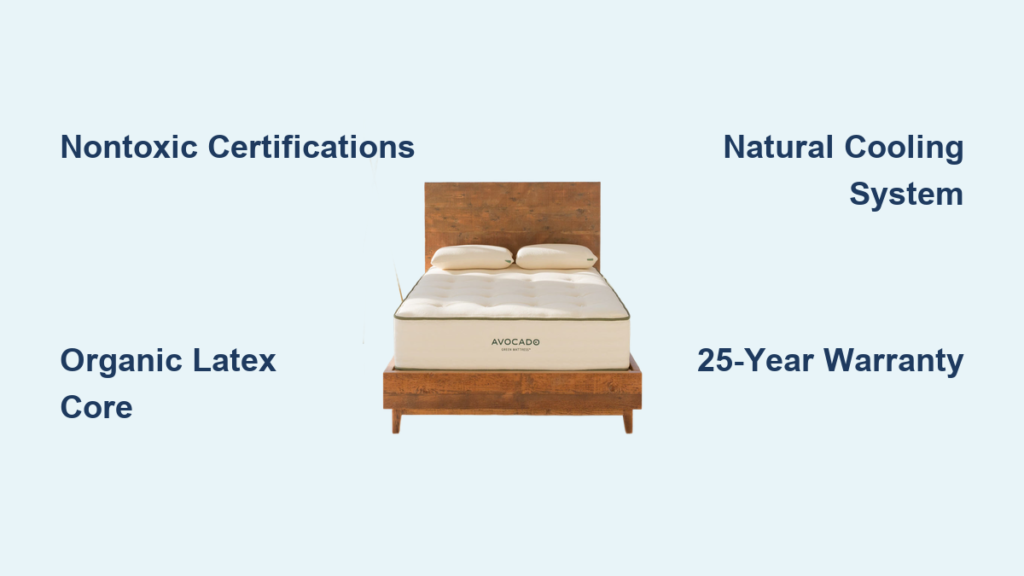
Top picks include Saatva Classic (Firm), Avocado Green Mattress (Firm), and WinkBed (Firm). Many offer free returns, so you can test risk-free.
Follow Mattress-Specific Rules
Not all fixes work on every bed. Respect manufacturer limits to avoid voiding your warranty.
Purple Mattresses
Never place on the floor. Avoid bunkie boards and toppers. The GelFlex Grid is self-supporting, and adding layers ruins performance.
Memory Foam Beds
These benefit from cool rooms, solid bases, and firm latex toppers. They respond well to plywood support and rotation.
Adjustable Base Users
Elevate head or feet to change firmness perception. Use dual-firmness toppers for split preferences.
Always check warranty terms before modifying your setup.
Frequently Asked Questions About Making a Mattress Firmer
How can I make my mattress firmer without buying a new one?
Start with free or low-cost methods like lowering your room temperature, rotating the mattress every 3 to 6 months, and tightening your sheets. If those do not work, add a bunkie board or plywood sheet under the mattress for structural support. A firm mattress topper is another effective option that costs under $100.
Does putting a mattress on the floor make it firmer?
Yes, placing your mattress directly on the floor provides maximum foundational support and eliminates sagging from weak frames. However, it increases risks of moisture buildup, mold, and pest exposure. Use a waterproof protector or tatami mat underneath, and air the mattress monthly.
What is the best mattress topper for making a bed firmer?
Look for a 3-inch or thicker topper made of high-density memory foam (at least 5 lbs per cubic foot) or latex with an ILD of 6 or higher. The PERLECARE 3″ Firm Topper and BEDLORE 4″ Memory Foam Topper are top-rated options with CertiPUR-US certification.
How often should I rotate my mattress to maintain firmness?
Rotate your mattress 180 degrees every 3 to 6 months to distribute wear evenly. Most manufacturers recommend at least once per year. For hybrid or latex models, twice-yearly rotation extends lifespan and maintains support.
Can I use a bunkie board on any mattress?
Bunkie boards work best on foam, hybrid, and air mattresses that lack internal rigidity. They are less effective on latex or premium gel-grid mattresses like Purple. Always check your manufacturer warranty before adding a bunkie board, as some warranties prohibit its use.
When should I replace my mattress instead of trying to firm it up?
Replace your mattress if it is older than 8 to 10 years, sags more than 1.5 inches despite interventions, causes chronic back or joint pain, or shows visible lumps, tears, or permanent indentations. At that point, firming methods become temporary fixes rather than long-term solutions.
Key Takeaways for Making Your Mattress Firmer
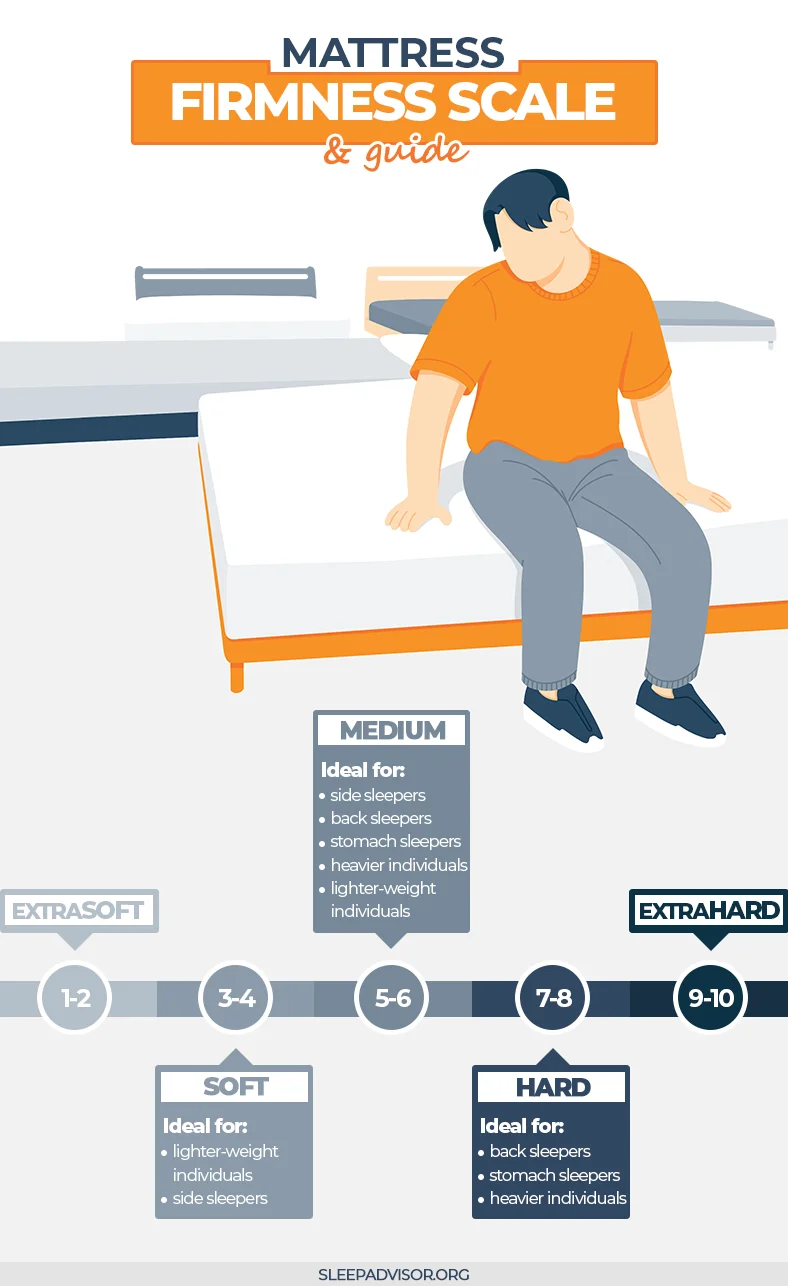
A too-soft mattress does not mean a new one is inevitable. Start by diagnosing the cause: sagging, poor base support, heat sensitivity, or worn layers. Then apply the right fix. A bunkie board or plywood sheet provides immediate structural support for sagging mattresses. Lowering your room temperature by 2 to 5°F firms memory foam within hours. Firm latex or high-density foam toppers add resistance and reduce sinkage, especially for back and stomach sleepers.
Combine methods for maximum effect. Pair a solid base with a firm topper and plywood support, and you can stop sagging permanently. If your bed is over 8 years old or in poor condition, replacement is the smart long-term choice. With the right care, you can enjoy a firmer, more supportive sleep without overspending.