Your old box spring might seem like trash, but it is actually the perfect base for a modern sleeping solution. You can save hundreds of dollars when you learn how to convert box spring to platform bed using simple tools and basic materials.
This guide shows you exactly how to strip down your current foundation and rebuild it into a sturdy, low-profile frame. You will discover how to create a solid surface that supports memory foam or hybrid mattresses without the bounce of traditional springs.
Assess Your Box Spring Condition
Start by examining your current box spring to see if the wooden frame is strong enough for conversion. A weak frame will fail quickly even with a new top surface, so honesty here saves time later.
Check for Structural Damage
Look closely at the wood perimeter for cracks, rot, or severe warping that compromises stability. Small tears in the fabric covering are acceptable, but broken corners mean the frame is unsafe. A structurally unsound base won’t hold up long-term, so discard frames with major integrity issues immediately.
Confirm Frame Usability
Flip the unit over to inspect the joints where the wooden rails meet. Stapled or screwed connections are ideal, while loose corners need reattachment with fresh wood screws. Ensure the frame sits perfectly flat on the floor without any rocking motion.
Decide Reuse or Reinvent
Some lightweight frames with metal grids instead of wood may require you to keep only the outer rails. If the interior structure feels flimsy, plan to rebuild the support system entirely using new lumber. Otherwise, you can repurpose the entire existing base with minor modifications.
Remove Mattress and Disassemble Top Layer
Transform your bed by stripping it down to the bare wooden skeleton. This process removes all the bounce and height associated with traditional box springs.
Strip Off Fabric and Padding
Turn the box spring upside down and use a staple remover to peel back the bottom fabric cover. Work carefully to avoid splintering the wood as you expose the internal components. Discard the foam padding and fabric once you have full access to the interior.
Clear Internal Components
Pull out all internal springs, metal rods, and cardboard supports to create a hollow space. These materials add unnecessary height and flexibility that defeat the purpose of a solid platform. You should be left with only the empty wooden frame ready for reconstruction.
Clean and Sand the Frame
Wipe down the exposed wood with a damp cloth to remove years of dust and debris. Lightly sand rough edges or splinters along the top rim where your new platform will rest. This ensures a flush fit and prevents damage to your new materials.
Build a Solid Platform Surface

Create a flat, supportive surface that provides the rigid foundation modern mattresses require.
Measure and Cut Plywood Base
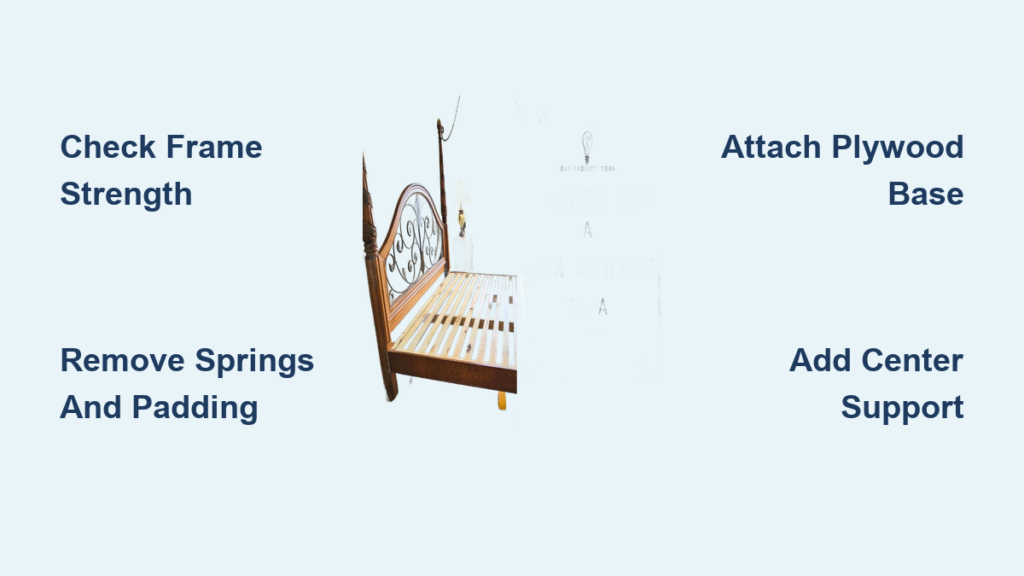
Measure the interior dimensions of your empty box spring frame accurately. Cut a piece of ¾-inch plywood to fit snugly inside using a circular saw or ask for a cut at the hardware store. This thickness provides optimal rigidity without adding excessive weight to the frame.
Pro Tip: Use sanded pine or MDF for a smoother finish if you plan to paint or stain the final product.
Secure Plywood to Frame
Lay the cut plywood on top of the frame rails and align it evenly on all sides. Drive 1¼-inch wood screws through the side rails into the plywood edges every 6 to 8 inches. Pre-drill holes to prevent the wood from splitting during this process.
Ensure the top surface is completely flush and stable with no gaps or wobbling. This becomes your new solid mattress foundation that eliminates sagging.
Reinforce for Long-Term Support

Prevent future sagging and increase the durability of your DIY project with added bracing.
Install Center Support Rail
Add a center support beam running from front to back for full-size beds and larger. Cut a 1×3 or 1×4 board to length and attach it vertically along the middle using corner brackets. This beam prevents the plywood from flexing under weight, which is crucial for heavier mattresses.
Add Cross Supports
Include one or two cross supports perpendicular to the center rail for queen or king conversions. Space them evenly across the width and secure them with screws or metal brackets. These distribute weight more effectively and enhance the overall structural integrity.
Upgrade Leg Options
Replace short or flimsy original legs with adjustable bed risers or sturdy wooden legs. Choose legs that are 4 to 6 inches tall to improve airflow and make cleaning underneath easier. Attach these securely with mounting plates or threaded inserts for maximum stability.
Customize Aesthetic and Finish
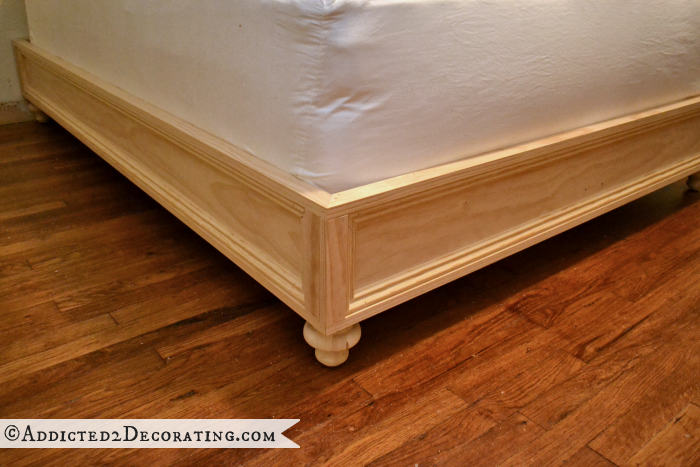
Turn your functional frame into a stylish piece that complements your bedroom decor.
Paint or Stain the Frame
Sand the exterior wood smooth before applying primer if you plan to paint. Use latex paint or wood stain in your preferred color, applying two coats for full coverage. Allow the finish to dry completely between coats to ensure a durable surface.
Choose a moisture-resistant finish if you place the bed directly on carpet or concrete floors.
Add Edge Trim
Glue or nail decorative edge molding around the top perimeter for a polished look. This simple addition hides raw plywood edges and mimics the appearance of high-end platform beds. It creates a seamless transition between the frame and your mattress.
Line the Bottom
Reattach fabric or staple on breathable material like a cotton drop cloth to the bottom. This step is not structural but improves appearance if the bed is viewed from below. It also helps keep dust and pests out of the hollow interior.
Choose Compatible Mattresses
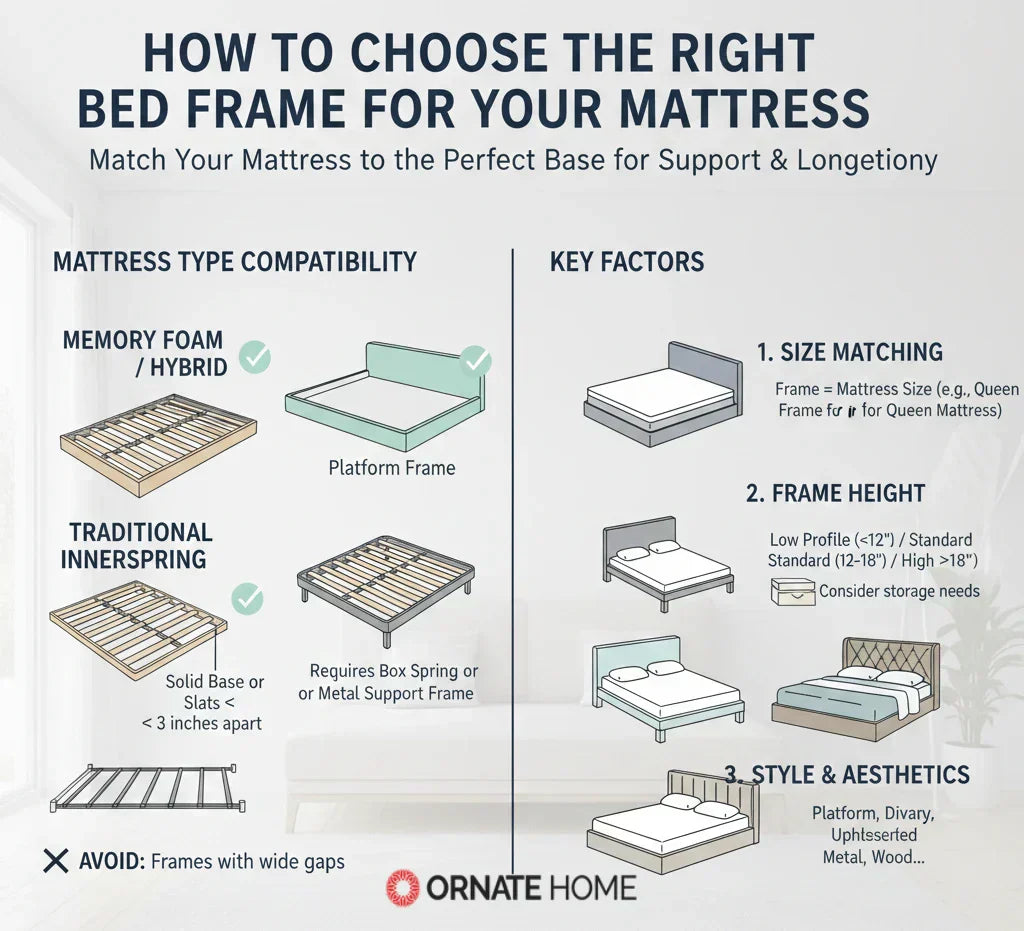
Select a mattress that works best with your newly converted solid surface.
Best Mattress Types
- Memory foam
- Latex
- Hybrid models with supportive base layers
These mattress types benefit significantly from solid, non-flexing surfaces. The lack of springs in your new platform prevents uneven wear and extends the life of your mattress.
Avoid Incompatible Mattresses
Traditional innerspring mattresses designed specifically for box springs may feel too firm on solid platforms. If you must use one, add a ½-inch felt pad between the mattress and platform to reduce noise. Always check your mattress warranty since some manufacturers require specific foundation types.
Note: Some warranties void coverage if the mattress is not on an approved foundation, so verify this first.
Maintain Your New Platform Bed
Keep your converted bed strong, clean, and comfortable for years to come.
Regular Tightening Checks
Inspect and tighten screws every 3 to 6 months, especially those holding the plywood and beams. Vibration from regular movement can loosen connections over time, leading to instability.
Clean Underneath Frequently
The elevated design allows airflow, but dust and debris can accumulate underneath. Vacuum under the bed monthly to prevent allergen buildup and maintain a healthy sleep environment.
Watch for Moisture
Place a moisture barrier like a plastic sheet beneath the bed if it sits on concrete floors. This prevents wood warping caused by dampness rising from the floor. Avoid direct contact with wet surfaces to protect your investment.
Frequently Asked Questions About Converting Box Springs
Can I convert any box spring to a platform bed?
You can convert most box springs that have a sturdy wooden perimeter frame. Units with metal frames or severe structural damage are not suitable candidates for this DIY project.
What thickness of plywood do I need for the platform?
Use ¾-inch plywood to ensure sufficient rigidity and support for your mattress. Thinner plywood may flex or break under weight, while thicker options add unnecessary heaviness.
Do I need to add a center support beam?
Yes, adding a center support beam is highly recommended for full, queen, and king-sized beds. This prevents the plywood from sagging in the middle over time and ensures even weight distribution.
Will this conversion work with memory foam mattresses?
Yes, this conversion is ideal for memory foam and latex mattresses that require a solid, flat surface. Unlike traditional box springs, your new platform provides the firm support these materials need.
How high will the bed be after conversion?
The final height depends on your original frame and any new legs you add, typically ranging from 10 to 14 inches. You can adjust this by choosing different leg heights or bed risers during the build.
Key Takeaways for Your Box Spring to Platform Bed Conversion

Converting your old box spring into a platform bed is a smart way to save money and reduce waste. You now know how to strip, reinforce, and finish a sturdy frame that supports modern mattresses perfectly.
Take action today by inspecting your current box spring and gathering the necessary plywood and tools. Your new minimalist bed frame is just a few hours of work away from completion.