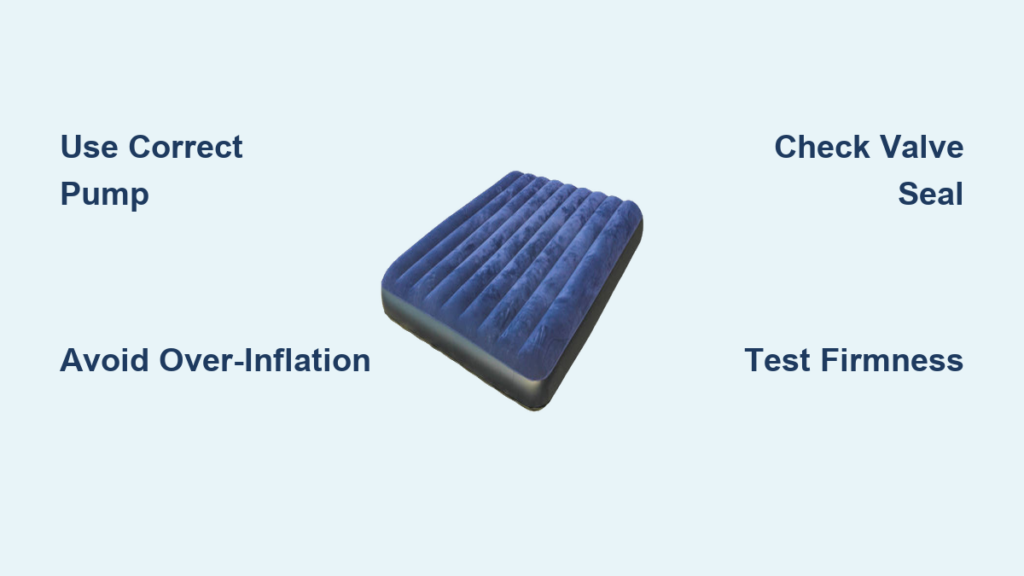
Nothing ruins a cozy night on an air mattress faster than a sagging, half-inflated surface. Whether you’re setting up for guests, camping under the stars, or traveling light, knowing how to inflate an air mattress properly ensures comfort, safety, and longevity. The right method depends on your mattress type, and using the wrong technique can lead to over-inflation, leaks, or seam failure.
Most modern air mattresses inflate in 4 to 9 minutes with electric pumps, while manual methods take 10 to 20 minutes. This guide covers every inflation method, from plug-in pumps to DIY hacks, so you can get your bed ready fast without the guesswork.
Choose the Right Inflation Method
Your air mattress type determines the best way to inflate it. Using the wrong method wastes time or damages the material.
Identify Your Mattress Type
Air mattresses fall into three main categories, each with unique inflation needs.
• Built-in electric pump models like EZ Inflate or Intex QuickFill® turn on a switch and inflate automatically in 4 to 9 minutes. No extra gear needed.
• External electric pump models require a separate pump. These inflate fast in 1 to 4 minutes but mean carrying extra equipment.
• Manual and self-inflating models are common in camping. Self-inflating pads expand naturally when the valve opens, then need a few breaths or a mini pump to firm up.
Match Pump to Your Use Case
Not all pumps work everywhere. Choose based on where and how you will use the mattress.
| Use Case | Best Pump Type | Why It Works |
|---|---|---|
| Home guest bed | AC electric pump or built-in model | Unlimited runtime, fast inflation |
| Camping or RV | Rechargeable battery pump | Portable, works off-grid |
| Backpacking | Ultralight pump under 3 oz | Fits in palm, ideal for tight packs |
| Emergency backup | Hand pump or hair dryer (cold only) | No power needed |
Avoid using heat-based devices like hot hair dryers. They can melt PVC material.
Prepare the Mattress for Inflation
Skipping prep increases the risk of leaks, slow inflation, or material stress.
Unfold on a Clean, Flat Surface
Always place the mattress on a smooth, debris-free area. Sharp objects like gravel, pet claws, or floor splinters can puncture the base.
• Use a groundsheet or tarp when camping to protect the underside.
• Indoors, avoid rough concrete unless covered.
• Never inflate while folded or creased.
Let the mattress lie flat for 15 to 30 minutes before inflating, especially in cool rooms. Cold material is stiffer and less elastic.
Check and Open the Valve
Valve issues cause most inflation failures. A clogged or partially closed valve slows airflow or blocks it entirely.
• Locate the valve on the side or top edge.
• Remove the cap and ensure the inner mechanism is fully open.
• Clean with a damp cloth if dusty.
• Confirm valve type. Some are one-way, while others have separate caps for inflating and deflating.
Never force a nozzle into a damaged or obstructed valve.
Use a Built-In Electric Pump
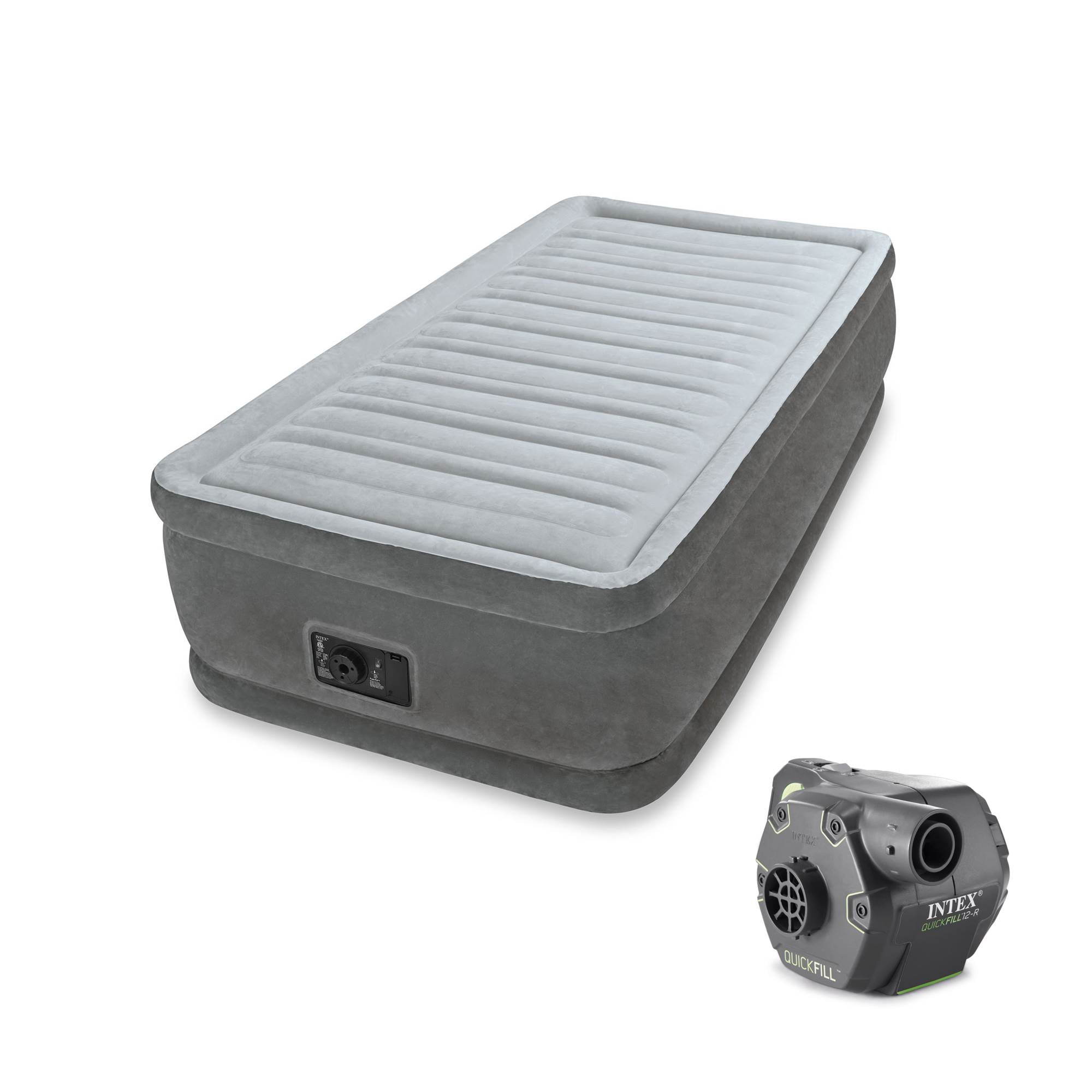
Models like EZ Inflate or Intex QuickFill offer the fastest, easiest setup.
Activate the Integrated Pump
Most built-in systems work with one button.
- Plug into a 110V AC outlet or car adapter.
- Push or twist the valve to open.
- Press the power button. The pump starts automatically.
- Wait 5 to 8 minutes for full inflation on queen size.
Some units have auto-stop that shuts off when firmness peaks. Others change pitch as they near capacity.
Never unplug while running. This damages the motor.
Adjust Firmness and Seal
Even with auto-inflation, perfect firmness requires a quick check.
• After inflation, press down with your hand. It should give slightly but not sag.
• If too soft, restart the pump briefly.
• If too hard, release a little air, then reseal.
Once set, close the valve tightly and replace the cap.
Operate an External Electric Pump
These are versatile but require correct setup to avoid leaks or reversed airflow.
Connect the Right Nozzle
Most pumps come with multiple attachments.
• Small nozzle for balloons
• Medium nozzle for standard air mattress valves
• Large nozzle for pools and rafts
Insert the medium nozzle into the pump is inflate port. Push until it clicks or feels snug.
Then open the mattress valve fully. Press the nozzle firmly into the valve opening. If air leaks, wrap duct tape around the connection for a tighter seal.
Start and Monitor Inflation
Turn on the pump. Most take 1 to 2 minutes for a queen mattress.
• Listen closely. As the mattress fills, the pump sound shifts higher.
• Watch for bulging or stretching. Stop at 90% full.
• Test firmness by sitting gently on the edge.
When done, turn off the pump. Quickly remove the nozzle and cap the valve to lock in air.
Use pumps with 15 to 25 CFM airflow for fastest results.
Inflate Without Electricity

No power? No problem. Several manual methods work in a pinch.
Use a Hand or Foot Pump
These are affordable and reliable, though physically demanding.
• Attach the nozzle securely to the valve.
• For hand pumps, pump steadily for 10 to 15 minutes.
• For foot pumps, use a stomping motion. It is more efficient.
Keep a steady rhythm and pause to check firmness.
Try the Hair Dryer Hack
A quick alternative if you have a hair dryer.
- Set to cold air only.
- Hold the nozzle tightly against the open valve.
- Turn on. Air forces in within 4 to 5 minutes.
Never use heat. It softens and warps vinyl.
Build a Garbage Bag Air Charger
No pump? Use physics.
- Open a large heavy-duty trash bag and swish it through the air to fill with ambient air.
- Seal the top with one hand.
- Press the open end tightly over the mattress valve.
- Squeeze the bag to push air in.
- Repeat 5 to 10 times.
This low-tech method works fast and costs nothing. Use thick bags to avoid tearing.
Avoid Mouth Inflation
Blowing by mouth takes 20 or more minutes and introduces moisture that leads to mold and mildew inside the chamber.
Only use this as a last resort.
Achieve the Ideal Firmness

A rock-hard mattress is not better. Over-inflation causes more failures than any other mistake.
Perform the Hand Test
Once inflated, place your hand or gently sit on the surface.
• Ideal firmness gives slightly under weight with no deep sagging.
• Too soft dips more than 2 inches under pressure.
• Too hard shows visible tension on seams.
Stop inflation at 90%, then lie down to test. Body weight compresses the air.
Adjust for Temperature
Air expands in heat and contracts in cold.
• In hot rooms or sunlight, under-inflate slightly. Air expands naturally.
• In cold tents or garages, recheck firmness before sleeping. Air may have contracted.
New mattresses stretch over the first 2 to 3 uses. Re-inflate before bedtime during break-in.
Prevent Common Inflation Mistakes
Avoid these errors to protect your mattress and save time.
Do Not Over-Inflate
Over-inflation is the number one cause of seam bursts.
• Signs include hard surface, stretched material, and high-pitched pump noise.
• Risk increases in warm environments. A 10 to 15 degree rise can over-pressurize a fully inflated mattress.
Use models with auto-stop or inflate to 90% capacity.
Never Sit on the Edge During Inflation
Concentrated weight on the sides stresses seam welds.
• This creates weak points that may split later.
• Let the mattress expand evenly without added load.
Wait until fully inflated before sitting.
Avoid Heat Exposure
Do not leave an inflated mattress in direct sunlight or near heaters.
• Heat causes air expansion and increases internal pressure.
• Prolonged exposure degrades PVC and vinyl over time.
Store in a cool, dry place away from UV light.
Deflate and Store Properly
Good inflation starts with proper storage. Residual air leads to creases and stress.
Use Pump-Assisted Deflation
If your pump has a reverse vacuum mode.
- Insert medium nozzle into the deflate port.
- Open the mattress valve.
- Turn on the pump. It pulls air out in 1 to 2 minutes.
- Close the valve and disconnect.
This is faster than rolling alone.
Roll, Do Not Fold
After deflating, start at the foot end and roll tightly toward the valve.
• This pushes out trapped air efficiently.
• Fold only along natural seams. Never force sharp creases.
Store in the included bag or a breathable container.
Keep It Dry and Cool
Moisture breeds mold. Always wipe down the surface before storage. Ensure the interior is dry by leaving the valve open for a few hours if needed.
Never store with air inside. This stresses the material and causes permanent warping.
Troubleshoot Inflation Issues
Quick fixes for common problems.
Pump Is Not Working
Check these items.
• Loose nozzle: Reconnect and seal with tape.
• Wrong port: Make sure you are using the inflate side.
• Dead battery: Recharge or plug in.
• Clogged valve: Clean with a damp swab.
If the pump runs but no air flows, verify compatibility.
Mattress Deflates Overnight
Possible causes include loose valve cap, micro-leak, normal stretching on new mattresses, or cold temperature.
• Tighten the cap after inflation.
• Test with soapy water to find leaks. Bubbles reveal holes.
• Re-inflate before bed. It stabilizes after 2 to 3 uses.
• Warm the room or top off air before sleeping.
Pump Makes a High-Pitched Noise
This usually means the mattress is nearly full.
• Turn off immediately and test firmness.
• If too hard, release a little air.
Never leave the pump unattended.
Frequently Asked Questions About Inflating an Air Mattress
How long does it take to inflate an air mattress?
Electric pumps inflate most queen-size mattresses in 4 to 9 minutes. Manual methods like hand pumps take 10 to 20 minutes. The garbage bag trick works in 5 to 10 minutes.
Can I use a hair dryer to inflate my air mattress?
Yes, but only on the cold setting. Hold the nozzle tightly against the valve and let the air flow do the work. Never use heat, as it melts and warps PVC material.
Why does my air mattress keep losing air overnight?
Common causes include normal material stretching on new mattresses, a loose valve cap, micro-leaks from punctures, or temperature drops that contract the air. Re-inflate before bed and check for leaks with soapy water.
Should I inflate my air mattress fully?
No. Inflate to about 90% capacity. The mattress should feel firm but still give slightly under body weight. Over-inflation risks seam bursts, especially in warm environments where air expands.
Can I sleep on an air mattress immediately after inflating?
Yes, but check firmness first. Sit gently on the edge to test. The mattress may feel slightly firm initially and soften as body heat warms the air inside.
What is the best way to store an air mattress?
Deflate completely using pump-assisted deflation or rolling. Clean the surface with mild soap and water. Ensure it is fully dry. Store in the provided bag in a cool, dark, dry place.
Key Takeaways for Inflating Your Air Mattress
Inflating an air mattress properly ensures comfort and extends the life of your purchase. Always identify your mattress type and use the matching pump or method. Built-in electric pumps offer the fastest setup in 4 to 9 minutes, while manual methods work well when electricity is unavailable.
Never over-inflate. Stop at 90% capacity and test firmness by lying down. Air expands in heat, so under-inflate slightly in warm environments. Store your mattress completely dry and deflated in a cool place to prevent mold and material damage.
With the right technique, your air mattress delivers reliable rest for years without flat surprises.