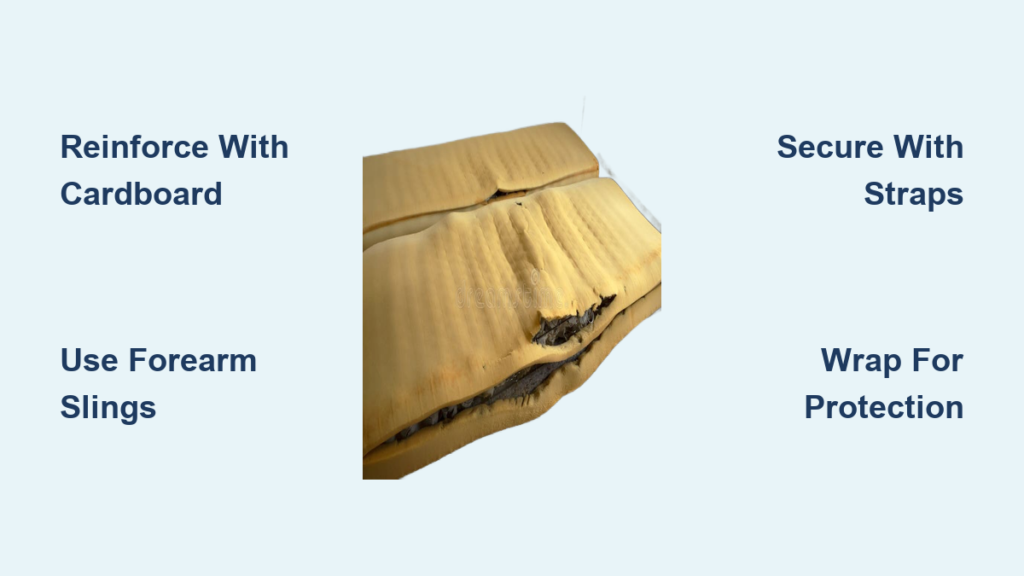
Moving a mattress is hard enough—but when it’s floppy, the challenge doubles. A soft, sagging, or structurally weak mattress lacks rigidity, making it prone to bending, creasing, or even internal damage during transport. Whether it’s an old innerspring, a thin foam model, or a worn-out hybrid, a floppy mattress demands special handling to avoid injury and preserve its integrity.
This guide delivers a complete, step-by-step plan for moving a floppy mattress safely. You’ll learn how to stiffen a sagging mattress, lift without straining your back, and secure it for transport using affordable, accessible tools.
Reinforce a Floppy Mattress With Cardboard Before Lifting
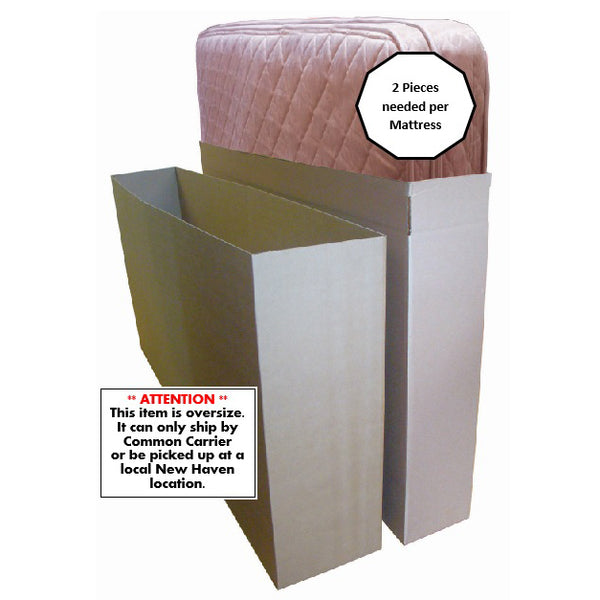
A floppy mattress needs structure before it can be moved. Without support, it will sag in the middle, strain your back, and risk permanent folding damage. Cardboard reinforcement is the simplest, most effective fix.
Cut Full-Size Cardboard Panels
Use corrugated cardboard—the thick, ribbed kind from appliance boxes. Cut two pieces to match your mattress exactly: twin (39″ x 75″), full (54″ x 75″), queen (60″ x 80″), or king (76″ x 80″). Precision matters. Oversized panels snag, undersized ones leave edges unsupported.
Sandwich the Mattress
Place one panel on the floor. Lay the mattress flat on top. Position the second panel on top. This creates a rigid sandwich that resists bending when you lift.
Secure With Ratchet Straps
Wrap ratchet straps or heavy-duty rope tightly around the entire unit. Cross the straps diagonally if possible for even compression. Tighten until the mattress holds its shape when lifted slightly.
Build a DIY Forearm Sling for Better Grip and Control
When gloves slip and hands tire, forearm slings give you unmatched grip and leverage. This low-cost method turns a dish towel and paracord into a powerful lifting aid with no special tools needed.
Make the Sling Loop
Cut a 20-foot length of quarter-inch paracord. Join the ends with a water knot to form a continuous loop. Fold a standard dish towel into thirds lengthwise, then into thirds again widthwise. Roll it tightly from one end to form a firm cylinder.
Thread and Position Under Mattress
Slide the paracord loop through the rolled towel. Fold the sling in half so the open end faces inward. Pull the loop back through itself to create a self-tightening knot. Slide two slings under the mattress in a cross pattern.
Lift With Your Forearms
Insert your hands into the loops and rest the cord across your forearms. As you lift, the sling tightens and distributes weight evenly. This mimics industrial forearm forklifts, reducing strain and improving balance.
Use a Mattress Carrying Strap for Safer Lifting
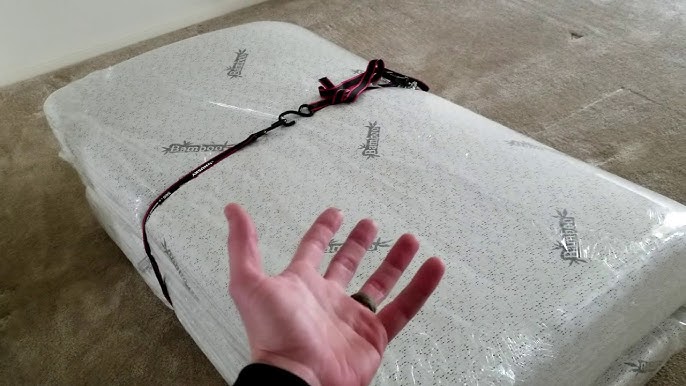
A mattress carrying strap is one of the most underrated moving tools. For $12–$18, it transforms back-breaking lifts into controlled, upright carries.
Slide Strap Under the Center Mass
Tilt the mattress backward 30–45 degrees. This creates space to slide the strap underneath while keeping the top close to your body. Position the strap horizontally across the center mass, never near the edges where floppiness is worst.
Loop Around Your Wrist, Not Your Hand
Instead of gripping the strap, loop it around your wrist. This transfers pulling force from your hand to your forearm and upper body. Keep your wrist straight and engage your core to stabilize.
Walk Upright and Close
Keep your back straight, chest up, and the mattress close to your torso. Use your legs, not your back, to power forward. The upright position reduces vertical clearance by up to 12 inches, critical for tight doorways.
Wrap and Protect Your Mattress During the Move

Even a well-lifted mattress can be ruined by dirt, moisture, or pests during transit. Full encapsulation is non-negotiable for used, resale, or long-distance moves.
Choose the Right Cover
Zippered mattress bags work best for long-term protection and resale. Heavy-duty stretch wrap is budget-friendly and effective. Wrap 5–7 layers tightly from end to end. Double-bag for long moves to add moisture and bed bug defense.
Seal All Edges
Use water-resistant packing tape to seal zippers or stretch wrap seams. Cross-tape corners for reinforcement. If using stretch wrap, start at the foot, roll the mattress forward, and wrap continuously to the head.
Add Edge Protection
Tape pool noodles along the long edges to prevent compression damage during stacking or strapping. This also cushions corners from dolly rails or truck walls.
Plan Your Moving Route in Advance
A smooth move starts before the first lift. Route planning prevents last-minute surprises and reduces physical strain.
Walk the Path First
Trace the journey from bedroom to vehicle. Note narrow doorways, tight hallway turns, stairwells with low headroom, and thresholds or carpet ridges.
Clear All Obstacles
Remove rugs, furniture, doorstops, or wall art that could block passage. Prop open interior doors with hooks or doorstops.
Measure Critical Clearances
Standard door height is 80 inches. A queen mattress standing upright with a strap reduces clearance to 65–70 inches due to backward tilt. This upright carrying method significantly helps with tight spaces.
Lift and Carry Your Floppy Mattress Safely
Poor lifting technique causes back injuries, especially with floppy, unstable loads. Follow these steps to move safely.
Use Proper Lifting Form
Keep feet shoulder-width apart, close to the mattress. Bend at the knees, not the waist. Keep your back straight and lift with your legs, not your arms. Hold the mattress close to your body and avoid twisting.
Choose the Right Carry Style
The bear hug works best for short distances. Hug the mattress tightly to your chest. The upright carry uses a wrist-looped strap. Tilt slightly back and walk forward. For two-person moves, position one person at each end with a third supporting the center if needed.
Use a Dolly for Heavy Units
For mattresses over 50 lbs or extra-floppy models, keep the mattress upright on the dolly. Strap it securely to the frame. Tilt and roll slowly on stairs. Use furniture sliders under corners for indoor sliding.
Load Your Mattress Into the Vehicle Correctly
How you load determines whether your mattress arrives intact or damaged.
Moving Truck or Van
Slide the mattress in on its side or flat. Stand it upright if space allows. Secure with criss-cross ratchet straps to walls or anchors. Never let other items rest on top.
Pickup Truck
Lay flat in the bed. Use nylon ropes or straps in a criss-cross pattern. Flag any overhang exceeding 4 feet beyond the cab. Drive under 55 mph.
Car Roof Transport
Only attempt this for short, local moves. Strap tightly with ratchet straps. Drive slowly under 45 mph and avoid highways. Check straps every 10–15 miles. This method is not recommended for long distances or high winds.
Transport and Unload Without Damage
The journey isn’t over until the mattress is inside and inspected.
Drive With Care
Avoid sudden stops, sharp turns, and high speeds. Check straps every hour or after rough roads. Keep windows closed to prevent wind uplift.
Unload Using the Same Techniques
Clear the path at the destination. Use the same lifting and carrying methods you used during loading. Place the mattress on a clean, flat surface immediately.
Inspect and Decompress
Unwrap and check for new tears, sagging, or frame damage. Let the mattress rest flat for 24–48 hours before use. This allows foam layers to fully decompress if compressed during the move.
Handle Special Moving Scenarios
Not all moves are the same. Adjust your approach based on distance, mattress type, and help available.
Moving Alone
Double-bag the mattress for maximum protection. Use cardboard and straps to create a self-supporting unit. Use a dolly to move upright. Slide across floors with furniture sliders. Consider hiring help just for the lift, even if you handle prep solo.
Local vs. Long-Distance Moves
For local moves, car roof transport works for short trips, or use a truck. Standard cardboard and strap reinforcement suffices. For long-distance moves, enclosed trucks or shipping is best. Double reinforcement and double-bagging are strongly recommended. Professional shipping may cost $150–$900 but can be cheaper than renting a truck for cross-country moves.
Handle by Mattress Type
Memory foam 11 inches or thinner can be rolled briefly but never folded. Latex avoids compression and needs bubble wrap. Hybrid and innerspring models must never fold. Air mattresses deflate fully, roll, and pack in a carry bag.
Safety Checklist for Moving a Floppy Mattress
Do
Reinforce with cardboard and straps. Wrap in a sealed mattress bag. Lift with legs, not back. Clear pathways in advance. Use a dolly for heavy units. Secure tightly in the vehicle. Drive cautiously and check straps. Use wrist-looped straps for better control. Consider professional movers for high-value or oversized units.
Don’t
Fold innerspring, hybrid, or thick foam mattresses. Carry above shoulder height. Use roof transport for long distances. Place other items on top during transit. Skip protective wrapping. Drag or slide a bare mattress on rough floors.
Frequently Asked Questions About Moving a Floppy Mattress
Can I fold a floppy mattress to move it?
No. Never fold innerspring, hybrid, or thick foam mattresses. Folding damages coils, springs, and foam layers. Most warranties are voided if the mattress is folded improperly or damaged during transport.
What is the best way to stiffen a sagging mattress before moving?
Use cardboard reinforcement. Cut two full-size pieces of corrugated cardboard and sandwich the mattress between them. Secure with ratchet straps to create a rigid unit that resists bending and sagging.
Can I move a floppy mattress alone?
Yes, with the right techniques. Double-bag the mattress for protection. Use cardboard and straps to create a self-supporting unit. Use a dolly to transport upright. Slide across floors with furniture sliders. Consider hiring help just for the actual lift to prevent injury.
How do I protect a memory foam mattress during a move?
Memory foam can be rolled briefly if 11 inches or thinner. Use bubble wrap under the mattress bag for extra protection. Focus on the center third where sagging stress is highest. Never fold or crease sharply.
How long does a mattress take to decompress after moving?
Allow 24–48 hours for full decompression if the mattress was compressed during the move. Place it on a flat surface and let it rest before use.
Key Takeaways for Moving a Floppy Mattress Successfully
Moving a floppy mattress doesn’t have to be a back-breaking ordeal. The key is preparation: stiffen the structure with cardboard, protect the surface with proper wrapping, and lift with your body in mind. Use wrist-looped straps to transfer weight from your hands to your forearms, keeping your spine neutral and your legs powered. Plan your route in advance, secure the mattress tightly in your vehicle, and drive cautiously. For long-distance moves, double-bag and double-reinforce to prevent damage from vibration and handling. When in doubt, keep the mattress flat or upright—never folded. Follow these steps, and your mattress will arrive intact, ready to rest.