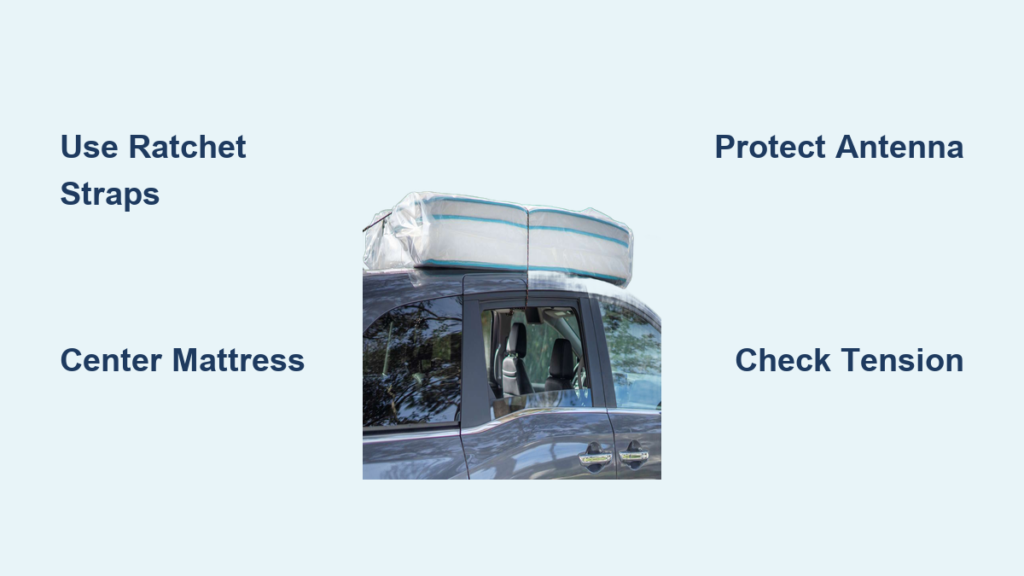
Moving a mattress without a truck? Tying it securely to your roof rack is a practical solution if done correctly. A poorly secured mattress can shift, fly off, or damage your vehicle, creating serious safety risks. The key is using the right tools, proper positioning, and ratchet straps that hold firm against wind and vibration. This guide shows you how to tie a mattress to roof rack safely, step by step, using proven methods that prevent accidents and protect both your vehicle and your sleep surface.
You will learn how to position the mattress for balance, choose the best straps, route them securely even without window access, and verify stability before hitting the road. Whether you are relocating across town or hauling a dorm mattress to college, these techniques ensure your load arrives intact.
Choose the Right Straps for Secure Mattress Transport

Use 15-Foot Ratchet Straps
Secure your mattress with at least two 15-foot ratchet straps rated for 400 pounds or more. These provide superior tension control and eliminate the rebound risk of bungee cords. Polyester webbing resists UV rays, moisture, and abrasion, which is critical for long drives. Three straps are ideal for king-sized or heavier mattresses to prevent sagging and lateral movement. Never use rope, twine, or elastic cords because they stretch, slip, or snap under pressure.
Avoid Bungee Cords and Rope
Bungee cords lack tension control and can violently recoil if they break. Rope stretches over time and knots loosen with vibration. Both fail under highway wind loads, which can reach up to 400 pounds of force at 75 mph. Ratchet straps offer mechanical advantage, allowing firm tightening with minimal effort. They lock in place and maintain consistent pressure even after miles of driving.
Inspect Straps Before Use
Check each strap for fraying, cuts, or weakened stitching. Ensure ratchet mechanisms operate smoothly and hooks are undamaged. Corrosion or bent metal compromises strength. Replace any strap showing wear. Clean dirty straps with mild soap and water, dry thoroughly, and store coiled in a dry place to extend their lifespan.
Prepare Your Vehicle and Mattress
Protect the Roof and Antenna
Remove or cover flexible antennas with cardboard to prevent punctures from straps or mattress fabric. Place a layer of cardboard under the antenna mount if the mattress rests directly on the roof. This shields paint and prevents tears in the mattress cover. Ensure roof rack crossbars are tight and spaced about 3 feet apart for optimal support.
Check Roof Load Limits
Consult your owner is manual for maximum roof weight capacity. Exceeding this limit risks structural damage, poor handling, or accidents. A standard queen mattress weighs 60 to 100 pounds. Add 20 to 40 pounds for a box spring. Confirm your vehicle can handle the combined weight of mattress, straps, and any additional cargo.
Position Mattress Soft Side Down
Lay the mattress flat on the roof with the quilted or soft side down to protect both the car is paint and the mattress surface. If using roof racks, place the mattress directly on the crossbars to reduce friction. For box springs, position them upside down on top of the mattress with the dust cover facing down to prevent abrasion and maintain stability.
Position the Load Correctly
Center and Shift Rearward
Center the mattress left-to-right across the roof. Slide it 1 foot rearward from the front edge of the roof to balance weight over the cabin and improve aerodynamics. Allow 6 inches of overhang at the rear, which is within legal limits that usually allow 2 to 4 feet beyond the bumper. Keep a 2-inch gap near the antenna to avoid contact and damage.
Avoid Folding When Possible
Never fold innerspring or hybrid mattresses unless absolutely necessary. Folding causes permanent coil damage and reduces support. If folding is unavoidable due to garage clearance, fold width-wise into a U-shape, not lengthwise. Secure the fold with a ratchet strap but do not over-tighten. Unfold immediately upon arrival.
Know Your Mattress Size
A queen mattress is about 4 feet wide by 6 feet long. A king is wider and may require extra caution. Oversized loads increase wind resistance and may exceed legal width, which is typically 8.5 feet including mirrors. Measure your setup to ensure compliance and safe clearance through tunnels or tight spaces.
Secure With Window-Through Straps
Route Front Strap Through Front Window
Start with the front strap. Throw the non-hook end over the mattress. Feed it through an open front window or door gap, avoiding seats where passengers will sit. Hook the ratchet end to the strap is loop or anchor point. Pull the webbing by hand until snug to eliminate slack before ratcheting.
Tighten Front Strap Gradually
Engage the ratchet handle and tighten slowly. Stop when the strap is firm but not crushing the mattress. Over-tightening can damage internal coils or wood slats. Ensure the webbing faces forward to reduce wind flap and lies flat without twists or kinks.
Install Rear Strap Same Way
Repeat the process at the back. Throw the strap over the load, thread through a rear window or door, pre-tighten by hand, then ratchet down. Match tension with the front strap to distribute pressure evenly. Both straps should press the mattress firmly against the roof or crossbars.
Use Under-Crossbar Method (No Windows)

Pass Strap Under Crossbar
When window routing is not possible, such as with sunroof models or occupied seats, use the under-crossbar method. Slide one end of the strap under the roof rack bar from beneath the vehicle. Pull it up through the gap between the bar and roof.
Loop and Ratchet Securely
Bring the strap up and over itself, threading it through the ratchet mechanism. Pull tight by hand, then tie a knot underneath the crossbar to prevent slippage. Ratchet down until the strap is firmly seated and taut. Repeat on the opposite side for balanced tension.
Add Center Strap for Heavy Loads
For king-sized or heavier mattresses, apply a third ratchet strap across the center. This prevents mid-span sagging and lateral shifting. Use either window-through or under-crossbar routing, depending on access. Center straps enhance stability during high-speed or windy conditions.
Optimize for Wind and Drag
Keep Mattress Flat and Level
At highway speeds, wind can exert 400 pounds of pressure on the front edge. Minimize lift and drag by keeping the mattress as flat and level as possible. Avoid angling or vertical placement unless structurally supported. Eliminate gaps between the mattress and roof to reduce air pockets and flutter.
Reduce Aerodynamic Lift
Slightly compress the load with straps to eliminate movement without deforming the mattress. In high-wind areas, add rigid boards like plywood over the mattress to smooth airflow. Avoid loose plastic wrap because Saran Wrap flaps can catch wind and tear, though it will not compromise strap security if properly anchored.
Plan Route and Weather
Check the forecast before departure. Avoid rain, snow, or high winds. Crosswinds increase instability, especially on bridges or open highways. Choose sheltered routes when possible. If rain is expected, cover the mattress with a waterproof tarp or mattress bag, securing all edges so it does not flap.
Final Safety Check Before Driving
Verify Position and Protection
Confirm the mattress is centered, rear-shifted, soft side down, with box spring if used upside down. Antenna is protected with cardboard. No sharp edges or loose materials. Reflective tape or bright markers are attached for visibility during night or low-light driving.
Test for Load Movement
After tightening all straps, gently push on the mattress from multiple sides. No shifting should occur. If movement is detected, re-tighten straps or add a third one. Double-check all hooks and ratchets for secure engagement. Tuck or wrap excess strap length to prevent flapping.
Recheck After First 10 Miles
Drive the first 5 to 10 miles at reduced speed, then stop to recheck tension. Materials settle during initial travel. Retighten straps if needed. Re-inspect after rough roads, weather changes, or every few hours on long trips.
Drive Safely With Roof Load
Limit Speed to 55 to 60 mph
Even with secure straps, drive at 55 to 60 mph maximum. Up to 75 mph is acceptable on smooth, stable highways, but lower speeds improve control and reduce wind stress. Avoid sudden braking, sharp turns, or aggressive lane changes. High center of gravity affects handling and increases rollover risk.
Monitor Load During Transit
If traveling with a passenger, assign them to monitor load stability. Listen for flapping sounds or unusual vibrations. Stop immediately if you suspect the mattress has shifted. Communicate regularly, especially on long hauls or in windy conditions.
Unload With Assistance
Upon arrival, release ratchet straps gradually to prevent sudden release or injury. Unload with at least one helper because mattresses are bulky and awkward. Lower carefully to avoid pinching fingers or damaging floors. Inspect both mattress and vehicle for signs of wear, strap marks, or damage.
Follow Legal and Safety Rules
Stay Within Load Limits
Most jurisdictions allow 2 to 4 feet of rear overhang. Beyond that, you may need a permit or red flag on the load. Some states require roof load signage or proof of securement during traffic stops. Non-compliance can result in fines or liability if the load detaches and causes an accident.
Accept Driver Responsibility
You are legally responsible for securing cargo. A loose mattress becomes a deadly projectile capable of causing crashes or fatalities. Properly tied-down loads reduce insurance liability and demonstrate due diligence. Always assume responsibility for safety, even on short trips.
Maintain Straps After Use
Clean and Dry Before Storage
After transport, remove dirt, road grime, or moisture with a damp cloth and mild soap. Rinse if needed, then air dry completely before storing. Damp straps encourage mold, mildew, and fiber degradation. Never store wet or coiled tightly with debris.
Store Properly for Long Life
Wind straps neatly to prevent kinks. Store in a labeled bag or drawer, away from sunlight, heat, and chemicals. Occasionally lubricate ratchet mechanisms with silicone spray, never oil-based products, which attract dust and degrade plastic components.
Frequently Asked Questions About Tying a Mattress to Roof Racks
Can I use bungee cords to secure a mattress on my roof rack?
No, bungee cords should never be used. They lack tension control and can snap or recoil violently, creating a serious safety hazard. Ratchet straps are the only recommended option for secure mattress transport.
How many ratchet straps do I need for a queen mattress?
You need a minimum of two ratchet straps. Three are recommended, especially for heavier mattresses or long-distance travel. Each strap should be 15 feet long and rated for at least 400 pounds.
What if my vehicle has a sunroof and I cannot route straps through windows?
Use the under-crossbar method. Pass the strap under the roof rack crossbar, bring it up through the gap, loop it over itself, and ratchet it tight. This creates a secure anchor point without using windows.
How far can a mattress overhang on a roof rack?
Most jurisdictions allow 2 to 4 feet of rear overhang. Check local laws and use red flags or reflective markers if your load exceeds standard limits.
Should I check strap tension during my trip?
Yes. Stop after the first 5 to 10 miles to recheck tension because materials settle during initial travel. Re-inspect periodically on long trips, after rough roads, or if weather conditions change.
Key Takeaways for Safely Tying a Mattress to Roof Racks
Using the right technique makes the difference between a secure journey and a dangerous hazard. Always use ratchet straps rated at 400 pounds or higher, never bungee cords or rope. Position your mattress soft side down, centered and shifted slightly rearward for optimal weight distribution and aerodynamics. Protect your antenna with cardboard and verify your vehicle is roof load capacity before departure.
Secure the mattress using window-through routing or the under-crossbar method, adding a third strap for king-sized or heavier loads. Pre-tighten by hand, then ratchet to firm but not crushing tension. Test for movement before driving and recheck after the first 10 miles. Drive at moderate speeds, avoid high winds, and monitor the load during transit.
By following these guidelines, you will safely transport your mattress on a roof rack, arriving with no damage, no fines, and no roadside emergencies.