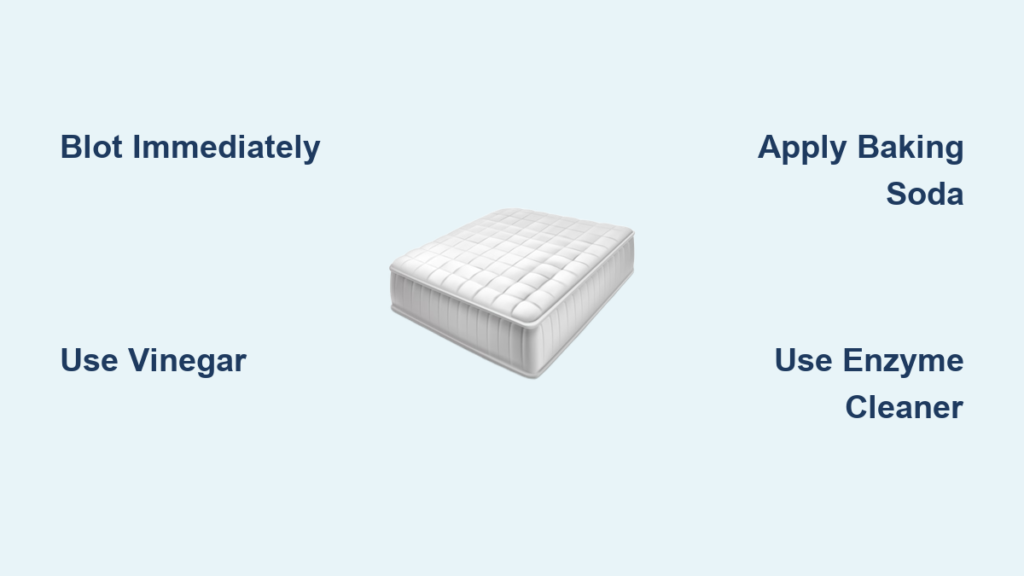
Waking up to the smell of urine on your mattress is frustratingly common, whether from a child’s nighttime accident, a pet mishap, or adult incontinence. The good news? You do not need to replace your mattress. With the right approach, you can permanently eliminate pee smell using safe, effective methods.
The key lies in understanding why the odor persists. Urine contains uric acid, which forms invisible crystals deep in your mattress that reactivate whenever moisture or humidity returns, releasing that familiar ammonia-like stench. Standard cleaning often fails because water and typical sprays only reach the surface. This guide reveals proven methods to destroy uric acid at its source, remove stains, and protect your mattress for years to come.
Immediate Response: Blot Before It Sets
Acting fast is your best defense against permanent odor and staining. The longer urine sits, the deeper it penetrates and the harder it becomes to remove.
Remove Bedding Immediately
Strip off all sheets, blankets, and mattress protectors the moment you discover an accident. Wash them in hot water at 60°C or 140°F using an enzyme-based laundry detergent. This breaks down the proteins in urine and prevents the smell from lingering in fabrics.
Caution: Do not remove a permanent mattress cover. Most memory foam mattresses have non-removable covers. Only wash removable layers.
Blot, Never Rub
Use paper towels or microfiber cloths to absorb as much liquid as possible. Press down firmly and hold in place, never scrub. Work from the outside of the stain inward to contain the spill. Replace towels as they soak through and continue until the area feels only slightly damp.
Why it matters: Rubbing generates heat that bonds urine proteins to fibers, making stains and odors permanent.
Vinegar Solution for Neutralizing Urine
White vinegar neutralizes the alkaline ammonia in urine and helps loosen uric acid from mattress fibers. This makes it an excellent first step in your cleaning process.
How to Apply Vinegar Safely
Mix one cup of distilled white vinegar with one cup of water in a spray bottle. Lightly spray the affected area and let it sit for 5 to 15 minutes. Blot dry with clean towels.
Note: Vinegar does not fully dissolve uric acid crystals. Always follow with baking soda or enzyme treatment for complete odor elimination.
Myth busting: Vinegar will not damage your mattress when diluted 50/50. It is safe for memory foam and most fabric types.
Baking Soda Treatment for Deep Deodorizing
Baking soda absorbs moisture and neutralizes both acidic and basic odor compounds, including uric acid and ammonia. This makes it essential for full odor control.
Step-by-Step Application
After blotting or treating with vinegar, sprinkle a thick layer of baking soda over the entire wet area. For stubborn smells, mix the baking soda with a few drops of water to form a paste, then let it dry completely. Leave the baking soda for 8 to 24 hours, ideally overnight. Vacuum thoroughly using an upholstery attachment.
Pro tip: Skip this step, and the smell will return. Baking soda is essential for complete odor removal.
Warning: Incomplete vacuuming leaves gritty residue that can irritate skin and damage your bedding.
Hydrogen Peroxide for Old or Set-In Stains

This powerful combination oxidizes and lifts set-in urine stains, especially from pet accidents. It breaks down uric acid molecules while baking soda lifts and deodorizes.
The Peroxide Formula
Mix one cup of 3% hydrogen peroxide with three tablespoons of baking soda and one to two drops of mild dish soap. Patch test this mixture on a hidden area first, as peroxide can bleach colored fabric or degrade foam. Lightly mist the stain, do not soak it. Wait 5 to 10 minutes, then blot and allow to air dry for 4 to 6 hours. A white residue will appear, which is dried baking soda. Vacuum thoroughly when completely dry.
Caution: Avoid repeated use on memory foam. Over-saturation weakens foam structure over time.
Enzyme Cleaners: The Gold Standard Solution
For complete odor elimination, nothing beats enzyme-based cleaners. They contain live bacteria that digest uric acid, urea, and proteins, eliminating the odor source instead of just masking it.
Why Enzymes Work Better Than DIY Methods
Enzyme cleaners contain protease and urease that consume urine components at the molecular level. They are especially crucial for pet urine, which has higher uric acid concentration, recurring stains, and preventing pets from re-marking the same spot.
Recommended Products
Several enzyme cleaners consistently receive top ratings. Nature’s Miracle Stain & Odor Remover works well for most situations. Rocco & Roxie Professional Strength Cleaner offers extra power for tough cases. Out! Pet Stain & Odor Eliminator provides good value.
How to Use Enzyme Cleaner Effectively
Blot the area dry first, then saturate the stain generously. Most people under-apply enzyme cleaner, so be generous. Let it dwell for 20 to 60 minutes, checking the product label. Blot up excess liquid, then sprinkle baking soda and leave it overnight. Vacuum completely the next day.
Expert tip: Pets return to pee spots they can still smell. Enzymes remove pheromones, breaking the cycle of repeat accidents.
Drying: The Make-or-Break Step
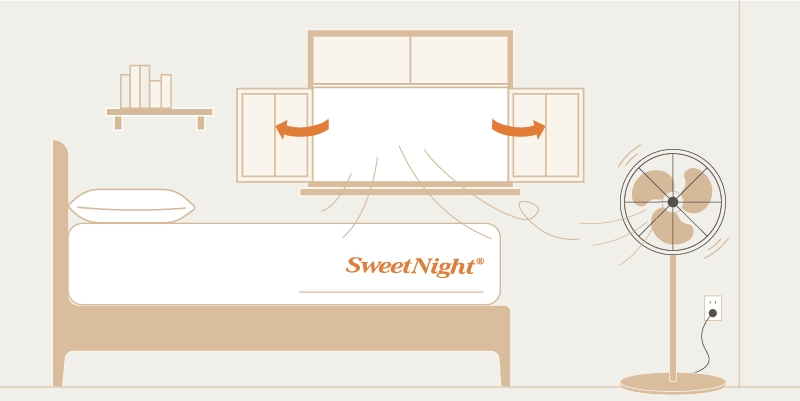
Improper drying causes mold, bacteria, and returning odors, even after perfect cleaning. This step is critical to your success.
How to Dry Your Mattress Safely
Place the mattress in indirect sunlight for 2 to 4 hours. UV light kills bacteria and neutralizes odors naturally. Use multiple fans to increase airflow across the surface. Open windows or run a dehumidifier in humid climates. Rotate the mattress if possible to expose all sides to airflow.
Never use heat sources like hairdryers or space heaters. They can melt foam or set odors permanently.
Drying Time Guidelines
| Cleaning Method | Drying Time |
|---|---|
| Vinegar solution | 8 to 10 hours |
| Hydrogen peroxide mix | 4 to 6 hours |
| Enzyme cleaner | 12 to 24 hours |
Final test: Press a warm, damp cloth over the spot for 10 minutes. If no smell emerges, the job is done.
Critical rule: Never sleep on a damp mattress. Moisture compresses deeper into the foam, increasing mold risk and causing respiratory issues.
Special Cases: Tough Situations Explained
Some situations require more aggressive strategies. Here is how to handle the most challenging scenarios.
Old or Dried Urine Stains
Crystallized uric acid requires aggressive treatment. Soak the area with enzyme cleaner, wait 30 minutes, then blot. Apply a heavy baking soda layer and leave it overnight. Vacuum and repeat if needed. For yellowing, use the hydrogen peroxide mix first, let it dry, then apply enzyme cleaner, followed by baking soda overnight.
When to stop: If odor returns after two full treatments, consider professional cleaning or replacement.
Pet Urine: Breaking the Re-Marking Cycle
Pets are drawn back to areas they can smell, even faint traces. Blot immediately, then apply a pet-specific enzyme cleaner. Let it dwell for the full recommended time, often 30 minutes. Blot thoroughly, apply baking soda overnight, then vacuum. Some enzyme cleaners include citrus or eucalyptus oils that deter future accidents.
Memory Foam and Hybrid Mattresses
Foam soaks up liquid fast but dries slowly, making it prone to mold. Use light sprays, never soaking. Blot aggressively after each step. Allow full drying before remaking the bed. Never use steam cleaners, bleach, or ammonia. Never submerse or machine wash the mattress.
Manufacturer warning: Steam cleaning can void your warranty and promote mold growth deep in the layers.
What NOT to Use on Your Mattress
Avoid these common mistakes that worsen the problem instead of solving it.
| Product | Why to Avoid |
|---|---|
| Bleach | Damages fabric, weakens foam, does not break down uric acid |
| Ammonia cleaners | Smells like urine, makes odor worse |
| Scrubbing brushes | Tears material, pushes stain deeper |
| Excessive water | Traps moisture, breeds mold |
| Air fresheners | Only masks smell, does not fix root cause |
Final word: If you are only spraying Febreze, you are not solving anything. Eliminate the source, do not cover it up.
Preventing Future Accidents
The best cleanup is the one you never have to do. Prevention saves time, money, and frustration.
Use a Waterproof Mattress Protector
This is your first line of defense. Choose a protector that is breathable with no plastic feel, quiet with no crinkling, and machine washable. Look for materials like TENCEL, PUL, or zippered encasement.
Top pick: Zinus TENCEL Waterproof Protector blocks liquids, resists bacteria, and feels soft.
Pro advice: Change and wash the protector after every accident, even if it seems minor.
Layered Bedding System
For incontinence management, layer your bedding strategically. Place a waterproof protector as the bottom layer, add a fitted sheet, then top with a reusable bed pad. Keep a spare pad nearby for quick night changes.
Benefit: Swap just the top pad at night without stripping the entire bed.
Nighttime Routine Tips
Limit fluids 1 to 2 hours before bed. Avoid caffeine and alcohol in the evening. Use night lights for safe bathroom trips. Consider adult incontinence products for chronic issues.
When to Replace or Call a Professional
Sometimes cleaning is not enough. Know when to cut your losses.
Replace the Mattress If
Replace if the smell returns after multiple enzyme treatments. Replace if you see mold or mildew, indicated by black spots or a musty smell. Replace if the foam is sagging, crumbling, or discolored. Replace if accidents happen frequently and hygiene cannot be maintained.
Expert advice: If the smell lingers or there is visible mold, replacement is the safest choice.
Try Professional Cleaning First
Professional services use industrial extraction, ozone treatment, or thermal drying. This often costs less than a new mattress and works well for high-end or hybrid models.
Best Method by Situation
| Scenario | Best Method |
|---|---|
| Fresh human urine | Blot, vinegar spray, blot, baking soda, vacuum |
| Dried human urine | Peroxide mix, dry, baking soda, vacuum |
| Fresh pet urine | Blot, enzyme cleaner, baking soda, vacuum |
| Old pet urine | Peroxide, enzyme, baking soda, 24-hour dry |
| General deodorizing | Baking soda overnight, vacuum |
| Prevention | Waterproof protector always in place |
Frequently Asked Questions About Removing Pee Smell
Does baking soda really remove urine odor from a mattress?
Yes. Baking soda neutralizes acidic compounds in urine, including uric acid and ammonia. Apply it generously over the affected area, leave it for 8 to 24 hours, then vacuum thoroughly.
Can I use hydrogen peroxide on my mattress?
Yes, but with caution. Mix one cup of 3% hydrogen peroxide with three tablespoons of baking soda and one drop of dish soap. Patch test first on a hidden area. Avoid over-saturating memory foam, as it can degrade the material.
How long does it take for urine smell to go away?
With proper treatment, odor should reduce within 24 to 48 hours. Full drying is essential because any remaining moisture keeps uric acid crystals active and the smell will return.
Will vinegar damage my mattress?
No, when diluted 50/50 with water. Vinegar is safe for most mattresses, including memory foam and fabric types. Always follow with baking soda or enzyme treatment for complete odor removal.
Can I sleep on the mattress after cleaning?
Only when completely dry. Sleeping on a damp mattress risks mold growth, bacteria, and deeper odor retention. Use the damp cloth test to confirm it is ready.
What if the smell comes back after cleaning?
Reapply enzyme cleaner and baking soda. Ensure the mattress has fully dried this time. If the smell persists after two complete treatments, consider professional cleaning or mattress replacement.
Key Takeaways for Eliminating Pee Smell Permanently
You can get pee smell out of a mattress if you treat the uric acid, not just the surface. Use enzymes for deep cleanup, baking soda for deodorizing, and ensure complete drying to lock in results. Always protect your investment with a waterproof cover to avoid repeat disasters.
Acting quickly when an accident happens gives you the best chance of complete odor removal. Blot immediately, never rub, and work from the outside inward. For old or stubborn smells, combine hydrogen peroxide treatment with enzyme cleaners and allow extra drying time.
With this proven approach, your mattress can stay fresh, clean, and odor-free for years. The combination of prompt action, the right cleaning agents, and proper drying techniques makes all the difference between temporary masking and permanent elimination.