Finding ants crawling on your mattress can feel alarming, but understanding why they appear is the first step to elimination. Ants do not typically nest inside mattresses. Instead, they are foraging for food, moisture, or body residues like sweat and skin cells that accumulate in bedding. Their presence usually signals a larger infestation nearby, not a colony living in your bed. This guide provides a complete step-by-step plan to remove ants from your mattress, eliminate the source colony, and protect your sleeping space long term without replacing your mattress unless absolutely necessary.
Immediate Steps to Remove Ants from Your Mattress

When you discover ants on your bed, quick action is essential to stop the infestation before it spreads. Start by removing visible ants, eggs, and attractants that draw them to your sleeping area.
Strip and Wash All Bedding
Remove every layer of bedding immediately, including sheets, pillowcases, blankets, mattress protectors, and comforters. Wash everything in hot water at least 130°F (54°C) using regular detergent, as high heat kills ants, larvae, and bacteria. Dry on the highest heat setting for at least 30 minutes to ensure complete eradication. Check pillows and mattress toppers as well. If they are washable, clean them too. Consider replacement if contamination is severe.
Vacuum the Mattress Thoroughly
Use your vacuum’s upholstery brush or crevice tool to target every part of the mattress surface. Focus on seams, tufts, stitching lines, edges, sides, end panels, and any visible tears or punctures. Vacuum daily during active infestation, then reduce to once every one to two weeks for maintenance. After vacuuming, empty the bag or canister outside in a sealed trash bin. For bagless vacuums, clean the canister with soapy water or a mild bleach solution, and wipe down the exterior to prevent ants from hitching back inside.
Clean and Deodorize the Mattress Surface
Once vacuumed, clean to remove lingering odors and organic residues that attract ants.
Spot Clean with Mild Detergent: Mix a few drops of mild liquid soap with warm water. Dampen a cloth, never soak, and gently blot stained areas. Test on a hidden spot first to avoid fabric damage. Allow the mattress to dry completely for six to eight hours using fans or open windows.
Disinfect with Safe Sprays: Use non-toxic, fabric-safe disinfectants such as hydrogen peroxide-based cleaners or enzyme sprays that break down organic matter. Avoid ammonia or undiluted bleach, as they can degrade foam and fabric.
Neutralize Odors with Baking Soda: Lightly sprinkle baking soda over the surface after cleaning. Let it sit for 15 to 30 minutes, then vacuum thoroughly. This removes sweat and food odors that attract ants.
Steam Clean Your Mattress Safely
Steam cleaning kills hidden ants, eggs, and pathogens without chemicals, but only use this method if your mattress label says steam-safe. Most memory foam and hybrid models tolerate low-moisture steam, but excessive water can cause mold. Use a handheld or full-sized steamer with a fabric attachment, holding the nozzle slightly above the surface and moving slowly. Focus on seams, edges, and high-risk zones. Allow four to six hours of drying time, preferably overnight, before remaking the bed.
Natural Repellents to Break Ant Trails
Ants follow pheromone trails back to their colony. Disrupt these paths to stop repeat visits, especially around the bed area.
Vinegar Spray Solution
Mix equal parts white vinegar and water in a spray bottle. Spray along baseboards, bed legs, floor edges, and entry points such as cracks and outlets. Vinegar masks scent trails and repels ants. Reapply daily until activity stops.
Essential Oil Repellents
Ants dislike certain scents that work as natural deterrents. Effective oils include peppermint, tea tree, cinnamon, lemongrass, and lavender. Mix 10 to 15 drops per cup of water and spray around bed legs, under the frame, and along walls. Reapply every one to two days. Note that these are repellents, not killers. Use them after eliminating the colony to prevent return.
Physical Barriers
Create barriers ants cannot cross easily. Sprinkle thin lines of salt or baby powder near baseboards, as ants avoid dry, abrasive textures. Scatter dried used coffee grounds around bed corners, which absorb moisture and repel ants. Lightly dust food-grade diatomaceous earth around room edges, under the bed, and at entry points. This dehydrates ants on contact. Avoid breathing the dust.
Use Ant Baits to Eliminate the Colony
Sprays kill only visible ants. Baits eliminate the entire colony, including the queen, which is essential for permanent removal.
How Ant Baits Work
Worker ants take poisoned bait back to the nest. It spreads through feeding, eventually killing the queen and brood. Never place baits on or under the mattress. Keep them away from sleeping areas, positioning them near baseboards, wall outlets, doorways, and kitchen entry points instead.
Best Bait Types
Gel baits like Terro T300 or Advion Ant Gel offer precise placement along trails. Liquid bait stations work well for sugar-loving ants. Granular baits are best used outdoors around the foundation to block entry. Wait three to seven days for results, and do not spray ants near bait stations, as this scares them away.
DIY Boric Acid Bait
Mix one teaspoon boric acid, two teaspoons powdered sugar, and one teaspoon warm water to form a paste. Place on aluminum foil or inside bottle caps near ant trails, away from kids and pets. Boric acid is toxic if ingested, so use commercial bait stations when possible.
Create a Soapy Water Moat Around Your Bed

Isolate your mattress while treating the infestation to prevent ants from reaching it.
Build the Moat
Pull the bed two to three inches away from walls and furniture to break ant pathways. Place a shallow container such as a plastic dish or tuna can under each bed leg. Fill with half an inch of soapy water using one teaspoon dish soap plus water. Ants trying to climb will fall in and drown. Check and refresh daily.
Add Sticky Tape Barrier
Wrap double-sided tape around bed legs or place strips on the floor. Ants get stuck and cannot reach the mattress. Replace when dusty or full. This method is safe, effective, and ideal for ongoing protection.
Seal Entry Points and Prevent Reinfestation
Long-term success means cutting off food, moisture, and access points entirely.
Stop Eating in Bed
Food crumbs and spills are the number one attractant. No snacks, drinks, or meals in bed. Store food in airtight containers outside the bedroom.
Keep the Bed Dry
Ants love moisture. Maintain humidity below 50% using dehumidifiers, air conditioning, or bathroom exhaust fans. Fix leaks in plumbing, roofs, or windows. Ensure good airflow under and around the bed.
Use a Mattress Encasement
Install a zippered, waterproof, allergen-proof cover. It blocks ants from entering through tears and protects against sweat, dust mites, and bed bugs. Choose models with antimicrobial fabric for added defense.
Inspect and Repair the Mattress
Check monthly for tears, punctures, worn seams, or loose stitching. Patch small holes with fabric glue or repair kits. Replace if damage is extensive.
Ant-Proof the Bed Frame
Use plastic or metal leg caps. Apply talcum powder or petroleum jelly around legs, as ants cannot grip these surfaces. Combine with sticky tape or moats for double protection.
Seal Cracks and Gaps
Ants enter through tiny gaps around windows, doors, electrical outlets, and plumbing. Use silicone caulk for cracks and gaps. Install weatherstripping on doors and windows. Place foam outlet gaskets behind wall plates.
When to Call a Pest Control Professional
DIY methods work for minor cases. Call a professional if ants keep returning after two to three weeks of treatment, you see ants coming from outlets or walls, there is rustling in ceilings or walls, or ants are falling from ceiling vents. These signs suggest structural nesting requiring specialized tools.
Professionals use colony-eliminating bait systems, non-fumigation injections, and structural repairs for leaks or rot. They can address Pharaoh ants that form multiple satellite nests or Carpenter ants that nest in wood and may require void injections.
Key Takeaways for Keeping Your Mattress Ant-Free
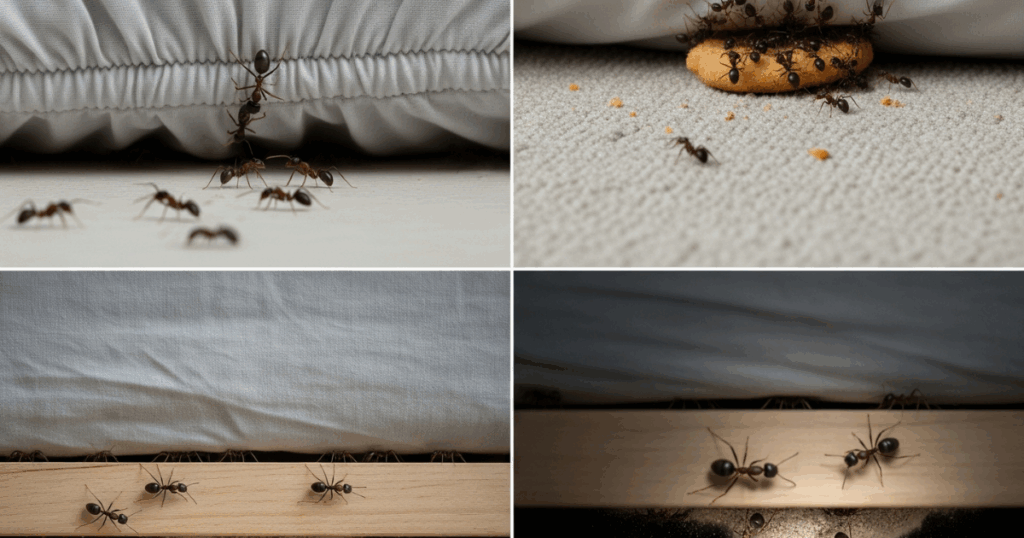
Ants in your mattress are a warning sign, not a death sentence for your bed. With fast cleaning, smart baiting, and preventive barriers, you can eliminate ants completely without replacement. Focus on source control, not just surface cleanup. Wash bedding in hot water immediately and weekly. Vacuum the mattress daily during infestation. Apply natural repellents after colony elimination. Use ant baits to kill the queen. Keep humidity below 50%. Seal all entry points. A dry, clean, well-sealed bedroom is your best defense, keeping you and your mattress ant-free for good.
Frequently Asked Questions About Ants in Mattresses
Can ants live inside a mattress?
No. Mattresses lack moisture control, food sources, and nesting structure. Ants found inside are foraging, not nesting. Their presence means a colony is nearby.
Why are there ants in my bed if I do not eat there?
Ants are likely attracted to sweat, body oils, skin cells, moisture from humidity, pet dander, or nearby nests in walls or attic. Your bed may be a transit route to the bathroom or kitchen.
Are ant bites dangerous?
Most bedroom ants do not bite. However, Carpenter and Fire ants can sting, causing redness, swelling, itching, or allergic reactions. Clean bites with soap and water and use antihistamines if needed.
Is it safe to sleep in the bed during treatment?
Only if you use a soapy water moat or double-sided tape to isolate the bed. Avoid sleeping there if you see active trails or bites.
How long does it take to get rid of ants?
With consistent effort, expect one to three weeks. Success depends on eliminating the colony, not just the ants on your bed.
Do essential oils kill ants?
No. They repel but do not eliminate colonies. Use them after baiting to prevent return.