A dirty mattress can harbor dust mites, bacteria, sweat residue, and unpleasant odors, often without showing obvious signs. If you have woken up with itchy skin, sneezing, or a musty smell in your bedroom, your mattress may be the culprit. The good news is that steam cleaning offers a chemical-free solution to deep-clean and sanitize your mattress effectively, killing allergens and refreshing your sleep surface without damaging the fabric.
This guide walks you through every step of the steam cleaning process, from choosing the right equipment and pre-treating stains to applying steam safely, ensuring complete drying, and maintaining long-term mattress freshness.
Choose the Right Steam Cleaner for Mattress Cleaning

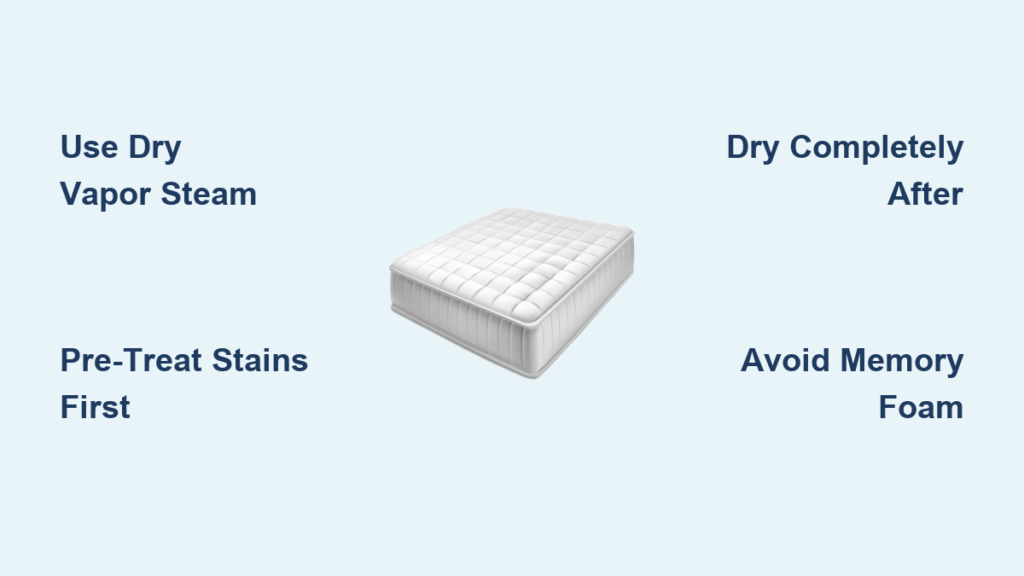
For effective mattress sanitization, a dry vapor steam cleaner is the best choice. These commercial-grade units heat distilled water to over 212°F and release low-moisture steam with less than 5% water content, which penetrates fabric without soaking it. This minimizes moisture damage while maximizing germ-killing power.
Popular models for mattress cleaning include the Zerorez Ready Releasor, McCulloch MC1500, and Bissell SteamShot. These deliver consistent, high-heat steam perfect for killing dust mites and bacteria.
Handheld garment steamers or steam irons produce inconsistent heat and often drip water, increasing the chance of over-wetting. While acceptable for light surface refreshes on non-foam mattresses, they are not suitable for full sanitization. If used, keep them moving and hold the nozzle 2 to 6 inches above the surface.
Always fill your steamer with distilled water. Tap water contains minerals that build up inside the machine, reducing steam output and potentially clogging the nozzle.
Prepare Your Mattress Before Steam Cleaning
Strip all bedding from the mattress, including sheets, pillowcases, mattress protectors, toppers, and pillows. Wash these items in hot water of at least 130°F to kill transferred dust mites and bacteria. For heavily soiled or bulky items, use a commercial washer.
Before steaming, vacuum the entire mattress thoroughly using a HEPA-filter vacuum. Attach an upholstery tool and crevice tool to reach seams, edges, tufts, and gussets. Move slowly, about 1 to 2 inches per second, to maximize suction power. Focus on high-contact zones including the head, torso, and foot areas.
This pre-vacuuming step removes up to 80% of surface debris and is crucial. Skipping it reduces steam cleaning effectiveness by nearly half.
Pre-Treat Stains and Odors Before Steaming
Never steam a mattress with untreated biological stains. Heat sets protein-based stains like urine, blood, or sweat, making them permanent.
For urine, blood, or vomit, start by blotting with clean, absorbent towels without rubbing. Apply an enzyme cleaner and let it sit for 10 to 30 minutes to break down proteins. Blot again until dry, then lightly mist with a 1 to 1 mixture of white vinegar and water to neutralize pH. Sprinkle baking soda over the area and let it sit for 6 to 24 hours before vacuuming completely.
For general soiling, mix 1 teaspoon of dish soap with 1 cup of cold water. Dab onto stained areas with a clean cloth, then blot dry. Avoid saturating the fabric.
Test Steam on a Hidden Area First
Before applying steam to the entire mattress, test a small, inconspicuous corner such as an edge or under a flap. Allow it to dry completely, then check for discoloration, shrinkage, or dampness.
If no damage occurs, proceed with full steam cleaning. If the fabric darkens or feels wet underneath, do not steam the mattress. Your mattress may not tolerate moisture exposure.
Apply Steam Correctly for Maximum Sanitization
Allow 5 to 10 minutes for the steamer to reach full temperature. Most units indicate readiness with a light or steam burst.
Work in small sections, cleaning 1 to 2 square feet at a time to maintain control and prevent over-wetting. Hold the nozzle 1 to 6 inches above the surface, with hand-held steamers at 1 to 2 inches and commercial units up to 6 inches.
Move slowly and continuously in overlapping horizontal passes, like mowing a lawn. Hold each pass for 30 seconds to 1 minute to allow heat to penetrate and kill pathogens. Never hover over one spot, as this pools moisture.
Pay extra attention to seams and tufts, head and torso areas, and edges and sides. If your steamer has simultaneous suction, activate it during steaming to pull loosened contaminants and reduce drying time.
Dry the Mattress Completely After Steam Cleaning
Never sleep on a damp mattress. Moisture breeds mold and allergens within hours.
Drying time varies by conditions. Light steam with good airflow takes 2 to 4 hours. Moderate steam in an average room takes 3 to 6 hours. Humid climate or heavy use extends drying to 6 to 8 hours or more. Foam-containing mattresses may take 12 to 24 hours, though steaming them is not recommended.
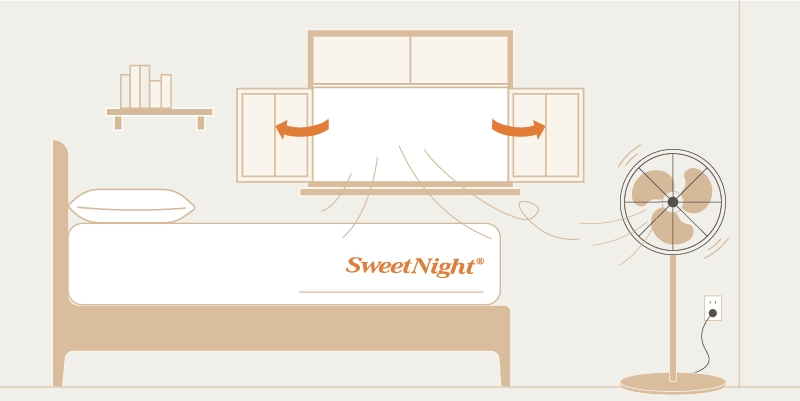
Speed up drying by opening windows on opposite walls for cross-ventilation. Place fans blowing across the surface, not down. Run a dehumidifier to reduce ambient humidity. Turn on HVAC systems to lower room moisture. If possible, expose the mattress to sunlight outdoors for UV disinfection and faster drying. Press dry towels onto the surface to absorb residual dampness.
Verify dryness using three tests. The towel test presses a dry white towel onto the mattress; if it comes away damp, continue drying. The touch test ensures the surface feels completely dry and neutral with no coolness or stickiness. The smell test detects any musty or sour odor indicating remaining moisture or microbial growth.
Optional Baking Soda Treatment for Extra Freshness
Once the mattress is fully dry, boost odor control with a baking soda treatment. Mix 1 cup of baking soda with 5 to 10 drops of essential oil such as lavender, tea tree, or eucalyptus. Sprinkle the mixture evenly over the surface and let it sit for 1 to 8 hours, preferably overnight for strong odors. Vacuum thoroughly using an upholstery attachment.
Baking soda neutralizes acidic and alkaline odors while tea tree oil adds antimicrobial power.
When to Avoid Steam Cleaning Your Mattress
Avoid steam on memory foam, which absorbs moisture and leads to mold and breakdown. Natural latex is sensitive to heat and water. Pillow-top or plush layers trap moisture if over-saturated. Never steam any mattress with a no steam care label.
Steaming memory foam may void your warranty and cause irreversible damage. For foam mattresses, blot spills immediately with clean towels, use enzyme cleaners for biological stains, apply baking soda for odor absorption, and use fans and open air for 12 to 24 hours.
Steam cleaning cannot fix deep internal odors after multiple treatments, visible mold inside seams or foam, permanent staining through layers, or sagging or structural damage. Replace the mattress if it smells musty when dry, feels spongy or damp under fabric, or shows spreading discoloration.
How Often to Steam Clean Your Mattress
For general use, steam clean every 6 months. For allergy sufferers or asthma sufferers, every 3 to 4 months is ideal. For pets or children in bed, clean every 3 months. After illness or spills, clean immediately.
Use a breathable, washable mattress protector and wash bedding weekly in hot water. Rotate the mattress every 3 to 6 months if it is double-sided.
Frequently Asked Questions About Steam Cleaning a Mattress
Is steam cleaning safe for all mattresses?
Steam cleaning is safe for innerspring, hybrid, and non-foam models when used lightly. Avoid using steam on memory foam and latex due to moisture retention risks.
Can you steam clean a memory foam mattress?
Steam cleaning is not recommended for memory foam. High moisture absorption leads to slow drying, odor development, and material breakdown. Use blotting, enzyme cleaners, baking soda, and fan drying instead.
Will steam cleaning remove urine smell?
Steam alone will worsen urine odors. First treat with enzyme cleaner, then baking soda and vinegar, followed by complete drying. Only then consider a light steam pass on non-foam models.
How long does a mattress take to dry after steaming?
Drying typically takes 2 to 8 hours depending on humidity, airflow, and moisture applied. Use fans and dehumidifiers to accelerate drying. Confirm dryness with a towel test.
Does steam kill bed bugs and dust mites?
Yes. Steam at 212°F or higher kills bed bugs and eggs on contact with proper technique. Dust mites die at 130°F or higher. Ensure full coverage of seams, edges, and surfaces.
Can I use a steam iron to clean a mattress?
Only with extreme caution. Most irons produce inconsistent steam and can drip water. They are not recommended for deep cleaning.
Key Takeaways for Steam Cleaning Your Mattress
Steam cleaning kills 99.9% of bacteria, dust mites, and bed bugs on contact when done at proper temperatures. It is chemical-free, safe for kids and pets, and ideal for allergy sufferers.
Drying is just as important as cleaning. A damp mattress becomes a health hazard fast. Never steam memory foam or latex unless the manufacturer explicitly allows it.
Combine steam cleaning with protective covers and regular maintenance for long-term hygiene. When performed with care, steam cleaning delivers professional-level sanitation at home, turning a grimy, allergen-filled mattress into a clean, fresh, and healthier sleep surface.