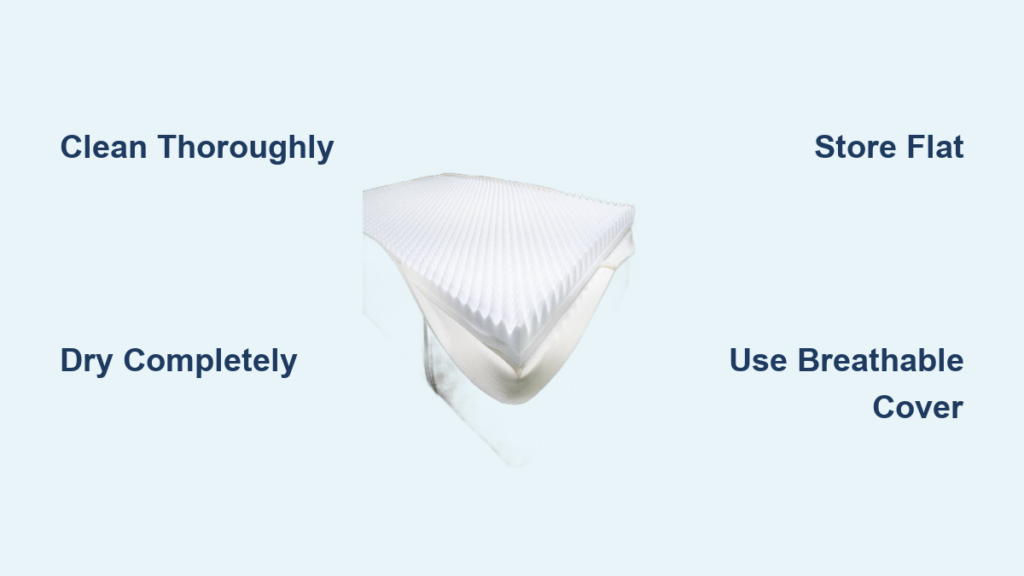
You’ve just moved, are renovating, or need to free up space. Whatever your reason, storing a foam mattress correctly is essential to protect your investment. Unlike innerspring mattresses, foam lacks internal support structures and reacts badly to compression, heat, humidity, and improper positioning. Store it wrong, and even a few weeks can lead to permanent sagging, mold growth, or a voided warranty.
This guide covers everything you need to know about foam mattress storage. You’ll learn how to clean and dry your mattress thoroughly, choose the right protective cover, select an ideal storage location, and maintain your mattress during long-term storage. Follow these steps, and your foam mattress will stay in excellent condition whether you’re storing it for weeks or months.
Clean the Mattress Before Storing

Before wrapping or moving your foam mattress, remove all contaminants that could cause odors, mold, or material breakdown during storage.
Vacuum Every Surface
Start by stripping off all sheets, protectors, and toppers. Use an upholstery attachment to vacuum the entire surface, paying special attention to seams, edges, and corners where dust, hair, and allergens collect. A thorough vacuum removes debris that could attract pests or feed mold spores during storage.
Spot-Clean Stains Safely
For visible stains, mix a small amount of mild detergent with water or use a mattress-safe cleaner. Dampen a clean cloth, never soak it, and gently blot the stain. Avoid scrubbing, which damages foam fibers. Never use bleach, ammonia, or steam cleaners because they break down foam and trap moisture deep inside.
Deodorize with Baking Soda
Sprinkle a thin, even layer of baking soda across the entire surface to neutralize odors. Let it sit for one to twenty-four hours depending on smell intensity, then vacuum completely. Baking soda also absorbs residual moisture, helping prevent mildew during storage.
Air Out Until Fully Dry
Place the mattress in a well-ventilated room or under indirect sunlight for six to twelve hours. Use fans to speed drying, but avoid direct heat sources like radiators or heaters. Limit UV exposure to prevent fabric fading and foam degradation.
Test for dryness by pressing your palm into the surface. If you feel any coolness or dampness, let it air longer.
Dry Completely Before Wrapping
Moisture is the number one threat to stored foam mattresses. Even slight dampness can cause mold growth within days, especially in enclosed spaces.
Check Hidden Areas
Inspect the underside, edges, and corners, which are common spots where moisture lingers. Lift the mattress slightly to allow air circulation underneath during drying.
Monitor Humidity Levels
Use a hygrometer to confirm room humidity is below sixty percent. High humidity slows drying and increases mold risk. Ideal drying conditions range from fifty to seventy-five degrees Fahrenheit with steady airflow.
Never wrap a mattress that feels even slightly damp. Mold can develop inside the core and may not be visible until it’s too late.
Choose the Right Storage Cover
Wrapping your mattress shields it from dust, pests, and scratches. However, the wrong cover can do more harm than good.
Select Cover Type by Duration
For short-term storage under three months, use a breathable plastic mattress bag designed specifically for storage. For long-term storage lasting three months or more, opt for a fabric-based, breathable encasement made of cotton or polyester blend. For maximum protection, invest in a professional-grade zippered cover with water-resistant backing and pest barriers.
Apply the Cover Correctly
Slide the mattress in carefully. Get help for queen or king sizes to avoid dropping or folding. Seal zippers fully. If using plastic wrap, wrap tightly and tape seams. Place cardboard between tape and fabric to prevent adhesive damage. Do not seal airtight because trapped moisture encourages mold growth.
Avoid non-breathable tarps, thick shrink wrap, or vacuum-sealing unless returning the mattress to its original bed-in-a-box packaging.
Pick the Perfect Storage Location
Foam reacts strongly to temperature and humidity. Extreme conditions compromise its structure and performance.
Ideal Conditions for Foam Mattress Storage
The best storage environment maintains temperatures between fifty and seventy-five degrees Fahrenheit with humidity between thirty and sixty percent. Ensure consistent airflow around and under the mattress at all times.
Best Places to Store a Foam Mattress
Climate-controlled storage units represent the best option for long-term storage or during relocation. Indoor spare rooms work well if kept dry, elevated, and away from exterior walls. A dry, insulated garage is acceptable only if dehumidified and temperature-stable. A finished basement works if a dehumidifier is used and there’s no flood history.
Locations to Avoid
Never store a foam mattress in an attic because summer heat softens foam while winter cold makes it brittle. Avoid sheds or porches exposed to rain, pests, and UV rays. Skip uninsulated garages with risk of freezing or overheating. Keep the mattress away from windows or plumbing where condensation and leaks could occur.
Place a battery-powered hygrometer near the mattress to monitor conditions remotely.
Store the Mattress Flat at All Times
Flat storage is absolutely essential for foam mattresses. Vertical or angled positioning leads to permanent deformation.
Why Flat Storage Matters
Foam lacks internal support structures. When stored upright, the bottom edge bears the entire weight, causing permanent hunching or edge collapse. The mattress loses its rebound and support characteristics. The cell structure becomes irreversibly damaged.
Set Up a Stable Base
Place the mattress on a wooden pallet, bed frame, or platform, or lay plywood over slats. Elevate at least two to three inches off the floor to allow airflow and prevent moisture absorption. If storing on concrete, place a vapor barrier underneath the support surface.
Foam toppers two to four inches thick can be loosely rolled for short-term storage if the environment is climate-controlled.
Never Fold, Roll, or Compress
Unless your mattress arrived compressed in a box, do not attempt to roll or fold it for storage.
Risks of Improper Compression
Compression causes cell rupture, which destroys the foam’s ability to expand and recover. Permanent creases appear as visible dents that never bounce back. Most manufacturers explicitly prohibit folding or rolling, which voids the warranty.
Short-Term Vertical Storage Only
If absolutely necessary due to narrow hallways or space constraints, limit vertical positioning to less than forty-eight hours. Lean at a five to ten degree angle, not fully upright. Support with rubber pads or bungee cords. Avoid contact with walls to allow airflow.
Users report visible dips and lopsided wear after just one week of vertical storage.
Keep the Mattress Completely Unloaded
Even light boxes or furniture placed on top of a stored foam mattress can cause lasting damage.
Why Top Loading Is Harmful
Any weight on top creates permanent indentations in the foam. Compression damages the open-cell structure, reducing pressure relief capability. Uneven wear patterns develop that persist even after the weight is removed.
The mattress must remain completely unloaded during storage with no exceptions.
Maintain During Long-Term Storage
For storage beyond one month, regular checkups prevent hidden damage from becoming a major problem.
Inspect Every Two to Three Months
Look for pest indicators like droppings or gnaw marks. Check for mold signs including black spots or a musty smell. Examine the cover for tears or moisture. Confirm no sagging or warping has occurred.
Air Out Every Three to Six Months
Unwrap and ventilate the mattress for four to eight hours in a dry, shaded area. Re-vacuum and reapply baking soda if needed. Rotate the mattress one hundred eighty degrees to prevent uneven settling.
Deodorize After Retrieval
Even well-stored mattresses may develop a slight odor after long periods of storage.
Refresh Before Use
Unwrap and air out the mattress for six to twelve hours. Sprinkle baking soda, wait one to two hours, then vacuum thoroughly. Inspect for pests or moisture damage before placing on your bed frame. Consider ozone or UV treatment if odor persists.
Storage Tips by Mattress Type
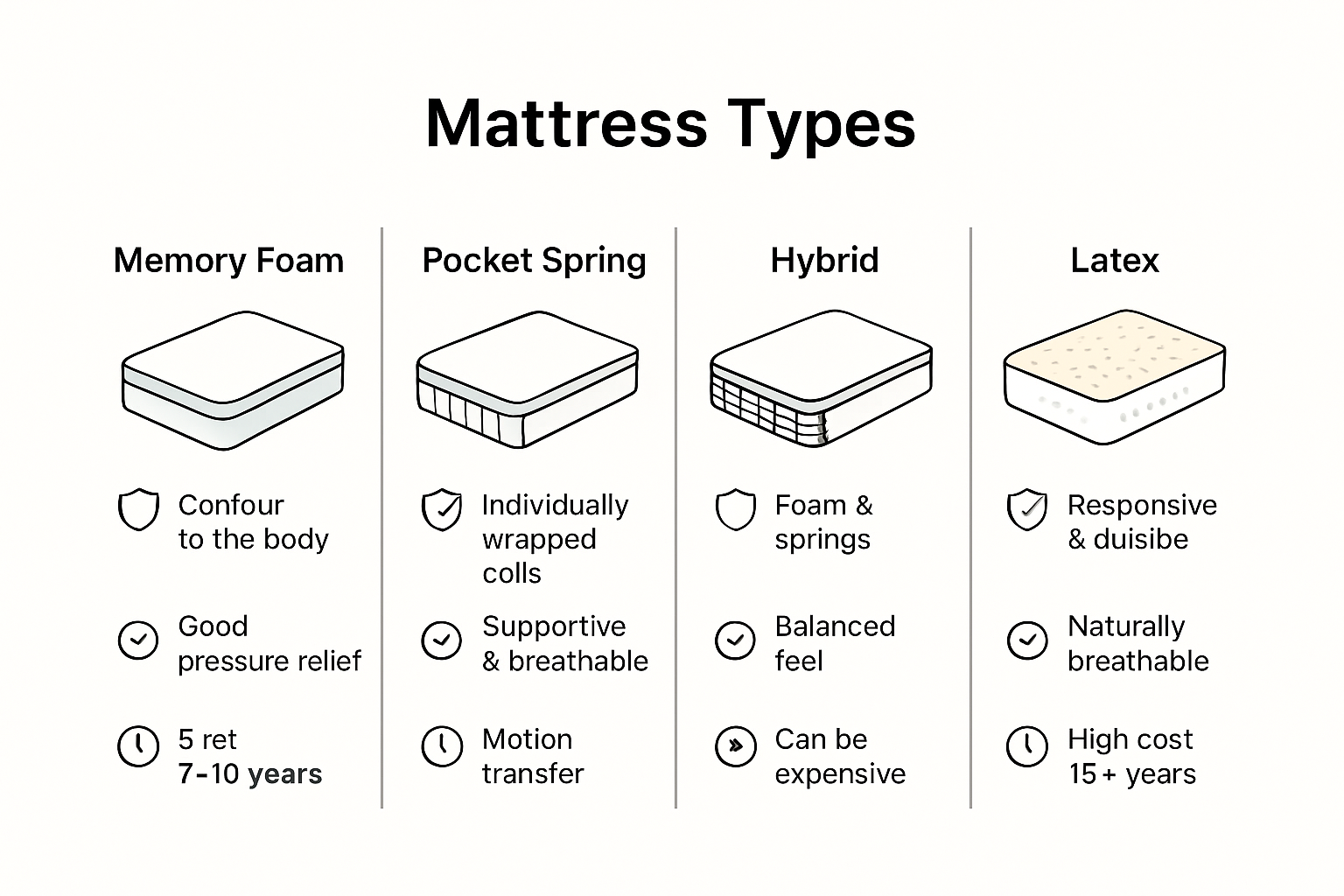
Memory Foam
Memory foam is the most sensitive variety. Always store flat. Avoid temperatures above seventy-five degrees where foam softens, or below fifty degrees where it hardens. Use a breathable fabric cover instead of plastic. Never use chemical cleaners; stick with water-based spot treatments. The warranty voids if the mattress is folded, rolled, or stored damp.
Latex Foam
Latex tolerates humidity up to sixty-five percent. It may be stored vertically for short periods up to one month with proper support. Still requires climate control and elevation. Naturally resistant to mold and dust mites but not immune to moisture damage.
Hybrid Foam
Hybrids combine foam with innerspring coils. Store flat to prevent spring misalignment and foam separation. More prone to deformation if stored upright. Follow the same climate and elevation rules as all-foam models. Warranties are often stricter than on all-foam mattresses.
Foam Mattress Toppers
Toppers can be rolled loosely rather than stored flat. Wrap in breathable fabric. Store in a climate-controlled space. Allow one to six hours to recover shape after unrolling.
Choose the Right Storage Unit Size
Self-storage units vary in size. Pick one that allows flat placement and adequate airflow.
| Mattress Size | Minimum Unit Size | Notes |
|---|---|---|
| Twin / Twin XL | 5′ x 5′ | Fits in small unit flat |
| Full / Queen | 5′ x 10′ | Needs medium unit |
| King / Cal King | 10′ x 10′ | Requires large unit |
Size up if storing additional furniture. Overcrowding restricts airflow and increases damage risk.
Avoid Warranty-Voiding Mistakes
Most foam mattress warranties are strict about storage conditions.
Actions That Void Warranty
Folding, rolling, or compressing outside original packaging voids coverage. Storing vertically long-term causes problems. Leaving the mattress in a compressed box beyond one to two months causes damage. Exposure to moisture, mold, or pests is not covered. Floor storage without elevation also voids the warranty.
Brands with Strict Storage Policies
Casper prohibits folding, rolling, or vertical storage. Tempur-Pedic requires storage on an approved foundation. Purple voids coverage if improperly compressed. Leesa, Saatva, and Nectar all require flat, dry, elevated storage.
Keep your original packaging if planning a return or short-term storage.
Frequently Asked Questions About Storing a Foam Mattress
Can I store my foam mattress in a garage?
Only if the garage is insulated and climate-controlled. Non-insulated garages experience extreme temperature fluctuations that damage foam. Use a dehumidifier and monitor conditions with a hygrometer.
How long can a foam mattress stay compressed?
Never compress a foam mattress unless it arrived in factory compression. Most manufacturers recommend no more than one to two months in compressed form. Extended compression permanently damages the foam structure.
Should I use a vacuum storage bag for my foam mattress?
No. Vacuum bags compress foam too tightly and trap moisture. Use a breathable storage bag or fabric encasement instead. The exception is returning to original bed-in-a-box packaging.
Can I stack items on top of my stored foam mattress?
No. Even lightweight items cause permanent indentations. The mattress must remain completely unloaded during storage.
How do I prevent mold on a stored foam mattress?
Clean and dry thoroughly before storage. Use a breathable cover. Store in a climate-controlled space with humidity below sixty percent. Inspect every two to three months and air out regularly.
Does foam mattress type affect storage requirements?
Yes. Memory foam requires the strictest conditions and must always stay flat. Latex tolerates slightly higher humidity. Hybrids need flat storage to prevent coil damage. Toppers can be rolled loosely for short-term storage.
Key Takeaways for Storing Your Foam Mattress
Proper foam mattress storage protects your investment and maintains warranty eligibility. Clean and dry the mattress completely before storage, because moisture causes mold and material breakdown. Use a breathable storage cover appropriate for your storage duration. Always store the mattress flat on an elevated surface in a climate-controlled environment between fifty and seventy-five degrees with thirty to sixty percent humidity. Never fold, roll, or stack items on top of a foam mattress unless it arrived factory-compressed.
Inspect your mattress every two to three months during storage, air it out every three to six months, and rotate it to prevent uneven settling. Follow manufacturer warranty guidelines to keep your coverage valid. By following these steps, your foam mattress stays fresh, functional, and ready for comfortable use whenever you need it again.