Storing a queen mattress properly isn’t just about saving space. It’s about preserving comfort, structure, and hygiene for months or even years. Whether you’re moving, renovating, or downsizing, improper storage can lead to sagging, mold, odors, and voided warranties. The good news? With the right steps, your mattress can come out of storage as fresh and supportive as the day you put it away.
This guide walks you through every step, from prep to retrieval. You’ll learn how to clean without soaking, which cover to use, where to store safely, and how long it can last in storage. Follow these tips, and your mattress will be ready to deliver restful sleep when you need it again.
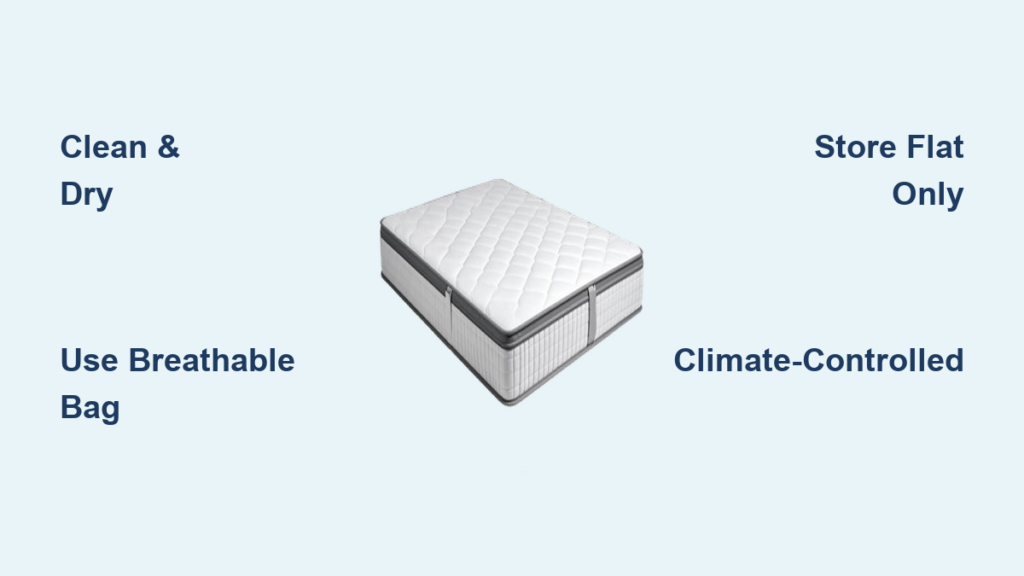
Clean & Dry Before Wrapping
Before storing, your queen mattress must be spotless and bone-dry. Any trapped moisture or debris can turn into mold, mildew, or pest infestations over time. This is especially true for foam and hybrid models.
Vacuum and Spot-Clean Thoroughly
Start by stripping off all bedding. Remove sheets, protectors, toppers, and disassemble any attached bed frames. Flip the mattress and inspect both sides for stains, tears, or wear. Check the care label before cleaning, as memory foam and latex models are sensitive to moisture and chemicals.
Use a vacuum with an upholstery attachment to clean every surface. Go over the top, sides, and seams, then flip and repeat on the bottom. Focus on edges where dust and allergens collect.
For stains, never soak the mattress. Instead, mix mild detergent with water and dampen a cloth without dripping. Blot gently and avoid bleach or ammonia. Use a mattress-safe cleaner if needed.
Deodorize with Baking Soda
To neutralize odors and absorb residual moisture, sprinkle a generous layer of baking soda over the entire surface. Let it sit for 4 to 8 hours, or up to 24 hours for strong smells. Vacuum completely, then flip and repeat on the other side.
This step is critical for memory foam and hybrid cores, which trap smells and moisture deep inside.
Air Dry Completely Before Covering
Even if the surface feels dry, internal layers may still be damp. Place the mattress in a well-ventilated room and use fans or open windows for airflow. Allow indirect sunlight for a few hours, but avoid direct UV exposure.
Never wrap a damp mattress. Wait until both sides are completely dry. This can take 24 or more hours depending on humidity levels.
Choose the Right Storage Cover

The right cover protects against dust, pests, and moisture while allowing minimal airflow to prevent mold growth.
Select a Breathable Mattress Bag
A purpose-built mattress storage bag is ideal. These durable, zippered bags are designed to fit a queen mattress snugly and allow the material to breathe. Avoid stretchy or thin plastic, which tears easily and doesn’t ventilate properly.
Choose a cover based on your needs. Breathable storage bags work best for all mattress types, especially foam. Plastic wrap is acceptable for short-term storage only. Heavy non-breathable plastic is not recommended because it traps moisture and creates high mold risk.
Seal and Label Properly
Once the mattress is in the bag, close the zipper fully and seal seams with packing tape. Use zip ties if needed for extra security. Never use duct tape directly on fabric.
Label the bag clearly with the date of storage, mattress type, and handling instructions. For example, write “Queen Memory Foam – Stored 04/2025” and “Store Flat Only.” This ensures proper handling during retrieval and helps track how long the mattress has been stored.
Position the Mattress Flat
How you position the mattress affects its internal structure and long-term durability. Always store a queen mattress flat on a clean, level surface to maintain even weight distribution.
Keep It Flat for All Mattress Types
Storing flat prevents sagging, foam compression, coil misalignment, and permanent indentations. This is non-negotiable for memory foam, hybrid, and latex models. Even innerspring mattresses should be stored flat for long-term safety.
Place the mattress on a raised platform such as a wooden pallet, cinder blocks, or plastic risers. This keeps it off the floor, allowing air circulation and reducing moisture absorption.
Avoid Vertical or Upright Storage
Storing a queen mattress on its side risks internal damage from uneven pressure. It can compress foam layers permanently and may void your warranty.
If space is tight, innerspring models can be stored vertically for up to one month only. Secure them with bungee cords or straps and lean them against a wall with rubber pads to prevent scuffing. Never fold or bend the mattress.
Never Fold or Roll Long-Term
Folding or rolling breaks adhesives, damages coils, and compresses foam unevenly. Even roll-packed bed-in-a-box models should be unrolled within 30 to 60 days. Long-term rolling can ruin the foam and void the warranty.
Select a Climate-Controlled Location
Where you store the mattress is as important as how you store it. Temperature and humidity directly impact material integrity.
Ideal Environmental Conditions
The best storage conditions keep temperature between 64 and 66 degrees Fahrenheit, with humidity below 50 percent. Extreme heat softens foam, while cold makes materials brittle. High humidity breeds mold and dust mites.
Best Storage Locations
A climate-controlled storage unit is the most reliable option. These units are HVAC-regulated, secure, and clean. A 5 by 10 foot unit fits a queen mattress stored flat with plenty of clearance.
A spare bedroom or closet works if the space is unused, dry, and well-ventilated. Avoid airtight closets with poor airflow.
A finished basement is acceptable only if it is dry, flood-proof, and elevated. Use a dehumidifier if humidity exceeds 50 percent.
A garage works for short-term storage if it is insulated, clean, and dry. Elevate the mattress off the floor and monitor it regularly.
Locations to Avoid
Never store a mattress in an attic, which gets too hot in summer and degrades foam and adhesives. Avoid uninsulated garages or sheds, which have moisture and pest problems. Never store in outdoor areas exposed to rain, UV, or insects. Avoid truck beds, which expose the mattress to weather and physical damage.
Pick the Correct Storage Unit Size
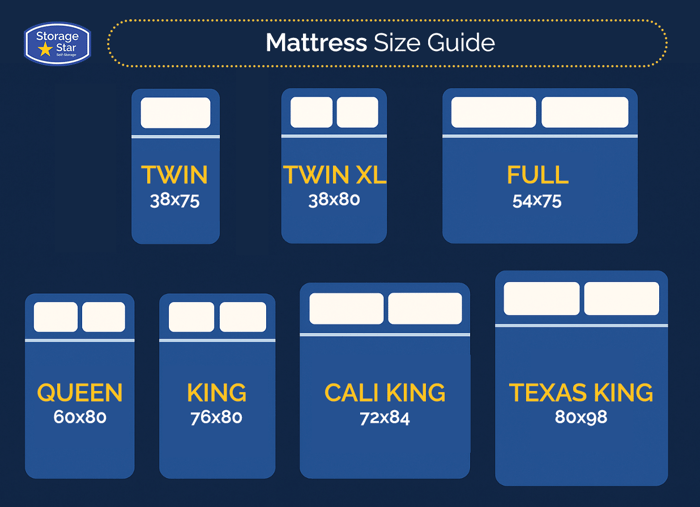
Size your storage unit correctly to avoid forced positioning or damage. A queen mattress measures 60 by 80 inches and is one of the bulkiest household items to store.
For mattress-only storage, a 5 by 10 foot unit fits the mattress flat with clearance. If storing a bed frame or additional boxes, rent a 10 by 10 foot unit or larger.
Measure your mattress and sketch a layout before renting. Use online size calculators from storage providers to estimate space needs. Never force a queen mattress into a smaller unit, which prevents flat positioning and increases warping risk.
Transport Without Damage
How you move the mattress matters, especially during loading and unloading.
Keep It Flat and Covered
Use an enclosed vehicle such as a moving truck, van, or trailer. Lay the mattress flat rather than standing it on edge. Secure with straps, not ropes, to avoid compression.
Never tie a mattress to a car roof. This exposes it to rain, wind, and UV rays. Never fold or bend the mattress during transport, even temporarily.
Disassemble Bed Frames First
Remove all bed frames and store separately in labeled boxes. This prevents damage to both the frame and the mattress during transit.
Maintain During Long-Term Storage
For storage beyond three months, routine checks keep your mattress in top condition.
Inspect Every 2-3 Months
Uncover briefly to check for mold or mildew, musty odors, pest activity, and tears in the bag or mattress. Air out the mattress for 6 to 12 hours during each visit to release trapped moisture.
Monitor Environmental Conditions
Use a battery-powered hygrometer to track temperature and humidity. Run a dehumidifier if levels exceed 50 percent. In hot climates, use fans or air conditioning periodically.
Some manufacturers recommend rotating the mattress even in storage. Check your warranty for specific guidelines.
Follow Type-Specific Guidelines

Different materials have unique needs. Always match your storage method to your mattress type.
Innerspring Mattresses
These can be stored flat or upright for short-term only. Store flat for long-term to prevent coil misalignment. Climate control helps prevent rust on coil components.
Memory Foam Mattresses
Must be stored flat. Never fold or roll long-term. Sensitive to heat and cold. Use climate-controlled storage exclusively.
Hybrid Mattresses
Store flat only to protect both foam and coil systems. Avoid vertical storage. Climate control is highly recommended.
Latex Mattresses
Store flat in a cool, dry place. Resistant to mold and dust mites but still vulnerable to moisture. Avoid compression.
Roll-Packed Bed-in-a-Box
May be stored rolled for only 30 to 60 days maximum. Unroll before long-term storage. Prolonged compression can void the warranty.
Avoid Warranty-Voiding Mistakes
Improper storage can disqualify you from warranty claims, even for sagging or defects.
Common Warranty Killers
Storing in non-climate-controlled environments can void coverage. Leaving the mattress in its original box beyond 60 days is risky. Folding, rolling, or storing vertically often voids warranties. Placing heavy items on top causes damage that may not be covered. Evidence of mold, water damage, or pests from poor storage disqualifies claims.
Protect Your Investment
Review warranty terms before storage. Keep proof of purchase and care records. Follow all manufacturer instructions precisely.
When in doubt, contact the brand directly for specific guidance on storage requirements.
Recondition After Storage
When it’s time to use your mattress again, don’t skip the reconditioning process.
Air It Out First
Let the mattress breathe in a dry, ventilated room for 6 to 12 hours. This removes stale odors, releases trapped moisture, and restores airflow in foam layers.
Re-Clean If Needed
Vacuum again to remove dust accumulated during storage. Spot-clean any new stains. Sprinkle baking soda if odors remain, then vacuum thoroughly.
Inspect for Damage
Check for sagging or lumps, mold or pest damage, and fabric tears or coil noise. If damage is found, contact the manufacturer. Your warranty may still apply.
Rotate and Add Fresh Bedding
Rotate or flip the mattress if double-sided to redistribute wear. Use a new or freshly washed mattress protector. Install clean sheets and comforters before use.
Frequently Asked Questions About Storing a Queen Mattress
Can a queen mattress be stored upright?
No. Storing a queen mattress upright or against a wall risks internal damage from uneven pressure and filling displacement. Always store flat unless the manufacturer specifies otherwise, and even then, only for short durations.
Is it safe to store a mattress in a garage?
Only under controlled conditions. The garage must be clean, dry, insulated, and protected from temperature extremes. Elevate the mattress and use a breathable cover. Regular monitoring is essential.
How long can a mattress stay in storage?
With proper care, a queen mattress can remain in good condition for several years. This includes cleaning, covering, climate control, elevation, and periodic inspections.
Can you stack two mattresses in storage?
No. Stacking causes compression and permanent indentations. Store each mattress separately, flat, and without any weight on top.
What about mattress toppers?
Store toppers using the same principles. Clean and dry them thoroughly, cover with breathable material, and store flat in a cool, dry place. Do not fold or roll.
Can you store a roll-packed mattress in its box?
Only temporarily. Most manufacturers recommend unrolling within 30 to 60 days. Prolonged storage in the compressed state damages foam layers and voids the warranty.
Key Takeaways for Storing Your Queen Mattress
A queen mattress can stay in excellent condition for years when stored correctly. Clean it thoroughly before wrapping, using baking soda to deodorize and absorb moisture. Wrap it in a breathable storage bag rather than plastic wrap, which traps humidity. Store it flat on a raised surface in a climate-controlled space, and inspect every few months for damage or pest activity.
Avoid folding, vertical storage, and damp environments at all costs. These mistakes cause permanent damage and can void your warranty. Follow type-specific guidelines for memory foam, hybrid, latex, and innerspring models. Each material has unique sensitivities.
When retrieval time comes, air out the mattress, re-clean if needed, and inspect for any damage before adding fresh bedding. By following these steps, you protect your investment and ensure comfort for years to come.