You can create a sturdy and comfortable sleeping surface without buying an expensive box spring. Many modern mattresses work perfectly on alternative supports that you can build yourself for under ten dollars.
This guide explains how to construct a reliable bed base using basic lumber and simple tools. You will learn to install center beams, space slats correctly, and avoid common errors that damage mattresses.
Build a Sturdy DIY Bed Frame for Under $10

Constructing your own bed base is simpler than most people expect. You only need a few pieces of lumber and basic tools to make a foundation that supports your mattress effectively.
This design utilizes a center support beam and cross slats to spread weight evenly. The result is reduced wear on your mattress and improved comfort during sleep.
Cut the Center Support Beam to Size
Start by measuring the inside length of your bed frame or intended sleeping area. A standard twin bed usually requires a beam around 75 inches long while full or queen sizes need 80 inches.
Cut a 2×4 board to match this specific length measurement. This beam runs down the middle of the bed to provide critical support against sagging.
Position it along the longest side so it spans from the head to the foot of the frame. Ensure it sits centered between the side rails for balanced weight distribution.
Pro Tip: Hardware stores often cut wood for free if you purchase it there. Ask them to cut your 2×4 to exact specifications to save time.
Install Vertical Legs Under the Beam
Use leftover sections from your 2×4 board to create three vertical legs. Place one leg at each end of the beam and one directly in the middle.
These legs must be tall enough to raise the beam slightly above the frame base. Aim for a height of 1 to 2 inches so the slats sit level with the top edges.
Attach each leg to the underside of the beam using wood screws or nails. Secure the legs firmly to the bed frame base to ensure total stability.
Warning: Never leave the center beam without support legs. An unsupported beam will bow under pressure and cause premature mattress wear.
Add Cross Slats for Even Weight Distribution

Cut four 1×4 boards to fit the width of your bed frame. A twin bed needs slats about 39 inches wide while full and queen sizes require 54 and 60 inches respectively.
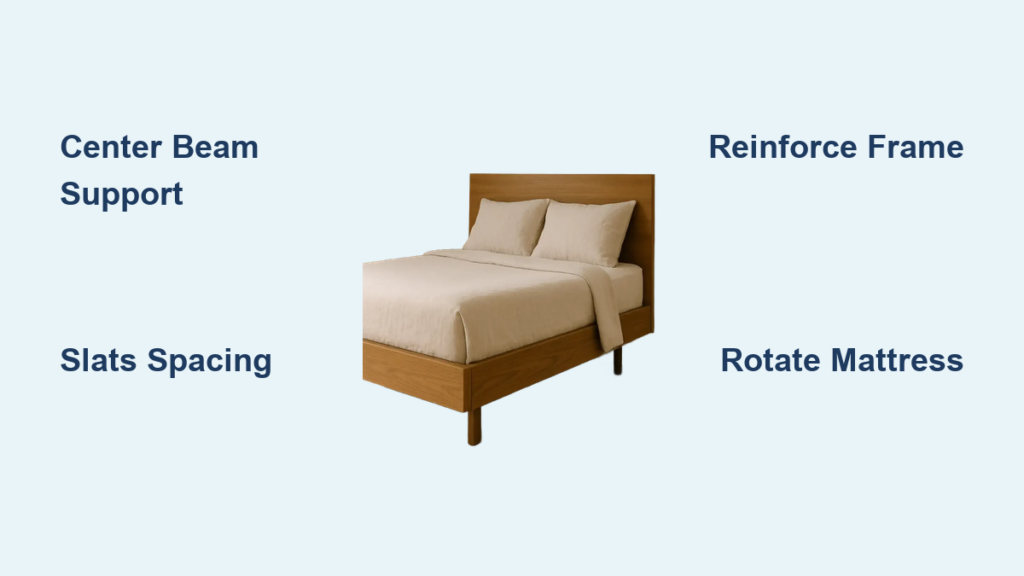
Space these slats evenly across the frame and attach them to both the center beam and side rails. These slats spread your body weight across the entire mattress surface.
Proper spacing reduces pressure points and increases airflow underneath your sleeping area. This ventilation helps keep your mattress fresh and dry.
Expert Note: Keep gaps between slats under 2 to 3 inches. Larger spaces allow the mattress to sag or dip over time.
Reinforce Structure with Scrap Wood Brackets
Build two triangular corner braces using scrap wood for added durability. This step is especially important if you use memory foam or hybrid mattresses.
Attach these brackets where the center beam meets the side rails. This prevents wobbling and stops lateral shifting when you move in bed.
The extra reinforcement ensures the frame remains solid even with frequent movement. It doubles the structural integrity of your DIY project.
Time Estimate: Adding reinforcement takes only 10 to 15 minutes but significantly extends the life of your frame.
Place Cardboard as a Temporary Top Layer
Lay a thick sheet of corrugated cardboard over the slats if they feel too rigid. This acts as a temporary base that prevents the mattress from slipping.
It also softens the support slightly for a more plush feel. This is a smart short-term solution for rentals or temporary setups.
Limitation: Cardboard absorbs moisture and weakens over time. Replace it monthly or skip it entirely if using foam or latex mattresses.
Alternative Mattress Support Options
You have several effective ways to support a mattress if you do not want to build a frame. Each option offers unique benefits based on your budget and space.
Use a Platform Bed Frame

Platform beds come with built-in slats and eliminate the need for a box spring entirely. They sit low to the ground and suit modern bedroom aesthetics perfectly.
Many models work directly with memory foam, latex, or innerspring mattresses. This is an ideal choice for long-term use and optimal airflow.
Try a Wooden Slatted Base
Pre-made wooden slat systems cost under $50 and install in minutes. They provide excellent ventilation and support when slats are no more than 2.5 inches apart.
Add felt pads between slats and the mattress to reduce friction. This simple addition prevents noise and protects the bottom of your mattress.
Install a Metal Grid Foundation

Some bed frames feature steel grid supports made of crisscrossing metal bars. These are strong and durable enough for heavy mattresses.
Unlike box springs, metal grids do not compress over time. Avoid grids with large gaps by using a thin plywood layer if spacing exceeds 3 inches.
Place Mattress Directly on the Floor
Putting the mattress on the floor is the simplest and cheapest option available. It requires no assembly and provides a surprisingly comfortable surface for many sleepers.
This method offers a cool sleeping surface and easy access. However, it reduces airflow which can trap dust and moisture under the bed.
Common Mistakes to Avoid When Skipping Box Springs

Small errors can compromise the lifespan of your mattress and your comfort level. Avoid these specific pitfalls when setting up your bed.
Skipping Center Support Entirely
The biggest mistake is failing to install middle support. Without a center beam or leg, the mattress sags over time especially along the spine area.
This leads to uneven wear patterns and potential back pain. Always use a center support for beds larger than a twin size.
Using Wide Gaps Between Slats
Gaps wider than 3 inches allow the mattress to dip between supports. Over time, this strains internal coils or foam layers significantly.
Add extra slats or use a bunkie board to fill any large gaps. This ensures consistent support across the entire sleeping surface.
Ignoring Frame Stability Issues
A wobbly frame puts unnecessary stress on the mattress and creates discomfort. Loose joints or uneven legs lead to noise and shifting during sleep.
Tighten all screws weekly and reinforce weak joints with corner brackets. Regular maintenance prevents structural failure and extends usability.
How to Choose Support for Your Mattress Type
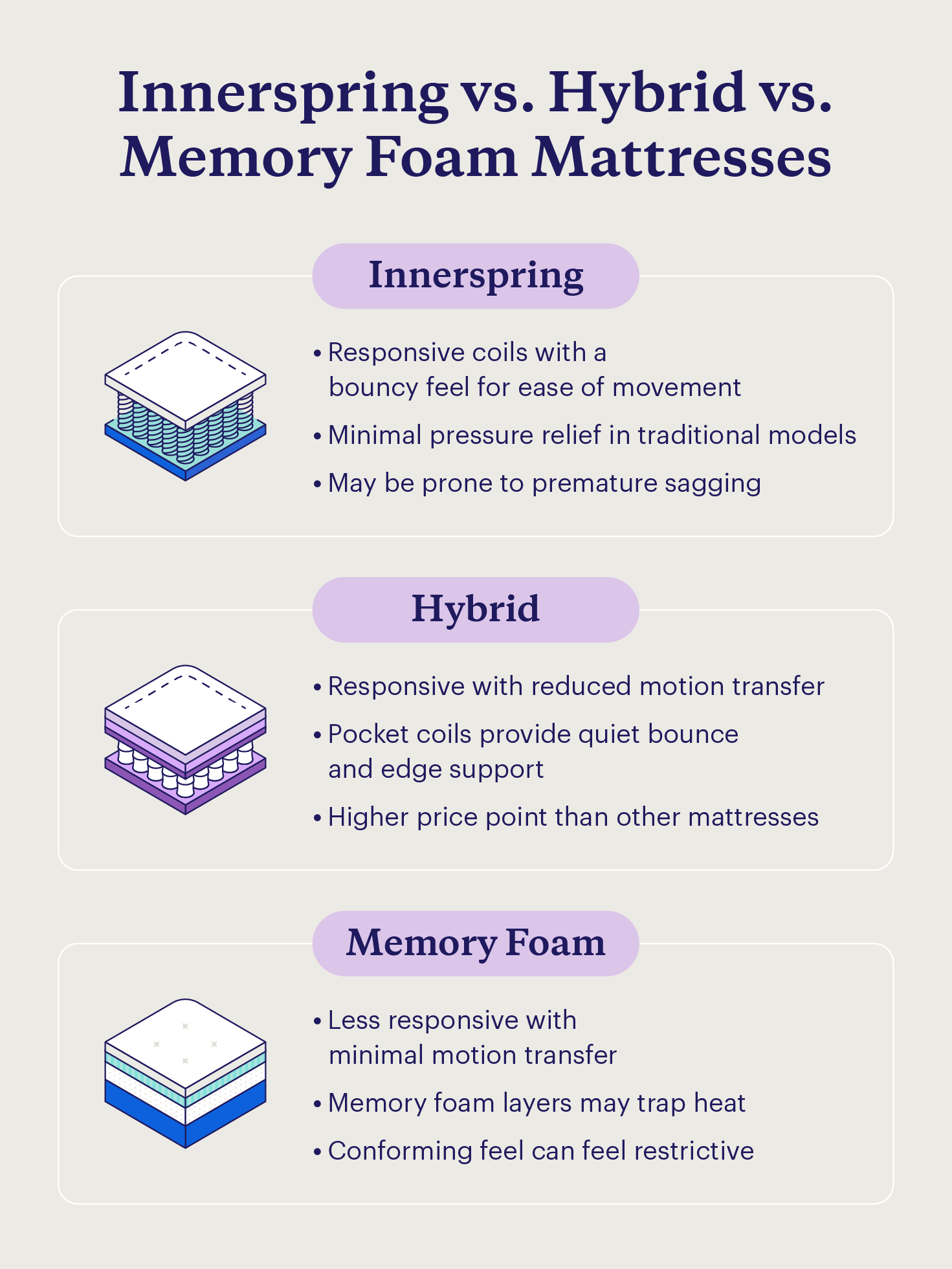
Not all mattresses work the same without a box spring. Match your support method to your specific mattress design for best results.
Memory Foam or Latex Mattresses
These materials need solid and even support to prevent soft spots. Slatted bases work fine if slats are close together at 2.5 inches or less.
Add a bunkie board or plywood sheet if your slats are widely spaced. Avoid flexible bases that allow the foam to sink unevenly.
Innerspring Mattresses
Traditionally paired with box springs, these work well on sturdy slats or platform bases. Ensure the support is firm and includes a center beam.
Thin or flimsy slats can cause coil misalignment in innerspring units. Check that your frame feels rigid before placing the mattress down.
Hybrid Mattresses
Combining foam and springs, hybrids demand strong and rigid support. Use a platform bed, metal grid, or DIY frame with reinforced center support.
Pair these with a low-profile foundation to maintain proper bed height. This ensures you get the intended feel from your hybrid design.
Maintenance Tips for Long-Lasting Bed Support
Even the best setup needs regular care to function properly. Follow these habits to extend both your mattress and support system life.
Rotate the Mattress Every 3 to 6 Months
This evens out wear and prevents permanent indentations in the foam. It is especially important for foam and hybrid models.
Check manufacturer guidelines as some mattresses are one-sided only. Regular rotation keeps the sleeping surface consistent.
Check Screws and Joints Monthly
Vibrations from movement loosen connections over time. Tighten all hardware to prevent wobbling and structural failure.
A quick monthly check ensures your frame stays secure. This simple step prevents accidents and maintains comfort.
Clean Under the Mattress Regularly
Dust and allergens build up faster when airflow is restricted. Vacuum under the bed every few weeks especially if sleeping on the floor.
Keeping the area clean improves air quality in your bedroom. It also helps you spot any potential issues with the support structure.
Replace Damaged Wood Immediately
Soft spots or warped boards compromise support significantly. Inspect the base every 2 to 3 months and replace worn components promptly.
Do not wait for a complete break to fix weak spots. Immediate replacement ensures your mattress stays protected.
Frequently Asked Questions About Setting Up Beds Without Box Springs
Can I put a mattress directly on the floor without a box spring?
Yes, you can place a mattress directly on the floor. This method is cheap and simple but may reduce airflow and trap moisture underneath.
How far apart should bed slats be without a box spring?
Slats should be no more than 2.5 to 3 inches apart. Wider gaps can cause the mattress to sag and damage internal components over time.
What is the cheapest way to support a mattress?
Building a DIY frame with scrap wood and a 2×4 beam costs under $10. Placing the mattress on the floor is also free but offers less ventilation.
Do memory foam mattresses need a box spring?
No, memory foam mattresses do not need box springs. They require a solid, flat surface or closely spaced slats to prevent sagging.
How do I stop my mattress from sliding on slats?
Use a sheet of cardboard or non-slip pads between the mattress and slats. You can also attach small wooden stops to the frame edges.
Is a platform bed better than a box spring?
Platform beds often provide better support for modern mattresses. They eliminate the need for a box spring and offer a lower profile design.
Key Takeaways for Setting Up a Bed Without a Box Spring
Creating a supportive bed without a box spring is affordable and effective. You can build a sturdy frame for under $10 using basic lumber and simple tools.
Focus on installing a center beam and keeping slat gaps under 3 inches. Regular maintenance like tightening screws and rotating your mattress ensures long-term comfort.
Start your project today by measuring your space and gathering materials. You will enjoy a customized sleeping solution that saves money and provides excellent support.