You just bought a Tempur-Pedic mattress for its amazing pressure relief and comfort. Now you are setting it up and asking: does a Tempur-Pedic need a box spring? The answer is no because these mattresses require a solid, flat surface to perform correctly. Using a traditional box spring can cause sagging and may void your warranty entirely.
This guide explains exactly what base you need to support your new investment properly. You will learn which foundations work best and which ones to avoid at all costs. We will also cover how to check your current setup for compatibility issues.
Why Traditional Box Springs Fail Tempur-Pedic Mattresses
:max_bytes(150000):strip_icc()/platform-bed-vs-box-spring-5216570-5acea4bcf8f641d8a0c4e1a44e5ad321.png)
Many people assume any bed base works for any mattress. This is not true for memory foam products like Tempur-Pedic. Traditional box springs contain coils designed to work with innerspring mattresses. These coils create a flexible, bouncy surface that memory foam cannot handle.
The flexible nature of a box spring causes uneven pressure points on the mattress. This leads to premature sagging and structural breakdown of the foam layers. Most importantly, using a coil-based box spring voids your Tempur-Pedic warranty. You risk losing all protection against defects by using the wrong support system.
The Risk of Warranty Voids
Tempur-Pedic technicians inspect your foundation when you file a warranty claim. If they find a traditional box spring, they will deny your request immediately. This happens even if the mattress defect is unrelated to the base. The brand strictly enforces these rules to ensure product longevity.
How Coils Damage Memory Foam
Innerspring box springs allow too much give under heavy weight. Memory foam needs a firm, unyielding surface to maintain its shape. When the base flexes, the foam bends in ways it was not designed to handle. This accelerates wear and creates permanent dips in the sleeping surface.
Approved Foundation Types for Maximum Support
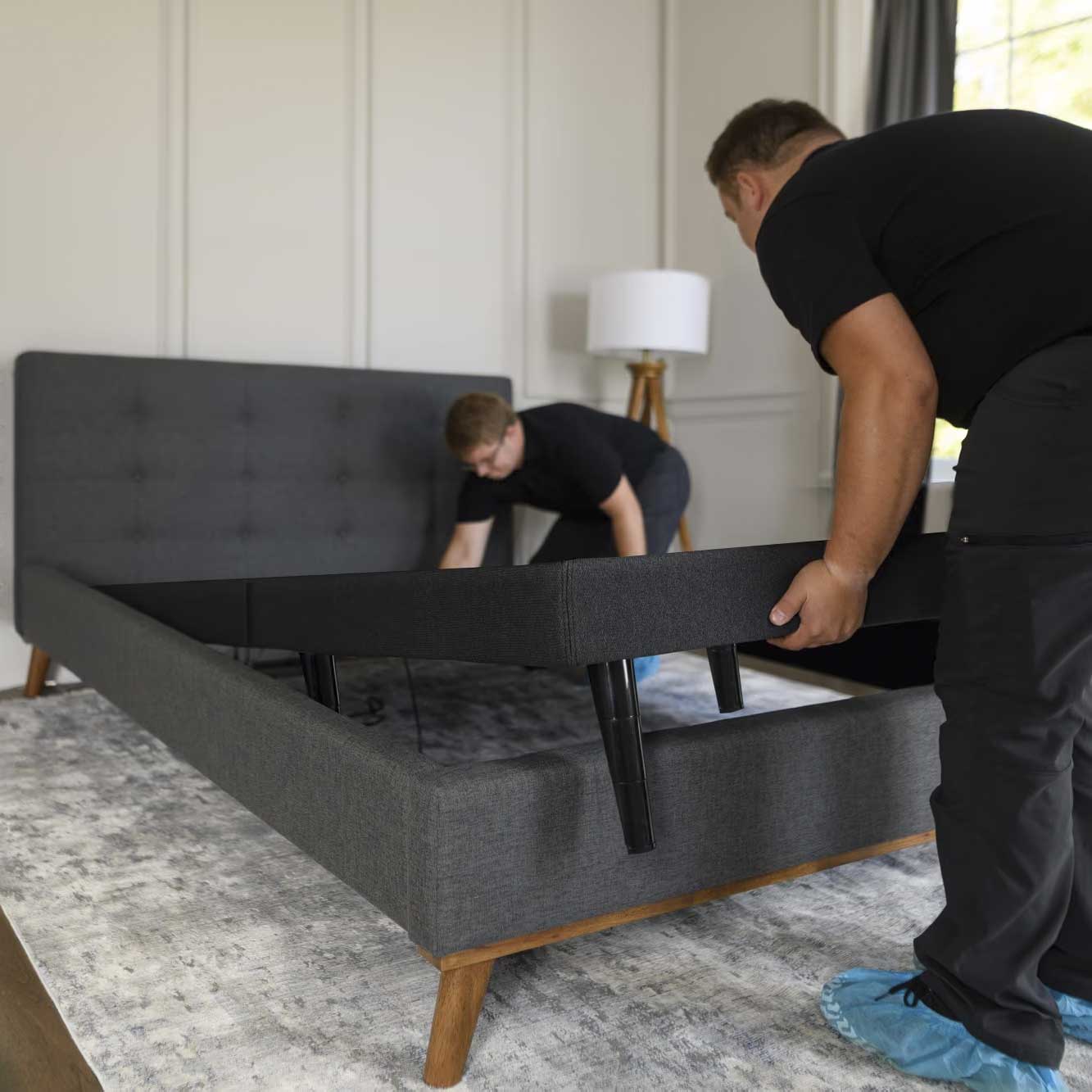
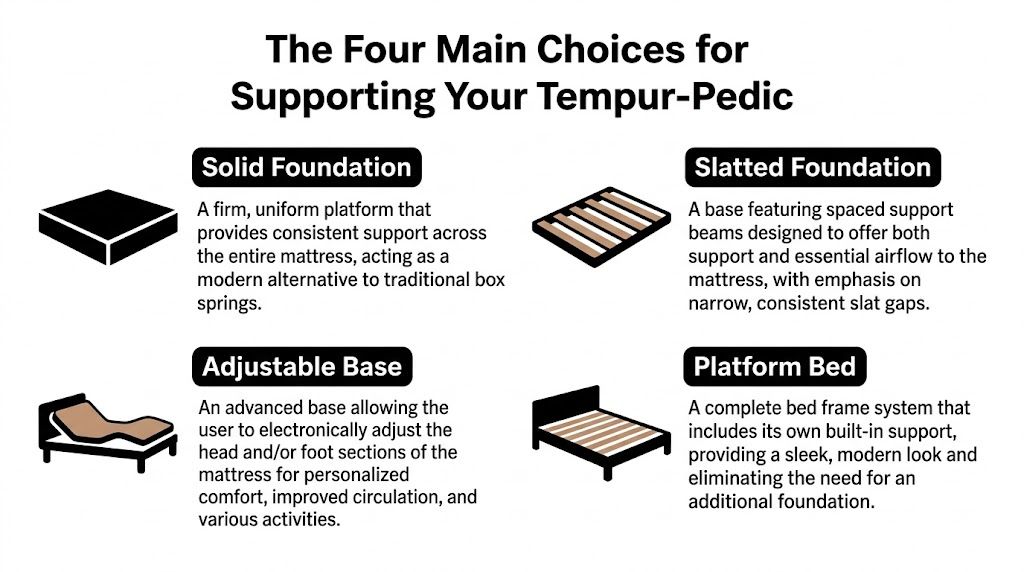
You must choose a base that provides a solid, flat, and sturdy surface. Tempur-Pedic designs its mattresses to pair with specific support systems. These approved options ensure proper alignment and airflow for your mattress.
Solid Platform Bases
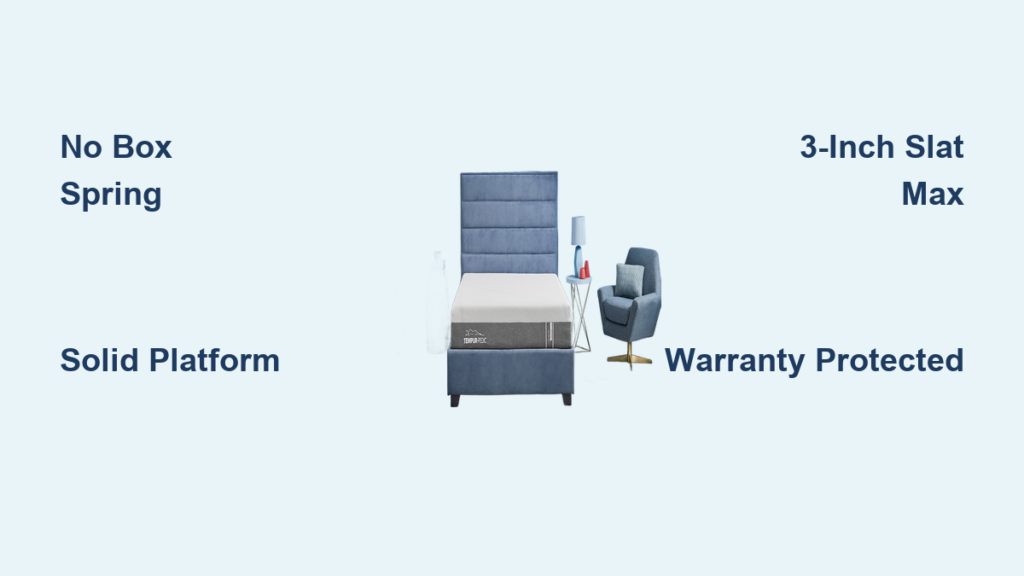
A solid platform bed with a flat, continuous surface is an ideal choice. These bases offer even support across the entire mattress area. Look for platform frames made of solid wood or metal with reinforced center support. This is especially critical for Queen sizes and larger to prevent bowing.
Tempur-Pedic Adjustable Bases
Tempur-Pedic adjustable bases are fully approved and engineered for seamless integration. These motorized bases allow you to elevate your head and feet for better comfort. They are perfect for reading, watching TV, or reducing snoring while you sleep. Just confirm your specific mattress model is labeled as adjustable base compatible.
Original Tempur-Pedic Foundations
The brand sells its own all-wood foundation designed specifically for their mattresses. This low-profile base replaces the need for a box spring completely. It provides optimal support while maintaining the correct bed height for easy entry. These foundations are built to last and guarantee warranty compliance.
Dangerous Bases to Avoid Immediately
Using an incompatible base is the fastest way to ruin your new mattress. You should avoid specific types of frames that lack the necessary rigidity. These bases do not provide the continuous support memory foam requires.
Folding or Mesh Bases
Avoid folding metal frames like old-fashioned roll-away beds. Bases with mesh fabric also fail to provide adequate support. These structures bend under weight and create pressure points. Over time, this leads to deep indentations and structural damage in the foam.
DIY or Homemade Frames
Custom wooden frames can work only if they meet strict standards. You must check for flatness and support density before use. Gaps, warped boards, or weak center supports lead to warranty issues. If you use a DIY base, ensure it meets all spacing and rigidity requirements.
Traditional Coil Box Springs
We cannot stress this enough: do not use a coil-based box spring. These are designed for innerspring mattresses, not memory foam. They create uneven surfaces that cause sagging and foam breakdown. Using one invalidates your warranty coverage instantly.
How to Check If Your Base Is Compatible
Verify your foundation meets Tempur-Pedic requirements before placing your mattress. A few simple tests can save you from future headaches. These steps ensure your setup is safe and effective.
Inspect Surface Flatness
Place a level or straight board across the entire surface of your base. Look for any visible dips, warps, or uneven areas. Memory foam conforms to your body, not to a lumpy base. If the surface is not flat, it is not suitable for your mattress.
Measure Slat Spacing Carefully
If your base uses slats, measure the gap between each one. The maximum spacing allowed is 3 inches. Wider gaps cause the foam to sag between supports. If your slats are too far apart, you must add plywood to create a solid surface.
Confirm Weight Capacity
Ensure your base supports the combined weight of the mattress and sleepers. Tempur-Pedic mattresses are denser than standard foam beds. A weak frame may creak, sag, or fail completely over time. Check the manufacturer specifications for weight limits.
Warning Signs of an Improper Base
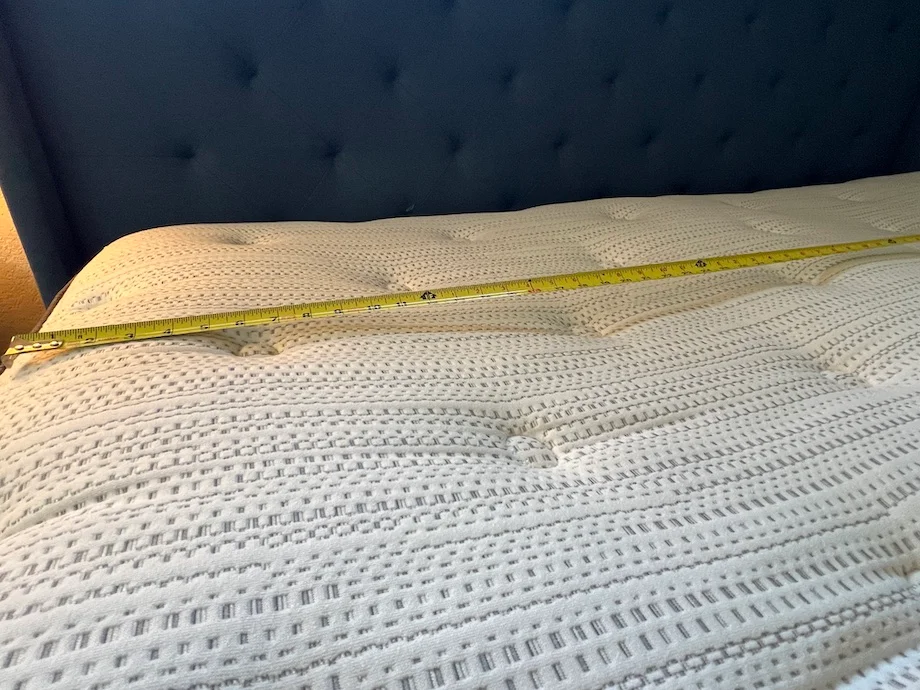
Your setup might seem fine initially but show problems later. Watch for these warning signs that indicate a support issue. Addressing them early prevents permanent damage to your mattress.
Visible Sagging or Indentation
Check for dips in the mattress surface, especially in the center. Sagging often occurs when using box springs or widely spaced slats. This indicates the base is not providing adequate support. Ignoring this leads to permanent deformation of the foam.
Excessive Noise from the Frame
Listen for creaking, popping, or shifting sounds from the bed frame. A proper foundation should remain silent and motionless under load. Noise suggests instability that can harm your mattress structure. Tighten loose bolts or replace the frame if noises persist.
Mattress Shifting or Sliding
Your memory foam mattress should stay in place on the base. If it creeps forward or slides, the base lacks proper grip. Some Tempur-Pedic bases have non-slip surfaces to prevent this. Consider adding a non-slip pad if your current base allows movement.
How to Maintain Your Warranty Coverage
Your Tempur-Pedic warranty depends entirely on correct setup and maintenance. Following the rules ensures you stay covered for years. Neglecting these guidelines puts your investment at risk.
Understanding Void Risks
Using a box spring, folding frame, or non-approved base voids the warranty. Technicians look for these specific issues during claim inspections. If they find an incompatible base, they deny repair or replacement. This applies even if the mattress itself has a manufacturing defect.
What Inspectors Check
During a claim, inspectors look for use of box springs first. They measure slat spacing to ensure it is under 3 inches. They also check for visible frame damage or instability. Signs of improper support like edge collapse are major red flags.
Steps to Stay Protected
Use only approved foundations to maintain full warranty protection. Keep your purchase receipt for the base as proof of compliance. Follow all setup instructions provided by Tempur-Pedic carefully. These simple steps keep your coverage valid.
Affordable Alternatives to Buying New Bases
You do not always need to buy a brand-new base if yours is incompatible. There are safe and affordable ways to adapt your current setup. These solutions help you avoid unnecessary expenses.
Low-Profile Solid Foundations
Replace a box spring with a low-profile solid foundation. These are typically 5 inches tall and provide firm support. They do not raise the bed too high while ensuring proper mattress performance. This is a cost-effective way to fix an incompatible setup.
Plywood Overlay Solution
Place a sheet of ¾-inch plywood over wide slats on platform beds. This creates a solid, flat surface for your memory foam mattress. Secure the plywood with screws or non-slip pads to prevent shifting. This simple fix makes many existing frames compatible.
Bed Risers with Solid Tops
Some bed risers come with a solid platform top rather than just legs. As long as the surface is flat and stable, these can work well. Ensure the slats underneath are properly supported before adding risers. Avoid risers that only lift legs without reinforcing the base structure.
Setup Tips for Long-Term Durability
Maximize the life of your mattress with smart setup practices. These tips help maintain comfort and structural integrity over time. Proper care ensures you get the most from your investment.
Allow Proper Ventilation
Do not place the mattress directly on carpet or solid flooring. Use a breathable base to allow air circulation underneath. Trapped moisture can lead to mold growth or foam degradation. Airflow keeps your mattress fresh and dry.
Rotate the Mattress Regularly
Tempur-Pedic mattresses are one-sided and should never be flipped. Rotate the mattress head-to-foot every 3 to 6 months. This promotes even wear and prevents permanent body impressions. Regular rotation extends the usable life of your bed.
Use a Mattress Protector
A waterproof protector shields against spills, sweat, and dust accumulation. It makes cleaning easier and preserves the fabric cover. Keeping the cover clean is another factor in maintaining warranty coverage. Protect your mattress from day one.
Frequently Asked Questions About Tempur-Pedic Foundations
Can I use my existing box spring with a Tempur-Pedic mattress?
No, you cannot use a traditional coil-based box spring with this mattress. Doing so causes uneven support and voids your warranty immediately. You must replace it with a solid platform or approved foundation.
What is the maximum slat spacing for a Tempur-Pedic bed?
The maximum spacing between slats must be 3 inches or less. Wider gaps cause the memory foam to sag and lose structural integrity. If your slats are wider, add a plywood sheet to create a solid surface.
Will using the wrong base void my Tempur-Pedic warranty?
Yes, using an unapproved base like a box spring voids your warranty completely. Technicians inspect the foundation during any claim process. If the base is non-compliant, your claim will be denied regardless of the issue.
Do I need a special foundation for an adjustable Tempur-Pedic mattress?
You need a base specifically labeled as adjustable base compatible. Most newer Tempur-Pedic models work with adjustable bases, but you should verify your specific model. Using a non-compatible adjustable base can damage the mattress.
How do I make my current platform bed compatible?
Measure your slat spacing first to ensure gaps are under 3 inches. If the surface is not solid, place a ¾-inch plywood sheet over the slats. Secure the plywood to prevent shifting and ensure a flat sleeping surface.
Key Takeaways for Tempur-Pedic Base Selection

Your Tempur-Pedic mattress does not need a box spring and should never use one. Instead, pair it with a solid platform, approved adjustable base, or original Tempur-Pedic foundation. The right support ensures better comfort, longer lifespan, and full warranty protection for your investment.
Always verify your base meets the strict spacing and flatness requirements before setup. If you are unsure, choose the original foundation or add plywood to an existing frame. Taking these steps protects your sleep quality and keeps your warranty valid for years to come.