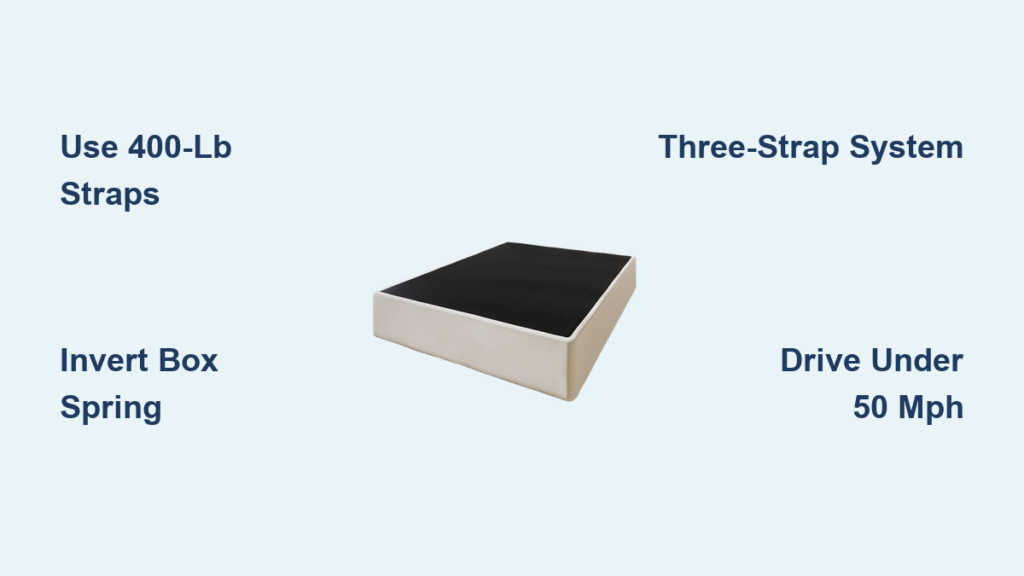
Moving a box spring without a truck often leaves you wondering how to strap a box spring to a car safely. Wind forces at speed can exert 400 pounds of pressure, making proper equipment and technique essential for preventing dangerous accidents on the road.
This guide details the exact ratchet strap method used by professionals to secure loads on sedans and SUVs. You will learn specific positioning tricks, the critical three-strap system, and safety checks to ensure your cargo arrives intact.
Select Heavy-Duty Ratchet Straps Rated for Wind Load

Using the wrong securing equipment is the fastest way to lose your load on the highway. You must use ratchet straps with metal hooks that are specifically rated for heavy loads.
Why 400-Pound Rated Straps Are Mandatory
Standard rope or bungee cords stretch and snap under pressure. Each strap you use must have a minimum rating of 400 pounds to withstand wind resistance. Lower-rated gear cannot handle the dynamic force of highway driving.
Choose 15-Foot Lengths for Full Coverage
Short straps simply will not reach around a queen-size box spring and through your car interior. Select straps that are at least 15 feet long to ensure you have enough slack for proper routing and tightening.
Determine the Correct Number of Straps
You need a minimum of two straps for basic security, but three provides superior stability.
* Two straps: Sufficient for short distances with horizontal placement.
* Three straps: Recommended for maximum hold using a vertical under-strap.
* Dual loads: Long straps allow you to stack and secure two units if necessary.
Prepare Your Vehicle Before Loading the Roof
Rushing to load the roof without prepping your car can lead to broken antennas or cracked window frames. Take a few minutes to configure your vehicle properly before lifting anything.
Remove or Protect the Antenna
A flexible antenna can puncture your roof or tear the box spring fabric during transit. Unscrew and remove it entirely, or cover the base with thick cardboard if removal is impossible.
Open Windows for Strap Routing
Open every window where you plan to route a strap before placing the load. Closing a window on a taut strap can shatter the glass or bend the frame permanently.
Utilize Roof Racks If Available
If your car has roof rails, place the load directly on them for added grip. You should still route straps through the interior for maximum security, even with racks present.
Position the Mattress and Box Spring Correctly
:max_bytes(150000):strip_icc()/move-mattress-with-your-car-2436329-03-e1e963ff480e48839f7737db78d64c36.jpg)
Improper stacking creates wind drag that can lift the entire load off your car. Follow this specific orientation to lower the center of gravity and protect your vehicle paint.
Place Mattress Quilted Side Down
Start by putting the mattress on the roof with the soft, quilted side facing down against the car. This layer acts as a buffer to prevent scratches on your roof while allowing the load to overhang the rear slightly.
Invert the Box Spring on Top
Place the box spring on top of the mattress but turn it upside down. The fabric top should face the sky, while the black dust cover faces the mattress. This orientation increases friction and prevents lateral shifting during the drive.
Execute the Dual-Strap Horizontal Method
The standard approach uses two horizontal straps to pin the load against the roof. This method works well for most sedans and short trips when executed precisely.
Route Straps Through the Interior
Feed the non-hook end of the strap through a rear window or door frame. Pass it across the cabin to the opposite side and close the door gently over the webbing without pinching it.
Wrap and Pre-Tighten Externally
Throw the hook end over the load to the other side of the car. Pull the webbing tight by hand before engaging the ratchet to prevent the mechanism from jamming later.
Ratchet Until Firm but Not Crushed
Connect the hook inside the car and pump the handle until the load feels solid. Stop immediately if you hear cracking sounds, as over-tightening can break the wooden slats inside the box spring.
Upgrade Stability with a Three-Strap System

For longer distances or highway driving, adding a third strap creates a locking effect that prevents forward and backward movement. This is the gold standard for safety.
Install Front and Rear Horizontal Anchors
Use two straps placed near the front and back of the load to stop side-to-side motion. These function exactly like the dual-strap method described above.
Add a Vertical Under-Strap
Run a third strap lengthwise from the front bumper area to the rear bumper area. Pass it underneath the overhanging mattress and box spring, then bring both ends into the car through front and rear windows. Tightening this strap locks the entire assembly in place.
Perform Final Safety Checks Before Driving

Never assume the load is secure without physical verification. A quick inspection routine can prevent disaster miles down the road.
Verify Tension and Locking Mechanisms
Push and pull hard on the box spring to test for movement. Ensure all ratchet levers are fully locked and that no slack remains in the webbing.
Inspect Strap Placement and Visibility
Check that no webbing is rubbing against sharp edges or trapped under the load. Confirm that the cargo does not block your view through the rearview or side mirrors.
Ensure Doors Are Securely Latched
Verify that every door used for routing is completely closed and latched. A partially open door can fly open at speed, releasing the tension on your straps instantly.
Drive Carefully and Monitor Load During Transit
Your driving habits must change when carrying a large roof load. The high center of gravity affects handling, and wind forces increase dramatically with speed.
Limit Speed to 45–50 MPH
High speeds multiply wind pressure exponentially. Stay under 50 mph to keep wind force manageable and reduce the risk of the load lifting or shifting.
Avoid Sudden Maneuvers
Brake early for stops and take turns slowly to maintain stability. Sharp movements can cause the load to slide or tip, even when strapped correctly.
Stop Every Few Miles to Re-Tighten
Vibration from the road can loosen ratchets over time. Pull over safely after the first mile and then every few miles to check tension and tighten if needed.
Unload and Restore Your Vehicle Safely
Releasing the tension incorrectly can cause straps to snap back and injure you. Follow a controlled process to dismantle the setup without damage.
Release Straps Slowly and Carefully
Stand to the side of the strap, not directly in line with it. Press the release lever gently to let out tension gradually, avoiding any sudden snap-back.
Remove Load in Reverse Order
Take off the box spring first, then slide the mattress off the roof. Avoid dragging the items across the paint to prevent scratches.
Restore Vehicle Features
Reinstall your antenna if you removed it earlier. Inspect the roof for any minor marks and coil your straps neatly for storage.
Frequently Asked Questions About Strapping Box Springs
Can I use bungee cords instead of ratchet straps?
No, bungee cords stretch and lack the tensile strength to hold a box spring against wind forces. You must use ratchet straps rated for at least 400 pounds to ensure the load stays secure.
How many straps do I need to transport a box spring?
You need a minimum of two straps for basic security, but three straps are recommended for maximum stability. The third strap acts as a vertical lock to prevent forward sliding.
Is it safe to drive on the highway with a box spring on the roof?
It is safer to avoid highways and stay under 50 mph if you must drive on main roads. High speeds create massive wind pressure that can destabilize even well-secured loads.
Should the box spring be placed right side up or upside down?
Place the box spring upside down on top of the mattress. This orientation increases friction between the layers and lowers the center of gravity for better stability.
How often should I check the straps while driving?
Check your straps after the first mile of driving and then every few miles thereafter. Road vibration can loosen ratchets, so regular re-tightening is essential for safety.
What happens if I over-tighten the ratchet straps?
Over-tightening can crack the wooden slats inside the box spring or damage your vehicle’s roof frame. Tighten until the load is firm and immovable, but stop before excessive pressure builds.
Key Takeaways for Strapping a Box Spring to a Car

Successfully transporting a box spring requires 400-pound rated ratchet straps, precise upside-down positioning, and a multi-point anchoring system. By limiting your speed to under 50 mph and performing regular tension checks, you can move your furniture safely without a truck.
Gather your 15-foot ratchet straps and prepare your vehicle today using these proven steps. Always prioritize the three-strap method for any trip involving highway speeds or distances over a few miles.