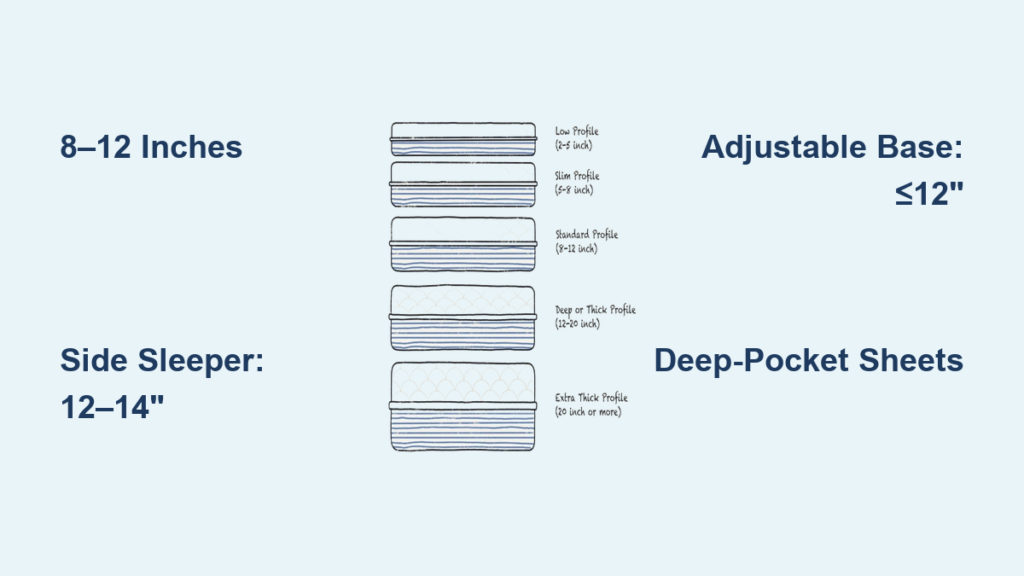
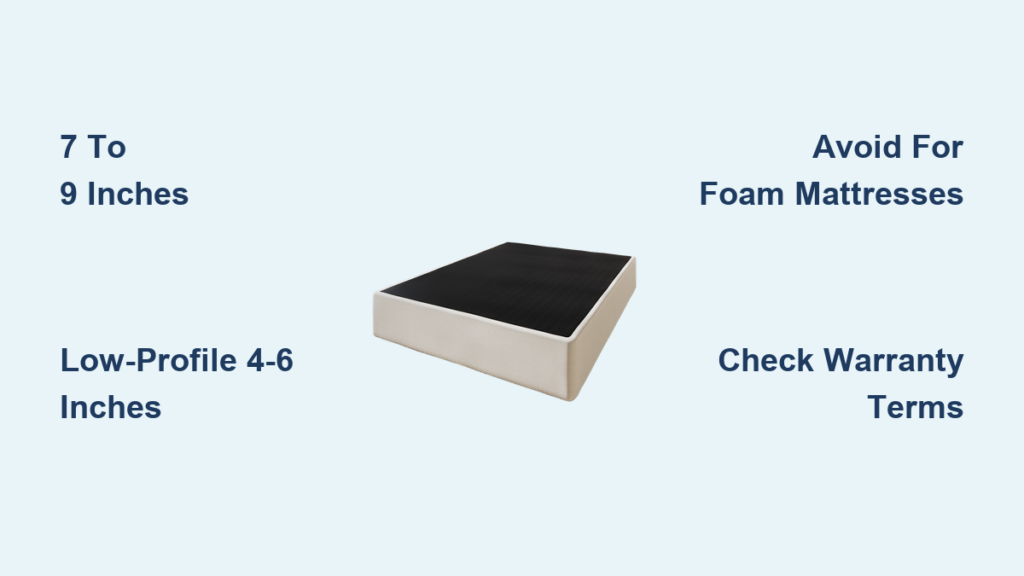
You are shopping for a new bed and wondering exactly how thick is a box spring. This measurement matters more than you might think because it dictates your total bed height and mattress support. Choosing the wrong thickness can make climbing into bed difficult or even damage your new mattress over time.
Most standard box springs range from 7 to 9 inches thick while low-profile options sit at 4 to 6 inches. Your specific needs depend on your mattress type and personal preference for bed height. This guide explains every thickness option so you can choose the perfect foundation for your sleep setup.
Standard Box Spring Thickness Ranges

Most traditional box springs follow specific industry standards to match common bed frames. Knowing these measurements helps you avoid buying a base that makes your bed too high or too low for daily use.
The 7 to 9 Inch Industry Standard
The most common answer to how thick is a box spring falls between 7 and 9 inches. This height provides the ideal lift for most sleepers to get in and out of bed comfortably.
- Proper support for traditional innerspring mattresses
- Ideal elevation for standard bedroom furniture
- Compatibility with most headboards and bed frames
This thickness works best when paired with a traditional mattress that is 10 to 14 inches tall. The combined height brings your total sleeping surface to a comfortable 18 to 22 inches from the floor.
Compatibility with Traditional Mattress Heights
Box springs are engineered to work with specific mattress constructions. Innerspring mattresses rely on a box spring for shock absorption and to prevent premature wear on the coils.
A 7 to 9 inch base ensures the mattress sits at the correct angle for proper spinal alignment. You should avoid using a standard box spring with foam or memory foam mattresses. These modern materials often require a solid foundation or platform bed instead of a spring-based base.
Low-Profile Box Spring Options
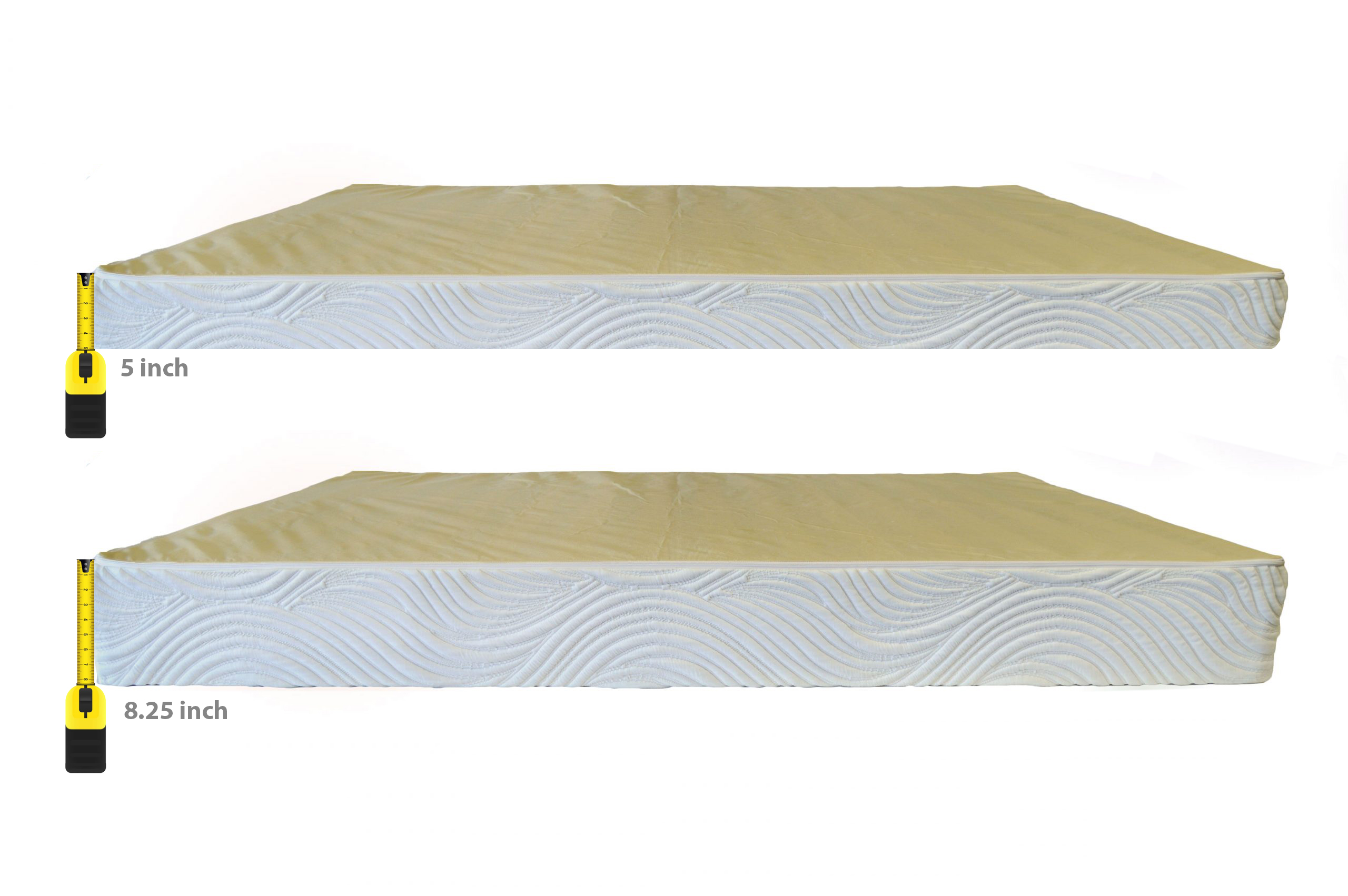
If your current bed sits too high or you use a modern adjustable base, a low-profile option might be your best solution. These thinner bases solve specific height issues without sacrificing support.
Ideal for Tall Mattresses and Kids
When your mattress is already 14 inches or taller, adding a standard box spring can make the bed inaccessible. A 4 to 6 inch low-profile box spring keeps the total bed height manageable for shorter individuals and children.
These thinner bases are also popular with platform beds that already provide strong structural support. They reduce the need for extra height while still protecting the mattress warranty.
Better for Adjustable Bases
Many modern adjustable bases are designed to work without a traditional box spring. When a base is required, it is usually a low-profile version that does not interfere with mechanical movement.
Pro Tip: Never use a standard box spring with an adjustable base unless the manufacturer explicitly allows it.
Check your adjustable base manual before purchasing. Some models require a flat, low foundation to function safely and prevent damage to the motor mechanisms.
Extra-Tall Box Spring Solutions

Some sleepers need more height than the standard options provide. Extra-tall box springs are less common but serve specific aesthetic and functional purposes.
Boosts Bed Height for High Frames
If you have a tall bed frame or want a luxurious hotel-style appearance, a 10 to 12 inch box spring adds dramatic lift. This height is common in master bedrooms with ornate frames or when you need to hide under-bed storage containers.
This option creates a grand look but may be difficult for children or older adults to climb into comfortably. Consider your mobility needs before selecting an extra-tall foundation.
Risks of Excessive Bed Height
While tall beds look elegant, they come with significant trade-offs regarding safety and comfort. You should carefully weigh these factors before choosing maximum thickness.
- Harder to get in and out of bed safely
- Increased risk of falling out during sleep
- May void mattress warranty if unsupported properly
Always check your mattress warranty documentation. Some brands require a maximum foundation height to maintain coverage validity.
Measuring Your Existing Box Spring
Not sure what thickness you currently own? Measuring your existing base is quick and easy with the right technique. Accurate measurements ensure you buy the correct replacement.
Use a Tape Measure Vertically
Place the box spring on a flat surface to get an accurate reading. Measure straight up from the bottom wood frame to the top surface where the mattress sits.
Do not include any fabric puffiness or dust covers in your measurement. Most box springs will show a label with dimensions, but measuring confirms the actual current height. If you are replacing an old one, check for sagging as compressed height may mean it is time for a new base.
Check Label for Exact Specifications
Manufacturers often stamp or tag the box spring with critical data. Look for a tag on the bottom or side of the unit to find these details.
- Dimensions such as “8 inches High”
- Model number for replacement matching
- Compatibility notes for specific mattress types
Keep this information handy when shopping for replacements to ensure a perfect match for your bed frame.
Does Thickness Affect Support Levels?
Many people assume thicker means better support, but structure matters more than total height. Understanding this distinction helps you buy a durable product.
Support Depends on Interior Build Quality
A thick and poorly built box spring may sag faster than a thinner and well-constructed one. You should look beyond the exterior height when evaluating quality.
- Sturdy wooden or metal internal frame
- Reinforced corners for edge support
- High-density coils or grid support systems
Low-profile models from reputable brands often support just as well as taller ones. The internal engineering determines longevity rather than the external thickness measurement.
Thick Does Not Equal Better Longevity
Over time, thicker box springs can compress unevenly especially if the internal coils are weak. Regular rotation helps maintain shape, but material quality is the real factor in lifespan.
Replace your box spring every 8 to 10 years. Look for signs like sagging, noise, or mattress misalignment as indicators that your current base has failed.
Choosing the Right Thickness for You
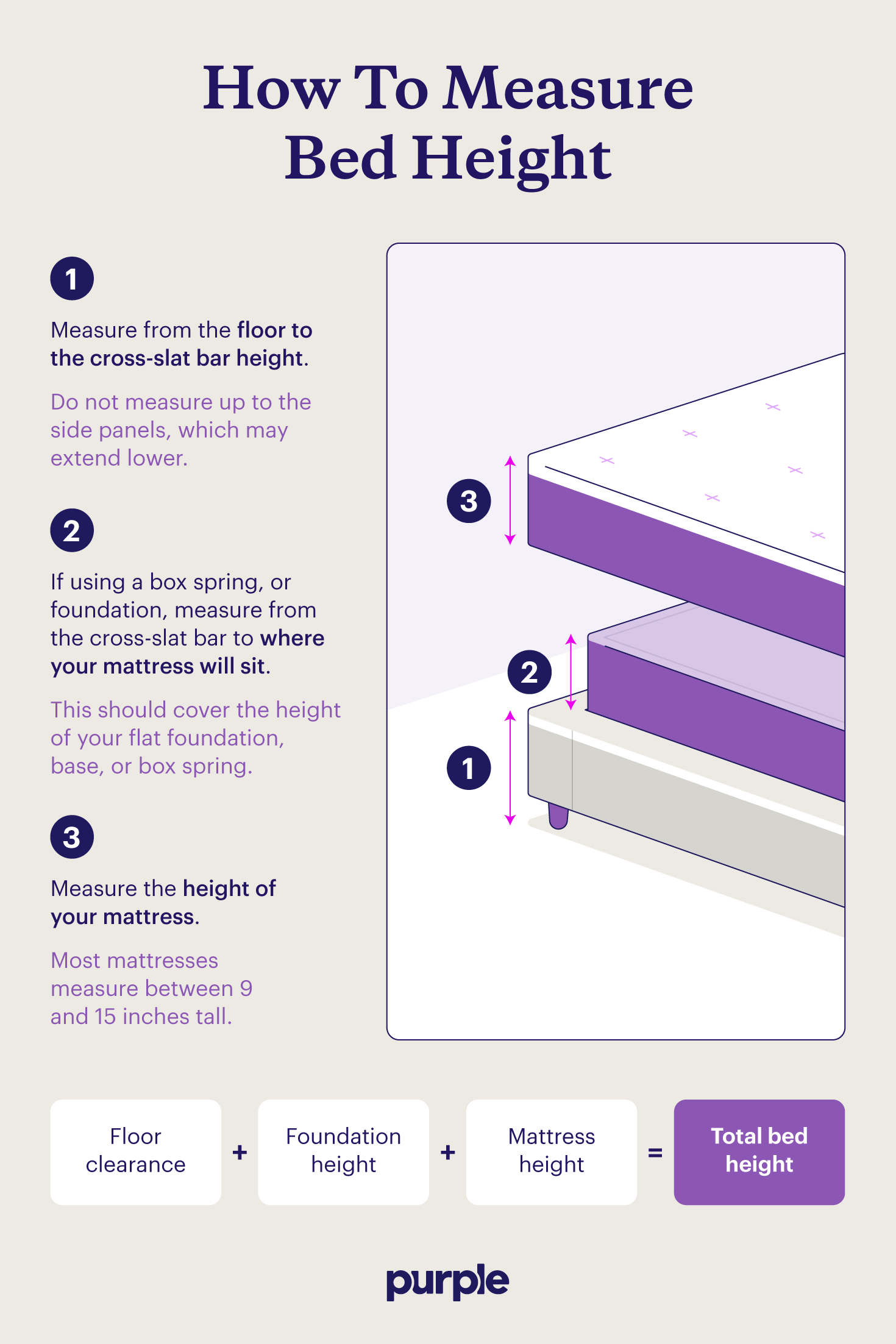
Match the base to your specific setup rather than just your visual preference. The right choice depends on multiple factors in your bedroom.
Consider Mattress Type First
Your mattress construction dictates the type of foundation you need. Using the wrong base can lead to poor support and premature wear on your investment.
- Innerspring: Use a standard 7 to 9 inch box spring
- Memory foam or Latex: Use a solid foundation or platform bed
- Hybrid: Check manufacturer guidelines as some allow box springs
Using the wrong base can lead to poor support and premature wear. Always verify compatibility before making a purchase decision.
Factor in Bed Frame Height
Add the box spring height plus mattress height plus bed frame clearance. If the total is over 24 inches, it might be too tall for comfortable daily use.
For lower beds, consider skipping the box spring entirely and using a platform frame. This approach simplifies the setup and often reduces overall cost.
Modern Alternatives to Traditional Box Springs
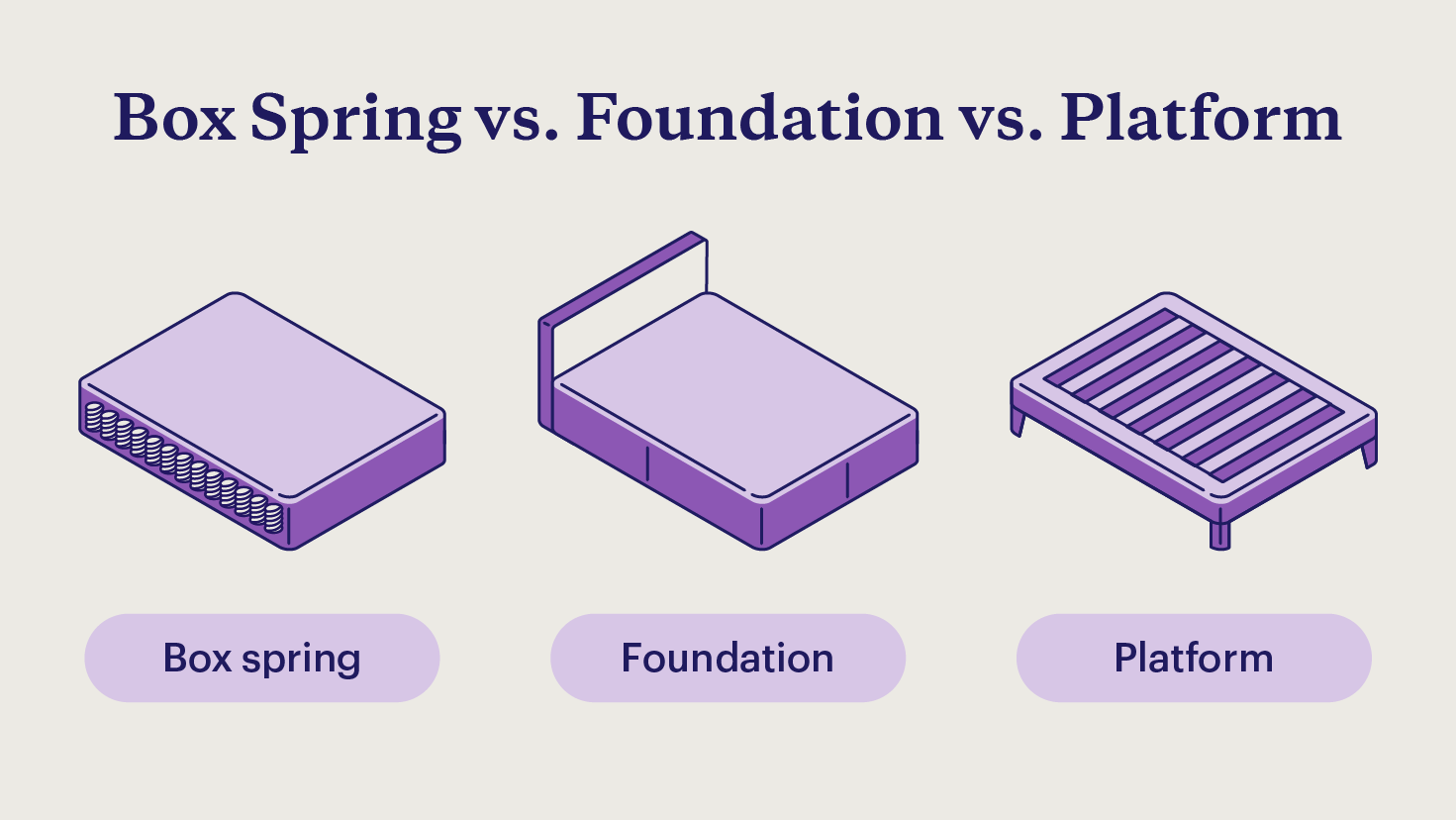
Many people are moving away from traditional box springs in favor of modern support systems. These alternatives offer different benefits regarding height and durability.
Platform Beds Provide Direct Support
Platform beds have built-in slats that eliminate the need for a box spring entirely. They are ideal for memory foam and hybrid mattresses and usually sit 12 to 18 inches off the ground.
- Lower profile for modern aesthetics
- No extra cost for a separate base
- Minimalist look fits many decor styles
This option removes the variable of box spring thickness from your decision process completely.
Foundation Panels Are Sturdier
A wooden or metal foundation is flatter and more durable than a coil-based box spring. These are often used in place of box springs, especially with foam mattresses.
They typically range from 5 to 6 inches tall and offer rigid support. This thickness provides a stable surface that prevents foam mattresses from sagging between slats.
Frequently Asked Questions About Box Spring Thickness
What is the most common thickness for a box spring?
The most common thickness ranges from 7 to 9 inches. This standard height works with most bed frames and provides comfortable access for average-height adults.
Can I use a thick box spring with a memory foam mattress?
No, you generally should not use a traditional thick box spring with memory foam. Foam mattresses require a solid, flat foundation to prevent sagging and maintain warranty coverage.
How do I know if I need a low-profile box spring?
You need a low-profile box spring if your total bed height exceeds 25 inches or if you use an adjustable base. These 4 to 6 inch models lower the sleeping surface for easier access.
Does a thicker box spring last longer?
No, thickness does not determine longevity. A well-built thin box spring will outlast a poorly constructed thick one. Focus on internal frame quality and coil density instead.
Will an extra-tall box spring void my mattress warranty?
It might, depending on the brand. Some manufacturers void warranties if the foundation is too high or lacks proper support. Always check your specific mattress warranty terms.
Key Takeaways for Choosing Box Spring Thickness
Selecting the correct thickness ensures your bed is safe, comfortable, and durable. Standard models are 7 to 9 inches thick while low-profile options measure 4 to 6 inches. Extra-tall versions reach up to 12 inches for specific aesthetic needs.
Always match your base to your mattress type and bed frame height. Using the wrong foundation can void your warranty and ruin your sleep experience. Measure your current setup and consult your mattress manufacturer before buying.