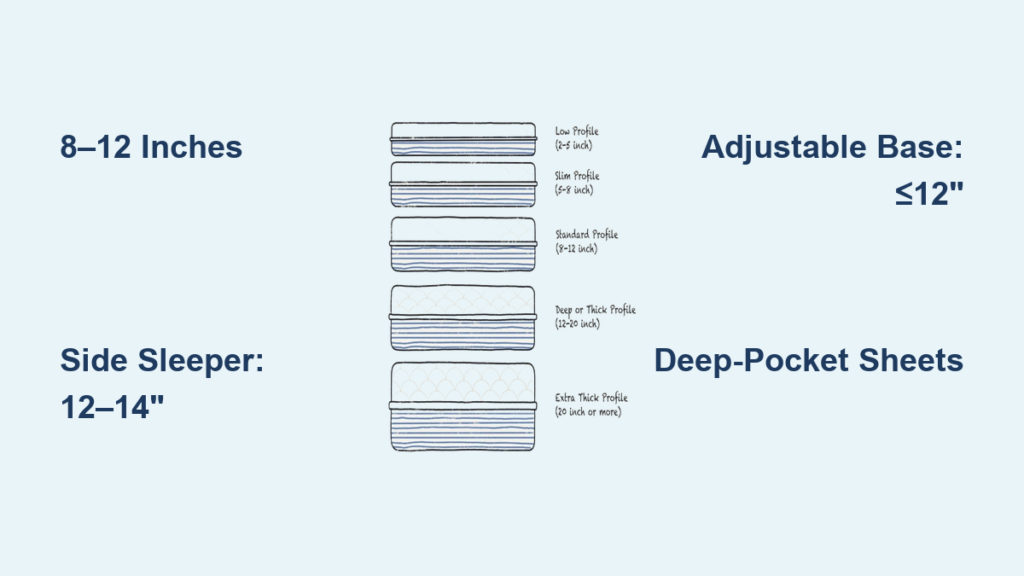
You’ve probably stood in a showroom or scrolled through online listings wondering: How thick should my mattress be? With options ranging from 2 inches to over 18, the average mattress thickness falls between 8 and 12 inches, making 10 inches a common benchmark. But thickness isn’t just about size—it affects comfort, support, accessibility, and even your sheets. Choosing the right depth means matching your body, sleep style, and bedroom setup. Too thick, and you might struggle to get in and out of bed. Too thin, and you could lack support or durability. In this guide, we’ll break down what determines mattress thickness, how it impacts performance, and which depth suits your needs so you can make a confident, informed decision.
Standard Mattress Thickness Ranges
Most adult mattresses fall within a predictable range, but understanding the categories helps narrow your choices.
8–12 Inches: The Sweet Spot for Most Sleepers
This is the standard thickness range for quality adult mattresses across types. At 10 inches on average, these models balance support, comfort, and compatibility with most bed frames and sheets. They’re ideal for back, side, and combination sleepers within the average weight range (130–230 lbs). A well-constructed 10″ mattress typically features a 2–3″ comfort layer and a 7″ high-density base, ensuring long-term durability.
Under 8 Inches: Low-Profile and Compact Options
Mattresses below 8 inches are considered low-profile. These are common in:
• Bunk beds
• Trundle beds
• RVs
• Adjustable bases
• Guest rooms
While convenient for space-saving designs, all-foam models under 8″ may lack sufficient support and degrade faster. Avoid thin memory foam mattresses (under 6″) unless used temporarily or with a supportive base.
12+ Inches: Thick and Ultra-Luxury Profiles
Mattresses over 12 inches are labeled deep or extra thick, often reaching 16–18.5″. These are typically:
• Pillow-top or box-top hybrids
• Multi-layer luxury models (e.g., Purple Rejuvenate Luxe at 18.5″)
• Designed for plushness, pressure relief, and visual impact
They suit side sleepers, heavier individuals, and couples seeking superior motion isolation, but require deep-pocket sheets and may challenge mobility.
How Mattress Type Affects Thickness
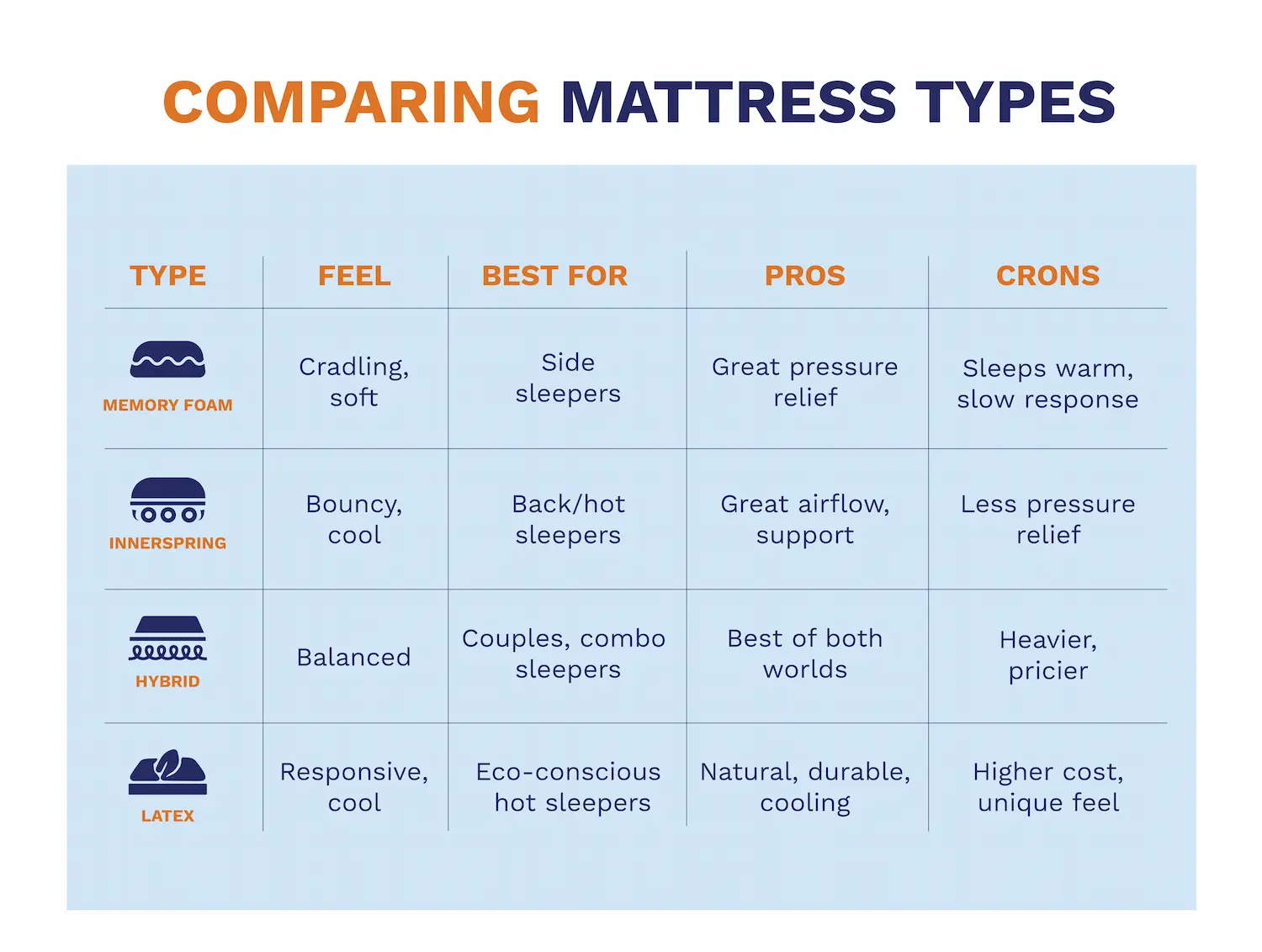
Each mattress type has a typical depth range based on construction and materials.
Innerspring: 7–12 Inches
Traditional innerspring models tend to be thinner (7–10″), limited by coil compression. Adding a pillow-top (2–4″ extra) increases plushness and overall height. While less common today, these remain a budget-friendly option with good airflow.
All-Foam and Memory Foam: 8–14 Inches
Memory foam mattresses usually start at 8 inches, with high-quality versions at 10–14″. Thinner models (under 8″) often use low-density foam and may sag prematurely. Look for:
• At least 3–4″ of quality foam in the comfort layer
• A 5–6″ high-density base (at least 1.8 lb/ft³) for support
Thicker foam models offer better pressure relief but can retain heat unless cooled with gel, copper, or open-cell technology.
Latex: 6–13 Inches
Natural or synthetic latex mattresses are dense and supportive, allowing strong performance even at moderate thicknesses. Most fall between 9–13″, with tighter compression than memory foam. They’re durable (up to 15 years) and ideal for eco-conscious buyers.
Hybrid: 10–15 Inches
Hybrids combine pocketed coils with foam or latex comfort layers, making them naturally taller. Most range from 10–14″, with premium models like the Casper Dream Max hitting 14″. The dual-layer design enhances support, cooling, and motion isolation, ideal for couples and heavier sleepers.
Luxury Pillow-Top and Box-Top: 13–18.5+ Inches
These ultra-plush models feature multi-tiered comfort layers over a coil base. Examples include:
• Avocado Ultra Plush: 15.5″
• Purple Rejuvenate Luxe: up to 18.5″
They deliver maximum cushioning but come with higher costs, weight, and sheet requirements.
Adjustable Base-Compatible: 12 Inches or Less
Mattresses for adjustable beds must remain flexible and not exceed 12 inches in height. Most are 10–11″ all-foam or thin hybrids, ensuring smooth bending at the hips and knees. Excessive thickness can impair function and strain the motor.
Key Factors That Determine Ideal Thickness

Your perfect mattress depth depends on more than averages—it’s personal.
Sleep Position Matters
Your sleeping posture dictates how much cushioning and support you need.
Side Sleepers: 12–14 Inches
You need deep contouring to cushion shoulders and hips while keeping your spine aligned. A thick comfort layer (3–5″) allows slight sinkage without bottoming out. Look for plush hybrids or memory foam models.
Back Sleepers: 10–12 Inches
You require even support with moderate cushioning. A medium-firm 10–12″ hybrid or foam mattress prevents lower back strain while offering comfort.
Stomach Sleepers: 10–12 Inches (Firm)
To avoid abdominal sinkage and spinal misalignment, choose a firm surface with a thinner comfort layer. Thicker plush models can worsen posture.
Combination Sleepers: 12+ Inches
Frequent movers benefit from deep, responsive layers that adapt quickly. Hybrids with zoned support or latex offer smooth transitions between positions.
Body Weight Influences Support Needs
Your weight determines how much the mattress compresses and whether it holds up over time.
Lightweight (Under 130 lbs): 10–12 Inches
You may not compress lower layers enough, so a thicker comfort layer improves pressure relief. Avoid ultra-firm or very dense models.
Average Weight (130–230 lbs): 10–12 Inches
You’re the target user for most standard mattresses. Choose based on sleep position and firmness preference.
Plus-Size (Over 230 lbs): 12–14 Inches
You need deep base layers (at least 6″) and high-density materials to prevent sagging. Avoid thin all-foam options. Opt for hybrids or innersprings with reinforced edges.
Warning: Mattresses under 10″ often fail plus-size sleepers due to inadequate support.
Couples Need Extra Depth
Two sleepers increase wear and motion transfer. A 10–14″ mattress provides:
• Better weight distribution
• Enhanced durability
• Improved motion isolation (especially with pocketed coils or thick foam)
For heavier couples, 12–16″ models offer superior longevity and comfort.
Mobility and Age Limit Excessive Height
Elderly or mobility-impaired users should avoid mattresses over 10–12″, especially when paired with a tall foundation. A total bed height over 30″ makes sitting and standing difficult. Stick to 8–10″ medium-firm models for easier access.
Medical Conditions Change Requirements
Back Pain: Choose 8–12 inches (medium-firm) to support spinal alignment without excessive sinkage.
Arthritis or Fibromyalgia: Opt for 12–14 inches (plush) to reduce joint pressure and tender point pain.
Pregnancy: Select 10–12 inches (medium) to balance support and comfort during body changes. Side-sleeping pregnant women benefit from thicker models.
Bed Frame and Base Compatibility
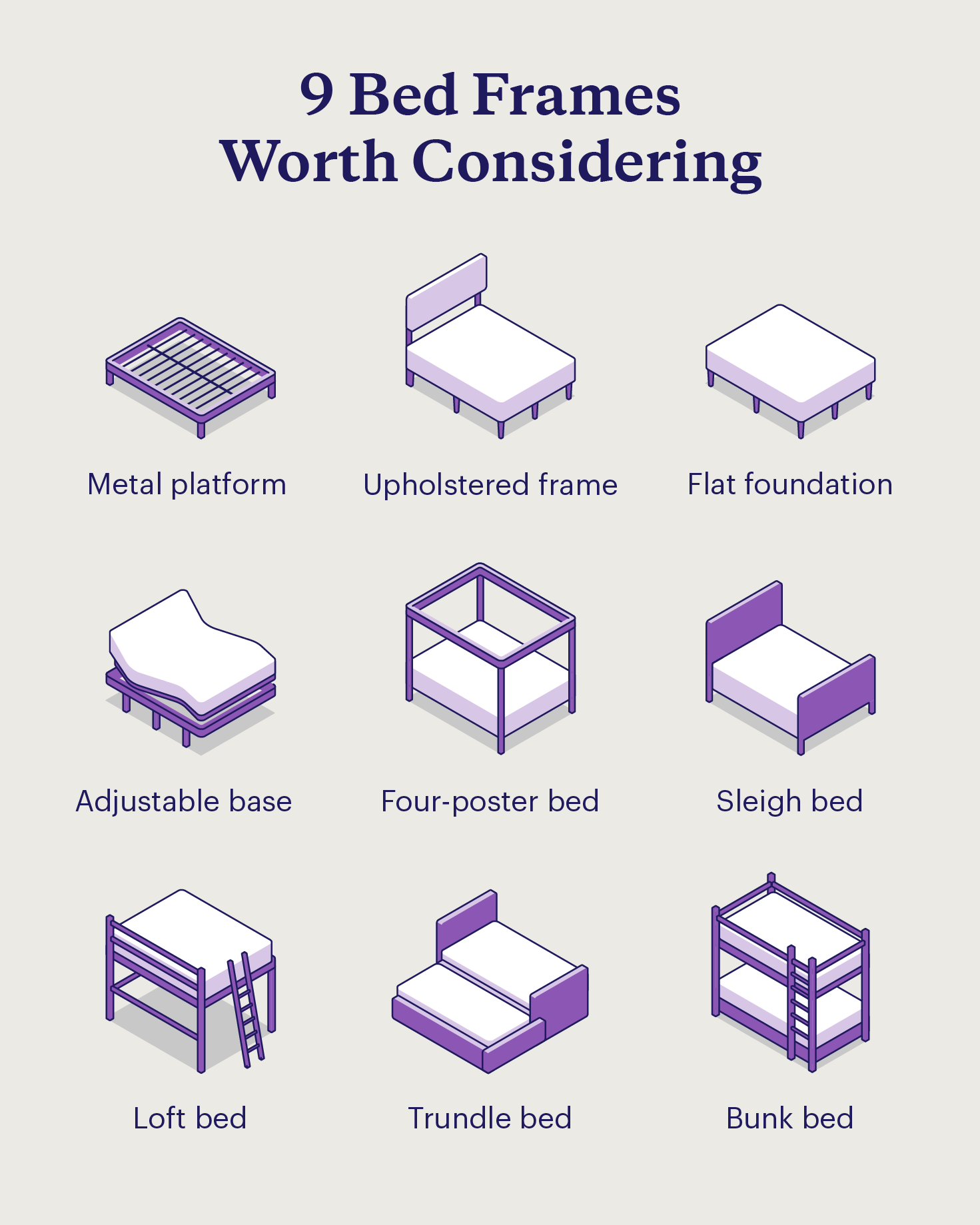
Your mattress doesn’t exist in a vacuum—its thickness must work with your foundation.
Total Bed Height: Aim for 25–30 Inches
The ideal sitting height allows your feet to rest flat when seated on the edge. Calculate your total by adding mattress thickness plus foundation height. Low-profile platform beds (5–6″) pair well with 12–14″ mattresses. Tall frames (8–10″) work better with 8–12″ mattresses. For floor placement, thicker mattresses (12″+) resist moisture and debris better.
Bunk and Trundle Beds: Max 6–8 Inches
Safety standards require low-profile mattresses to maintain guardrail clearance. Use 7.5″ or thinner models like the Avocado Eco Organic Kids Mattress.
Adjustable Bases: Stick to 12 Inches or Less
Thicker mattresses cannot bend properly, risking motor strain or damage. Use 10–11″ flexible foam or hybrid models.
Tip: Use bed risers to adjust height without changing mattress thickness.
How Thickness Affects Performance and Longevity
More inches do not always mean better quality, but they do influence key performance factors.
Does Thickness Equal Better Quality
No. A 9″ latex mattress can outlast a 16″ low-density foam model. Quality depends on:
• Material density (e.g., at least 1.8 lb/ft³ memory foam)
• Base layer thickness (should be at least 50% of total height)
• Construction integrity
Example: A 10″ mattress with 2″ comfort foam, 1″ transition layer, and 7″ high-density base creates a durable design with long-term support.
Does Thickness Affect Firmness
Indirectly. Thicker comfort layers often feel softer, but firmness is determined by material density, not depth. You can have a 14″ firm hybrid or a 9″ soft memory foam. Firmness ratings (1–10 scale) are independent of thickness.
Does Thickness Improve Durability
Yes, if the base layer is thick and dense. A 6+ inch high-density base resists sagging, especially under heavy use. However, excessive comfort layering without adequate support leads to faster wear. Thin base layers (under 5″) cause early breakdown.
Expected Lifespan by Type:
• Memory foam: 8–12 years
• Hybrid or innerspring: about 10 years
• Latex: up to 15 years
Sheet and Accessory Compatibility
Thicker mattresses create real-world challenges, especially with bedding.
Fitted Sheet Depth: Match or Exceed Mattress Height
Use this rule: sheet pocket depth equals mattress thickness plus 1–3 inches.
| Mattress Thickness | Required Sheet Depth |
|---|---|
| 10″ | 11–13″ |
| 12″ | 13–15″ |
| 14″ | 15–17″ |
| 16″+ | 18″+ (extra-deep or custom) |
Warning: Standard sheets fit up to 12″. Beyond that, you’ll need deep-pocket or specialty sheets, which are harder to find and more expensive.
Mattress Toppers Add Height and Comfort
Want to boost thickness without buying new? Toppers typically add 2–4 inches and come in memory foam (softens), latex (supports), or gel-foam (cools). A 3″ topper on a 12″ mattress gives you 15″ total. This works well for extending mattress life, adjusting firmness, or enhancing cushioning for side sleepers.
Tip: A 2″ firm latex topper can make a soft mattress more supportive.
Brand-Specific Thickness Examples

Real-world models show how brands implement thickness.
Purple Mattresses
All use GelFlex Grid, adding 2–4″ of responsive, cooling support.
| Model | Thickness | Best For |
|---|---|---|
| Essential | 8–12″ | Budget-friendly, balanced feel |
| Restore Hybrid | 12–14″ | Enhanced airflow, hybrid support |
| Rejuvenate Luxe | 14–18.5″ | Luxury, maximum contouring |
Avocado Mattresses
Organic-focused with varied profiles.
| Model | Thickness | Type |
|---|---|---|
| Eco Organic Kids | 7.5″ | Low-profile, firm |
| Green Mattress Firm | 11″ | Tight-top, durable |
| Green Mattress Ultra Plush | 15.5″ | Box-top, luxury |
| Latex Mattress | 9″ | Dense, eco-friendly |
Casper Mattresses
Known for value and consistent layering.
| Model | Thickness | Price (Queen) |
|---|---|---|
| The One | 11″ | $799 |
| Dream | 12″ | $1,325 |
| Dream Max | 14″ | $2,140 |
Pros and Cons of Thick Mattresses (12+ Inches)
Advantages
• Superior pressure relief from multiple comfort layers cushioning joints
• Better support from deep base layers resisting sagging
• Longer lifespan through more materials and better construction
• Ideal for couples by reducing motion transfer
• Luxury aesthetic enhancing bedroom elegance
Disadvantages
• Higher cost due to more materials (e.g., $2,140 for Casper Dream Max)
• Access issues making it hard to get in and out, especially for elderly
• Heavy and hard to move with some exceeding 100 lbs
• Heat retention as denser foams trap heat without cooling tech
• Sheet challenges requiring deep-pocket or custom bedding
• Shipping fees for non-compressible models
Final Recommendations by User Type
Match your profile to the ideal thickness.
| User | Recommended Thickness | Best Mattress Types |
|---|---|---|
| Back/Stomach Sleeper | 10–12″ | Hybrid, Innerspring, Medium-Firm Foam |
| Side Sleeper | 12–14″ | Memory Foam, Plush Hybrid |
| Combination Sleeper | 12–14″ | Zoned Hybrid, Responsive Latex |
| Couples | 10–14″ | Motion-Isolating Hybrid, Double-Sided |
| Plus-Size (over 230 lbs) | 12–14″ | Reinforced Hybrid, High-Density Foam |
| Elderly / Mobility Issues | 8–10″ | Medium-Firm, Easy-Access |
| Children / Toddlers | 5–8″ | Slim, Firm, Bunk-Safe |
| Guest Room / RV | 6–8″ | Low-Profile, Durable Foam |
Expert Tips for Choosing Smartly
“Your mattress either supports your sleep position or fights it. Before buying new, try pillow adjustments—under knees for back sleepers, between legs for side sleepers. If pain persists, then it’s time to change the mattress.”
— Lou Ezrick, Sleep Specialist
5 Key Tips
- Measure total bed height to ensure it’s 25–30″ for easy access.
- Prioritize base layer quality by looking for at least 6″ high-density foam or coils.
- Check sheet compatibility by buying deep-pocket sheets if your mattress is over 12″.
- Use a topper to adjust by adding 2–4″ of comfort without full replacement.
- Avoid thickness hype because a well-made 9″ mattress beats a poorly constructed 16″ one.
Frequently Asked Questions About Average Mattress Thickness
What is the most common mattress thickness?
The average mattress thickness ranges from 8 to 12 inches, with 10 inches being the most common benchmark for standard adult mattresses.
Does thicker mattress mean better quality?
Not necessarily. Quality depends more on material density and layer construction than total thickness. A well-made 9″ latex mattress can outperform a poorly constructed 16″ foam model.
What thickness mattress is best for side sleepers?
Side sleepers typically need 12–14 inches of thickness to achieve proper cushioning for shoulders and hips while maintaining spinal alignment.
Can I use thick mattresses with adjustable bases?
You should use mattresses 12 inches or less with adjustable bases. Thicker mattresses cannot bend properly and may damage the base’s motor.
What happens if my sheets don’t fit my mattress thickness?
Standard fitted sheets fit mattresses up to 12 inches deep. For thicker mattresses, you’ll need deep-pocket sheets (13″+) which cost more and are harder to find.
Key Takeaways for Choosing Mattress Thickness
The average mattress thickness is 8–12 inches, but your ideal depth depends on sleep style, weight, and bedroom setup. Focus on material quality, layer density, and total bed height, not just inches. Side sleepers and plus-size individuals benefit from thicker profiles (12–14″), while elderly or mobility-impaired users should stick to 8–10″ for easier access. Always measure your total bed height (mattress plus foundation) to ensure it stays within the 25–30″ ideal range. A thoughtful choice ensures better sleep, longer durability, and easier daily use.