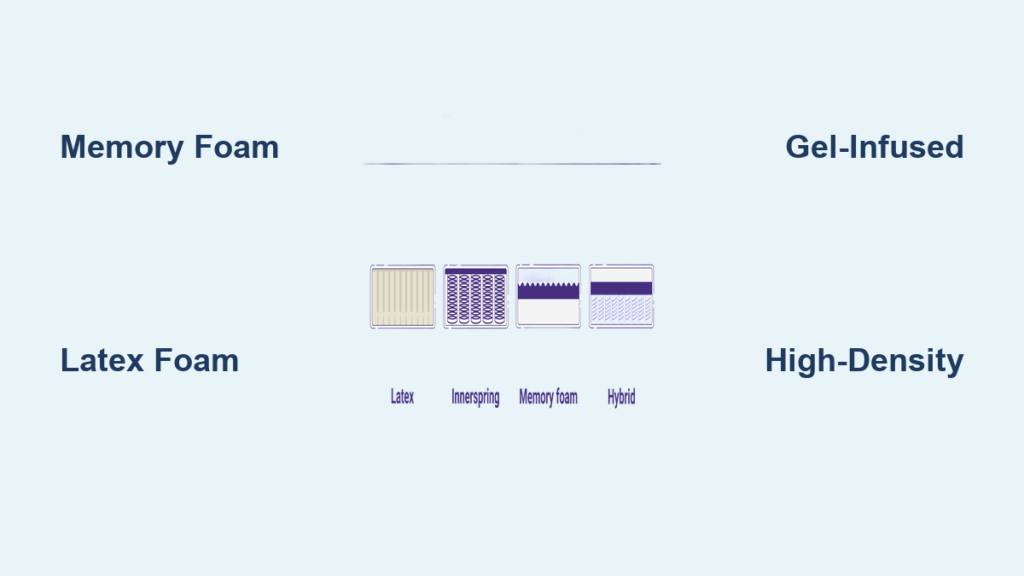
If you’re shopping for a new mattress, one of the most important decisions you’ll make is which foam types for mattress layers to choose. From the slow-sinking comfort of memory foam to the responsive bounce of latex and the budget-friendly poly-foam, each material delivers a unique sleep experience. With so many options available, knowing what sets them apart can help you avoid buyer’s remorse and find your ideal match.
Foam isn’t just about softness. It affects temperature regulation, durability, motion isolation, edge support, and even long-term spinal alignment. This guide breaks down every major foam type used in mattresses, comparing their performance, lifespan, feel, and ideal use cases so you can invest in the right mattress for your sleep needs.
Memory Foam: Deep Pressure Relief
Memory foam is the gold standard for contouring and pressure relief. Originally developed by NASA in the 1960s for aircraft seat cushioning, it softens in response to body heat and slowly molds to your shape, cradling hips and shoulders. This makes it especially beneficial for side sleepers and those with joint pain.
Traditional Memory Foam
Traditional memory foam offers a classic “hugged” feel. It sinks slowly and rebounds gradually, minimizing motion transfer, which is ideal for couples. However, its closed-cell structure traps heat, causing many users to sleep hot. It’s commonly found in comfort layers ranging from 2 to 4 inches thick.
Key specifications:
• Density: 2.50 to 2.60 lb/ft³ (standard), up to 5 lb/ft³ in premium versions
• 25% ILD: 10 to 12 lb (soft to medium-soft)
• Lifespan: 5 to 7 years
• Best for: Pain relief, motion isolation, side sleepers
Pro Tip: Look for high-density versions of 3 lb/ft³ or higher to reduce sagging and extend durability.
Gel-Infused Memory Foam
To combat heat retention, manufacturers add gel particles or swirls into the foam. These absorb and disperse body heat, offering a cooler surface feel. While not fully breathable, gel-infused foam improves thermal regulation without sacrificing contouring.
Key specifications:
• Density: 2.50 to 3.0 lb/ft³
• 25% ILD: approximately 10.9 lb
• Lifespan: Up to 8 years
• Limitation: Gel can settle over time, reducing effectiveness
Ideal for: Hot sleepers who still want deep pressure relief.
Open-Cell Memory Foam (Serene Foam)
Unlike traditional closed-cell memory foam, open-cell versions feature interconnected pores that allow air to circulate freely. This significantly improves breathability while maintaining contouring ability.
Benefits:
• Cooler sleep surface
• Reduced off-gassing
• Maintains deep hug feel
• Best for: Sleepers seeking cooling plus pressure relief
Polyurethane Foam: Budget-Friendly but Short-Lived
Polyurethane foam, often called poly-foam, is the most common and affordable foam in budget mattresses. Often used in base or transitional layers, it lacks the pressure relief and longevity of higher-end foams. Low-density versions degrade quickly, leading to sagging and body impressions.
Foam Quality by Density
| Density | Range (lb/ft³) | Lifespan | Use Case |
|---|---|---|---|
| Low | Less than 1.5 | 3 to 5 years | Toppers, cheap mattresses |
| Medium | 1.5 to 2.5 | 6 to 8 years | Mid-tier hybrids |
| High | Greater than 2.5 | 8+ years | Support layers in premium models |
Warning: Many brands misleadingly market low-density poly-foam as “memory foam.” Always check density and ILD specifications.
Certifications and Off-Gassing
Most poly-foams carry CertiPUR-US certification, which ensures no banned flame retardants, heavy metals, or high VOC emissions. However, this standard is industry-backed and less rigorous than independent tests like eco-INSTITUT or Oeko-Tex.
Key points:
• Off-gassing is common in the first few days; ventilate well
• Fire retardants are often chemically treated due to flammability
• Best use: Base layer in all-foam models or transitional layer in hybrids
Latex Foam: Durable and Responsive
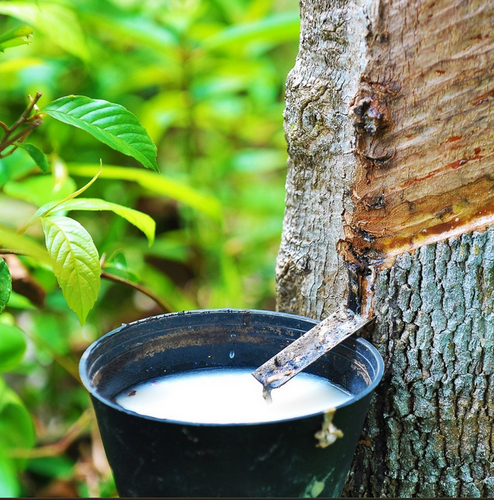
Latex foam delivers a buoyant, resilient feel with excellent durability and natural cooling. Sourced from rubber trees (natural) or synthesized from petrochemicals (synthetic), it’s a top choice for eco-conscious buyers and those seeking long-term value.
Natural vs. Synthetic vs. Blended
| Type | Source | Durability | Feel |
|---|---|---|---|
| Natural Latex | Rubber tree sap | 12 to 15+ years | Springy, supportive |
| Synthetic Latex | Petrochemicals | 8 to 10 years | Less breathable |
| Blended Latex | Mix of both | 10 to 12 years | Balanced cost and performance |
Processing methods:
• Dunlop: Denser, firmer, bottom-heavy
• Talalay: Lighter, softer, more consistent
Organic Latex Foam
Certified under GOLS (Global Organic Latex Standard), organic latex contains over 95% organic raw materials and is processed without synthetic chemicals.
Key specifications:
• Density: 3.45 to 5.95 lb/ft³
• 25% ILD: 11 to 45 lb (soft to extra firm)
• Lifespan: 15+ years
• Benefits: Hypoallergenic, zero VOCs, biodegradable
• Best for: Eco-buyers, allergy sufferers, long-term investment
User Insight: Many report latex mattresses lasting over 20 years with minimal sag.
High-Resilience Foam: Supportive and Long-Lasting

High-Resilience (HR) foam is a premium polyurethane-based foam engineered for durability and bounce. It outperforms standard poly-foam in resilience and lifespan, making it a cost-effective alternative to latex.
Key Advantages
Specifications:
• Density: Greater than 2.5 lb/ft³
• Resilience: High, returns to shape quickly
• Lifespan: 12 to 15 years
• Feel: Buoyant, supportive, less conforming
• Certifications: Often CertiPUR-US compliant
Best for: Transition layers, edge support, side sleepers needing firm yet comfortable support.
Qualux Foam: Premium HR Variant
Qualux Foam is a proprietary HR foam known for superior breathability, durability (15-year lifespan), and use in medical and marine applications.
Applications: High-end mattresses, orthopedic cushions
Benefits: Cool, resilient, long-wearing
Convoluted Foam: Affordable Pressure Relief
Also known as egg-crate foam, convoluted foam features a ridged surface that increases airflow and distributes pressure. Typically 1 to 3 inches thick, it’s commonly used in toppers, camping pads, and medical bedding.
Pros and Cons
Advantages:
• Inexpensive
• Improves airflow
• Helps with back pain
Disadvantages:
• Not durable (approximately 3-year lifespan)
• Hard to clean
• Offers minimal support alone
Best use: As a topper over a firm mattress for temporary pain relief or guest beds.
Material Base
Convoluted foam can be made from polyfoam (cheaper) or memory foam (better contouring). Memory foam versions offer improved pressure relief.
Rebond Foam: Eco-Friendly Base Support
Rebond foam is created by compressing shredded foam scraps with strong adhesives. It’s a sustainable choice that repurposes waste while delivering firm, durable support.
Rebond Foam Light
Specifications:
• Density: 5.0 lb/ft³
• 25% ILD: 40 ± 5 lb (medium-firm)
• Flammability: Meets CA TB 117-2013
• Lifespan: Greater than 10 years (estimated)
• Applications: Mattress base, carpet padding, gym mats
Eco Benefit: Reduces landfill waste; ideal for green manufacturing.
Blue Foam: Balanced Comfort at Low Cost
Blue foam is a medium-firm polyurethane foam with moderate durability. The color helps mask yellowing over time.
Specifications:
• Density: 1.90 lb/ft³
• 25% ILD: 33.0 ± 3 lb
• Sag Factor: 1.80 minimum
• Lifespan: Approximately 6 years
• Best for: Mid-tier upholstery and mattress layers
Value Pick: Offers better performance than low-density poly-foam without high cost.
Soft Foam (HR Type): Plush with Bounce
This high-resilience foam combines softness with durability, making it ideal for comfort layers and toppers.
Specifications:
• Density: 2.50 lb/ft³
• 25% ILD: 10 ± 3 lb (very soft)
• Resilience: High, quick recovery after compression
• Lifespan: Approximately 12 years
• Use: Mattress toppers, plush furniture
Advantage: Softer than standard HR foam but maintains shape.
Hard Foam: Maximum Structural Support
Ultra-firm hard foam is used where strength and support are critical.
Specifications:
• Density: 4.375 to 4.55 lb/ft³
• 25% ILD: 240 ± 3 lb (extremely firm)
• Applications: Edge reinforcement, orthopedic supports, industrial padding
• Not recommended for sleep surface (too rigid)
Best for: Zoned support layers and preventing edge collapse.
Foam Layering Strategies
How foams are layered determines overall performance.
All-Foam Mattress Structure
Layer order:
1. Comfort Layer: Memory, gel, or latex (2 to 4 inches)
2. Transition Layer: HR or high-density poly-foam (1 to 2 inches)
3. Base Layer: High-density or rebond foam (6+ inches)
This ensures pressure relief, support, and longevity.
Hybrid Mattress Structure
Layer order:
1. Comfort Layer: Memory foam, latex, or serene foam
2. Support Core: Pocketed coils
3. Optional: Lumbar zoned foam for back pain
This combines coil bounce with foam comfort and cooling.
How to Choose by Sleep Position
Side Sleepers
Best Foams: Memory foam, latex, HR foam
Firmness: 4 to 6 (soft to medium)
Why: Allows shoulders and hips to sink while keeping spine aligned
Back Sleepers
Best Foams: Latex, high-density memory
Firmness: 5 to 7
Why: Supports lumbar curve, prevents lower back pain
Stomach Sleepers
Best Foams: Firm latex or HR foam
Firmness: 7 to 8
Why: Prevents pelvis from sinking and spine from misaligning
Combination Sleepers
Best Foams: Latex, gel memory foam
Firmness: 5 to 6
Why: Responsive enough to support frequent movement
Cooling Performance Comparison
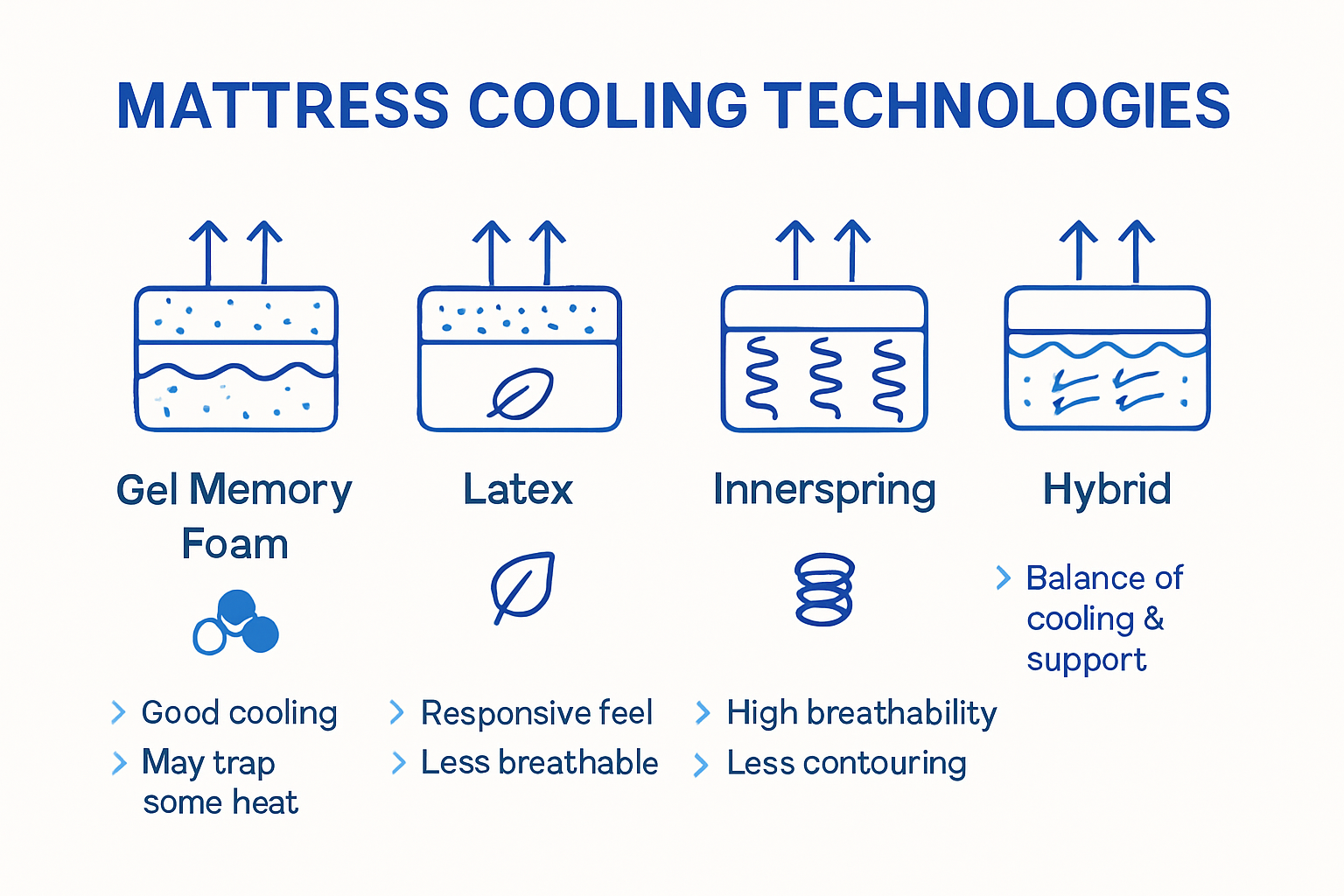
| Foam Type | Cooling Level | Reason |
|---|---|---|
| Latex | Excellent | Open-cell, naturally breathable |
| Open-Cell Memory | Excellent | Enhanced airflow |
| Gel-Infused Memory | Moderate | Surface cooling only |
| Traditional Memory | Poor | Heat-retentive closed cells |
| Polyfoam | Poor | Low breathability |
Hot Sleepers: Prioritize latex, Serene Foam, or gel-infused variants.
Durability by Foam Type
| Foam | Average Lifespan |
|---|---|
| Organic Latex | 15+ years |
| Natural Latex | 12 to 20+ years |
| HR Foam / Qualux | 12 to 15 years |
| High-Density Polyfoam | 6 to 8 years |
| Memory Foam (high-density) | 8 to 10 years |
| Convoluted Foam | Approximately 3 years |
Longest-Lasting: Organic and natural latex; rebond and HR foams
Certifications: What to Look For
| Certification | What It Means |
|---|---|
| CertiPUR-US | Low emissions, no banned chemicals (common in poly/memory foams) |
| eco-INSTITUT | Independent testing, trusted for natural foams |
| Oeko-Tex Class 1 | Safe for infants, high credibility |
| GOLS | Required for true organic latex claims |
| CA TB 117-2013 | Flammability standard, met without chemical retardants |
Pro Tip: Avoid foams with only CertiPUR-US if you want truly non-toxic materials.
Frequently Asked Questions About Foam Types for Mattress
What is the best foam type for side sleepers?
Memory foam is the best choice for side sleepers because it allows shoulders and hips to sink while keeping the spine aligned. Look for medium-soft density (2.5 to 3 lb/ft³) with an ILD of 10 to 12 lb for optimal pressure relief.
How long do different foam mattresses last?
Organic latex lasts 15+ years, natural latex lasts 12 to 20+ years, HR foam lasts 12 to 15 years, high-density memory foam lasts 8 to 10 years, and standard polyfoam lasts 3 to 8 years depending on density.
Which foam type is best for hot sleepers?
Latex foam offers the best cooling performance due to its naturally breathable open-cell structure. Gel-infused memory foam and open-cell memory foam (like Serene Foam) also provide improved cooling compared to traditional memory foam.
Is higher density foam always better?
Higher density generally correlates with longer lifespan and better support, but it doesn’t always mean better comfort. High-density foam is more durable and resistant to sagging, but the right choice depends on your sleep position, preferred feel, and budget.
What certification should I look for in foam mattresses?
For memory and poly-foam, look for CertiPUR-US certification. For natural or organic latex, prioritize GOLS certification, eco-INSTITUT, or Oeko-Tex Class 1 for independently verified non-toxic materials.
Can I use foam toppers to improve an old mattress?
Yes, adding a foam topper (2 to 3 inches) can extend the life of an older mattress and adjust firmness. Memory foam toppers provide pressure relief, latex toppers add responsiveness and cooling, and convoluted foam toppers offer basic airflow improvement.
Key Takeaways for Choosing Foam Types for Mattress
When selecting foam types for mattress layers, focus on density, certifications, and layering, not just softness. High-density foams last longer and perform better over time. Memory foam excels at pressure relief and motion isolation, making it ideal for side sleepers and couples. Latex offers the best combination of durability, cooling, and responsiveness for long-term value. Pair your sleep position with the right firmness level, and prioritize breathable materials if you tend to sleep hot. Whether you want the cradle of memory foam or the resilience of latex, understanding these foam types ensures you invest in a mattress that supports restful, healthy sleep for years to come.