A wet foam mattress can quickly become a serious problem if not handled properly. Foam absorbs water deeply and retains moisture, creating the perfect environment for mold, mildew, and stubborn odors to develop within hours. Unlike traditional mattresses, foam and memory foam cannot be submerged or machine-washed without causing permanent structural damage. This guide provides a complete, step-by-step method to safely clean and dry your foam mattress while protecting its integrity and your indoor air quality.
Remove Excess Moisture Immediately
Time is critical when liquid hits your foam mattress. The faster you act, the less moisture penetrates deep into the foam layers.
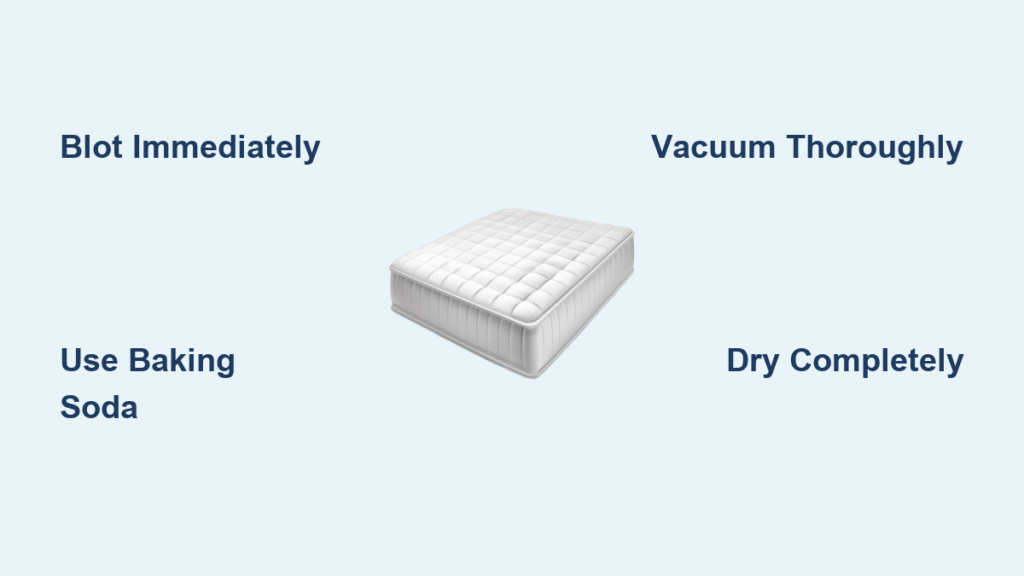
Blot the Wet Area Right Away
Use clean, dry microfiber towels to press firmly over the affected area. Blotting lifts moisture without pushing it deeper into foam cells. Replace towels as they become saturated and repeat until no more dampness transfers.
• Use absorbent microfiber towels for best results
• Press firmly rather than rubbing
• Replace towels frequently during the process
Strip off all bedding immediately, including sheets, protectors, and pillowcases. Wash these separately to prevent cross-contamination, especially if the spill involved organic materials.
Pro tip: Stack several towels and place a heavy object on top to draw out moisture passively over time.
Apply Baking Soda for Moisture and Odor Control
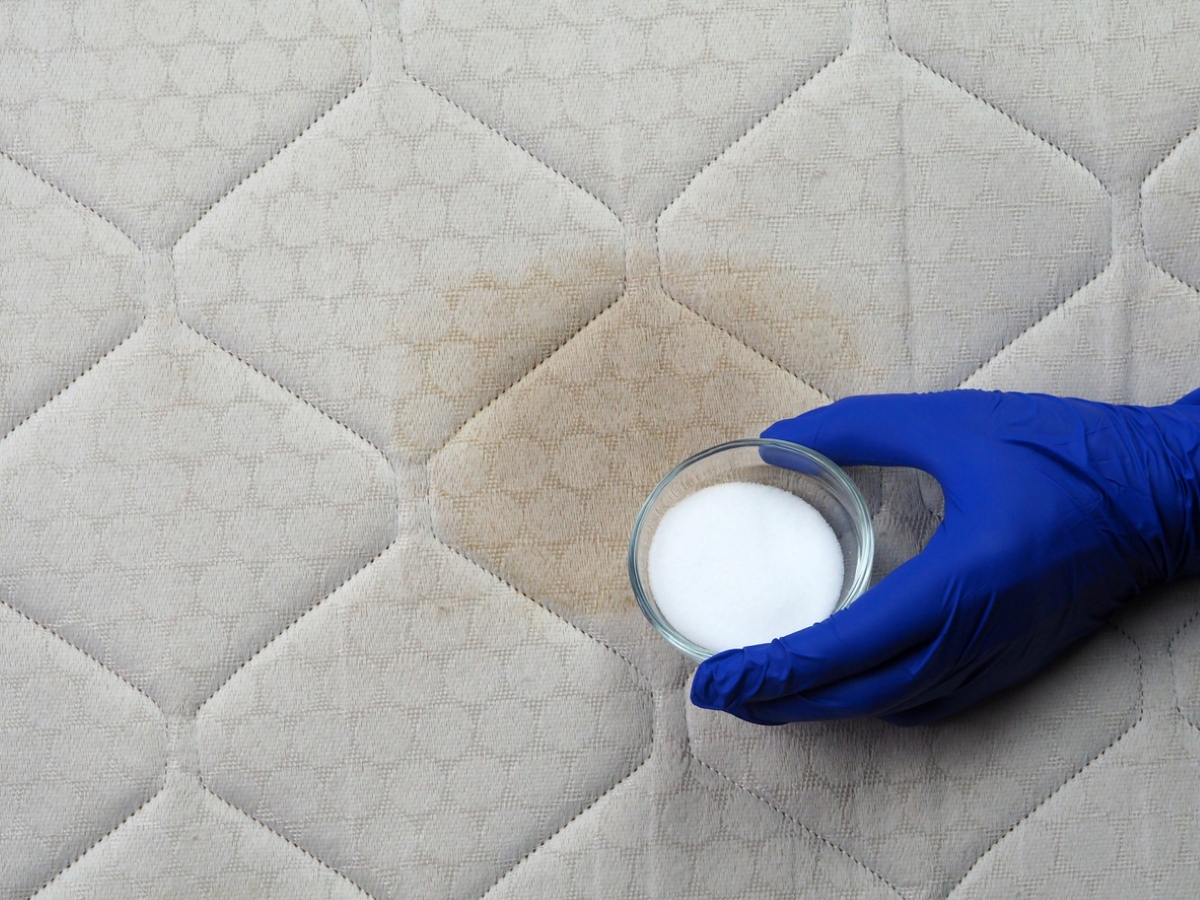
Once surface moisture is removed, baking soda draws out trapped dampness and neutralizes odors before they set.
Sprinkle Baking Soda Generously
Apply a thick, even layer of baking soda over the affected zone using a fine-mesh sieve to avoid clumping. Let it sit for at least 4 to 8 hours, or overnight for severe cases involving urine or significant spills.
• Use a fine-mesh sieve for even distribution
• Cover the entire affected area completely
• Allow 4-8 hours minimum for absorption
Baking soda works by drawing water from deep within foam layers while neutralizing acidic odors caused by sweat, urine, or other biological fluids.
Why it works: Sodium bicarbonate absorbs residual moisture and balances pH to stop odor-causing bacteria from thriving.
Vacuum the Entire Mattress Surface
After baking soda has absorbed moisture, thorough vacuuming removes all residue and debris.
Focus on Seams and Crevices
Use an upholstery attachment to clean the full surface, paying extra attention to seams, edges, and corners where dust, skin cells, and allergens accumulate. This step also removes all remaining baking soda residue.
• Use upholstery attachment for gentle cleaning
• Clean all surfaces including edges and corners
• Ensure complete removal of baking soda
Regular vacuuming monthly helps maintain mattress hygiene and extends the lifespan of your foam mattress.
Treat Stains Without Damaging Foam
Visible stains require careful spot-cleaning using minimal moisture to avoid saturating the foam.
Mix a Safe Cleaning Solution
Combine 1 part mild liquid detergent with 2 parts cold or lukewarm water. Optional: Add a few drops of white vinegar for disinfection, particularly effective against organic stains.
• Use gentle detergent like Woolite or mild dish soap
• Always use cold or lukewarm water
• Add vinegar for extra disinfection power
- Pour the solution into a spray bottle and mist lightly over the stain
- Dab gently with a clean, damp cloth using a tapping motion
- Blot dry immediately with a clean towel
- Reapply baking soda and let sit before vacuuming
Never use hot water on stains—it sets protein-based stains like urine and sweat while degrading foam structure.
Handle Urine and Organic Stains Properly
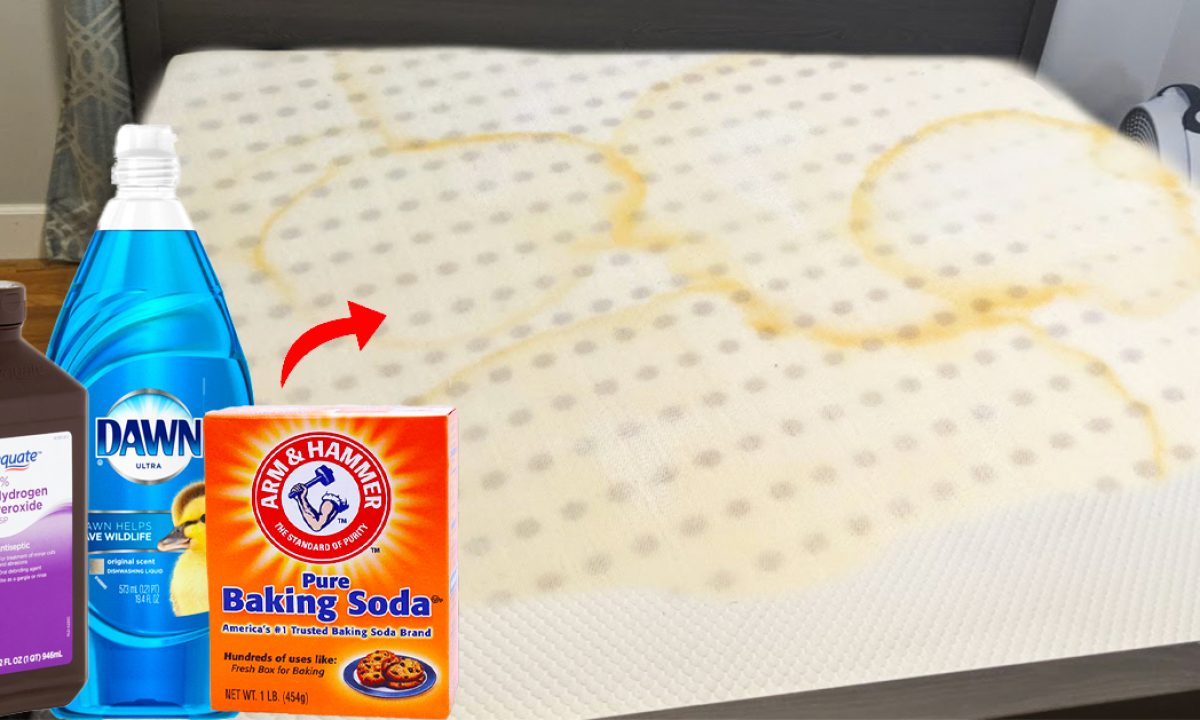
Urine and bodily fluids require special treatment due to bacterial concerns and strong odors.
Neutralize with Vinegar First
Blot up as much liquid as possible, then spray equal parts white vinegar and water on the area. Let sit for 5 to 10 minutes to break down ammonia and disinfect. Blot again with dry towels, then cover with baking soda for 8 or more hours before vacuuming.
• Blot first to remove maximum liquid
• Vinegar neutralizes ammonia effectively
• Follow with baking soda for complete odor removal
Warning: Never scrub the area—rubbing forces urine deeper into foam layers where it becomes nearly impossible to remove.
Eliminate Persistent Odors
For strong, lingering smells from sweat, pets, or mustiness, combine vinegar and baking soda for powerful odor elimination.
Use the Foaming Reaction Method
Spray the affected area with a 50/50 vinegar-water mix, then immediately sprinkle baking soda over it. Watch the fizzing reaction as the acid-base combination breaks down odor molecules. Let the foam work for 6 to 8 hours, then vacuum completely.
• Spray vinegar first, then add baking soda
• The fizzing reaction targets odor molecules
• Allow extended time for maximum effectiveness
This method addresses odors at the source rather than simply masking them with fragrances.
Deep Clean Only When Necessary
For heavily soiled mattresses, a light deep clean may help—but only if you can ensure complete drying capability over 24 to 72 hours.
Safe Deep-Cleaning Procedure
Lay the mattress on a tarp outdoors or stand it upright in a bathtub. Mix 1 part Woolite with 2 parts water and spray lightly over the surface without drenching. Let sit for 30 minutes, then rinse by misting with clean water. Gently press to release soapy water, then prop upright or lay flat in a ventilated area to dry.
• Only attempt if you have ample drying time
• Never drench the foam surface
• Ensure proper ventilation during drying
Only attempt this method if you have 24-72 hours for drying. Never lay a damp mattress on carpet.
Dry the Mattress Completely
Drying is the most critical phase. A damp mattress invites mold growth within 24 hours and creates serious health risks.
Choose the Best Drying Location
Outdoors in direct sunlight offers the best results—UV rays naturally kill bacteria and speed evaporation. For indoor drying, position near an open window with cross-ventilation or in an air-conditioned room.
• Outdoor sunlight provides UV antibacterial benefits
• Indoor locations need good air circulation
• Avoid enclosed spaces with poor ventilation
Position for Maximum Airflow
Lay the mattress flat on a dry, elevated surface like wood slats. Flip every 2 to 3 hours for even drying. Alternatively, prop the mattress upright at an angle against a wall to expose both sides simultaneously.
• Elevate to allow air circulation underneath
• Flip regularly for even drying
• Angle positioning exposes both sides to air
Speed Up Drying with Tools
Relying on air alone risks incomplete drying. Use tools to accelerate the process and reduce mold risk.
Use Fans and Dehumidifiers
Point electric fans across the mattress surface to move air continuously. Run a dehumidifier in humid climates to reduce ambient moisture and speed evaporation.
• Position fans to blow across the surface
• Dehumidifiers pull moisture from the air
• Combine both for fastest results
Extract Trapped Water with a Wet-Dry Vacuum
A wet-dry vacuum can pull moisture from deep foam layers. Pass slowly over the entire surface to absorb hidden dampness that air drying might miss.
Never sleep on or cover a damp mattress. Mold can start growing in as little as 24 hours.
Know the Drying Timeframe
Drying duration depends on spill severity, foam density, and environmental conditions.
Estimated Drying Times
Minor spills with fan assistance dry in 4 to 6 hours. Deep cleaning or large spills require 24 to 72 hours. High humidity environments add 12 to 24 hours to any estimate.
• Minor spills: 4-6 hours with fan
• Large spills: 24-72 hours
• Humid conditions: add 12-24 hours
Test for Complete Dryness
Press your palm firmly on the mattress. If it feels cool or damp, continue drying. The foam should feel completely room-temperature and dry to the touch before use.
Safety check: The mattress must feel completely dry with no cool or damp sensation before placing bedding back on it.
Clean Removable Covers Safely
Many foam mattresses have zip-off, washable covers that can be laundered separately from the foam core.
Follow Care Label Instructions
Check the care label before washing. Use cold or lukewarm water on a gentle cycle with mild detergent. Never use bleach or fabric softeners.
• Check care label first
• Use gentle cycle with mild detergent
• Avoid harsh chemicals entirely
Dry the Cover Properly
Tumble dry on low or no heat if the label permits. Otherwise, air dry in shade away from direct sunlight, which can degrade fabric fibers over time.
Never machine-wash the foam core. This voids warranties and causes permanent damage.
Maintain Mattress Toppers and Pillows
Memory foam toppers and pillows require the same careful cleaning approach as mattresses.
Spot-Clean Foam Components
Use mild soapy water on stains, dabbing gently rather than soaking. Air dry completely, flipping occasionally to ensure even drying throughout.
• Spot-clean only with minimal moisture
• Dab gently instead of rubbing
• Air dry fully before reuse
Fire risk warning: Memory foam contains flammable chemicals. Never expose to heaters, dryers, or high heat sources.
Avoid Dangerous Cleaning Mistakes
Even well-intentioned efforts can destroy a foam mattress if using improper methods.
Never Make These Mistakes
Never soak or submerge the mattress in water. Avoid bleach, ammonia, or strong chemicals that degrade foam. Never steam clean—excess heat and moisture warp foam structure. Never scrub aggressively, which tears delicate foam cells. Never put bedding back on a damp mattress.
• Never submerge or soak foam
• Avoid harsh chemicals and bleach
• Never use steam cleaners
• Never scrub or rub aggressively
Warranty note: Many manufacturers void warranties if steam cleaning or improper methods are used. Always check care guidelines first.
Prevent Future Wetness with Smart Habits
The best cleaning is prevention. Protect your foam mattress from future accidents.
Use a Waterproof Mattress Protector
Choose a protector that is breathable to prevent overheating, offers full-encasement protection for sides and bottom, and is hypoallergenic and machine-washable. Replace or clean every 4 to 8 weeks.
• Look for breathable materials
• Full encasement provides complete protection
• Wash regularly to maintain effectiveness
Follow a Maintenance Routine
Change sheets weekly, washing in hot water to kill dust mites. Vacuum the mattress monthly. Deep clean with baking soda every 3 to 6 months. Inspect annually for wear, sagging, or persistent odors.
• Weekly sheet changes in hot water
• Monthly vacuuming
• Quarterly baking soda treatment
• Annual inspection
Rotate and Ventilate for Longevity
Simple habits extend your mattress lifespan significantly.
Rotate Every 3-6 Months
If your mattress is double-sided, rotate head-to-foot to prevent uneven wear and sagging. Single-sided mattresses still benefit from periodic rotation to distribute wear.
• Rotate to distribute weight and wear
• Flip head-to-foot every few months
• Prevents sagging and soft spots
Ventilate Your Bedroom Daily
Open windows to reduce humidity and prevent mustiness. Keep pets off the bed to minimize accidents, dander, and hair accumulation.
• Daily ventilation reduces humidity
• Keep pets off to prevent accidents
• Fresh air prevents mold growth
Recognize When to Replace the Mattress
Some damage cannot be reversed despite your best cleaning efforts.
Signs It’s Time to Replace
Persistent musty smell despite thorough cleaning indicates mold within the foam. Visible mold or dark spots require immediate replacement. Sagging or softness in previously wet areas shows structural damage. If foam doesn’t rebound when pressed, the internal structure is compromised.
• Persistent odor after proper cleaning
• Visible mold or discoloration
• Sagging or permanent softness
• Poor foam rebound
If any of these signs appear, replacement is safer than continued use.
Key Takeaways for Cleaning a Wet Foam Mattress

Acting fast after a spill determines whether your mattress can be saved. Blot immediately rather than rubbing, then apply baking soda generously to draw out residual moisture. Never soak foam or use steam cleaning—these cause irreversible damage. Complete drying takes 4 to 72 hours depending on severity, so plan accordingly. Use a waterproof mattress protector going forward to prevent future emergencies. With proper care, a foam mattress can last 7 to 10 years, but neglect leads to mold, odors, and early replacement.
Frequently Asked Questions About Cleaning a Wet Foam Mattress
Can I machine-wash a foam mattress?
No. Foam and memory foam mattresses should never be submerged or machine-washed. The foam absorbs water deeply and retains it, causing structural damage and promoting mold growth. Only spot-clean with minimal moisture and always ensure complete drying before use.
How long does it take for a foam mattress to dry completely?
Minor spills dry in 4 to 6 hours with fan assistance. Large spills or deep cleaning require 24 to 72 hours. High humidity environments extend drying time by 12 to 24 hours. Always test by pressing your palm to the surface—it should feel completely dry with no cool sensation.
Does baking soda really work on wet foam mattresses?
Yes. Baking soda is highly effective for foam mattresses because it draws moisture from deep within foam layers while neutralizing odors. Apply a thick layer and let it sit for 4 to 8 hours, or overnight for severe cases, then vacuum thoroughly.
Can I use a steam cleaner on my foam mattress?
No. Steam cleaners introduce excessive moisture and heat that break down foam polymers, cause warping, and promote mold growth. All manufacturers and experts unanimously advise against steam cleaning foam mattresses. This method voids most warranties.
What should I do if urine soaks into the foam mattress?
Blot up as much liquid as possible immediately. Spray equal parts white vinegar and water to neutralize ammonia, let sit 5 to 10 minutes, then blot dry. Cover with baking soda for 8 or more hours before vacuuming. Repeat if odor persists. Never scrub, as this pushes urine deeper into foam.