Waking up to a blood stain on your mattress is stressful, whether from a nosebleed, a cut, or a period accident. But knowing how to clean blood out of a mattress doesn’t have to be overwhelming. The key is acting fast with the right method for your stain’s age and your mattress type.
Blood is a protein-based stain, and once it dries, it binds tightly to fabric fibers. Heat sets it permanently, making removal nearly impossible. But with cold water, hydrogen peroxide, enzyme cleaners, or simple household items like baking soda and vinegar, you can lift most stains, especially if you respond quickly. This guide covers proven methods for fresh and dried blood, step-by-step techniques, and crucial safety tips to avoid damaging your mattress.
Immediate Actions for Any Blood Stain
Acting fast dramatically increases your chances of complete removal. The first 45 minutes are critical, as blood begins to set quickly and becomes much harder to remove once dried.
Blot Immediately: Speed Matters
Use a clean white cloth or paper towel to gently blot excess blood. Never rub, as this pushes the stain deeper into the mattress layers. Strip off all bedding, including sheets, protectors, and pillows, to fully access the stained area. Place a dry towel underneath the stain, between the mattress and box spring, to catch any seepage during cleaning.
Cold Water Is Non-Negotiable
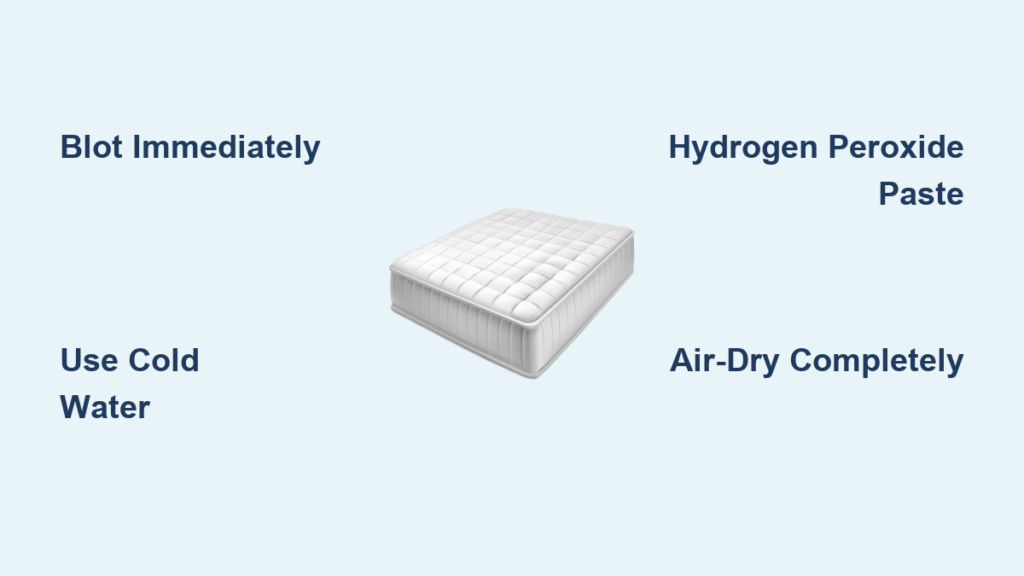
Hot water cooks the proteins in blood, permanently locking the stain into the fabric. Always use cold water only, whether rinsing, dabbing, or mixing cleaning solutions. For fresh stains, flush the area with cold water using a spray bottle or damp cloth. Repeat until no more blood transfers to the cloth.
Protect Yourself During Cleaning
Blood can carry pathogens. Wear nitrile or latex gloves and consider safety goggles if using hydrogen peroxide or ammonia. Ensure the room is well-ventilated, especially when applying strong cleaners.
Best Methods for Fresh Blood Stains
For blood stains less than 45 minutes old, simple cold water treatment often works effectively. These methods require minimal products and are gentle on mattress materials.
Cold Water Dabbing Technique
This method works best for recent spills, minor cuts, or early-stage period leaks. You need cold water, clean white cloths or paper towels, and optionally salt or mild laundry detergent.
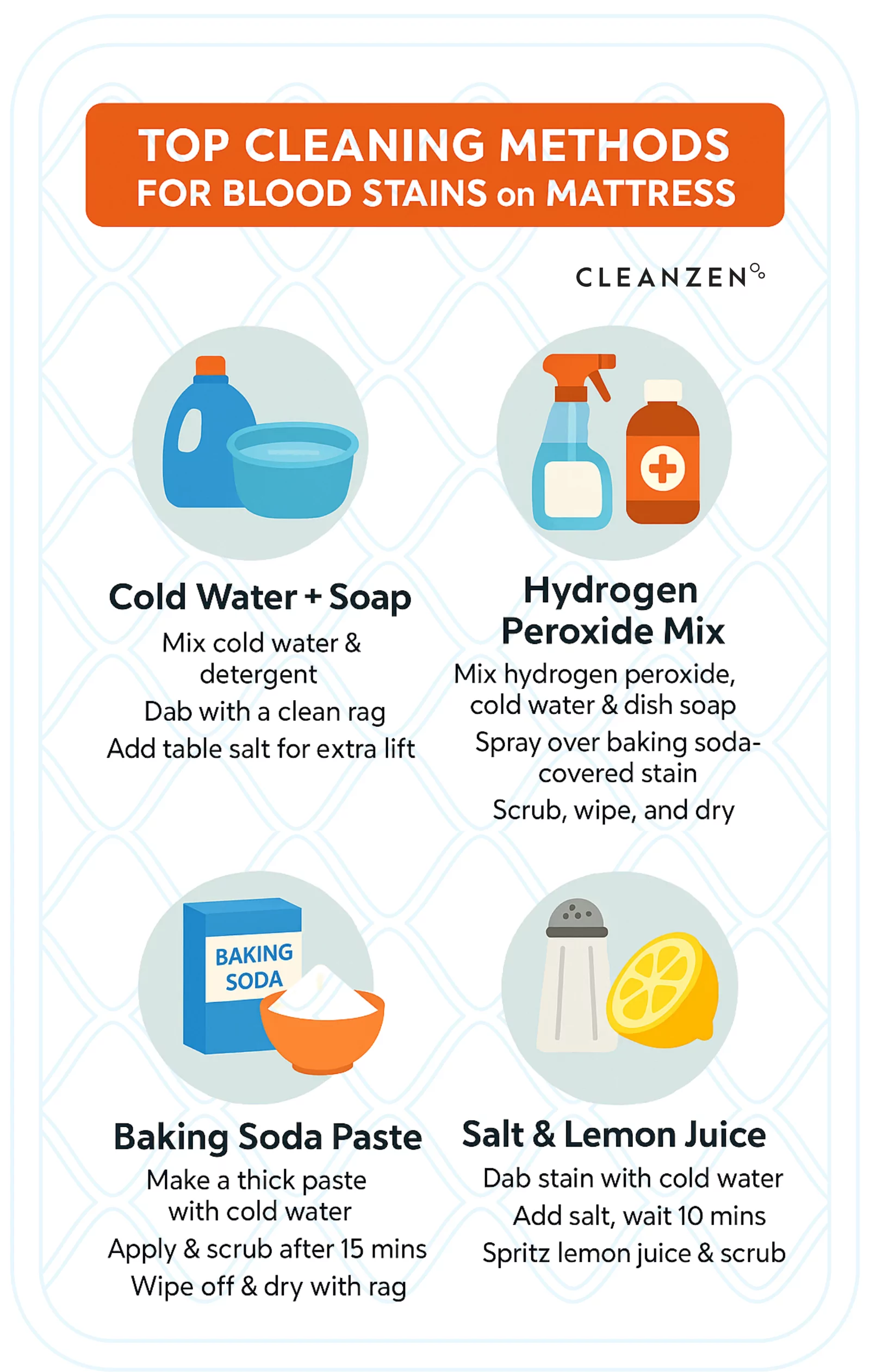
Blot excess blood with a dry cloth first. Dampen a clean rag with cold water and dab the stain gently without soaking. Keep blotting until the stain lifts completely. For extra power, mix a drop of laundry detergent into the water or sprinkle salt before dabbing, as salt absorbs moisture and lifts residue. Rinse by blotting with plain cold water, then pat dry and let air-dry fully before remaking the bed.
This method works best within minutes. If the stain disappears, skip harsher treatments entirely.
Removing Dried or Set-In Blood Stains
For older stains that have dried and bonded to the fabric, you’ll need stronger cleaning agents. These methods break down the protein structure that makes blood stains so stubborn.
Hydrogen Peroxide and Baking Soda Paste
This approach is best for old, visible, or recurring stains. You need 3% hydrogen peroxide, baking soda, cold water, a clean microfiber cloth, and a vacuum.
Vacuum the area to remove dust and loose particles first. Mix three parts baking soda with one part cold water to form a thick paste. Apply directly to the stain and let sit for 30 minutes. Alternatively, pour hydrogen peroxide directly on the stain first, watch for foaming as it breaks down proteins, then sprinkle baking soda on top. Gently blot with a damp, cold-water cloth to remove residue, then rinse with a clean, cold-water-dampened cloth. Blot dry and allow 2 to 4 hours to air-dry using fans or open windows.
Hydrogen peroxide can lighten colored fabrics. Always test on a hidden spot first, such as the mattress edge or underside.
White Vinegar Solution
This gentle alternative works well for sensitive materials or people avoiding chemicals. You need white vinegar, cold water, and a clean cloth.
Mix one-third cup vinegar with two-thirds cup cold water. Soak a cloth in the solution and blot the stain without rubbing. Let sit for 10 minutes. Rinse with a cold-water-dampened cloth, then pat dry and air-dry completely.
Vinegar helps neutralize odors and is safe on most fabrics, but avoid overuse on foam because the acidity may degrade some materials over time.
Stubborn or Deep Blood Stains
When simple methods fail, these approaches target the protein bonds more aggressively. They’re ideal for old stains or those that have soaked deeply into the mattress material.
Enzyme-Based Cleaners
Enzymes target and break down protein bonds in blood without damaging fabric, making this approach especially effective for old, deep, or period-related stains with organic residue. You need an enzyme cleaner such as Nature’s Miracle or Biokleen, clean towels, baking soda for odor, and a vacuum.
Vacuum the area thoroughly. Spray or dab enzyme cleaner onto the stain and let sit for 15 to 30 minutes, or up to several hours for thick stains. Blot thoroughly with a damp, cold-water cloth. Repeat if needed. Once clean, sprinkle baking soda to absorb moisture and odors, wait 30 minutes or more, then vacuum thoroughly.
Enzymatic cleaners are ideal for recurring stains and are safer on delicate or dark-colored mattresses than peroxide.
OxiClean Stain Remover Application
This oxygen-based approach works well for heavy or long-set stains when DIY methods fail. You need OxiClean Versatile Stain Remover, water, and white towels.
Pre-treat by blotting and rinsing with cold water. Mix one scoop per two cups of cold water. Do not pour the solution directly on the mattress. Instead, soak a white towel in the solution and blot the stain gently. Repeat until the stain fades, then rinse with a cold-water-dampened towel. Air-dry completely.
Never use OxiClean on wool, silk, or leather. Test first on colored or sensitive fabrics.
Low-Moisture Options for Foam Mattresses

Memory foam, latex, and hybrid mattresses require special care because they trap moisture easily, leading to mold or structural damage. These dry methods minimize liquid exposure.
Cornstarch and Salt Paste
This approach is best for memory foam, latex, or hybrid mattresses where moisture retention is risky. You need cornstarch, salt, cold water, and optionally a few drops of hydrogen peroxide.
Mix equal parts cornstarch and salt with just enough cold water, and hydrogen peroxide if desired, to make a paste. Apply a thin layer over the stain and let dry overnight. Vacuum thoroughly to remove all residue.
This method minimizes liquid exposure, reducing the risk of mold or foam breakdown.
Meat Tenderizer Paste
Meat tenderizer contains papain enzyme, which breaks down blood proteins just like commercial enzyme cleaners. This approach works well for old stains when you want to avoid soaking the mattress.
Mix one tablespoon meat tenderizer with cold water to form a paste. Apply to the stain and let sit for 30 to 60 minutes. Blot with a damp cloth and rinse with cold water, then vacuum or wipe dry.
Last-Resort Cleaning: Ammonia Solution
Use this method only when other approaches have failed. Ammonia is powerful but can damage certain materials and requires careful handling.
For extremely stubborn stains, ventilate the room well and wear gloves and goggles. Mix one tablespoon ammonia with one cup cold water. Dab lightly onto the stain without soaking. Blot aggressively with a dry cloth, then rinse with a cold-water-dampened cloth. Let dry completely.
Never mix ammonia with bleach or hydrogen peroxide, as toxic or explosive reactions can occur. Avoid on latex or natural fiber mattresses, as ammonia can degrade these materials.
Drying the Mattress Safely
After any wet cleaning, complete drying is essential. Trapped moisture breeds mold, mildew, and foul smells that can ruin your mattress.
Use fans or open windows for airflow. Run a dehumidifier in humid climates. Use a hairdryer on cool setting, never hot, from a distance. Stand the mattress on its side for 24 hours to dry both sides. Use a wet-dry vacuum to extract deep moisture and prevent water rings.
Wait at least 2 to 4 hours before remaking the bed. Thick or hybrid mattresses may need up to 24 hours to dry completely.
Neutralize Odors After Cleaning
Even after the stain is gone, odors may linger. Baking soda absorbs residual moisture and neutralizes smells effectively.
Once the mattress is dry, sprinkle a light layer of baking soda over the area. Let sit for 30 minutes to several hours, then vacuum thoroughly.
Baking soda also helps balance pH and absorbs any residual moisture left behind.
Prevent Future Blood Stains
Prevention is far easier than cleaning. These strategies protect your mattress from unexpected incidents.
Use a Waterproof Mattress Encasement
The best defense is a fully zippered, waterproof mattress protector. It blocks blood, sweat, urine, and spills while protecting against dust mites and allergens. Choose hypoallergenic, breathable materials and machine-wash every 1 to 3 months. Ensure the encasement covers all sides, top, bottom, and edges.
A 30-dollar protector can save you from replacing a 1,000-dollar mattress.
Additional Prevention Tips
Keep hydrogen peroxide and clean rags in your bedroom for emergencies. Apply secure bandages before bed if you have wounds. Use nasal moisturizers to prevent nighttime nosebleeds. Maintain 30 to 50 percent humidity in your bedroom to reduce skin cracking.
Know When to Replace the Mattress
Some stains cannot be fully removed, especially if blood has soaked into inner layers. Replace the mattress if the stain reappears after drying, there’s a persistent metallic or musty odor, you see mold, mildew, or discoloration, or multiple large stains have occurred.
Deep contamination cannot be reached with surface cleaning. If hygiene is compromised, replace the mattress for health and comfort.
Safety and Material Warnings
Always test any cleaner on a hidden area such as the edge or underside of the mattress. Let dry completely to check for color changes or texture damage before full application.
Avoid these common mistakes. Hot water sets the stain permanently. Bleach damages fibers and may discolor. Steam cleaning with blood present sets proteins and spreads odor. Soaking the mattress causes warping, mold, and structural damage.
Never mix chemicals. Hydrogen peroxide plus vinegar creates peracetic acid, causing irritating fumes. Ammonia plus bleach creates toxic chlorine gas. Hydrogen peroxide plus ammonia creates potentially explosive compounds.
Quick Method Guide by Stain Type
| Stain Type | Best Method | Key Products |
|---|---|---|
| Fresh under 45 minutes | Cold water plus blotting | Cold water, clean rags |
| Slightly dried | Vinegar solution | White vinegar, water |
| Dried or set-in | Peroxide plus baking soda | 3% hydrogen peroxide, baking soda |
| Stubborn or old | Enzyme cleaner | Nature’s Miracle, Biokleen |
| Heavy or recurring | OxiClean blotting | OxiClean, cold water |
| Foam mattress | Cornstarch-salt paste | Cornstarch, salt |
| Period blood | Enzyme or meat tenderizer | Papain-based products |
Frequently Asked Questions About Cleaning Blood Out of a Mattress
Does hot water make blood stains worse?
Yes, hot water permanently sets blood stains. Blood contains proteins that denature and bond to fabric fibers when exposed to heat. Always use cold water for treating blood stains on mattresses, sheets, or clothing.
How long do I have to remove a blood stain before it becomes permanent?
Blood begins to set within 45 minutes. The faster you act, the better your chances of complete removal. After several hours or overnight, the stain may require multiple treatments or may not come out entirely.
Can I use hydrogen peroxide on all mattress types?
Hydrogen peroxide works well but may lighten colored fabrics. Test on a hidden area first. Avoid using it on delicate or dark-colored mattresses without testing. For memory foam or latex, consider enzyme cleaners instead, as they’re gentler.
What is the best method for cleaning period blood from a mattress?
Enzyme-based cleaners work best for period blood because they break down the proteins and organic matter. Apply the cleaner, let it sit for 15 to 30 minutes, then blot with cold water. For stubborn stains, combine with hydrogen peroxide after testing.
How do I dry my mattress after cleaning blood stains?
Use fans, open windows, or a dehumidifier for airflow. Stand the mattress on its side to dry both sides. Use a hairdryer on cool setting from a distance. Wait at least 2 to 4 hours before remaking the bed, or up to 24 hours for thick mattresses.
Key Takeaways for Cleaning Blood Out of a Mattress
Acting fast with cold water gives you the best chance of removing blood stains completely. For dried or stubborn stains, hydrogen peroxide, enzyme cleaners, or OxiClean break down protein bonds effectively. Always test cleaning solutions first, avoid heat, and never mix chemicals. Prevention through waterproof mattress protectors is the smartest investment for long-term mattress care.