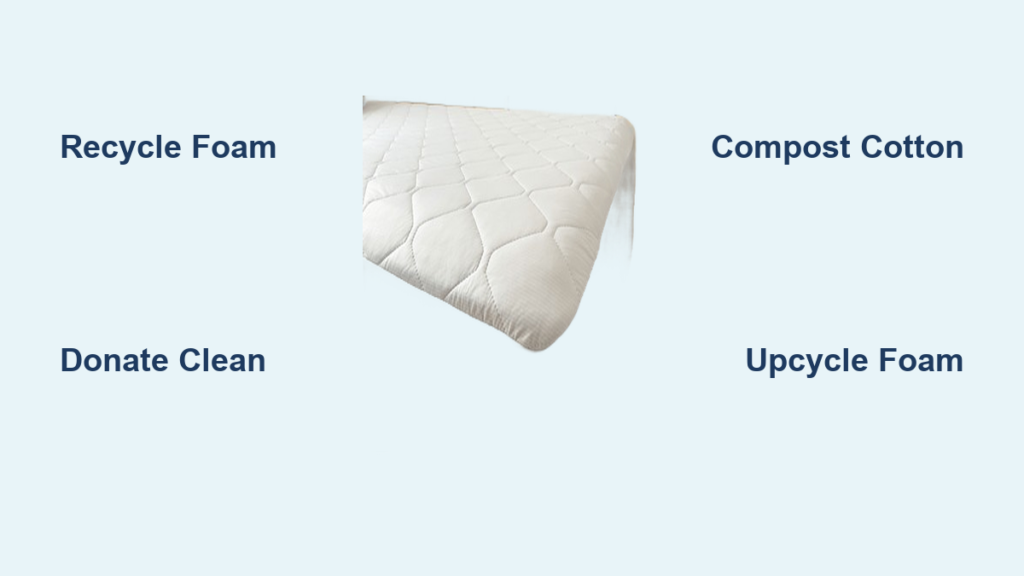
You’ve upgraded your bed, and now that old mattress pad is taking up space in the closet. Tossing it in the trash might seem easy, but it’s far from the best choice, especially if it’s made of memory foam or synthetic fibers. The good news? There are smarter, greener ways to let go of your old pad. Whether it’s foam, cotton, wool, or a blend, this guide will walk you through how to dispose of an old mattress pad responsibly.
Why Proper Mattress Pad Disposal Matters
Improper disposal contributes to environmental degradation and public health risks. Foam-based pads are petroleum-derived and can persist in landfills for 10 to 200 years, releasing volatile organic compounds and flame retardant chemicals as they degrade. Over 15 million mattresses are discarded annually in the U.S., and while exact figures for pads aren’t tracked, their volume is substantial due to widespread use.
Choosing responsible disposal reduces environmental contamination, conserves raw resources, and supports circular economy models. Your approach should start by identifying the material, since that determines your best option.
Recycle Foam Mattress Pads Through Specialized Programs

Foam-based mattress pads, especially memory foam, require specialized recycling facilities that can shred and repurpose materials into carpet padding, gym mats, or car insulation.
Find a Foam Recycler Near You
Memory foam doesn’t belong in curbside bins. To locate a recycler, use Earth911’s Recycling Search and enter “memory foam” or “mattress recycling.” Visit the Mattress Recycling Council website and check their Bye Bye Mattress program. Contact your local waste management authority to see if they offer bulk pickup with recycling.
Not all programs accept mattress pads specifically. Many focus on full mattresses, so always call ahead to confirm.
Know the Fees and Requirements
Most recycling services charge $10 to $30 for drop-off or pickup. Some retailers include free removal when you buy a new mattress. In states like California, Connecticut, and Rhode Island, advance recycling fees on new mattress purchases fund free disposal programs.
Never burn foam. Toxic fumes including hydrogen cyanide can be released. Recycling keeps it out of landfills and gives it new purpose.
Donate Clean Mattress Pads to Those in Need
A gently used mattress pad can help someone in need, but only if it’s in good condition.
Who Accepts Donations
Many organizations will take clean, stain-free pads. Goodwill and Salvation Army accept pads in like-new condition. Homeless shelters and domestic violence shelters often need bedding. Foster care programs and Habitat for Humanity ReStore may also accept donations. Call local branches to confirm before dropping off.
Red flags that disqualify donation include bed bug signs, urine stains, mold, or smoke damage.
Prepare for Donation
Before dropping off, wash thoroughly using hot water if the fabric allows. Air dry completely to prevent mildew. Inspect seams and elastic. Minor wear is okay, but rips or lumps are not.
Rehome It Locally
Use platforms like the Buy Nothing Project on Facebook, Freecycle.org, Craigslist Free section, or the Nextdoor app. Take clear photos, mention any flaws, and note that a fitted sheet can help secure loose elastic.
Compost Natural Fiber Mattress Pads
If your pad is made of cotton, wool, or down, composting offers a rare and eco-friendly end-of-life option.
Is Your Pad Compostable
Only natural fibers break down safely. Cotton is fully biodegradable and enriches soil. Wool acts as mulch, deters pests, and retains moisture. Down decomposes slowly and works best in sealed compost bins to avoid attracting rodents.
Synthetic blends are not compostable. Never compost pads treated with flame retardants, waterproof coatings, or contaminated with bodily fluids.
How to Compost Step by Step
Remove the outer cover first, as most are synthetic and must go in the trash. Cut inner fibers into small pieces to speed decomposition. Mix with brown materials like dry leaves and paper, plus green materials like food scraps and grass. Bury wool at the base of plants for slow-release nutrients. Turn compost weekly to maintain airflow.
Wool breaks down over 1 to 3 years and improves soil structure.
Repurpose Your Old Mattress Pad Creatively
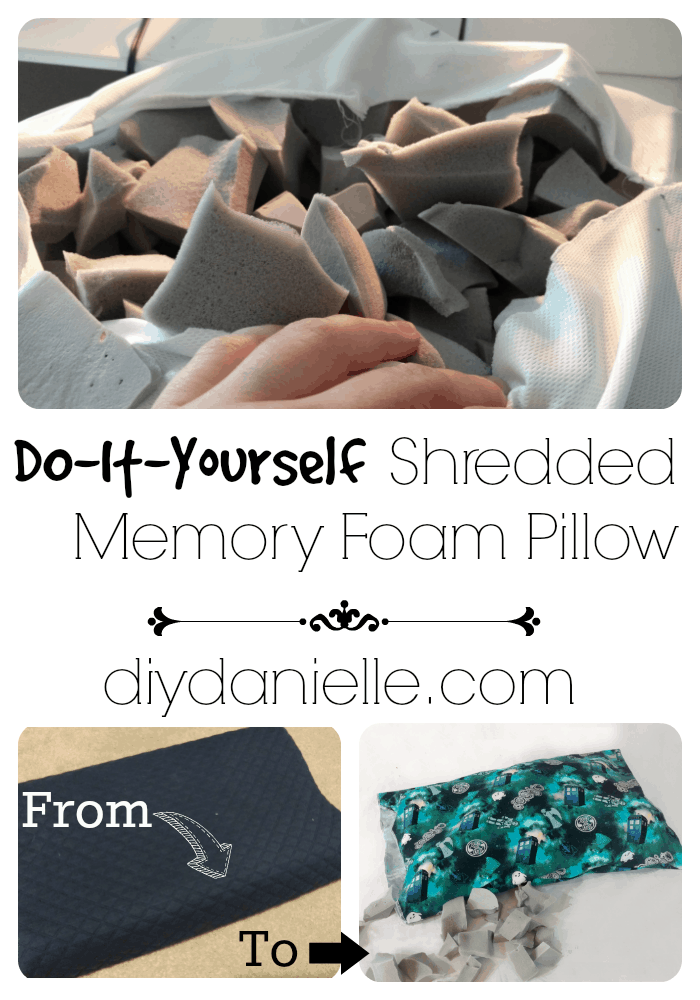
Even if recycling or donation isn’t possible, your old mattress pad can live on in creative ways.
Memory Foam Upcycling Ideas
Foam is durable and versatile. Cut pieces for pet bed filler and wrap in old jeans or sweatshirts. Use as a gardening kneeler for comfort. Attach to walls for soundproofing panels in home studios. Use as a workshop drop cloth, which is more durable than plastic. Shred and use for packaging material for fragile items.
Wear gloves, an N95 mask, and goggles when cutting foam to avoid inhaling dust.
Cotton, Wool, and Down Reuse
Natural fibers are ideal for DIY projects. Use as pillow or cushion stuffing. Convert into quilt batting or moving blankets. Use for insulation in boots or sleeping bags. Wool works especially well as garden mulch. Create ottoman or floor mat padding.
One pad can yield multiple useful items. Extend its life with a little creativity.
Safely Dismantle a Mattress Pad for Disposal
If no other option works, dismantling reduces volume and allows partial recycling.
Tools Youll Need
An angle grinder with cutoff wheel is most effective. You’ll also need a utility knife or heavy scissors. Wear cut-resistant gloves, goggles, and an N95 mask. Use plastic sheeting to protect your workspace.
Avoid hacksaws. They struggle with dense foam and create jagged edges.
Step by Step Dismantling
Work outdoors or in a well-ventilated garage. Lay down plastic to catch debris. Cut along seams to remove the fabric cover. Extract the foam core and slice into 12-inch by 12-inch sections. Use the angle grinder for thick foam. Remove the guard temporarily if needed, then reattach it.
Sort components afterward. Foam goes to the trash or local recycling. Natural fibers can be composted if untreated. Synthetic trims go to the landfill.
Dispose of pieces over 3 to 4 weeks to stay within weekly bulk waste limits.
Schedule Curbside Bulk Pickup
Many cities offer scheduled bulky item collection, a convenient option if recycling isn’t available.
How to Schedule
Visit your city sanitation website and check pickup dates. Note item limits per month and any fees, which typically range from $10 to $25. Understand requirements like bagging, tagging, or tying.
Pads often must be separated from frames or box springs.
Maximize Efficiency
Bundle with other bulky items like an old mattress or furniture. Dismantle first to fit more in one pickup. Call your hauler. Some offer on-demand service for a fee.
Use Manufacturer Take-Back Programs
Some brands offer end-of-life take-back services, especially if you’re buying a new product.
Brands With Recycling Programs
Casper partners with recyclers and checks regional availability. Avocado is eco-focused and accepts old bedding for responsible disposal. Tempur-Pedic offers take-back for branded items. Ecosa in Australia recycles mattresses and sheets. Inquire about toppers.
Retailer Haul-Away Services
Stores like Mattress Firm, Sleep Number, and American Freight often offer free removal with new mattress delivery. They may charge $25 to $50 if not purchasing new.
Ask if they accept toppers and pads. Many do, especially if bought together.
Check Your State Recycling Laws
Disposal options vary by location, especially in states with mattress recycling laws.
U.S. Programs That Accept Pads
California has Bye Bye Mattress with over 240 free drop-off sites and free pickup with new mattress. Connecticut offers Bye Bye Mattress with free drop-off in 157 towns. Rhode Island has Bye Bye Mattress with statewide events and sites. Oregon launches a state program in 2025 with collection in every county, funded by a $22.50 fee on new purchases.
These programs are funded by advance recycling fees and aim to recycle 99% of materials.
International Options
Australia has Soft Landing, SUEZ, and EcoDrop that accept toppers. New Zealand has All Heart NZ with Andoo offering nationwide pickup.
Never Burn a Mattress Pad
It might seem like a quick fix, but burning foam releases toxic fumes including isocyanates, hydrogen cyanide, and carbon monoxide. These are dangerous to humans, pets, and the environment.
Always choose recycling, donation, or safe disposal instead.
Quick Decision Guide for Disposing Your Pad
Not sure where to start? Use this flow.
Is it clean and usable? Donate or give it away. Is it made of foam? Recycle via MRC or local facility. Is it natural fibers like cotton or wool? Compost or repurpose. Is it blended or stained? Dismantle and dispose responsibly. No local options? Use a junk removal service.
Junk haulers often recycle 60 to 90% of what they collect. Average cost is $75 to $150.
Frequently Asked Questions About Mattress Pad Disposal
Can I throw my mattress pad in the regular trash?
Technically possible in many areas, but strongly discouraged. Municipalities often classify foam pads as bulky waste requiring special pickup. Some localities ban foam items from regular garbage. Check your local regulations before trashing.
How much does foam mattress pad recycling cost?
Drop-off or pickup fees typically range from $10 to $30 per item, depending on size and location. Some facilities offer free recycling if bundled with a new mattress purchase. In states with recycling laws, programs may be free.
Are there donation centers that accept used mattress pads?
Goodwill, Salvation Army, homeless shelters, and domestic violence shelters often accept clean, stain-free pads. Habitat for Humanity ReStore varies by location. Always call ahead to confirm current policies and conditions.
Can I compost a cotton mattress pad at home?
Yes, cotton is fully biodegradable and composts well. Remove any synthetic covers first. Cut into small pieces and mix with brown and green compost materials. Avoid composting if treated with flame retardants or contaminated with bodily fluids.
What should I do with a memory foam pad I cannot recycle locally?
Try upcycling instead. Cut into pieces for pet beds, garden kneelers, soundproofing panels, or packaging material. You can also use junk removal services that sort and recycle components. Many divert 60 to 90% of materials from landfills.
Key Takeaways for Responsible Mattress Pad Disposal
Disposing of an old mattress pad doesn’t have to mean adding to the waste stream. Start by identifying the material, since foam requires different handling than cotton or wool. Recycle foam through specialized programs like the Mattress Recycling Council or Earth911. Donate only clean, usable pads to Goodwill, Salvation Army, or local shelters. Compost natural fibers to enrich your garden soil. Get creative with upcycling projects like pet beds or soundproofing panels.
Never burn a mattress pad due to toxic fume release. Check your state’s recycling laws, as California, Connecticut, Rhode Island, and Oregon offer funded programs. Use manufacturer take-back programs when upgrading to a new mattress.
With the right approach, you can protect the planet, help others, and even spark a DIY project. Every responsible choice counts.