If your baby is struggling with congestion or acid reflux, you may have considered propping up the crib mattress to help them breathe or sleep more comfortably. While a slight incline can offer relief, safety must come first. The American Academy of Pediatrics strongly advises that infants sleep on a firm, flat surface to reduce the risk of Sudden Infant Death Syndrome. However, in certain medical cases, your pediatrician may approve a gentle elevation using safe, under-mattress methods.
This guide walks you through how to prop a crib mattress safely using approved techniques, common risks to avoid, and safer alternatives. You will learn how to elevate the sleep surface without compromising safety, prevent your baby from sliding, and know when to consult a doctor.
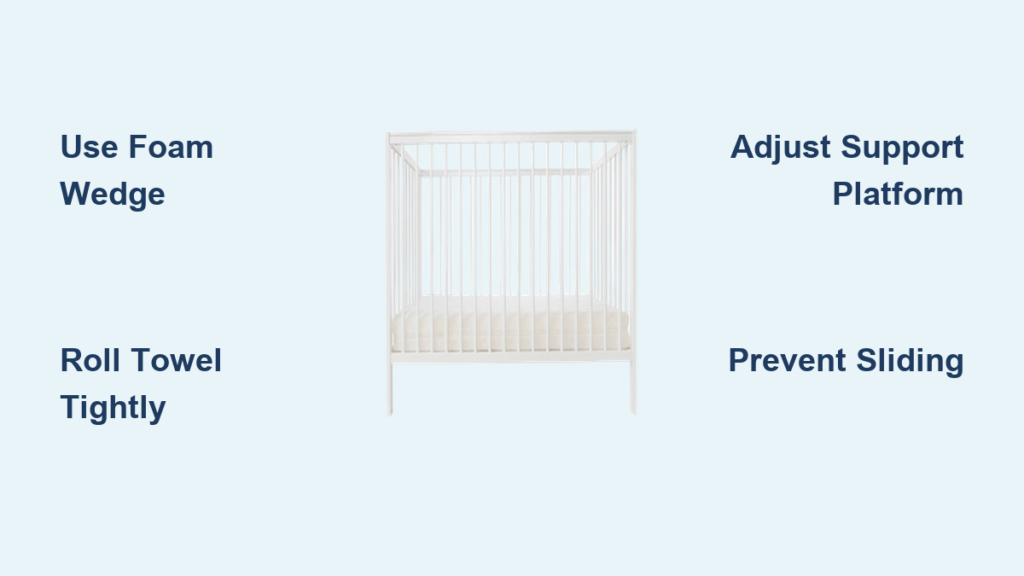
Use a Crib Wedge Under the Mattress
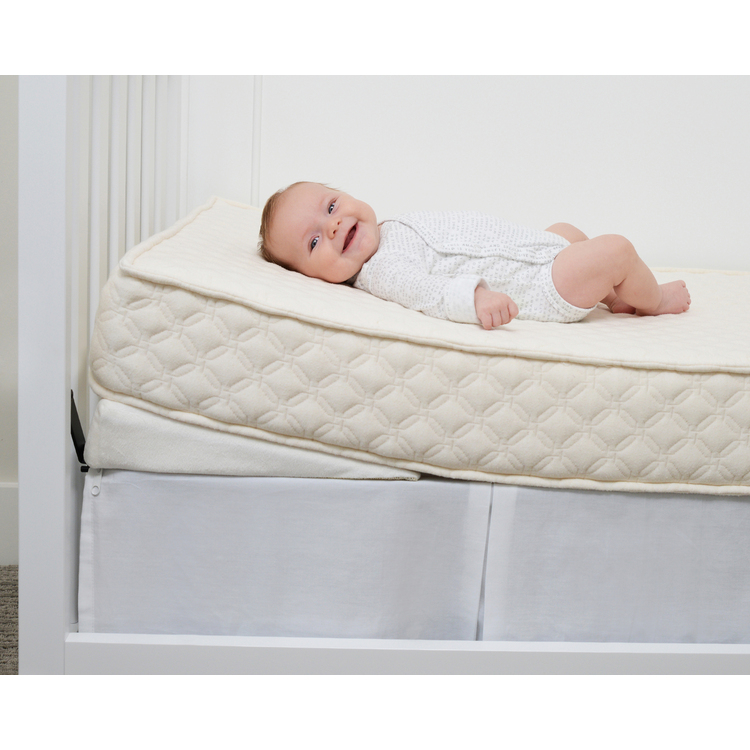
The safest way to incline a crib mattress is with a firm foam wedge designed specifically for infant use. These wedges create a slight, stable incline while keeping the sleep surface firm and secure.
Choose a Safe, Approved Wedge
Look for wedges labeled for use under the mattress, never on top. The incline should be between 15 and 30 degrees, which helps with drainage without increasing suffocation risk. Ensure the wedge is made of non-compressible foam and fits your crib dimensions. Avoid soft, plush, or inflatable products that can collapse and create danger zones.
Install the Wedge Correctly
Remove the mattress and bedding completely. Place the wedge flat against the crib base at the head end. Reinstall the mattress on top, ensuring it lies flush and does not bend. Cover with a fitted sheet with nothing loose or exposed.
Test stability by pressing down on the mattress. If it shifts or wobbles, reposition or replace the wedge. This method keeps the baby on a firm, continuous surface as safe sleep guidelines require.
Roll a Towel Under the Mattress
If you do not have a commercial wedge, a tightly rolled towel under the mattress can work temporarily. This is not a long-term solution but may help in a pinch.
Apply the Towel Method Safely
Use a bath-sized towel rolled tightly into a firm cylinder. Place it under the head end of the mattress, running the full width. Ensure the mattress tilts as a single plane with no sagging or creasing in the middle. Tuck the towel snugly so it cannot shift during the night. Cover with a fitted sheet to secure everything in place.
This method is less stable than a foam wedge. Replace it with a proper product as soon as possible. Never place the towel on top of the mattress, as this creates a soft surface that is a suffocation hazard.
Adjust the Mattress Support Platform
Some cribs allow you to tilt the entire mattress base by adjusting height settings at each end. This is a clean, object-free way to create a safe incline.
Create a Mechanical Tilt
Remove the mattress and bedding. Locate the adjustable brackets on the crib support system. Keep the head-end brackets at their current height. Lower the foot-end brackets by one or two levels. Reinstall the mattress and test for stability.
Check for Safety
The platform must remain rigid and wobble-free. The mattress should not shift or slide. Confirm your crib model allows this setup by checking manufacturer instructions.
This method uses no added materials, only the crib built-in design. It offers a stable, long-term solution when available.
Elevate the Crib Legs
Raising the head-end legs of the crib can create a full-bed incline, but this method carries higher risks. Use it only if other options are not possible and only under medical advice.
Elevate Safely
Remove any wheels from the front legs. Use solid, non-slip blocks such as wooden cubes or crib risers with anti-slip pads. Place blocks under the two front head-end legs only. Aim for a six-inch lift to achieve a therapeutic 15 to 30 degree angle. Ensure all four legs sit evenly with no wobbling.
Test Stability
Gently shake the crib to check for movement. Confirm the crib does not rock or tilt to one side. Never place blocks under only one leg or use unstable materials like books.
Elevating the crib can make it top-heavy, increasing the chance of tipping, especially if your baby pushes or rolls. This method may void the crib warranty and is not recommended by most pediatricians unless absolutely necessary.
Prevent Baby from Sliding Down

One of the biggest dangers of an inclined mattress is sliding. Babies can slip toward the foot of the crib, ending up in a curled or trapped position that may obstruct breathing.
Use a Rolled Blanket as a Barrier
Take a large, firm blanket and roll it tightly into a cylinder. Bend it into a U shape with the curve centered on the mattress. Tuck the two ends under the mattress edges at the sides. Position the center of the U around the midpoint of the crib.
Secure Everything
The rolled blanket acts as a soft bumper preventing downward movement while allowing space to shift. Cover the entire setup with a fitted sheet with no loose fabric exposed. Never use pillows, stuffed animals, or aftermarket bumpers.
Always supervise your baby closely the first few times you use this setup.
Never Prop the Mattress with Loose Items
Some parents consider using pillows, folded blankets, or books on top of the mattress to create a slope. This is extremely dangerous and violates safe sleep protocols.
Why It Is Unsafe
Soft objects can cover the babys face causing suffocation. Babies can roll into gaps between the mattress and pillow creating entrapment. Extra layers trap heat increasing SIDS risk. Pillows compress creating unstable bases.
Never place pillows, blankets, or toys inside the crib. The AAP has linked inclined sleepers and loose bedding to infant deaths. Stick to under-mattress solutions only.
Know the Risks of Improper Inclining
Even well-intentioned adjustments can backfire. Understanding the dangers helps you avoid them.
Mattress bending occurs when the mattress folds or creases in the center. Never fold or crease the mattress; use full-width support. Over-inclination happens when angles exceed 30 degrees. Keep the angle under 30 degrees and use a level app to check. Crib instability results from leg elevation unless done carefully. Avoid leg elevation unless absolutely necessary. Baby sliding occurs on inclined surfaces. Use a tucked U-shaped roll or approved positioning aid. Delayed response happens when you cannot monitor frequently. Never leave your baby unattended on an incline.
If your baby starts rolling over, usually by four to six months, stop inclining the mattress. They can no longer be safely positioned.
Ask Your Pediatrician First
Before changing your babys sleep setup, talk to your doctor. Conditions like reflux or congestion may require diagnosis, not just positional fixes.
When a Doctor Might Approve Inclining
Chronic acid reflux confirmed by a pediatrician may warrant elevation. Persistent nasal congestion due to colds or allergies can benefit from a slight incline. Ear drainage issues that improve with elevation may be treated this way.
What to Ask
Ask what degree of incline is safe for your baby. Ask how long you can use this method. Ask if there are safer alternatives. Ask if you should consider a prescription device.
Get professional approval before making changes. Never guess with your babys safety.
Try Safer Alternatives First
Before altering the sleep surface, consider non-invasive solutions that do not compromise safety.
Use a cool-mist humidifier in the babys room. Moist air loosens mucus and eases breathing. Clean the humidifier daily to prevent mold. Apply saline drops using one to two drops per nostril before feeding or bedtime. Wait 30 seconds, then suction with a bulb syringe. Use a nasal aspirator like NoseFrida, which is more effective than bulbs. Clear nasal passages before sleep for better airflow. Hold your baby upright for 20 to 30 minutes after meals. Use a baby carrier during the day, never for sleep.
These methods address the root cause without changing the sleep environment.
Follow Age and Usage Guidelines
Inclining may be considered from birth if medically advised. Most effective during the first three to six months before rolling begins.
Stop When Baby Starts Moving
At four to six months, babies gain mobility. Rolling, sitting, or pushing up increases risk on an incline. Return to a flat, firm surface by this stage.
Never use inclined sleeping once your baby can move independently. Even if symptoms persist, safer alternatives exist.
Frequently Asked Questions About Propping a Crib Mattress
Is it safe to prop a crib mattress for a newborn?
Only if your pediatrician approves it for a specific medical condition such as reflux or severe congestion. The safest sleep position for newborns is flat on their back on a firm, bare surface. Always consult your doctor before making any changes.
What angle is safe for inclining a crib mattress?
A 15 to 30 degree angle is considered safe for medical purposes. Angles greater than 30 degrees may increase suffocation risk and should be avoided. Use a level app to measure the angle accurately.
Can I use a pillow to prop my babys head?
Never place pillows inside the crib. Pillows are a suffocation hazard and violate safe sleep guidelines. Any elevation must happen under the mattress, never on top of it.
How long can I keep my babys mattress inclined?
This depends on the reason for inclining and your pediatricians guidance. For acute illness like a cold, a few days is typical. For chronic conditions like reflux, follow your doctors specific timeline. Discontinue as soon as symptoms improve or baby starts rolling.
What should I do if my baby slides down on an inclined mattress?
Use a U-shaped rolled blanket tucked under the mattress edges to create a barrier. This prevents sliding while maintaining a safe sleep surface. Supervise closely and consider returning to a flat surface if sliding continues.
Key Takeaways for Propping a Crib Mattress Safely

The safest method to incline a crib mattress is using a firm foam wedge designed for infant use, placed under the mattress at a 15 to 30 degree angle. Temporary solutions like a rolled towel under the mattress can work in a pinch, but replace them with proper products as soon as possible. Adjusting the cribs mattress support platform or elevating the head-end legs are options, but only under medical guidance and with careful stability checks.
Never place pillows, blankets, or soft items on top of the mattress. Always use a fitted sheet and supervise your baby closely when using any inclined setup. Prevent sliding by using a U-shaped rolled blanket tucked securely under the mattress edges.
Most importantly, consult your pediatrician before propping the crib mattress. Safe alternatives like humidifiers, saline drops, and nasal aspirators should be tried first. Stop inclining the mattress immediately once your baby starts rolling or sitting up, typically around four to six months. When in doubt, choose safety over convenience and always follow pediatric guidelines.