Waking up to a musty smell or spotting dark stains under your floor mattress? You are not alone. Mold on floor mattresses is a common but avoidable problem, especially when the mattress sits directly on cool, non-porous surfaces like concrete or laminate. With no airflow beneath, trapped moisture from body sweat, room humidity, and condensation creates the perfect breeding ground for mold spores. Left unchecked, this can lead to respiratory issues, allergies, and irreversible mattress damage.
The good news is that prevention is simple, affordable, and highly effective. By focusing on airflow, material choices, daily habits, and environmental control, you can keep your floor mattress dry, fresh, and mold-free for years. This guide gives you a step-by-step action plan backed by environmental health principles to stop mold before it starts.
Elevate for Airflow

Air circulation under your mattress is the number one defense against mold. Without it, moisture accumulates and lingers, turning the underside into a damp, dark incubator for spores.
Use Breathable Underlays
Place a natural, porous base between the floor and mattress to create passive airflow.
- Tatami mats made from rice straw and rush grass allow air to move freely. They are lightweight, odor-resistant, and ideal for floor sleeping.
- Coconut coir mats made from dense, fibrous husks promote ventilation and resist mold naturally.
- Avoid solid foam or plastic underlays because they block airflow and trap moisture.
Pro Tip: Layer two coir mats for extra lift and breathability in humid climates.
Install Slatted Support Systems
Even one to two inches of elevation can make a big difference.
- Slatted bunkie boards consist of wooden slats covered in breathable fabric. They support the mattress while letting air pass underneath.
- DIY wood slats can be repurposed from an old bed frame. Space them half an inch to one inch apart for optimal airflow.
- Add felt pads to the bottom to protect hardwood floors.
Warning: Solid bunkie boards or plywood sheets trap heat and moisture, so avoid them.
Choose Low-Profile Platforms
For a cleaner look and better airflow, use a minimalist bed frame.
- Two to four inch platform beds lift the mattress just enough to allow continuous ventilation.
- These are ideal for homes with children since they are still low to the ground but mold-resistant.
Pick Mold-Resistant Mattress Materials

Not all mattresses are created equal. Some materials resist moisture and mold far better than others.
Best Mattresses for Floor Use
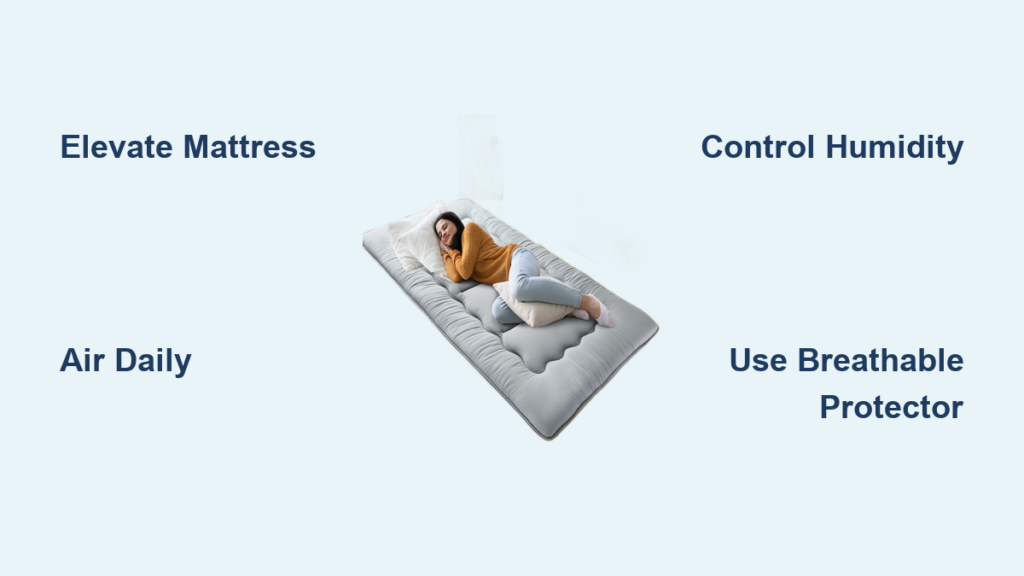
- Futons and shikibutons are thin, foldable, and made from cotton, wool, or layered natural fibers. They are designed for floor sleeping, easy to air out daily, and can be rolled or stood upright to dry.
- Natural latex mattresses are naturally antimicrobial and breathable. They resist mold better than foam but still need airflow, and they are more durable and eco-friendly than synthetic options.
Avoid High-Risk Materials
- Memory foam and polyurethane foam have closed-cell structures that trap moisture. They are hard to dry once damp, making them ideal for mold growth, especially on cold floors where condensation forms.
Key Insight: Even the best materials fail if airflow is blocked, so elevation is non-negotiable.
Establish Daily Airing Habits
Your routine matters more than you think. Just a few minutes each day can prevent weeks of moisture buildup.
Air Out Every Morning
Make this a non-negotiable habit.
- Strip off sheets and bedding.
- Leave the mattress uncovered for two to four hours.
- Prop it upright against a wall or fold it in half if thin enough.
- Open windows or run a fan to speed up drying.
Why it works: Human bodies release up to half a liter of moisture per night through sweat and breath. Letting the mattress breathe prevents that moisture from soaking in.
Rotate and Flip Weekly
Prevent localized dampness and extend mattress life.
- Rotate head-to-foot every week.
- Flip if double-sided.
- Stand upright for a few hours after flipping to dry the underside.
Expose to Sunlight Monthly
Sunlight is a natural disinfectant.
- Place the mattress in indirect sunlight for two to four hours.
- UV rays kill mold spores and accelerate drying.
- Avoid direct, prolonged sun because it can degrade foam and fade fabric.
Control Bedroom Humidity
Mold thrives when indoor humidity exceeds 50%, so keeping it lower is essential.
Maintain 30 to 50% Humidity
Use a hygrometer, which is a digital humidity monitor, to track levels.
- Place it near the mattress.
- Check daily in humid seasons.
Run a Dehumidifier
This is essential in basements, ground-floor rooms, or humid climates.
- Choose a compact model with automatic shutoff.
- Run it nightly or during damp weather.
- Empty the tank regularly.
Bonus: Dehumidifiers also reduce dust mites and musty odors.
Ventilate the Room
Stale air equals trapped moisture.
- Open windows daily for cross-ventilation.
- Use bathroom and kitchen exhaust fans.
- Keep the bedroom door open when possible.
Use Breathable Waterproof Protectors
A protector shields against spills and body fluids, but only if it is breathable.
Choose the Right Protector
Look for waterproof yet breathable fabric such as organic cotton with TPU or polyurethane backing. Choose soft, quiet material and avoid crinkly plastic-like covers. Consider full encasement with a zipper for allergy protection if needed.
Warning: Non-breathable protectors trap moisture inside the mattress, increasing mold risk.
Maintain the Protector
- Remove bedding daily to let the mattress surface breathe.
- Wash the protector every one to two weeks in hot water if the label allows.
- Air dry or tumble dry on low.
Address High-Risk Scenarios
Some situations increase mold risk significantly, so know how to adapt.
Cosleeping with Babies or Toddlers
More bodies mean more heat and moisture.
- Risks include diaper leaks, spit-up, night sweats, and breastmilk spills.
- Solutions include using a soft, breathable waterproof protector, propping up the mattress weekly for airing, using a slatted base even in low-height setups, and enforcing a no-shoes rule to reduce tracked-in mold spores.
Sleeping in Basements or Ground-Level Rooms
Cold floors plus poor ventilation equal high condensation risk.
- Solutions include elevating on slats or coir mat, running a dehumidifier year-round, and sealing concrete floors with a vapor barrier if possible.
Living in Humid Climates
Tropical, coastal, or rainy areas demand extra vigilance.
- Best practices include airing the mattress weekly, using a dehumidifier even in cooler months, and choosing natural fiber futons over foam.
Spot Early Warning Signs
Catching mold early can save your mattress and your health.
Common Indicators
- Musty, damp odor when making the bed.
- Discoloration including black, green, or brown spots on seams, edges, or underside.
- Allergy symptoms such as unexplained coughing, sneezing, or congestion at night.
- Recurring stains after cleaning.
Pro Tip: If it smells moldy but looks clean, pull the mattress away and inspect the floor and underside because mold often starts beneath.
Clean Surface Mold Safely
Only attempt cleaning if mold is surface-level, small, and not recurring.
Wear Protective Gear
- N95 respirator
- Nitrile gloves
- Eye protection
- Keep kids and pets out of the room
Step-by-Step Cleaning
- Ventilate the room by opening windows and using a fan to blow air outside.
- Remove and wash bedding by bagging sheets and washing in hot water.
- Vacuum with a HEPA filter using an upholstery attachment and empty the canister outdoors.
- Spot clean by testing a solution first. Options include mild detergent and warm water, equal parts water and white vinegar, or 3% hydrogen peroxide. Dab do not scrub with a clean cloth and never soak the mattress.
- Dry completely using fans, dehumidifier, and sunlight. Wait 24 hours before remaking the bed.
- Recheck by inspecting for returning spots or odor. If they return, replace the mattress.
Source: EPA guidelines allow DIY cleanup for small mold areas with proper drying and PPE.
Replace When Necessary
Some damage cannot be fixed, so know when to let go.
Replace If
- Mold has penetrated foam or inner layers.
- Musty smell persists after cleaning and airing.
- Stains return or spread.
- Mattress was soaked for over 48 hours.
- Anyone in the home has asthma, allergies, or weakened immunity.
Dispose Safely
- Wrap in heavy plastic or a sealed mattress bag.
- Tape all seams to contain spores.
- Carry directly outside and do not drag through living areas.
- Contact local waste service for pickup.
Frequently Asked Questions About Preventing Mold on Floor Mattresses
Can I put my floor mattress directly on concrete?
Placing a floor mattress directly on concrete is not recommended because concrete retains cold and attracts moisture. This creates condensation underneath the mattress, providing ideal conditions for mold growth. Always use a breathable underlay such as tatami mats or coconut coir to create airflow between the mattress and the floor.
How often should I air out my floor mattress?
Air out your floor mattress every morning by stripping off bedding and leaving it uncovered for two to four hours. This daily routine allows moisture from body sweat and respiration to evaporate before it soaks into the mattress. In humid climates or during summer months, consider airing it twice daily for best results.
What humidity level prevents mold on floor mattresses?
Keep indoor humidity between 30% and 50% to prevent mold growth. Use a hygrometer to monitor levels near your mattress. If humidity exceeds 50%, run a dehumidifier, especially in basements, ground-floor rooms, or during rainy seasons when moisture levels naturally rise.
Does a waterproof mattress protector prevent mold?
A waterproof protector helps block spills and bodily fluids, but it must be breathable to prevent mold. Choose protectors made from organic cotton with TPU or polyurethane backing rather than plastic-based covers. Non-breathable protectors trap moisture inside the mattress, actually increasing mold risk despite protecting against external spills.
How do I know if mold has penetrated my mattress?
Signs that mold has penetrated your mattress include persistent musty odor that returns after cleaning, staining that spreads to inner layers, and mold regrowth in the same spot after thorough drying. If any household member experiences unexplained allergy symptoms or respiratory issues during sleep, inspect the mattress immediately. Once mold reaches foam or inner batting, replacement is necessary.
Can I use a floor mattress in a basement without mold problems?
Yes, you can use a floor mattress in a basement if you take proper precautions. Basements are prone to cold floors and higher humidity, so elevate the mattress on slats or a coir mat, run a dehumidifier year-round, and seal concrete floors with a vapor barrier if possible. Inspect the underside monthly and maintain daily airing habits to prevent mold in this high-risk environment.
Key Takeaways for Preventing Mold on Floor Mattresses
Mold prevention on floor mattresses comes down to three core principles: airflow, dryness, and vigilance. Elevating your mattress on breathable underlays such as tatami mats or coconut coir creates the essential gap that allows moisture to escape rather than pooling underneath. Daily airing habits, where you strip bedding and prop the mattress upright for a few hours each morning, remove the half liter of moisture your body releases overnight before it can saturate the material. Maintaining indoor humidity below 50% with a hygrometer and dehumidifier creates an environment where mold spores cannot germinate, regardless of what happens on the surface.
The right materials amplify these efforts. Natural fiber futons and latex mattresses resist mold better than memory foam, and breathable waterproof protectors block spills without trapping moisture. For high-risk situations such as cosleeping with children, basement sleeping, or living in humid climates, combine all strategies: elevation, daily airing, humidity control, and monthly inspections. Catching mold early when it is still surface-level can save your mattress, but once it penetrates the foam or returns after cleaning, replacement is the only safe option. Start today by lifting your mattress, airing it out, and checking your humidity levels. A few minutes of prevention saves years of clean, healthy sleep.