Period stains on your mattress can feel stressful and embarrassing, but they are far more common than you think and completely treatable with the right approach. Menstrual blood is a protein-based fluid that responds best to cold water, enzymatic cleaners, and prompt action. The key to success lies in acting quickly and using the correct technique to avoid setting the stain or damaging your mattress material.
Hot water is a major mistake that causes blood proteins to coagulate and bond permanently to fabric fibers, turning a fresh spill into a yellowed, permanent mark. Instead, you should blot, use cold treatments, and avoid oversaturating the surface. This guide delivers proven, step-by-step solutions backed by cleaning experts. You will learn how to safely clean different mattress types, dry thoroughly to prevent mold, and protect your bed long-term.
Immediate Steps for Fresh Period Stains on Mattresses
Acting fast dramatically increases your chances of complete stain removal. Fresh menstrual blood has not yet oxidized or bonded with fabric fibers, making it significantly easier to treat than dried or aged stains.
Blot the Stain Immediately
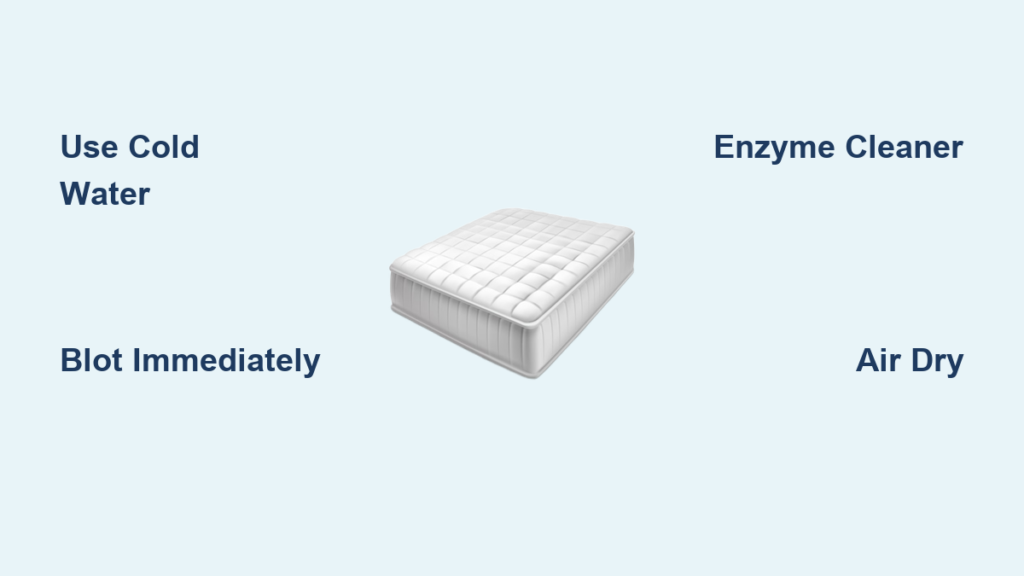
Grab a clean white cloth or paper towel and gently press down on the stain to absorb as much liquid as possible. Never rub the area, as this pushes blood deeper into the mattress fibers and spreads the stain. Apply steady pressure in a dabbing motion until no more moisture transfers to the cloth.
Flush with Cold Water Only
After blotting, dampen a cloth with cold water and gently dab the area. Cold water helps dissolve blood proteins before they bond to fabric. Avoid soaking the mattress. Lightly moisten the stained area and blot repeatedly. This step is critical. Hot water sets the stain permanently, so never use warm or hot liquids at this stage.
Strip and Wash Bedding Right Away
Remove all sheets, pillowcases, and mattress protectors immediately. Wash them in cold water to prevent setting stains. Check care labels before using detergent or bleach. Washing promptly stops odors and prevents cross-contamination to other bedding.
Best Cleaning Solutions for Fresh Period Stains
For stains that are less than a few hours old, hydrogen peroxide provides excellent results. This method works fast and breaks down blood cells effectively.
Hydrogen Peroxide Treatment
Mix one part 3% hydrogen peroxide with two parts cold water in a spray bottle. Test this solution on a hidden corner of your mattress first, as peroxide can lighten colored fabrics. Soak a clean cloth in the solution and gently blot the stain. You will see bubbling, which means the peroxide is breaking down blood cells. Let it sit for one to two minutes, then blot dry. Repeat if needed, then rinse with a cold-water-dampened cloth to remove residue.
Pro Tip: Add two to three drops of Dawn dish soap to boost lifting power for thicker stains.
How to Treat Set-In or Dried Period Stains

For stains that dried overnight or have turned brown, you need a different approach. Dried blood oxidizes and bonds tightly to fibers, requiring longer dwell times and more aggressive treatment.
Baking Soda and Vinegar Method
Start by mixing baking soda and cold water into a thick paste. Apply this paste directly to the stain and let it sit for 30 minutes. Baking soda pulls moisture and begins breaking down organic matter. After removing the paste, mix one part white vinegar with two parts cold water. Dampen a cloth and blot the area. Vinegar’s acidity helps dissolve old protein bonds. Rinse with cold water and blot dry.
Warning: Do not mix vinegar and peroxide together. They create a corrosive acid that can damage your mattress and pose health risks.
Removing Old or Deep Period Stains with Enzymatic Cleaners
For stubborn, aged stains, enzymatic cleaners are your best option. These products contain protease enzymes that digest blood at a molecular level.
Using Enzymatic Cleaners Effectively
Products like Nature’s Miracle, Biokleen Bac-Out, or Rocco and Roxie contain protease enzymes that break down blood proteins. Spray or pour the cleaner over the entire stain. Let it dwell for 15 minutes to several hours, depending on severity. Do not use a hairdryer or heater during this time. Heat kills the enzymes and renders the cleaner ineffective. Blot excess, rinse with cold water, and air dry.
User Insight: These cleaners also eliminate odors, making them ideal for memory foam or hybrid mattresses.
Alternative Home Remedies for Emergency Stain Removal
When commercial cleaners are not available, these household items can help in a pinch.
Meat Tenderizer Paste
Mix meat tenderizer powder with cold water into a paste. Papain, an enzyme in tenderizer, breaks down blood proteins. Apply to the stain, wait 30 minutes, then blot and rinse with cold water. This method works best as an emergency solution when other cleaners are not available.
Salt and Cold Water Paste
Mix table salt with cold water into a paste. Gently dab onto a fresh stain. Salt absorbs liquid and acts as a mild abrasive. Rinse after 10 to 15 minutes. This method is less effective on its own but works well as a first step before peroxide or enzyme treatment.
OxiClean for Colorfast Mattress Surfaces
If your mattress has a removable, washable cover, OxiClean is highly effective for treating period stains.
Safe Application Method
Mix one scoop of OxiClean with two cups of cold water. Never apply the solution directly to the mattress. Instead, soak a white cloth in the mixture and blot the stain gently. OxiClean uses sodium percarbonate, an oxygen-based bleach that lifts stains without chlorine. This method works well on cotton, polyester, and synthetic blends but is not safe for wool, silk, or non-removable foam cores.
Avoid Overuse: Rinse well to prevent residue buildup that attracts dirt.
How to Dry Your Mattress Properly After Cleaning
Proper drying is essential to prevent mold, mildew, and musty odors from developing in your mattress.
Use Fans and Towels
After cleaning, place a dry towel over the area to absorb moisture. Replace it as it becomes damp. Use fans or open windows to circulate air. For faster drying, run a dehumidifier in the room. Most mattresses take four to 12 hours to dry completely, depending on thickness and humidity levels.
Never Use Heat
Avoid hairdryers, space heaters, or steam tools. Heat can deactivate enzymes, set stains, or damage foam layers. Let the mattress air dry completely. Sleeping on a damp mattress encourages mold, mildew, and persistent musty odors. If in doubt, wait longer before remaking the bed.
Treating Stubborn Stains with Repeat Cleaning
Old blood turns brown and bonds tightly to fibers. Consistent treatment over several days often yields the best results.
Rehydrate Before Treating
Start by dampening the area with cold water to rehydrate the stain. This makes it easier for cleaners to penetrate the bonded proteins.
Apply Enzyme Cleaner Daily
Cover the stain with enzymatic cleaner and let it sit for 30 to 60 minutes. Blot and rinse. Repeat once daily for two to three days. Most deep stains lift with consistent treatment. Once the stain fades, you can use hydrogen peroxide or OxiClean to brighten the area if the fabric is safe.
Safe Methods for High-End and Memory Foam Mattresses
:max_bytes(150000):strip_icc()/How-to-Clean-a-Tempur-Pedic-Mattress-0150-Hero-9d90627e14d2408e8ece8e2d0650ee39.jpg)
Luxury mattresses require special care to maintain their structure and warranty coverage.
Avoid Soaking Expensive Beds
For Tempur-Pedic, Casper, Purple, or Saatva mattresses, never soak or steam clean. These models often have non-removable covers and sensitive foam layers. Excess moisture can ruin structural integrity and void warranties.
Use Low-Moisture Methods
Stick to spot cleaning with minimal damp cloths. Apply enzymatic cleaners sparingly and blot aggressively. Always follow manufacturer guidelines. When in doubt, hire a professional cleaner who uses pH-balanced, industrial cleaners and low-moisture extraction techniques.
What to Avoid When Cleaning Period Stains
Certain common mistakes can permanently damage your mattress or create health hazards.
Never Use Hot Water
Heat cooks blood proteins into fabric, turning a temporary stain into a permanent one. Always use cold water in every step of the cleaning process.
Skip Chlorine Bleach
Bleach weakens fibers, causes yellowing, and damages mattress materials. It also leaves harsh fumes. Use oxygen-based alternatives like OxiClean instead.
Do Not Mix Cleaning Agents
Never combine vinegar and hydrogen peroxide, ammonia and bleach, or baking soda and vinegar in closed systems. These create toxic gases or corrosive acids that can harm you and your mattress.
Avoid Over-Wetting
Too much liquid seeps into foam, padding, or springs, leading to mold growth, rust in innerspring coils, and permanent sagging. Use spray bottles and damp cloths rather than soaking the surface.
How to Prevent Future Period Stains on Your Mattress
Prevention is far easier than treatment. These strategies can eliminate most staining risks.
Use a Waterproof Mattress Protector
The number one prevention tool is a fitted, zippered mattress encasement. Look for polyurethane backing for 100% waterproof protection, breathable fabric like cotton or bamboo, secure elastic edges, and machine-washable design. Replace every one to two years or when worn.
Switch to Period-Proof Bedding
Consider period-specific sheets or absorbent mattress pads designed for heavy flow. These trap leaks before they reach the mattress. Dark-colored sheets can also mask minor stains between washings.
Wear Reliable Night Protection
Use high-absorbency overnight pads, period underwear, or menstrual cups to reduce leakage risk. These are especially helpful during heavy flow nights.
Frequently Asked Questions About Removing Period Stains from Mattresses
Can period stains become permanent on a mattress?
Yes, period stains can become permanent if treated with hot water or if treatment is delayed. Blood proteins bond to fabric fibers when heated or left to oxidize. Acting quickly with cold water and the right cleaner prevents permanent staining.
What is the best cleaner for old period stains on mattresses?
Enzymatic cleaners are most effective for old or set-in period stains. Products containing protease enzymes break down blood proteins at a molecular level. Nature’s Miracle, Biokleen Bac-Out, and Rocco and Roxie are highly recommended options.
How long does it take to remove a period stain from a mattress?
Fresh stains often come out within one to two hours of treatment. Set-in stains may require repeated treatments over two to three days. Drying time adds four to 12 hours to the overall process.
Can I use a steam cleaner on my mattress to remove period stains?
No, steam cleaners should be avoided. The heat from steam can set blood stains permanently and damage foam or delicate fabrics. Stick to cold water and enzymatic cleaners instead.
Will hydrogen peroxide damage my mattress fabric?
Hydrogen peroxide acts as a mild bleaching agent and may lighten colored fabrics. Always test on a hidden area first, such as the side or corner of the mattress. It is safe for white or colorfast fabrics but should be used cautiously on colored surfaces.
Key Takeaways for Removing Period Stains from Mattresses
Period stains are treatable with prompt, correct action. Cold water is essential throughout the entire process, as hot water permanently sets protein-based stains. Enzymatic and oxygen-based cleaners like OxiClean and Nature’s Miracle are the most effective options for biological residues.
Avoid common mistakes like using hot water, mixing cleaning agents, or over-wetting the mattress. These errors can cause permanent damage or create health hazards. Thorough drying is critical, as incomplete drying leads to mold, odors, and structural harm.
Prevention is the best strategy. A high-quality waterproof mattress protector eliminates over 99% of future staining risks. Keep a spot-cleaning kit handy with cold water, clean cloths, and a travel-sized enzymatic cleaner so you can act immediately when accidents happen. With the right approach, your mattress can look and smell like new again.