Moving day is stressful enough without figuring out how to handle a bulky spring mattress. Whether you’re relocating across town, storing furniture during a renovation, or shipping a mattress to a customer, the compact convenience of rolling seems like the obvious solution. But here’s the catch: rolling a spring mattress isn’t always safe or even possible, and doing it wrong can permanently damage the coils, void your warranty, and turn a comfortable sleep surface into a lumpy nightmare.
This guide walks you through how to roll a spring mattress safely, which types can actually survive the process, and what professional manufacturers do differently. You’ll learn the step-by-step manual technique, understand the real risks, and discover when flat transport is simply the smarter choice.
What Type of Spring Mattress Can You Roll

Before attempting to roll anything, you need to identify your mattress construction. Not all spring mattresses are created equal when it comes to flexibility and compression tolerance.
Pocketed Coil vs. Traditional Innerspring
Pocketed coil mattresses feature individually wrapped springs that move independently. This design makes them the only spring mattresses with realistic rollability, particularly models engineered for mattress-in-a-box shipping. Traditional innerspring mattresses use connected metal coils that create a rigid support system. Rolling these risks coil misalignment, breakage, and permanent loss of support.
Rolling an innerspring mattress can hurt the springs and make it uncomfortable to sleep on later. If your mattress squeaks, sags unevenly, or feels rigid in certain spots, it’s likely not roll-safe.
Hybrid Mattresses: High Risk, Low Reward
Hybrid mattresses combine pocketed or innerspring coils with foam or latex layers. While the foam might compress easily, the coil system underneath remains vulnerable to damage. Rolling hybrids can damage the coil system, so it’s best to avoid it unless the manufacturer explicitly approves the process.
Why Manufacturer Guidelines Matter Before Rolling
Never attempt to roll a spring mattress without first checking the brand’s official guidelines. This step could save you from voiding your warranty and destroying your investment.
Warranty Implications
Most mattress warranties explicitly prohibit rolling or folding unless the product was designed for compression. Doing so can void coverage for sagging, coil failure, or structural issues that emerge later. Look for specific language like “roll-packed,” “compressed for shipping,” or “vacuum-sealed” in your product documentation.
If your manual or brand website contains no mention of rolling, assume it’s not allowed. Even when the mattress appears compressible, unauthorized rolling voids all warranty protection.
When Rolling a Spring Mattress Makes Sense
Rolling isn’t just about convenience. It serves real logistical purposes, particularly in commercial and moving scenarios.
Easier Transport Through Tight Spaces
A rolled mattress becomes compact and much easier to carry through stairwells, narrow hallways, or crowded elevators. For DIY movers working without professional equipment, this can mean the difference between fitting the mattress in a sedan or renting a larger truck.
Significant Shipping Cost Savings
For exporters and retailers, rolling dramatically reduces volume. Rolled units take up less space in shipping containers, allowing more mattresses per shipment and cutting freight costs by over 50%. This is why many e-commerce brands invest in industrial rolling systems.
Temporary Storage Solutions
Rolling works well for short-term storage in closets, garages, or under beds. It’s ideal for seasonal guest rooms, RV owners, or anyone maximizing limited storage space. Just remember that long-term compression causes permanent damage.
How to Manually Roll a Spring Mattress: Step-by-Step
If you’ve confirmed your pocketed coil mattress is approved for rolling, follow these steps carefully. This method is for short-term use only, such as moving day or temporary storage lasting a few weeks.
Step 1: Remove Bedding and Clean the Surface
Strip off all sheets, mattress protectors, and pillows. Wipe down the mattress with a dry or slightly damp cloth to remove dust and debris. Let it air dry completely before rolling, because moisture trapped inside encourages mold growth.
Step 2: Lay Flat on a Clean, Level Surface
Place the mattress horizontally on a smooth, even floor. Avoid carpets or uneven ground that could cause lopsided pressure during the rolling process.
Step 3: Fold Lengthwise for Thick Mattresses
For mattresses over 12 inches thick, folding in half first makes rolling easier. Fold slowly and evenly along the centerline, keeping the sleeping surface on the inside to protect the fabric. Never fold hybrid or traditional innerspring models.
Step 4: Secure the Fold with Straps
Use heavy-duty ratchet straps or moving belts to hold the folded shape. Don’t over-tighten, because excessive force stresses coils and seams. One to two straps across the middle and ends should suffice.
Step 5: Roll from One End to the Other
Start at the foot end and roll toward the head using gentle, even pressure. Use both hands and enlist a helper for queen or king sizes. Roll loosely, aiming for a cylinder rather than a vacuum-sealed tube. Tight compression increases spring deformation risk.
Step 6: Secure the Roll and Protect
Once fully rolled, add another strap or rope around the roll every 12 to 18 inches. Slide the entire unit into a plastic mattress bag to block dirt, moisture, and pests. Label with the date and “Do Not Stack” if storing. Avoid using tape directly on the cover, because it can tear the fabric.
How Factories Safely Roll Spring Mattresses
Mass production facilities use automated systems to roll spring mattresses without damaging internal structures. These machines handle the job with precision that manual methods simply cannot match.
Automatic Roll-Press Packing Machine
The LR-KPLINE-30P and similar machines process one mattress in 25 to 35 seconds. They use an adjustable 45-degree pressing system to apply even force across the entire surface. The machine applies 0.04 mm PE film during compression to maintain stability. These systems only work with borderless pocket-spring models without frames or thick foam layers.
Cartoning and Secondary Packing
After rolling, the unit enters an automatic cartoning machine for boxing and sealing. Optional secondary roll-press machines further compress the roll into cube shapes for efficient stacking. Fully automated lines reduce labor needs by 3 to 4 people per shift while ensuring consistent, low-damage results.
What Are the Risks of Rolling a Spring Mattress

Even when done carefully, rolling carries serious risks that every owner should understand before proceeding.
Permanent Spring Damage
Over-compression can bend or break coils, misalign spring rows, and reduce rebound ability. You might not see damage immediately, but over time the mattress may develop sagging zones or noisy springs that disrupt your sleep.
Fabric and Seam Tears
Thin or aged covers can split under pressure, especially at fold or roll points. Once torn, repairs are difficult and may void warranties entirely.
Poor Rebound After Unrolling
Some rolled spring mattresses fail to return to their original shape. This results in lumpy surfaces, uneven support, and disrupted sleep quality. Give the mattress 24 to 48 hours to expand after unrolling, but full recovery isn’t guaranteed.
Voided Warranty
Rolling against manufacturer rules voids warranty protection. That means no replacements or refunds for future issues, even if problems seem unrelated to the rolling itself.
How Long Can a Spring Mattress Stay Rolled
Time matters significantly. The longer a spring mattress stays compressed, the higher the risk of permanent damage.
Short-Term Rolling: Days to Weeks
Short-term rolling is acceptable only if the manufacturer approves it. This timeframe works for moving across town, temporary storage during renovations, or shipping via courier. Unroll the mattress as soon as possible.
Long-Term Rolling: Not Recommended
Prolonged compression leads to spring fatigue, foam layer collapse in hybrids, and increased chance of permanent deformation. Even industrial rolls should be unpacked within weeks of delivery.
Best Storage Practices
If you must store a rolled mattress, keep it in a cool, dry, well-ventilated area. Use climate-controlled space if possible. Elevate the roll off the floor on wood planks or pallets. Never stack heavy items on top or store in direct sunlight.
Folding vs. Rolling: Which Is Safer for Spring Mattresses
Both methods stress the mattress, but they apply that stress differently.
Folding Creates Single Point Stress
Folding creates a sharp crease down the center, focusing pressure on one area. It’s slightly less risky than tight rolling but still requires manufacturer approval and only works for pocketed coil models.
Rolling Applies Continuous Compression
Rolling applies pressure along the entire coil system, creating higher risk of widespread damage, especially with uneven manual force. The continuous compression is harder on springs than a single fold point.
Flat Transport Remains Safest
Whenever possible, move or store the mattress flat. Use a dolly, mattress carrier, or truck bed. No bending, no compression, no warranty risks.
Tools Needed to Roll a Spring Mattress
For Manual Rolling
You need heavy-duty ratchet straps or moving belts, a plastic mattress bag (6-mil thickness recommended), two people (essential for queen and king sizes), and clean flat floor space. No special tools are required, but lack of professional equipment increases risk.
For Industrial Use
Factories use automatic roll-press machines, PE film wrapping systems, conveyor and cartoning lines, and touch-screen controls for pressure adjustment. These systems preserve structural integrity through precision engineering.
Manual vs. Industrial Rolling: Performance Comparison
| Feature | Manual Rolling | Industrial Rolling |
|---|---|---|
| Time per Unit | 10 to 20 minutes | 25 to 35 seconds |
| Labor Required | 1 to 2 people | Minimal (automated) |
| Risk of Damage | High | Low |
| Compression Quality | Inconsistent | Uniform |
| Warranty Compliance | Often voids | Approved when used correctly |
| Best For | Short home moves | Mass production, e-commerce |
Essential Tips and Warnings for Rolling Spring Mattresses
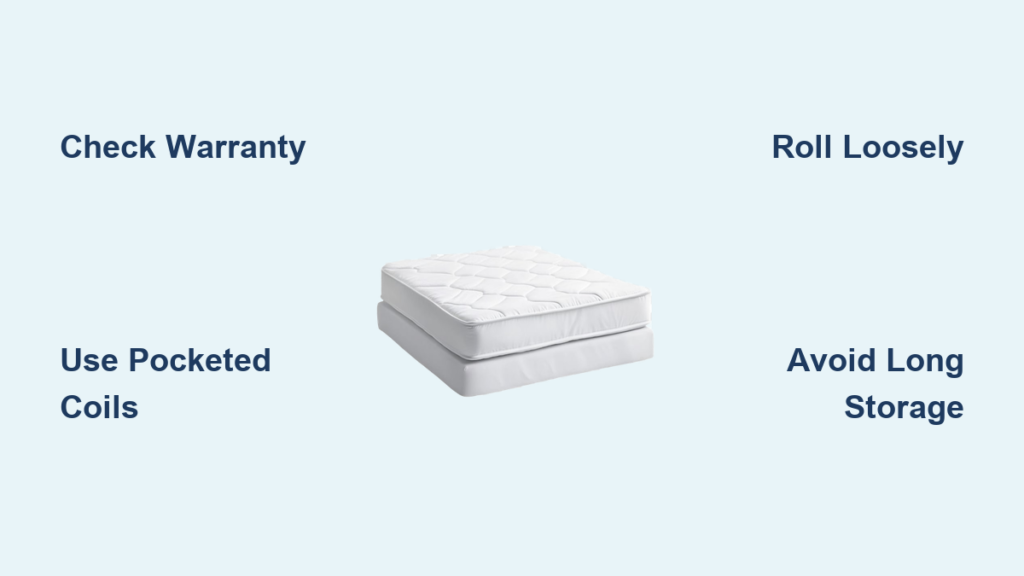
Always check manufacturer instructions first. Use rolling only for approved pocketed coil models. Roll loosely and unroll quickly. Protect with a sealed mattress bag. Prefer flat transport when possible.
Never roll traditional innerspring or hybrid mattresses. Don’t attempt tight vacuum-style compression. Avoid storing rolled for more than a few weeks. Never stack heavy objects on a rolled mattress. Don’t assume all “rollable” claims are safe without verifying with the brand.
Frequently Asked Questions About Rolling a Spring Mattress
Can you roll a traditional innerspring mattress?
No, traditional innerspring mattresses should not be rolled. Their interconnected coil system makes them prone to permanent damage, misalignment, and breakage when compressed. Rolling can make them uncomfortable to sleep on later and will likely void your warranty.
How long can a spring mattress stay rolled?
A spring mattress should only stay rolled for short periods, ideally days rather than weeks. If the manufacturer approves rolling, limit compression to 2 to 4 weeks maximum. Prolonged rolling causes spring fatigue and permanent deformation.
Does rolling a spring mattress void the warranty?
Yes, in most cases rolling a spring mattress voids the warranty unless the manufacturer explicitly states that rolling is permitted. Most warranties specifically prohibit rolling or folding, and doing so invalidates coverage for structural issues.
What happens if a spring mattress doesn’t unroll properly?
If a spring mattress fails to recover its shape after unrolling, you may experience lumpy surfaces, uneven support, and reduced comfort. Some damage may become visible immediately, while other issues develop over time as the mattress settles.
Is it safer to fold or roll a spring mattress?
Folding is slightly safer than rolling because it creates stress at a single point rather than applying continuous compression along the entire coil system. However, both methods require manufacturer approval and carry risks that flat transport avoids entirely.
Key Takeaways for Rolling a Spring Mattress
Rolling a spring mattress is only safe when you have a pocketed coil model and explicit manufacturer permission. Even then, proceed with extreme caution. Manual rolling at home carries high risks of spring damage, fabric tears, and voided warranties. The safest transport method remains flat handling using a dolly or truck bed.
For businesses, industrial roll-packing systems offer reliable, cost-efficient solutions that cut logistics costs by over 50% while maintaining quality. For consumers, treat rolling as a last resort, not a standard practice. When in doubt, keep it flat, protect it well, and prioritize long-term comfort over short-term convenience.