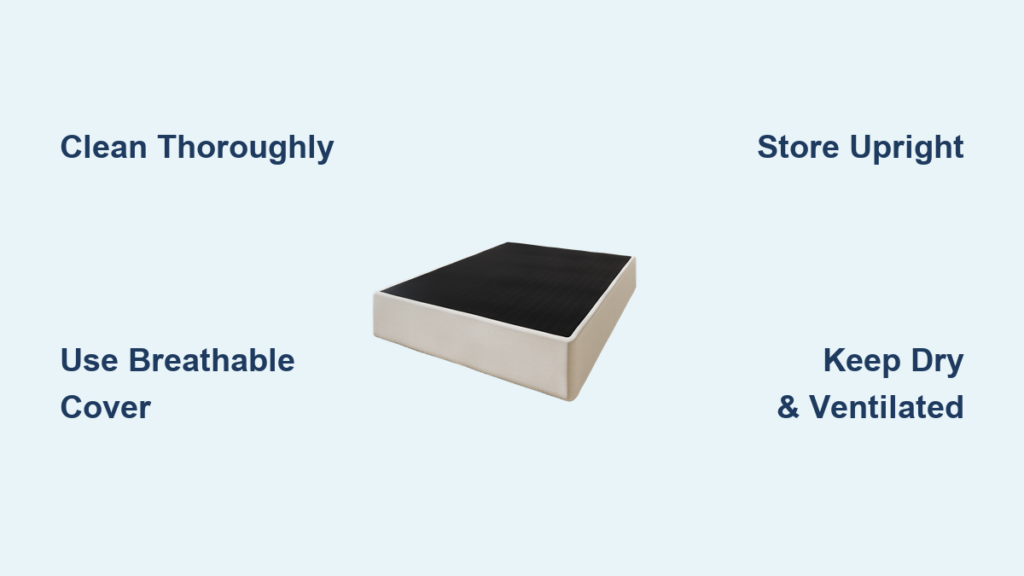
You have upgraded your mattress or moved homes, leaving you with a bulky box spring that needs a safe place to wait. Learning how to store a box spring correctly prevents warping, mold growth, and pest infestations that can ruin the frame before you use it again.
This guide details every step to keep your foundation clean, dry, and structurally sound for months or years. You will discover the right cleaning methods, protective covers, and storage locations to avoid costly damage.
Clean Thoroughly Before Storing Your Box Spring

Dust, dead skin cells, and allergens accumulate in fabric over time and attract pests during storage. Cleaning the unit thoroughly before packing it away removes these food sources and prevents odors from setting in.
Remove Dust and Surface Stains
Use a vacuum cleaner with an upholstery attachment to clean both sides of the box spring. Pay close attention to seams and edges where debris often hides. Mix a small amount of mild detergent with water to dab any visible stains, but avoid soaking the fabric to prevent internal moisture issues.
Ensure Complete Drying Time
Let the box spring air dry for at least 24 hours in a room with good ventilation. Place it upright or on its side so air reaches all surfaces evenly. Never pack away a damp unit because trapped moisture invites mildew and creates musty smells that are difficult to remove later.
Protect With a Breathable Storage Cover

Selecting the right covering is critical when you learn how to store a box spring for the long term. The wrong material can trap humidity and cause more damage than leaving it exposed in a clean room.
Choose a Breathable Fabric Bag
Slip the foundation into a heavy-duty storage bag designed specifically for mattresses or large furniture. Avoid using plastic sheeting or non-vented covers that trap moisture inside. Look for fabric covers with waterproof backing to block dust and liquids while allowing the material to breathe.
Seal Edges Against Pests
Ensure your storage bag fully encloses the item and features a secure zippered closure. Check for holes or weak seams before placing your item inside. Add natural pest deterrents like cedar blocks or silica gel packs inside the bag, but avoid mothballs since their strong odor lingers on fabric.
Store Upright to Prevent Structural Damage
Positioning is the most important factor in maintaining the shape of your box spring. Storing it flat often leads to compression that ruins the internal support system.
Prevent Sagging and Frame Warping
Always store a box spring upright on its side rather than laying it flat. This position reduces pressure on the internal frame and helps maintain its original shape. Laying it flat for long periods compresses the coils or support structure, leading to permanent sagging.
Keep the Unit Off the Floor
Do not let the box spring touch the floor directly, even when stored vertically. Place it on wooden pallets, a plastic shelf, or a piece of plywood to create a barrier. This step is vital in garages or basements where humidity fluctuates and pests may crawl from the ground.
Choose the Right Location for Storage
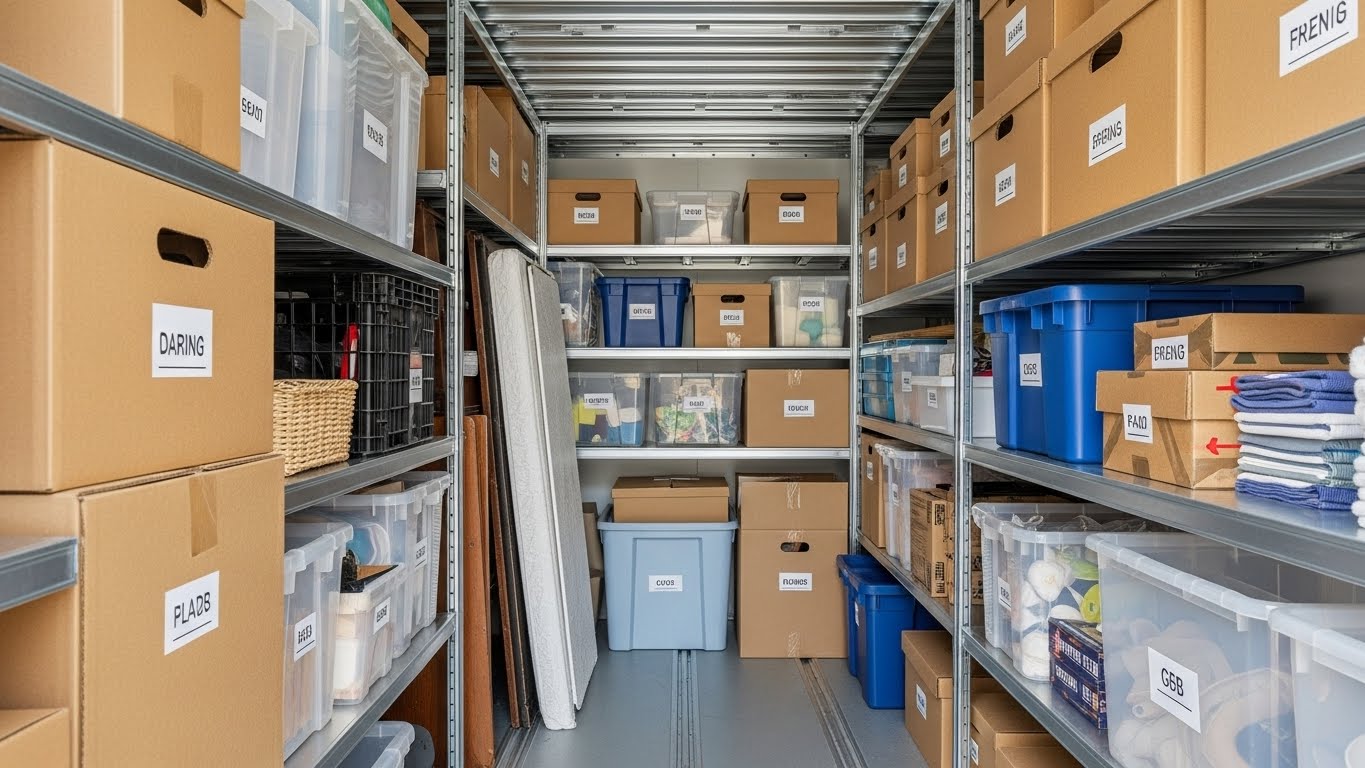
The environment you choose dictates whether your box spring survives storage in good condition. Humid or unregulated spaces pose significant risks to fabric and wood components.
Avoid Damp and Humid Areas
Never store a box spring in a damp basement, unventilated attic, or uninsulated garage unless the space is climate-controlled. High humidity promotes mold and mildew growth, while extreme temperature swings can weaken adhesives and fabric over time.
Opt for Climate-Controlled Units
Select a climate-controlled storage unit if you need long-term protection for your items. These facilities maintain stable temperature and humidity levels to protect against warping and mold. If storing at home, pick a dry, cool room like a spare bedroom or closet with consistent airflow.
Maintain Air Circulation Around Walls
Proper spacing allows air to move freely around the unit, preventing moisture buildup on specific sides. Ignoring this step can lead to localized mold growth even in decent environments.
Allow Space Between Wall and Unit
Leave at least 2 to 3 inches of space between the box spring and any wall. This gap promotes air circulation and prevents moisture from building up on one side. Storing it flush against a wall traps dampness and increases mold risk, especially in spaces with concrete floors.
Rotate the Position Occasionally
Rotate the box spring 180 degrees every few months if you plan to store it for more than six months. This ensures even air exposure and prevents one side from becoming compressed. It also stops discoloration caused by prolonged contact with the floor or wall.
Avoid Common Stacking Mistakes
Many people ruin their foundations by stacking items incorrectly or combining them with mattresses. Understanding these errors is key to mastering how to store a box spring safely.
Never Stack Heavy Items On Top
Do not place heavy objects like furniture, boxes, or other mattresses on top of the box spring. This weight can bend the frame, damage internal supports, and create permanent indentations. If you must stack items, place the box spring on the very top of the pile.
Do Not Store With Mattress Attached
Avoid storing a mattress and box spring together as a single unit unless they have separate sealed covers. Trapped moisture cannot escape when they are bound together, which increases the risk of mold. Store them apart, keeping both upright and covered individually.
Inspect Carefully Before Reuse
Examine your box spring thoroughly before putting sheets on it after storage. This final check ensures the foundation is safe and comfortable for sleep.
Check for Damage and Odors
Remove the cover and inspect the unit carefully for signs of pests, mold, or water damage. Smell the fabric to detect any musty odors, and air it out for a day if needed. A quick vacuum removes surface dust that may have accumulated during the storage period.
Test for Structural Integrity
Press down on the surface to check for squeaks, sagging, or weak spots. If the frame feels unstable or makes loud noises, it may no longer provide proper support. Consider replacing it if damage is evident to protect your new mattress and ensure comfortable sleep.
Frequently Asked Questions About Storing a Box Spring
Can I store a box spring in my garage?
You can store a box spring in a garage only if the space is climate-controlled and dry. Uninsulated garages often have fluctuating temperatures and high humidity that promote mold and weaken adhesives.
How long can I keep a box spring in storage?
A box spring can last in storage for months or even years if you clean, cover, and position it correctly. Proper preparation and a climate-controlled environment are essential for extending its lifespan during storage.
Is it okay to lay a box spring flat for storage?
No, you should never lay a box spring flat for long periods as it causes permanent sagging. Storing it upright on its side reduces pressure on the internal frame and maintains its structural shape.
What is the best cover for storing a box spring?
The best cover is a heavy-duty, breathable fabric bag designed for mattresses or furniture. Avoid plastic sheeting because it traps moisture inside, which leads to mildew and unpleasant odors.
Should I store my mattress and box spring together?
You should store them separately unless each piece has its own sealed, breathable cover. Binding them together traps moisture between the layers, significantly increasing the risk of mold growth.
Key Takeaways for Storing Your Box Spring Safely
Proper storage requires cleaning the unit thoroughly, using a breathable cover, and keeping it upright on a raised surface. Choosing a dry, climate-controlled location and avoiding heavy stacks ensures your box spring remains in excellent condition.
Follow these steps to protect your investment whether you are storing items for a few months or several years. Your bedroom setup will be ready for action whenever you need it again.