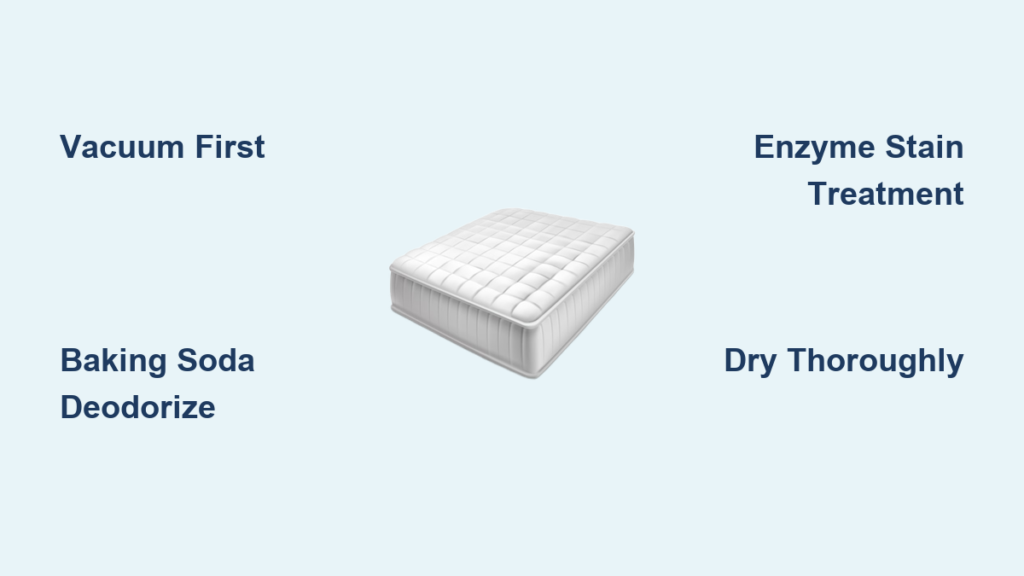
Your mattress absorbs years of sweat, dead skin, dust mites, and spills. Yet most people never clean it properly. Water-based cleaning seems intuitive, but soaking your mattress can cause mold, foam breakdown, and permanent odors, especially in memory foam and latex models. The truth? You do not need water to deep-clean effectively. With the right dry and low-moisture techniques, you can eliminate stains, neutralize odors, and sanitize your sleep surface safely without a single drop of excess liquid.
This guide delivers a complete step-by-step system for cleaning any mattress without water. You will learn how to use baking soda, enzyme cleaners, steam, and natural disinfectants to refresh your bed, prevent damage, and maintain hygiene. Whether you are tackling old urine stains, morning sweat smells, or just routine buildup, these non-toxic, equipment-backed methods are proven, safe, and easy to follow.
Dry Vacuuming: The Essential First Step
Before any treatment, remove up to 80 percent of surface contaminants with a powerful vacuum. This step is non-negotiable, even in water-free cleaning.
Use a HEPA Vacuum Correctly
Standard vacuums recirculate dust back into your room. A HEPA-filtered model traps allergens, pet dander, and microscopic debris instead.
• Attach the upholstery tool to gently glide over fabric
• Switch to the crevice tool for seams, zipper edges, tufts, and corners where crumbs and dust accumulate
• Work in overlapping rows, top to bottom, side to side
• Focus on high-contact zones: head, shoulders, hips, and feet where sweat and skin cells build up daily
Pro Tip: Vacuum weekly when changing sheets. This reduces deep cleaning frequency by 70 percent.
Prevent Vacuum Damage
Baking soda and fine debris can clog home vacuums. For heavy-duty cleanup, use a shop vacuum designed for fine particles, or empty and clean your home vacuum filter immediately after use.
Baking Soda Deodorizing: Deep Odor Absorption

Baking soda is the most effective dry method for eliminating odors, absorbing oils, and lifting surface grime without moisture.
Apply Baking Soda Properly
- After vacuuming, lightly sprinkle a thin, even layer over the entire mattress
- For added freshness, mix in 5 to 10 drops of essential oil such as tea tree for antimicrobial action or lavender for scent
- Let it sit: 30 minutes for light refresh, 2 to 8 hours overnight for strong odors or moisture exposure
- If possible, place the mattress in direct sunlight during dwell time because UV rays kill bacteria and dust mites
Pro Tip: Sunlight plus baking soda equals natural disinfection. Even 2 hours outside reduces microbial load significantly.
Remove Residue Completely
- Use a soft-bristle brush or dry microfiber cloth to loosen powder
- Re-vacuum thoroughly because leftover baking soda attracts new dirt and can irritate lungs
Warning: Never skip re-vacuuming. Residual powder reduces airflow and creates a sticky film over time.
Vinegar and Baking Soda: Controlled Foaming Clean
This semi-dry method uses a chemical reaction to lift stains and odors with minimal wetting. It works best on innerspring or hybrid mattresses.
Activate the Fizz Safely
- Lightly mist the surface with white vinegar using a fine spray bottle. Do not soak
- Immediately sprinkle baking soda over the damp areas
- Watch the fizzing reaction break down organic residues and deodorize deep fibers
Caution: Avoid this method on memory foam or latex. These materials absorb moisture quickly and may degrade.
Prevent Moisture Spread
- Place clean, dry towels over treated areas to absorb residual dampness
- Let sit for 2 to 4 hours
- Remove towels, brush off excess powder, then vacuum completely
- Dry for at least 2 hours with fans or sunlight before remaking the bed
Enzyme Cleaners for Organic Stains

For urine, vomit, blood, or pet accidents, enzymes are the only solution that destroys odor at the source rather than covering it up.
Use Enzyme Paste for Deep Cleaning
- Mix enzyme powder with a few drops of water to form a thick paste
- Apply directly to the stain
- Gently rub in with a soft cloth. Do not scrub
- Let dry for 4 to 6 hours
- Vacuum all residue
Why It Works: Enzymes digest proteins like urea and blood that bacteria feed on, stopping odors at the root.
Enzyme Spray for Quick Treatment
- Spray enzyme cleaner on the stain
- Wait 10 to 15 minutes for biological breakdown
- Blot with a damp microfiber towel. Never rub
- Let air dry completely using fans if needed
- Follow with baking soda for extra deodorizing if needed
Always test first. Some enzyme formulas may discolor sensitive fabrics.
Hydrogen Peroxide Spot Treatment
For yellow sweat stains or old organic marks, hydrogen peroxide oxidizes and lifts discoloration using minimal moisture.
Choose Fresh Peroxide
• Store in a dark glass bottle because light degrades its power
• Label the opening date and discard after 6 months
• Always test on an inconspicuous area because it can bleach colored foam
Treat Stains by Severity
Light marks: Spray lightly, wait 1 minute, blot with microfiber towel
Visible stains: Work in small sections, spray, blot, repeat with clean towel area
Deep-set stains: Combine with enzyme treatment or spot extraction machine
Warning: Never use on memory foam. High risk of discoloration and foam breakdown.
Steam Cleaning: Heat-Based Sanitization
Steam kills bacteria, dust mites, and allergens without leaving liquid if used correctly.
Steam Without Soaking
- Pre-vacuum the mattress
- Heat your handheld steamer fully
- Hold 1 to 2 inches above the surface. Never press directly
- Move slowly in overlapping 6-inch passes
- Use short bursts of 2 to 3 seconds. Avoid continuous steaming
Drying Time: Allow 6 to 24 hours depending on mattress type. Memory foam retains heat and moisture longer.
Check Manufacturer Guidelines. Some foam mattresses void warranties if steamed.
Natural Disinfectant Sprays
Use quick-evaporating sprays to sanitize after dry cleaning without rinsing or residue.
Vodka or Isopropyl Alcohol
• Spray lightly over the surface
• Blot with a clean microfiber towel
• Air dry with a fan because it evaporates in minutes
Benefits: Kills bacteria, deodorizes, and dries faster than water-based solutions.
Non-Toxic Antibacterial Sprays
Choose plant-based, bleach-free formulas. Avoid sprays with quaternary ammonium compounds linked to respiratory irritation. Look for citric acid or thymol as active ingredients.
Never saturate. A light mist is sufficient.
Handle Specific Stains Without Water
Urine Stains
Best Method: Enzyme paste. Apply, let dry 6 hours, vacuum. For old stains, repeat twice. Avoid hydrogen peroxide because it does not break down uric acid crystals.
Sweat and Body Odor
Best Method: Baking soda plus sunlight. Apply, sun-expose for 2 hours, vacuum. Repeat monthly for prevention.
Blood
Best Method: Cold dab plus enzyme cleaner. Blot with cold water first because heat sets the stain. Apply diluted hydrogen peroxide or enzyme spray. Dab, do not rub.
Wine or Coffee
Best Method: Vinegar mist plus baking soda. Lightly mist stain with 50/50 vinegar-water. Sprinkle baking soda, wait 8 hours, vacuum. Avoid hydrogen peroxide on colored foam because it may bleach.
Vomit or Food Spills
- Blot solids immediately
- Apply enzyme spray, wait 15 minutes
- Blot, dry, then baking soda deodorize
Drying: Prevent Mold and Odors
Even minimal moisture must be fully removed before remaking the bed.
Accelerate Drying
• Use ceiling or standing fans
• Open windows for cross-ventilation
• Place in direct sunlight for 2 to 4 hours maximum to avoid fabric fading
• Flip or rotate the mattress halfway if accessible
Drying Times by Method
Baking soda only: 1 to 2 hours
Vinegar plus baking soda: 2 to 4 hours
Enzyme paste: 6 to 8 hours
Steam cleaning: 12 to 24 hours for memory foam
Never sleep on a damp mattress. Moisture breeds mold, triggers allergies, and ruins foam structure.
Preventive Maintenance: Protect Long-Term
Use a Mattress Protector
Choose waterproof, breathable, washable models. Fully encased zippered protectors block dust mites, spills, and allergens.
A protector is the single best investment for mattress longevity.
Follow a Cleaning Schedule
Weekly: Vacuum surface
Monthly: Baking soda refresh
Every 3 to 6 months: Deep clean plus rotate
Every 1 to 2 months: Wash protector
Rotate every 3 to 6 months to prevent sagging. Do not flip BedInABox models.
Lifestyle Tips
• No eating or drinking in bed
• Wash sheets weekly in hot water at least 130 degrees Fahrenheit
• Air out the bed each morning by pulling back covers to let moisture escape
Mattress Type Considerations
Memory Foam
Very high water sensitivity. Use only dry methods: vacuum, baking soda, enzyme paste. Avoid hydrogen peroxide and steaming unless brief and elevated.
Latex
Moderate to high sensitivity. Light misting only. Never soak. Enzyme cleaners are safe, but avoid vinegar on natural latex.
Innerspring
Moderate tolerance. Can handle light hydrogen peroxide or spot extraction. Always dry thoroughly.
Hybrid
High sensitivity due to foam layers. Clean top only, vacuum sides. Use protector at all times.
Airbed or Inflatable
Wipe with damp cloth plus mild soap. Never submerge or spray directly.
Excess moisture causes delamination, compression, and permanent odor in foam-based beds.
Final Cleaning Protocol: Step by Step
- Strip the bed and wash sheets, protector, and pillowcases in hot water
- Vacuum thoroughly with HEPA vacuum and attachments
- Spot treat stains: organic stains get enzyme cleaner, light stains get hydrogen peroxide
- Deodorize with baking soda, add essential oils if desired, wait 1 to 8 hours
- Brush off residue and re-vacuum completely
- Optional: For stubborn areas, use vinegar mist plus baking soda, towel-cover, wait 2 to 4 hours, vacuum
- Dry fully using fans, sunlight, or airflow for 4 to 24 hours
- Reassemble bed only when 100 percent dry
- Apply clean protector and resume regular maintenance
Frequently Asked Questions About Cleaning a Mattress Without Water
Can I use water to clean my mattress if I dry it thoroughly?
Excessive water exposure can penetrate deep into internal layers, leading to microbial growth, delamination, foam breakdown, and permanent staining. Always minimize water and ensure complete drying before remaking the bed.
How often should I deep clean my mattress without water?
Vacuum weekly when changing sheets. Apply baking soda monthly for deodorizing. Perform a full deep clean with enzyme treatment every 3 to 6 months depending on use and household factors.
Does baking soda damage mattress fabric?
Baking soda is safe for all mattress types when used properly. Always vacuum thoroughly afterward because残留 powder can irritate lungs and attract new dirt.
What is the best method for urine stains on a memory foam mattress?
Use enzyme paste specifically designed for organic stains. Apply directly to the stain, let dry 4 to 6 hours, then vacuum completely. Avoid hydrogen peroxide on memory foam because it causes discoloration and foam breakdown.
Can I steam clean a memory foam mattress?
Check manufacturer guidelines first. If permitted, use short bursts held 1 to 2 inches above the surface. Allow 12 to 24 hours for complete drying. Excessive heat and moisture can damage foam structure and void warranties.
How do I know if my mattress is dry enough after cleaning?
The surface should feel completely cool and dry to the touch with no dampness or cold spots. Run your hand over the fabric to check. If unsure, wait additional hours or use a fan to ensure no moisture remains before remaking the bed.
Key Takeaways for Cleaning Your Mattress Without Water
Never soak your mattress because moisture causes mold, odors, and material failure. Vacuum first and last because it removes the bulk of debris and leftover powders. Baking soda is your best dry deodorizer, so use it monthly for freshness. Enzyme cleaners destroy organic odors from urine, blood, and vomit by breaking down proteins at the source. Hydrogen peroxide works for stains but only if fresh and tested on an inconspicuous area. Drying is mandatory, so use fans, sunlight, or airflow for 4 to 24 hours depending on the method used. A waterproof protector prevents 90 percent of problems, so wash it every 1 to 2 months. Memory foam and latex need extra care, so avoid liquids, prolonged steam, and bleaching agents.
By following this dry, safe, and science-backed routine, you can keep your mattress clean, hygienic, and odor-free for years without ever using a wet sponge or steam overload. Start with vacuuming, add baking soda, treat stains smartly, and protect daily. Your bed will thank you.