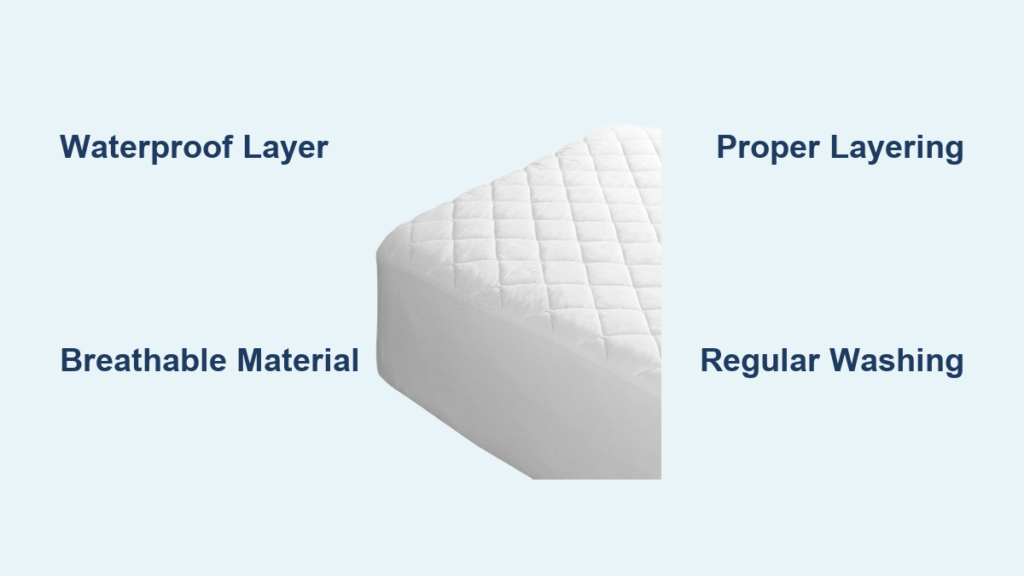
Every night, your mattress absorbs more than just your weight. The average adult releases approximately 100 litres of sweat per year while sleeping, which can soak into an unprotected mattress along with body oils, dead skin cells, and the occasional spill. Without proper protection, these elements lead to permanent staining, lingering odors, and allergen buildup that compromises your sleep surface. The good news? You can stop stains before they start using the right protective strategies.
This guide reveals exactly how to protect your mattress from stains, covering top-rated products, smart layering techniques, and expert-backed maintenance habits. Whether you are dealing with children, pets, allergies, or night sweats, these strategies will keep your mattress clean, fresh, and stain-free for years.
Choose the Right Mattress Protector
Understand Protector Types
Not all protectors offer the same level of defense. Your choice should match your specific risk level and protection needs.
Fitted protectors are the most common type. They stretch over the top and sides like a fitted sheet, guarding against spills, sweat, and light soiling. These are ideal for everyday use, though they leave the bottom of the mattress exposed.
For complete coverage, mattress encasements are superior. These zip completely around the mattress on all six sides, including the top, bottom, and sides, locking out fluids, dust mites, and bed bugs. Encasements are especially recommended for allergy sufferers, medical needs, or households with pets.
Pro Tip: If bed bugs are a concern, only a zippered encasement provides full protection. Standard fitted protectors leave entry points at the seams and along the base of the mattress.
Waterproof vs. Water-Resistant Options
Liquid exposure demands the right barrier. Understanding the difference between waterproof and water-resistant protects your investment.
Waterproof protectors use a sealed backing, typically polyurethane, to block all moisture completely. These are best for incontinence, bed-wetting, or pet accidents. Modern waterproof versions are silent and flexible, eliminating the crinkly plastic sounds of older models.
Water-resistant models repel light spills but are not fully impermeable. They are more breathable, making them better for hot sleepers, but they are not suitable for heavy fluid risks.
A growing favorite is the breathable waterproof hybrid, made from cotton, bamboo, or TENCEL with a thin, silent waterproof layer. These block liquids while allowing airflow, significantly reducing heat retention compared to traditional plastic-backed options.
Avoid thick vinyl protectors. They trap heat, disrupt sleep comfort, and often create noise when you move.
Natural vs. Synthetic Materials
Material affects both protection performance and sleep comfort. Choose based on your priorities.
100% cotton protectors are soft, breathable, and ideal for temperature regulation. They wick moisture away, reducing the damp environment that attracts dust mites. Look for verified 100% cotton, as many brands mix in polyester skirts or linings that reduce breathability.
Bamboo-rayon and TENCEL blends offer luxury-level softness with natural antimicrobial properties. These are excellent for sensitive skin and hot sleepers who need cooling comfort.
Synthetic materials like polyester or microfibre are common in budget waterproof models. While durable and effective at blocking liquids, they tend to retain heat and may irritate allergy sufferers.
Expert Recommendation: Prioritize natural fibers unless medical-grade waterproofing is absolutely necessary. Cotton and bamboo provide the best balance of breathability, comfort, and protection.
Layer Your Bedding Accessories Correctly

Follow the Proper Layer Order
Even the best protector fails if layered incorrectly. To maximize protection and comfort, follow this specific order from bottom to top.
The correct layering sequence is:
- Mattress
- Mattress topper or pad (for added comfort)
- Mattress protector (to seal everything below)
- Fitted sheet
Placing the protector under the topper leaves the topper itself exposed to spills. Conversely, putting it over the sheet defeats the purpose entirely, because liquids will soak through the sheet before reaching the barrier.
Common mistake: Using a memory foam topper without a protector underneath. One spill can ruin both the topper and the mattress permanently.
Combine Protectors with Pads and Toppers
Mattress pads add cushioning but offer minimal stain protection. Most are quilted fabric and absorb spills rather than blocking them. Always use a protector under or instead of a pad to prevent liquid penetration.
Quality toppers like memory foam or latex enhance comfort but are expensive and difficult to clean. A protector underneath keeps them dry and hygienic, extending their lifespan significantly.
Best Practice: Use a cooling topper, such as gel-infused foam, with a breathable protector for a comfortable, fully protected sleep system that does not trap heat.
Apply Fabric Protector Sprays for Extra Defense
How Nanotechnology Sprays Work
For additional defense beyond physical covers, consider a fabric protector spray like protectME. These water-based sprays bond with mattress fibers at a molecular level, creating an invisible, breathable shield that repels liquids.
When applied correctly, spills bead up and roll off instead of soaking into the fabric. The treatment lasts up to three years and survives repeated cleaning cycles.
How It Works: Nano-particles form a microscopic barrier that blocks water and oils without altering the texture or breathability of your mattress.
Spray Application Steps
Applying fabric spray correctly ensures maximum effectiveness. Follow these steps precisely.
- Test first on a small, hidden area to check for discoloration.
- Shake well, then spray in a steady back-and-forth motion.
- Use 3.3 fl oz per 10 ft², using more for thick or layered surfaces.
- Apply a second coat within 30 minutes if needed.
- Wait 12 to 24 hours to dry, longer in cold or humid rooms.
- Test effectiveness by dripping water. If it beads, the barrier is active.
Do not layer sprays over existing chemical treatments like Scotchgard. Old residues can block bonding. Wait until prior protection has worn off, typically around 12 months.
Benefits and Compatibility
Sprays work on multiple surfaces throughout your home, including mattresses, pillows, duvets, upholstery, and car seats.
These sprays are safe for cotton, wool, silk, leather, and synthetics. They are odourless, non-toxic, and eco-friendly, making them ideal for homes with children or pets.
Pro Tip: Reapply spray after deep cleaning or every two to three years for continuous protection.
Protect Against Specific Stain Risks
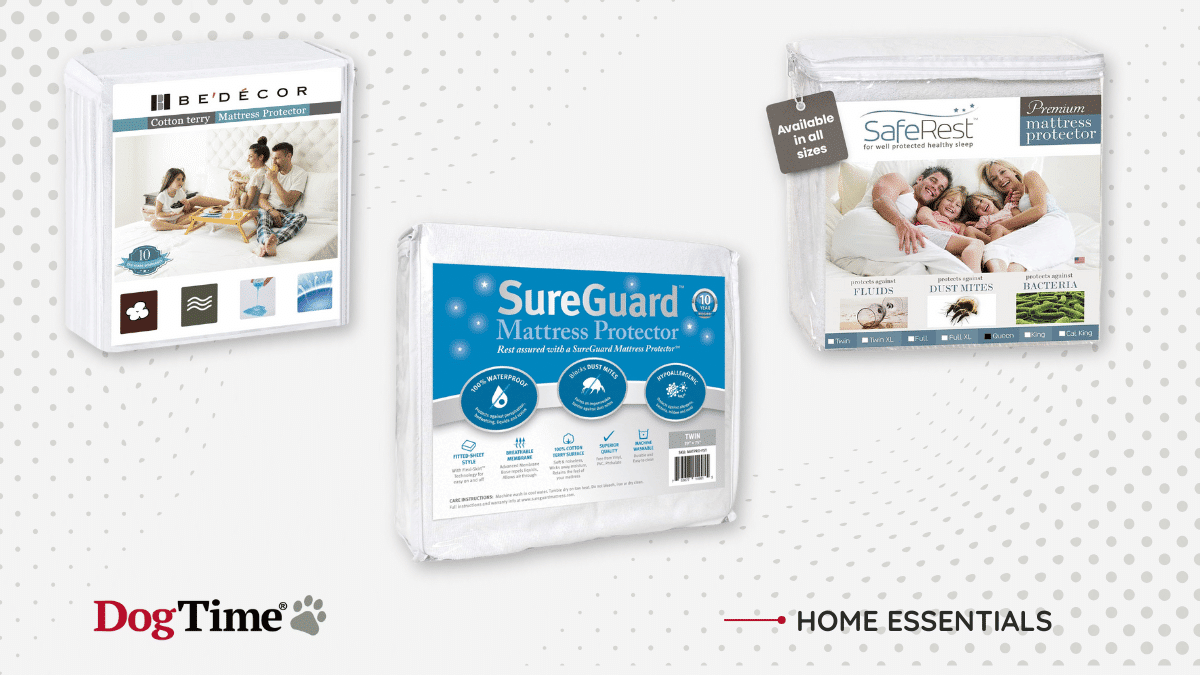
Prevent Bed-Wetting and Incontinence Stains
For children or medical needs, standard protection is not enough. Use a fully waterproof encasement with a zip closure. These are hospital-grade and block urine, sweat, and wound drainage effectively.
Choose models labeled medical-grade or incontinence-proof. These are designed for frequent washing and heavy-duty use.
Night-time routine: Pair the encasement with washable mattress pads for added absorbency and comfort.
Block Pet Accidents and Dander
Pets bring joy but also drool, urine, and fur that can stain your mattress. A waterproof protector is essential for pet households. Opt for durable, silent materials that resist claw snags.
Clean the protector monthly or immediately after any mess. Vacuum the mattress surface every few months to remove embedded dander.
Never let pets sleep on an unprotected mattress. Pet urine causes deep staining and lingering odors that are extremely difficult to remove.
Reduce Allergen and Dust Mite Exposure
Dust mites thrive in warm, humid environments like your mattress. They feed on dead skin cells and leave allergenic waste behind that can trigger allergies, asthma, eczema, and nasal congestion.
An allergen-proof encasement blocks mites and their feces, significantly reducing allergy symptoms. Look for labels like hypoallergenic, dust mite proof, or asthma-friendly.
Complete the system: Use pillow and duvet protectors to eliminate allergens across your entire sleep zone.
Keep Cool While Protected
Hot sleepers often avoid protectors, fearing heat buildup. Modern options solve this problem completely.
Choose cooling materials like 100% cotton, bamboo-rayon, or TENCEL. These wick moisture and promote airflow. Some premium models feature phase-change materials or airflow channels for enhanced temperature control.
Avoid thick, plastic-backed protectors. They trap body heat and disrupt sleep quality.
Maintain and Replace Protectors
Wash Protectors Regularly
A dirty protector loses effectiveness quickly. Wash your protector every one to two months, or immediately after spills, excessive sweating, or pet use.
Most protectors are machine washable. Use mild detergent, avoid bleach, and skip fabric softeners as they degrade waterproof layers.
Dry on low heat or air dry to prevent shrinkage and membrane damage.
Pro Tip: Keep a spare protector on hand so your mattress stays protected during laundry cycles.
Know When to Replace
Even high-quality protectors wear out over time. Replace every three to five years, or sooner if you notice visible signs of deterioration.
Replace when you see tears or thinning fabric, experience leaks during spills, notice elastic corners losing stretch, detect persistent odors after washing, or see visible stains that will not lift.
Warning: A damaged protector offers false security. Once compromised, fluids can seep into the mattress undetected, causing damage you cannot see.
Select the Best Protector for Your Needs
Match Size and Depth Exactly
A loose protector slips off during the night, while one that is too tight can damage your mattress. Ensure it fits your exact mattress size, whether single, double, queen, king, or emperor.
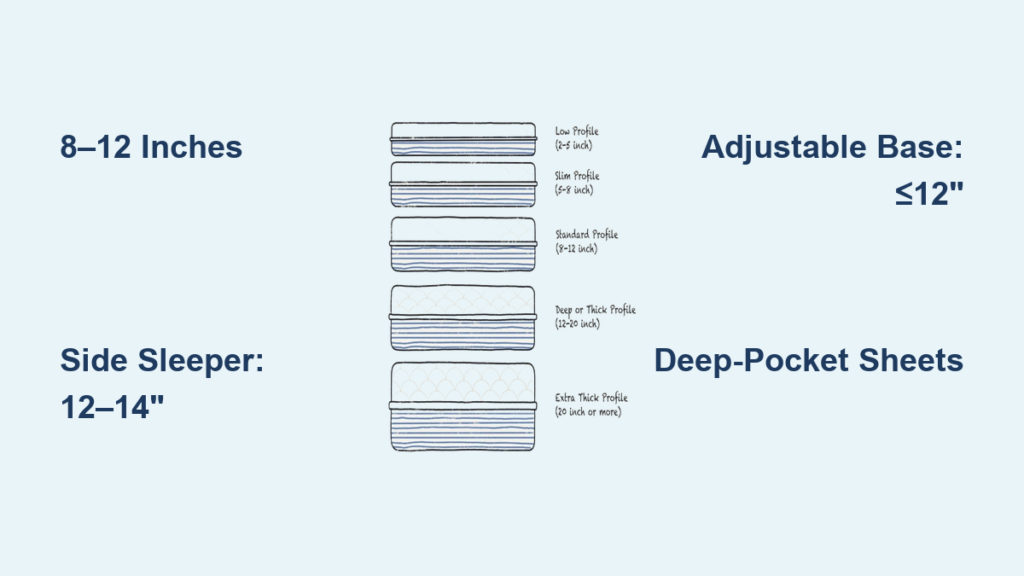
For thick mattresses over 12 inches, choose deep-pocket models that accommodate up to 18 inches or more. Measure your mattress before buying to ensure proper fit.
Check the skirt: Elastic should wrap fully around corners without overstretching or gaping.
Prioritize Key Features
Use these six criteria when choosing a protector.
- Fit: Secure, non-slip corners that stay in place
- Protection level: Waterproof for heavy risks, water-resistant for light use
- Breathability: Cooling fabrics for hot sleepers
- Noise level: Silent membranes preferred for undisturbed sleep
- Ease of care: Machine washable and fast-drying
- Durability: Reinforced stitching and quality materials
Best Value: Mid-range protectors in the $50 to $100 range often offer premium features without luxury pricing.
Top Product Picks
Based on performance and reliability, these protectors stand out.
- Sleepy’s Signature Total Encasement at $160.99 offers full-zip coverage that is bed bug and allergen proof
- Sleepy’s Basics Waterproof at $30.99 provides budget-friendly, reliable protection
- Bedgear Ver-Tex Performance at $360.99 features high-tech breathable materials ideal for athletes
- Sleepy’s Deluxe Comfort Cool at $190.99 delivers cooling fabric with a soft feel, great for couples
These products are available at major retailers, online stores, and specialty sleep shops in all standard sizes.
Protect Pillows Too
Use Breathable Pillow Covers
Pillows collect sweat, oils, and hair just like mattresses do. Pillow protectors prevent staining and significantly extend pillow life.
Choose stretchy, breathable covers made from cotton jersey or bamboo. Avoid tight-fitting ones that compress down or interfere with feather fillings.
Never skip pillow protection. Head stains are common and extremely difficult to remove once set into the fabric.
Wash and Replace Pillows
Wash pillow protectors monthly to maintain hygiene. Replace pillows every one to two years, or when they lose shape, develop lumps, or retain odors despite cleaning.
Pro Tip: Use hypoallergenic pillows with protectors for maximum allergy control across your entire sleep environment.
Frequently Asked Questions About Protecting Mattress from Stains
Does a mattress protector really prevent stains?
Yes, a quality mattress protector effectively prevents stains by creating a barrier between your mattress and any liquids. Waterproof protectors block spills entirely, while water-resistant options repel light messes. Without a protector, sweat, body oils, and accidents soak directly into the mattress fibers, causing permanent staining that cannot be removed.
How often should I wash my mattress protector?
Wash your mattress protector every one to two months under normal use. If you have pets, experience heavy night sweats, or have spills, wash it immediately or more frequently. Regular washing maintains the protective barrier and prevents allergen buildup.
Can I use a mattress topper and protector together?
Yes, you can and should use both. Apply them in the correct order: mattress first, then topper or pad for comfort, then the protector, and finally the fitted sheet on top. This layering ensures your expensive topper stays protected while you enjoy added comfort.
What is the best mattress protector for hot sleepers?
Hot sleepers should choose protectors made from natural, breathable materials like 100% cotton, bamboo-rayon, or TENCEL. Look for labels indicating cooling technology, airflow design, or temperature regulation. Avoid thick vinyl or plastic-backed options that trap heat.
How long do mattress protectors last?
High-quality mattress protectors last three to five years with proper care. Replace sooner if you notice tears, leaks, worn elastic, or persistent odors that do not wash out. A damaged protector no longer provides effective protection.
Are fabric protector sprays worth using?
Fabric protector sprays are worth using as a complementary layer of defense. They add invisible protection that repels liquids and extends the life of your mattress. Application is simple, and the effects last up to three years. They work especially well on mattresses without built-in protective covers.
Key Takeaways for Protecting Your Mattress from Stains
A mattress protector is not optional, it is essential for maintaining your investment and sleep health. From sweat to spills, your mattress faces daily threats that lead to permanent damage when left unprotected. The most effective strategy combines a quality waterproof or water-resistant protector with proper layering techniques. Choose natural, breathable materials like cotton or bamboo unless you need medical-grade waterproofing for incontinence or bed-wetting situations.
Supplement physical protectors with fabric spray treatments for additional defense, especially on older mattresses without built-in protection. Maintain your protectors by washing them every one to two months and replacing them every three to five years or when damaged. Do not forget pillow protectors, as they complete the hygiene system and extend the life of your pillows.
Whether you have children, pets, allergies, or simply want to preserve your mattress warranty and comfort, these simple steps will keep your mattress stain-free and healthy for years. Invest in quality protection today, and your mattress will reward you with cleaner, more comfortable sleep for a decade or more.