You just received your new mattress in a box—now comes the important part. Setting up a compressed mattress correctly determines how well it performs, how long it lasts, and whether your warranty stays valid. These vacuum-sealed beds arrive rolled tight in compact boxes that fit through doorways and up narrow stairwells, but the real work begins after you cut the seal.
Most buyers expect instant results, but a mattress in a box needs time to decompress, regain its shape, and release any trapped odors. Rushing this process can compromise support, durability, and comfort. This guide walks you through every step from delivery to bedtime, helping you avoid common mistakes and get the best sleep experience from your new bed.
Choose Your Delivery Method
White Glove Service vs. Standard Delivery
You have two main options when receiving your mattress: standard courier drop-off or premium white glove service. Most brands ship via FedEx or UPS, leaving the box at your doorstep. The box is compact—often around 18x18x48 inches—but surprisingly heavy. A queen-size mattress can weigh between 80 and 100 pounds, while king or hybrid models often exceed that.
White glove delivery is worth considering for many buyers. This premium service, offered by retailers like Casper, Nectar, and City Mattress, includes delivery to your bedroom, unboxing and placement on your frame, removal of all packaging materials, and often old mattress haul-away. This option eliminates physical strain and is ideal if you live in an apartment, have limited mobility, or purchased a heavy hybrid model with coils.
Prepare for Safe Handling
If you opt for self-delivery, plan ahead to avoid injury or damage. Use a dolly or hand truck to move the box safely. Clear the path from your doorway to the bedroom by removing rugs, closing pets in another room, and checking stairwell clearance. Always use two people to lift, especially for queen or king sizes. Never drag the box, as this can damage floors or the mattress inside.
Prepare Your Room and Foundation
Confirm Space and Measurements
Before the mattress arrives, measure your room and doorway carefully. While the box is small, the expanded mattress is not. Standard dimensions include queen at 60 by 80 inches, king at 76 by 80 inches, and California king at 72 by 84 inches. Ensure at least 2 to 3 inches of clearance around the bed for easy movement and airflow. Remove old bedding, nightstands, or dressers that might block access.
Set Up the Bed Frame First
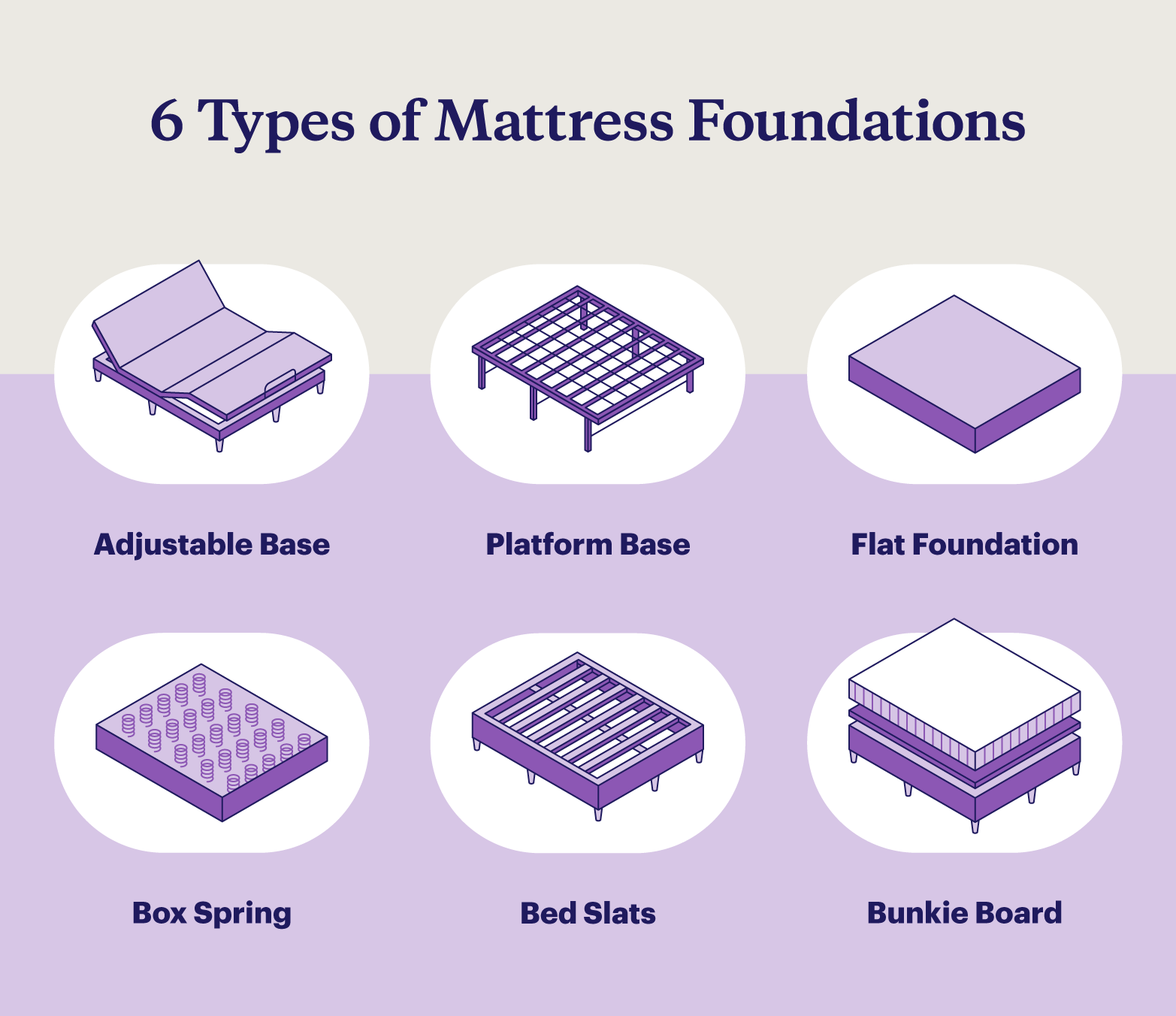
Your mattress needs a flat, rigid foundation to perform properly and stay under warranty. Acceptable bases include platform beds with slats no more than 3 inches apart, solid box springs compatible with foam models, adjustable bases verified for your specific model, and bunkie boards placed over slatted frames for added support.
Wide slat gaps, mesh bases, or flexible surfaces can cause sagging and void your warranty, especially with hybrid models. Place the frame in its final position before unboxing the mattress, as moving an expanded mattress risks damage.
Gather Essential Tools
Keep these items ready before starting the setup process. You will need scissors or a box cutter for opening the cardboard, gloves for grip and protection, a fan or air purifier to reduce off-gassing odor, and a measuring tape to confirm fit. Avoid using sharp tools near the plastic-wrapped roll, as a misplaced cut can puncture foam or fabric and cause permanent damage.
Unbox the Mattress Safely
Move Box to Final Location First
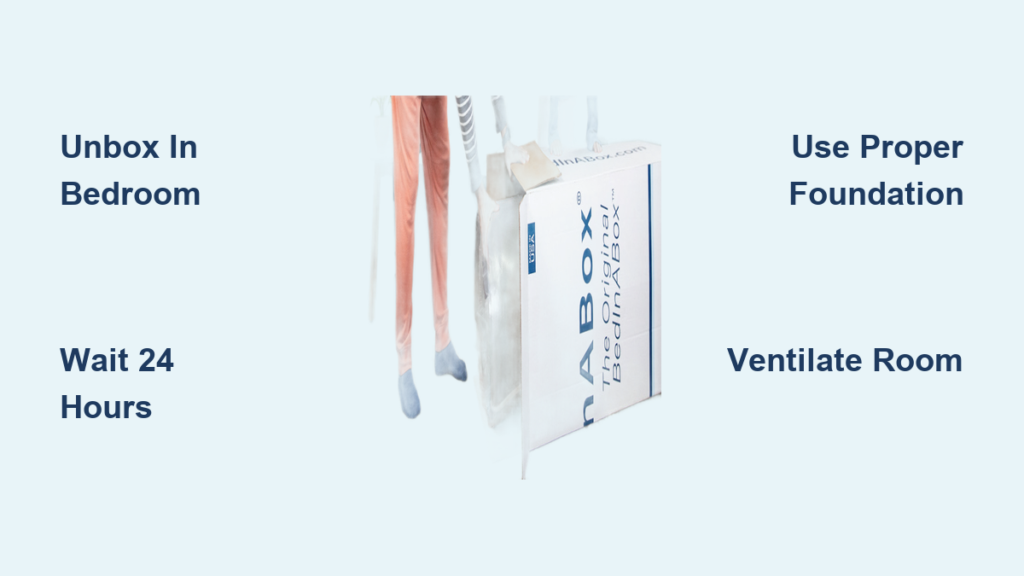
Do not open the box until it is in the bedroom. Once the vacuum seal breaks, the mattress begins expanding and becomes nearly impossible to move. Position the box near the bed frame with enough space for unrolling, about 3 to 4 feet of clearance on all sides.
Unrolling in the wrong room means dragging a partially expanded mattress, which risks tearing the fabric or damaging the foam layers.
Open the Cardboard Only
Place the box upright or on its side. Use scissors to cut the tape on the top flaps, not the sides. Gently open the box and slide the plastic-wrapped roll out. One person should stabilize the box while the other guides the roll. The roll is dense and can slip unexpectedly, so wearing gloves provides better grip.
Unwrap and Unroll Correctly
Find the Pull Tab or Zipper
The mattress is wrapped in two layers of plastic: an outer protective film and an inner vacuum-sealed wrap. Most brands include a pull tab or zipper strip on the side. Some manufacturers, like BedInABox, label which side should face down. Follow any printed instructions carefully.
Unroll Without Using Blades
Lay the roll on the floor or directly on the frame. Begin pulling the tab to release the seal. You will hear air rush in with a hiss—this is normal. Let the mattress unfurl naturally rather than forcing it open.
An alternative method involves rotating the roll like a spool to unwind smoothly. Some users flip the roll on its side and let gravity help. Never use a blade on the plastic wrap; tearing by hand prevents accidental cuts to foam or cover.
Remove All Plastic Layers
Continue unwrapping until the entire mattress is free. Check underneath, as plastic often gets trapped beneath the edges. Lift one edge to pull out any residual film. The cardboard is curbside recyclable, while the plastic wrap is engineered polyethylene—check local rules for proper disposal.
Allow Full Expansion Time

Understand the Decompression Phases
Expansion does not happen instantly. Here is what to expect during the first 48 hours.
During the first 10 minutes, the mattress reaches about 70 to 80 percent of its height with rapid puffing and possibly wrinkled edges. After 1 to 2 hours, it reaches approximately 90 percent expanded and feels usable for light sitting. Between 4 and 6 hours, the mattress is nearly fully expanded and suitable for cautious use. At 24 hours, the mattress is fully decompressed and reaches optimal support and firmness. For hybrid mattresses, wait 48 hours for complete stabilization.
Cold rooms below 65 degrees Fahrenheit slow recovery significantly. Keep the room at 68 to 77 degrees Fahrenheit for best results.
Hybrid Mattresses Need Extra Time
Models with pocketed coils, such as Casper Hybrid or DreamCloud, need additional time to fully perform. The foam expands quickly, but the coils reactivate gradually. Waiting 24 to 48 hours before regular use ensures the best comfort and support.
Manage Off-Gassing Odors
What Causes the Smell
When unsealed, foam mattresses often emit a chemical odor known as off-gassing. This comes from volatile organic compounds released by compressed memory foam, polyfoam, or gel layers. While non-toxic and harmless, the smell can be strong, especially in budget models.
CertiPUR-US certified foams, used by brands like Casper, Nectar, and DreamCloud, are made without formaldehyde, phthalates, or heavy metals, which reduces odor and health concerns.
Speed Up Air Purification
To minimize the smell, open windows and doors to improve ventilation. Use fans to circulate air throughout the room. Run your HVAC system if available. Place an air purifier or activated charcoal nearby to absorb odors. Avoid sleeping on the mattress until the odor fades, which typically takes 24 to 72 hours. Natural latex and hybrid models typically have less off-gassing than all-foam models.
Inspect and Finalize Setup
Check for Even Expansion
After 24 hours, inspect the surface for proper expansion. Look for a level and smooth surface without persistent dents or folds. Check that edges are fully expanded. Minor creasing at roll seams is normal and usually disappears within hours. Rotating the mattress 180 degrees helps test firmness consistency.
Add Bedding Safely
Wait at least 4 to 6 hours before placing sheets. For best results, delay full bedding such as comforters and mattress pads until 24 hours have passed. Use a breathable, non-slip protector to prevent moisture buildup and slipping. Avoid waterproof vinyl covers, as they trap heat and reduce airflow.
Test Adjustable Bases
If using a motorized base, wait 24 or more hours before operating it. Test head and foot elevation and massage functions gradually. Premature use can strain foam or coil layers and damage the internal mechanisms.
Know Your Warranty and Trial Rules
Sleep Trial Periods
Most brands offer risk-free trials ranging from 100 to 365 nights. Standard trials last 100 nights, while extended trials up to 365 nights are offered by brands like Nectar and DreamCloud. The trial usually starts at delivery or unboxing, so confirm your brand’s specific policy. Some require 30 or more days of use before allowing a return.
Warranty Coverage
Warranties typically last 10 years, though some brands offer lifetime coverage. Protected items include manufacturing defects, permanent indentations deeper than 1 inch, and foam splitting or delamination. Conditions include using an approved foundation, keeping the mattress free from stains or damage, and providing proof of purchase. These are one-sided mattresses, so flipping is not allowed and would void the warranty.
Maintain Your Mattress Long-Term
Rotate Regularly
To prevent body impressions, rotate the mattress 180 degrees from head to foot every 3 to 6 months. Do not flip the mattress, as these are designed for one-side use. Mark your rotation schedule on a calendar to stay consistent.
Clean Properly
Use mild detergent and water for spot cleaning. Blot stains rather than scrubbing them. Never saturate the mattress or attempt machine washing. Always use a protector to block sweat, spills, and allergens from penetrating the surface.
Never Re-Roll or Fold
Once expanded, do not compress the mattress again, as this ruins foam cell structure. When moving, transport the mattress flat in a truck or trailer rather than trying to re-roll it.
Frequently Asked Questions About Setting Up a Mattress in a Box
How long should I wait before sleeping on my new mattress?
You can technically sleep on the mattress after 2 to 3 hours, but waiting 24 hours is ideal. This allows full expansion, off-gassing to subside, and the foam to reach its intended firmness and support characteristics.
Can I set up the mattress in a cold room?
Cold temperatures below 65 degrees Fahrenheit significantly slow the expansion process. Keep your room between 68 and 77 degrees Fahrenheit for optimal recovery. If the room is cold, expansion may take 48 hours or longer.
What happens if I don’t use the right foundation?
Using a foundation with slat gaps wider than 3 inches, uneven surfaces, or flexible materials can cause sagging and edge collapse. This compromises comfort and may void your warranty. Always use a flat, rigid base with proper support.
Is the chemical smell dangerous?
The off-gassing odor comes from volatile organic compounds in foam and is generally non-toxic and harmless. It dissipates within 24 to 72 hours with proper ventilation. CertiPUR-US certified foams have reduced odor and fewer health concerns.
Can I return the mattress if I’m not satisfied?
Most brands offer sleep trials of 100 to 365 nights, allowing you to test the mattress at home. Some require a minimum trial period of 30 days before initiating a return. Check your specific brand’s policy for details.
Key Takeaways for Setting Up Your Mattress in a Box

Setting up a mattress in a box is straightforward when you follow the right steps. Choose between white glove delivery or self-delivery based on your mobility and the mattress size. Prepare your room by ensuring the bed frame is assembled and positioned in its final spot with proper foundation support. Unbox the mattress in the bedroom, unwrap the plastic by hand without using blades, and allow 24 to 48 hours for full expansion. Ventilate the room aggressively to speed up off-gassing and reduce odors. Finally, rotate the mattress every 3 to 6 months and use a protector to keep it clean and extend its lifespan. With proper handling and patience, your new mattress will deliver the comfortable, supportive sleep you expect.