Moving a mattress doesn’t sound complicated until you try to fit a queen-sized foam bed through a narrow hallway or strap it to the roof of your SUV. Whether you are relocating across town or shipping a mattress cross-country, how to transport a mattress properly is critical to avoid damage, voiding warranties, and risking injury. Most people do not realize that folding or rolling memory foam, hybrid, or innerspring models, even slightly, can permanently destroy internal support layers.
This guide walks you through every step. You will learn how to choose the correct transport method by mattress type, use protective gear, load safely into different vehicles, avoid common mistakes, and prepare for storage or long-distance moves. By the end, you will know exactly how to secure a mattress in a truck, whether roof transport is legal, and when to call professionals instead of doing it yourself.
Choose the Right Transport Method by Mattress Type

Not all mattresses can be moved the same way. The internal structure determines whether it can stand upright, lie flat, or rarely, be rolled. Using the wrong method risks irreversible damage and voids most manufacturer warranties.
Innerspring Mattresses: Keep Flat or Upright
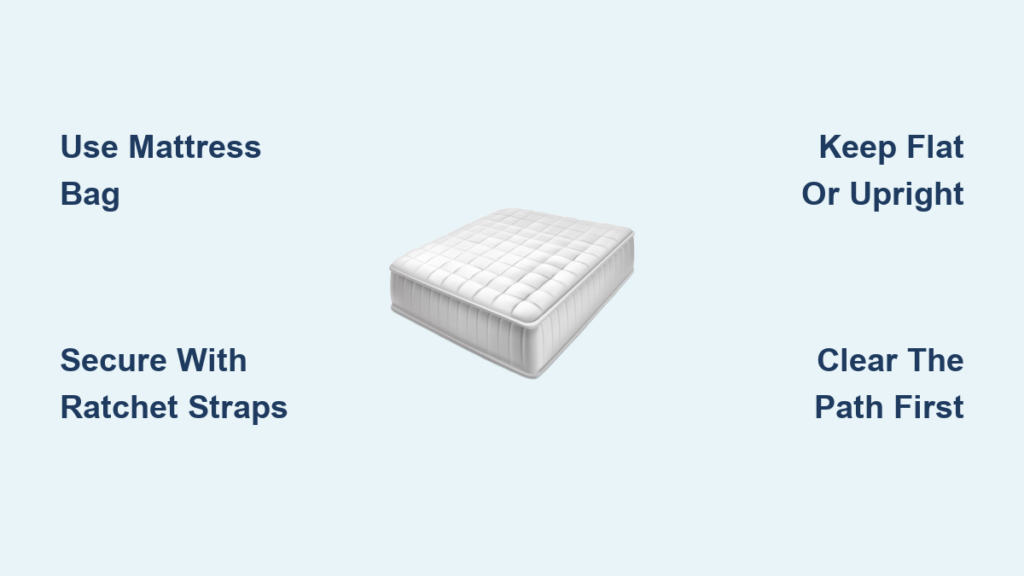
Innerspring mattresses contain metal coils that lose tension if bent. Never fold or roll them. During transport, position the mattress flat or on its side. Avoid stacking heavy items on top. Even slight sagging over door frames can misalign coils and create permanent sags.
Use cardboard inserts on both sides to prevent bowing during side transport.
Memory Foam Mattresses: Never Fold
Memory foam recovers slowly from pressure. If folded or rolled outside factory compression, the foam cells collapse and will not rebound. Transport only flat or vertically upright. If moving alone, reinforce with rigid cardboard panels and ratchet straps for stability.
DIY rolling voids most warranties. Only factory-compressed bed-in-a-box models are designed to be unrolled after shipping.
Hybrid Mattresses: Treat Like Foam
Hybrid mattresses combine foam comfort layers with coil support. They inherit the vulnerabilities of both materials. Never compress or fold. Transport flat or upright and avoid stacking. These are often heavier. Queen hybrids can exceed 100 pounds so use a dolly and at least two people.
Latex Mattresses: Handle with Care
Natural latex is resilient but not indestructible. While more flexible than memory foam, prolonged bending causes permanent creases. Transport flat when possible. Short-term vertical positioning is acceptable, but avoid leaning at extreme angles.
Air Mattresses: Deflate and Fold
These are the easiest to move. Fully deflate, fold, and pack in a carry bag. No special wrapping is needed unless for long-term storage.
Bed-in-a-Box: Follow Manufacturer Rules
Models like Purple, Casper, and Saatva arrive vacuum-sealed. Some, like Purple’s grid technology, can be temporarily folded for transport. Wrap first, secure with straps, and never place weight on top. Always check brand-specific guidelines before bending.
Gather Essential Tools Before Moving
Having the right supplies makes the job faster, safer, and more effective. Skipping key items increases the risk of damage and personal injury.
Mattress Bag: Non-Negotiable Protection
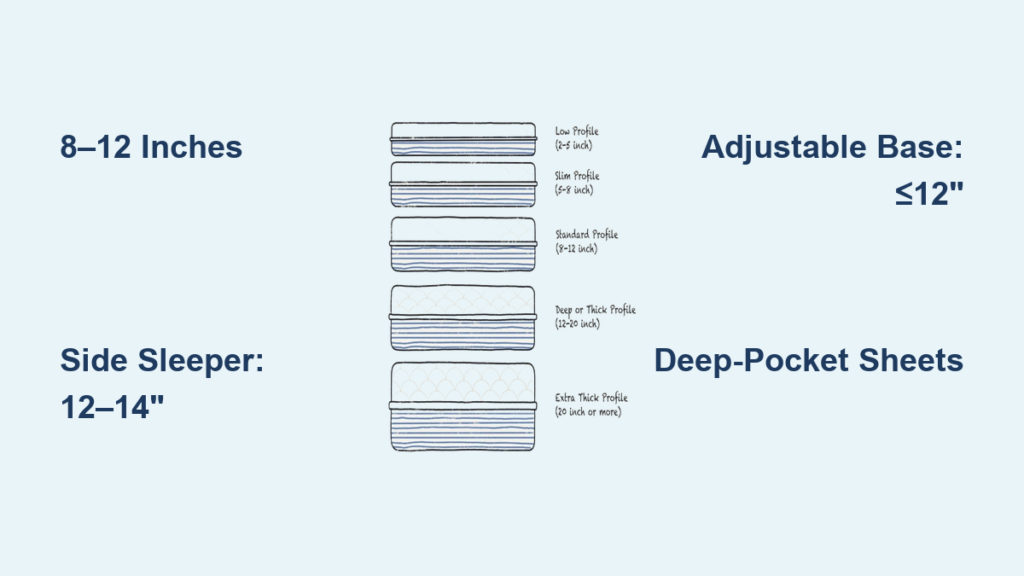
Use a heavy-duty plastic or vinyl mattress moving bag sized for your bed. These seal out dirt, moisture, and pests. Deep-pocket bags accommodate mattresses 16 inches thick or more.
Seal all seams with strong packing tape, not duct tape, which loses adhesion. For long moves, double-bag for added moisture resistance.
Ratchet Straps: Secure Better Than Rope
Rope stretches and slips. Ratchet straps with 500 to 1,000 pound capacity lock tight and stay secure. Use at least two inside a vehicle and four for roof or open-bed transport. Anchor to D-rings, bed rails, or approved tie-down points.
Straps should allow no more than 1 inch of movement when tugged.
Mattress Dolly: For Safe Solo Moves
Standard hand trucks are too narrow and tip easily. A wide-base mattress dolly has built-in straps and prevents lateral shifting. It is ideal for stairs and tight turns.
Work Gloves and Non-Slip Shoes
Improve grip and prevent falls. Mattresses are bulky and slippery, especially vinyl-wrapped ones.
Furniture Sliders: Move Without Lifting
Slide the mattress across floors instead of lifting. Place sliders under corners and push gently. This is great for solo movers navigating hallways.
Prepare the Mattress Before Transport
Skipping prep leads to odors, mold, and contamination. Clean and dry your mattress thoroughly before wrapping.
Clean and Dry Completely
Strip all bedding. Vacuum both sides to remove dust and debris. Spot-clean stains with mild detergent and a damp cloth. Let it air dry 24 to 48 hours before bagging.
Never seal a damp mattress. Trapped moisture breeds mold and mildew within hours.
Inspect for Damage or Pests
Check for tears, sagging, or signs of bed bugs. Look for dark spots or shed skins. Address issues before moving to avoid spreading infestations.
Wrap the Mattress Properly
How you wrap the mattress determines how well it survives the journey.
Use a Mattress Bag Correctly
Slide the mattress in foot-first, lifting alternately to avoid dragging. Push out excess air, fold the flap, and seal every edge with packing tape. Crisscross tape corners for reinforcement.
Label with “This End Up” and the room destination for easy unloading.
Reinforce with Cardboard
For soft or sagging mattresses, place large cardboard sheets on top and bottom. Tape or strap them in place. This adds rigidity and creates handles for better grip.
Stretch Wrap for Short-Term Only
If no bag is available, wrap tightly with overlapping layers of plastic wrap. Seal ends with tape. This is less durable and should only be used for short indoor moves.
Clear the Path and Measure Doorways
Over half of moving injuries happen during maneuvering, not lifting. Plan your route in advance.
Walk the Route First
From bedroom to vehicle, remove obstacles. Take down rugs, move furniture, remove doorstops, and lower wall art. Prop open all doors. Measure stairwells, elevators, and hallways.
Measure Doorframes
Standard interior doors are 30 to 32 inches wide. A twin mattress at 38 inches wide will not fit flat. It must go on its side or diagonally. Use a tape measure to confirm clearance.
Temporarily remove door handles if they block passage.
Lift and Move with Proper Technique
Lifting incorrectly can cause back injuries. Use teamwork and proper technique.
Lift with Your Legs, Not Your Back
Bend knees, keep back straight, and engage your core. Hold the mattress close to your body. Avoid lifting above shoulder height.
Two-Person Lift: Head and Foot
One person takes the head, one takes the foot. Communicate clearly. Say “lift,” “stop,” “turn,” and “lower” in sync. Lift simultaneously.
For stairs, position one person above and one below to control descent.
Solo Moving: Use a Dolly or Sliders
Attach furniture sliders and push across floors. On stairs, guide the mattress downward slowly from above. Reinforce with cardboard to prevent bending.
If it feels too heavy, do not risk it. Hire help via TaskRabbit or Handy, or ask a neighbor.
Mattresses over 70 pounds require at least two people. Queen and king beds often exceed 100 pounds.
Load Into Vehicle by Type
The vehicle determines how the mattress must be positioned and secured.
Moving Truck or Cargo Van
This is the best option. Use a ramp and dolly. Load lengthwise against the wall, on its side or flat. Never position it upside down unless unavoidable.
Secure with ratchet straps to D-rings. Wedge between large furniture to prevent shifting. Do not place heavy items on top.
Loading into a truck takes 5 to 10 minutes with two people and proper tools.
Pickup Truck: Secure Against Wind
Lay flat in the bed. If overhanging, use crisscrossed ratchet straps and attach a red flag if the overhang exceeds 4 feet.
Drive under 45 miles per hour. Avoid highways. Wind pressure at 60 mph can exert hundreds of pounds of force, enough to tear loose straps.
SUV or Minivan: Fit Through Rear Hatch
Fold down rear seats. Measure cargo space first. Most SUVs fit a queen on its side or at an angle.
Protect interior with a tarp. Slide in gently and wedge in place. Avoid stacking.
Some SUVs cannot fit a king mattress even diagonally.
Car Roof: Last Resort Only
Only attempt in dry weather, for short trips under 10 miles, and with roof racks.
With roof racks, use 4 to 6 ratchet straps at front, back, and sides. Place moving blankets between roof and mattress.
Without racks, run straps through open windows. Never block the driver’s view.
Drive under 35 mph. Stop after a few blocks to recheck tightness.
Roof transport is illegal in some states if not properly secured. Fines apply.
Drive with Caution
How you drive affects the mattress as much as how you load it.
Avoid sudden acceleration, hard braking, and sharp turns. Maintain low to moderate speeds. Check straps every 10 to 15 minutes or after rough roads. Re-tighten if loose.
For long-distance moves, inspect at rest stops.
Unload and Set Up at Destination
Unloading is just as important as loading.
Clear the Path at the New Location
Repeat the prep. Remove obstacles, prop open doors, and measure tight spaces.
Use the Same Lifting Technique
Coordinate with a partner. Use a dolly for stairs. One person above, one below for control.
Remove Bag Immediately
Unseal the mattress bag as soon as you are inside. Let it air out for 24 to 48 hours, especially if compressed. This eliminates off-gassing odors and prevents moisture buildup.
Inspect for Damage
Check for tears, stains, or signs of pests. If damaged, document and contact movers or insurers.
Special Scenarios and Solutions
Some moves require extra planning.
Long-Distance Moves
Use an enclosed moving truck or professional movers. Never use roof transport for cross-country trips.
Consider shipping separately. Costs range from $150 to $900 based on size and distance. This requires professional boxing and crating and is often cheaper than renting a larger truck.
Short-Term Storage Under 30 Days
Store flat on wooden pallets or plastic slats. Use a breathable fabric cover, not plastic. Keep in a dry, indoor area. Place no weight on top.
Long-Term Storage Over 30 Days
Use a climate-controlled unit. Elevate off concrete. Never store directly on floor. Allow airflow around all sides. Avoid storage longer than 6 months.
International Moves
Use professional packing services. Some countries require fumigation certificates for used bedding. Custom wooden crates offer maximum protection.
Avoid Common Mistakes
Even small errors can ruin a mattress.
Use a mattress bag and ratchet straps. Transport flat or on its side, never folded. Store flat in climate-controlled units. Hire help for large or heavy mattresses. Allow 24 to 48 hours for recovery after transport.
Never leave a mattress exposed to rain, snow, or UV. Never drag across floors. Never fold or roll non-compressible mattresses. Never store on concrete. Never use duct tape on bags. Never drive fast with a roof load. Never stack heavy items on top.
Cost Overview: DIY vs. Professional Help
Mattress bags cost $5 to $10 each. Packing tape runs $3 to $8 per roll. Ratchet straps cost $10 to $20 per set and are reusable. Truck rental ranges from $20 to $100 per day depending on size. Professional movers charge $50 to $100 per hour per mover, and 2 to 3 are typically needed. Long-distance shipping costs $150 to $900 based on size and distance. Monthly storage runs $50 to $150.
Borrow a dolly, use your car, and recruit a friend. Total cost can be zero.
Key Takeaways for Transporting Your Mattress
Transporting a mattress is not just about getting it from point A to point B. It is about preserving comfort, support, and your warranty. Always use a mattress bag, even if the mattress is new. Dust and moisture are silent destroyers.
Never move alone if the mattress exceeds 70 pounds. Flat or upright positioning is best for foam and hybrid models. Invest in ratchet straps and a mattress dolly. They pay for themselves in safety and ease.
When in doubt, hire professionals, especially for king, California king, or high-end models. Plan ahead by measuring, gathering supplies, clearing paths, and choosing the right vehicle.
Frequently Asked Questions About Transporting a Mattress
Can you fold a memory foam mattress for moving?
No. Memory foam should never be folded or rolled unless it arrived factory-compressed as a bed-in-a-box. Folding damages foam cells permanently and voids most warranties. Transport flat or vertically upright instead.
What is the best way to transport a mattress in a pickup truck?
Lay the mattress flat in the truck bed. If it overhangs, secure it with crisscrossed ratchet straps and attach a red flag if the overhang exceeds 4 feet. Drive under 45 mph and avoid highways.
How long does it take a mattress to recover after being compressed?
Allow 24 to 48 hours for the mattress to fully expand and air out. This is especially important for bed-in-a-box models that were vacuum-sealed during shipping.
Is it legal to transport a mattress on a car roof?
It depends on local laws. Many states require a red flag if overhang exceeds 4 feet. Roof transport is risky at any speed and should only be attempted for short distances under 10 miles in dry weather.
Can I store a mattress on its side?
No. Storing a mattress on its side causes permanent sagging and damage to internal support layers. Always store flat on a raised surface like wooden pallets.