You have selected a comfortable mattress, but your sleep setup remains incomplete without the proper foundation. Choosing the wrong base causes sagging, poor alignment, and premature wear on your new investment.
This guide explains how to choose a box spring that matches your specific mattress type and bed frame requirements. You will learn to identify compatible sizes, select the correct height, and avoid common mistakes that void warranties.
Match Your Mattress Type to the Right Foundation
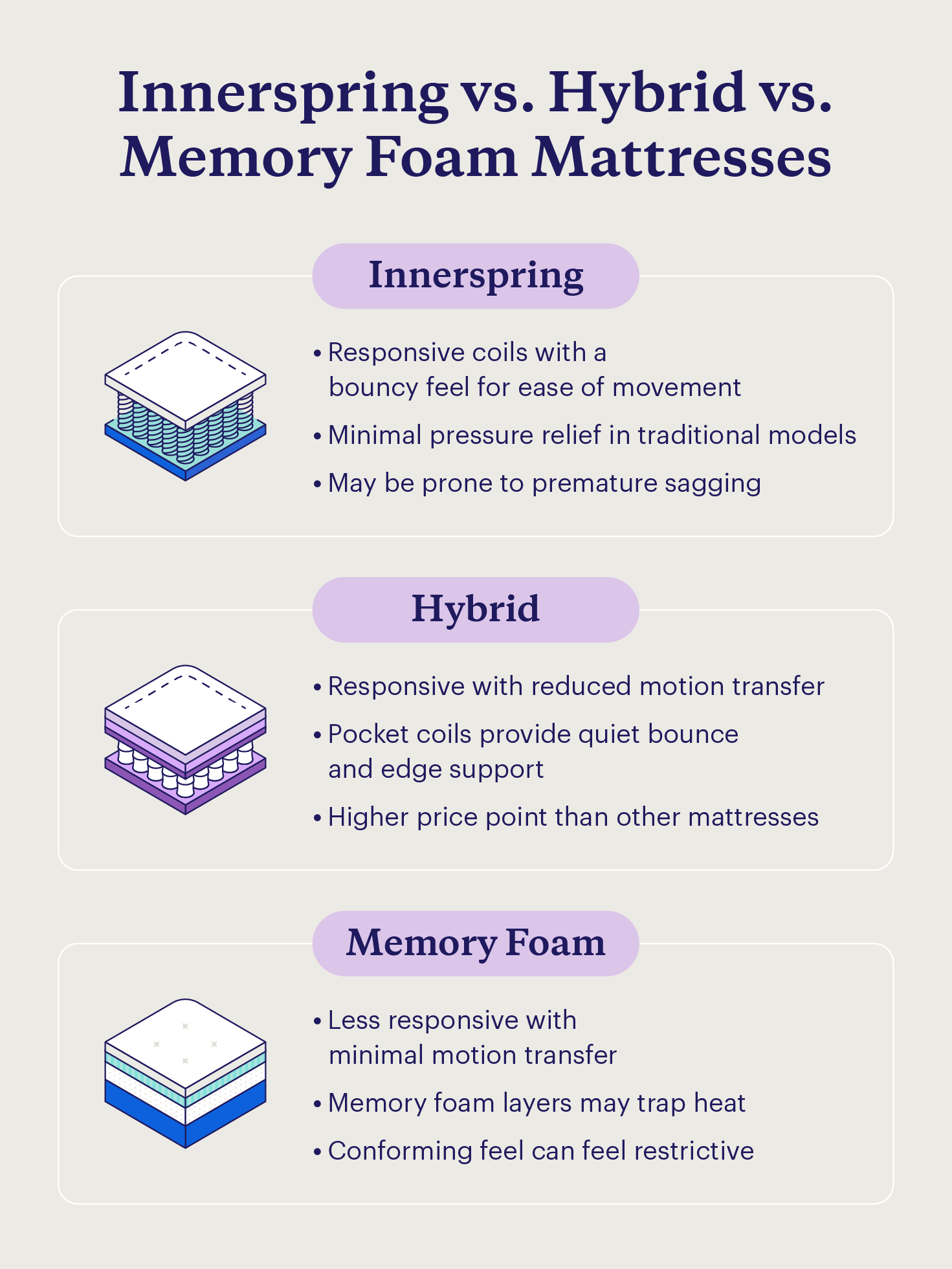
Not every mattress requires a traditional coil-based box spring. Your specific mattress construction dictates whether you need a springy base or a solid, flat surface.
Why Innerspring Mattresses Need Traditional Coils
Innerspring mattresses are engineered to function specifically with a box spring. The dual coil systems work in tandem to provide responsive support and essential shock absorption.
Without a proper box spring, these mattresses often feel excessively firm or develop premature sagging in the center. Ensure your chosen base features a sturdy wooden or metal grid to handle the weight and movement of the coils.
Support Requirements for Memory Foam and Latex
Most memory foam and latex models do not require a traditional box spring. These dense materials need a solid, flat, and stable surface to prevent uneven support.
Using a standard spring box with these mattresses can cause the foam to sink between the coils. This uneven pressure often voids the manufacturer warranty. Opt for a solid foundation or a vented, low-profile base rated specifically for foam.
Hybrid Mattress Foundation Guidelines
Hybrid mattresses combine innerspring support with foam comfort layers. Many manufacturers recommend a firm, flat foundation or a low-profile box spring for these units.
Always check your specific warranty guidelines before purchasing. Some brands strictly require a platform frame or solid foundation to maintain coverage, as extra give from a traditional box can destabilize the hybrid core over time.
Pick the Exact Size for Your Mattress
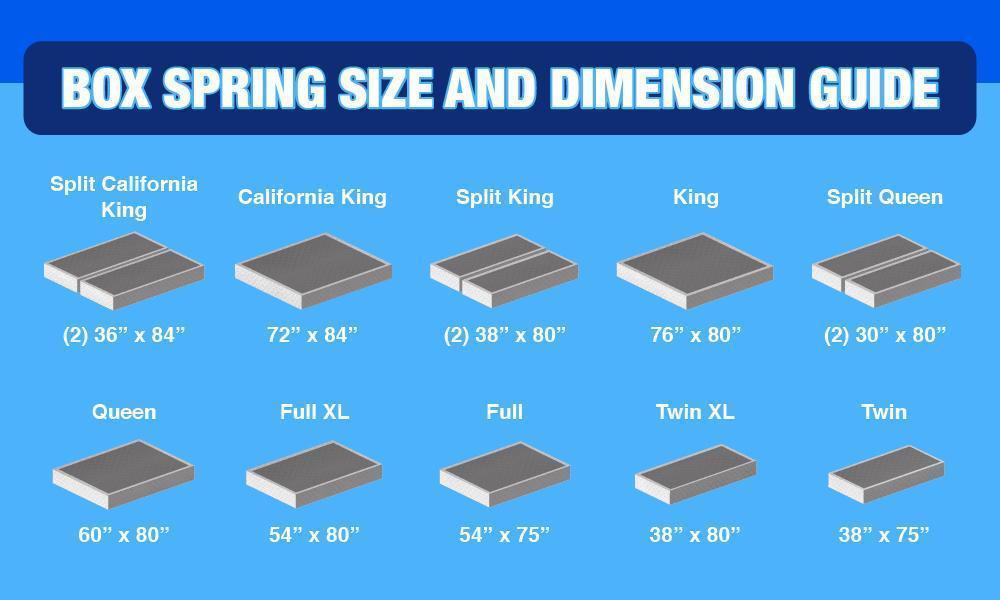
Your box spring must match your mattress dimensions precisely. Mismatches lead to instability, uneven wear patterns, and potential safety hazards in the bedroom.
Standard Size Pairings for Common Beds
Use these standard measurements to guide your purchase decision:
- Twin: 38″ x 75″
- Twin XL: 38″ x 80″
- Full: 54″ x 75″
- Queen: 60″ x 80″
- King: 76″ x 80″
- California King: 72″ x 84″
Always measure your specific mattress before buying, as older or specialty models may have non-standard dimensions.
Prevent Edge Sagging with Proper Fit
A mattress that overhangs the box spring will sag at the edges. This creates a tripping hazard and places excessive stress on the mattress seams.
Ensure full surface contact between the mattress and the foundation. Even a one-inch gap can cause the foam or coils to break down faster in the unsupported areas.
Choose the Correct Height for Accessibility
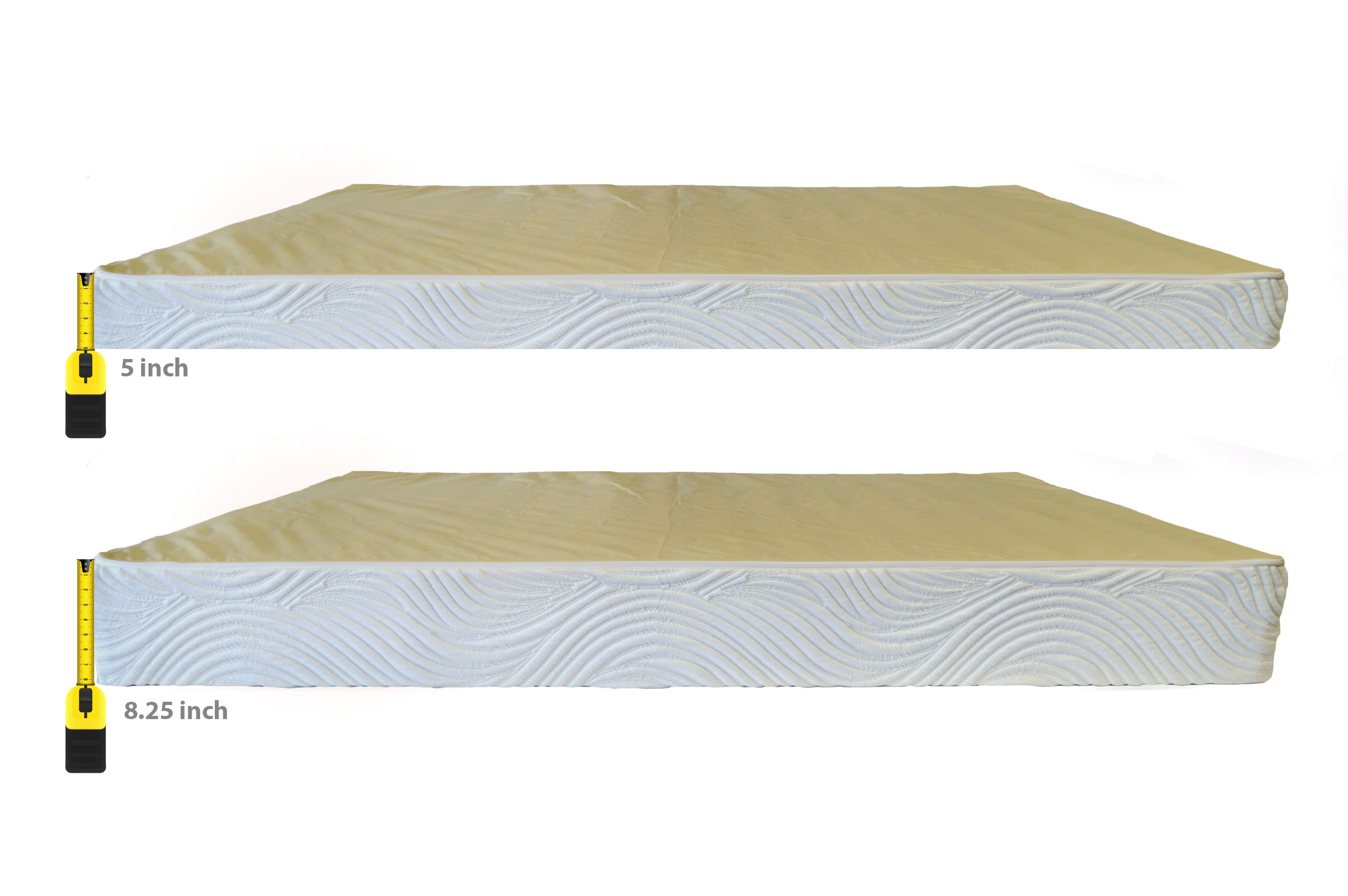
Box spring height directly affects your total bed height, accessibility, and room aesthetics. You generally choose between high-profile and low-profile options.
High-Profile Options for Elevated Beds
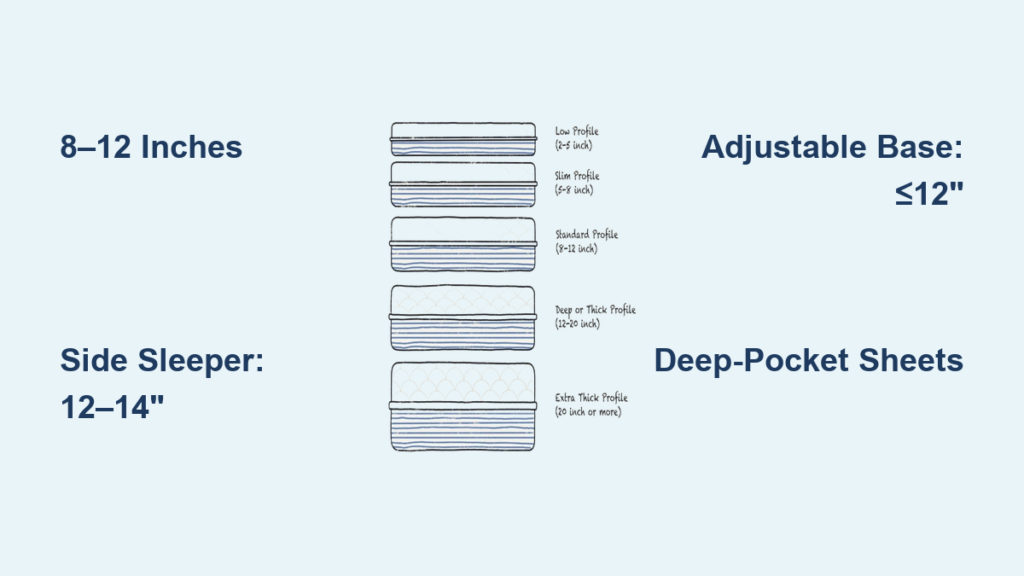
High-profile box springs range from 8 to 11 inches tall. These were once the default choice for most bedrooms and elevate the bed significantly.
This height makes it easier for taller individuals to get in and out of bed. However, on tall bed frames, the total height may become inconvenient or unsafe for shorter sleepers.
Low-Profile Choices for Modern Frames
Low-profile box springs typically measure 4 to 6 inches tall. They offer necessary support without adding excessive height to your sleep surface.
These are ideal for platform beds, modern frames, or when you desire a grounded, contemporary look. They also suit memory foam and hybrid mattresses that do not need extra cushioning from below.
Calculate Your Total Bed Height
Add your mattress thickness, box spring height, and bed frame height together. If the total exceeds 28 to 30 inches, consider a low-profile option for easier access.
Decide on Material and Build Quality

The internal structure and materials determine durability, weight capacity, and noise levels. Quality construction prevents early failure.
Wooden Frames Versus Metal Structures
Wooden frames are quieter and offer a traditional feel. Hardwood varieties like pine or birch last longer than softwood alternatives. Look for reinforced corners and cross-bracing for added strength.
Metal frames provide superior strength and durability, especially for heavy hybrid mattresses or large sizes like King and California King. They resist warping but may develop squeaks over time if joints loosen.
Fabric Breathability and Ventilation Needs
The outer fabric should be breathable and durable to ensure longevity. Mesh panels or perforated sides improve airflow, which reduces moisture buildup and extends mattress life.
Avoid vinyl covers entirely. They trap heat and degrade faster than woven fabrics, potentially leading to mold issues or fabric tearing.
Verify Weight Capacity Ratings
Always check the weight rating, particularly for Queen and King sizes. A quality box spring should support at least 500 lbs for a Queen and 600+ lbs for a King.
This rating must include the combined weight of all sleepers and bedding. Reinforced edges and center support bars help prevent sagging in larger sizes.
Know When You Don’t Need a Box Spring
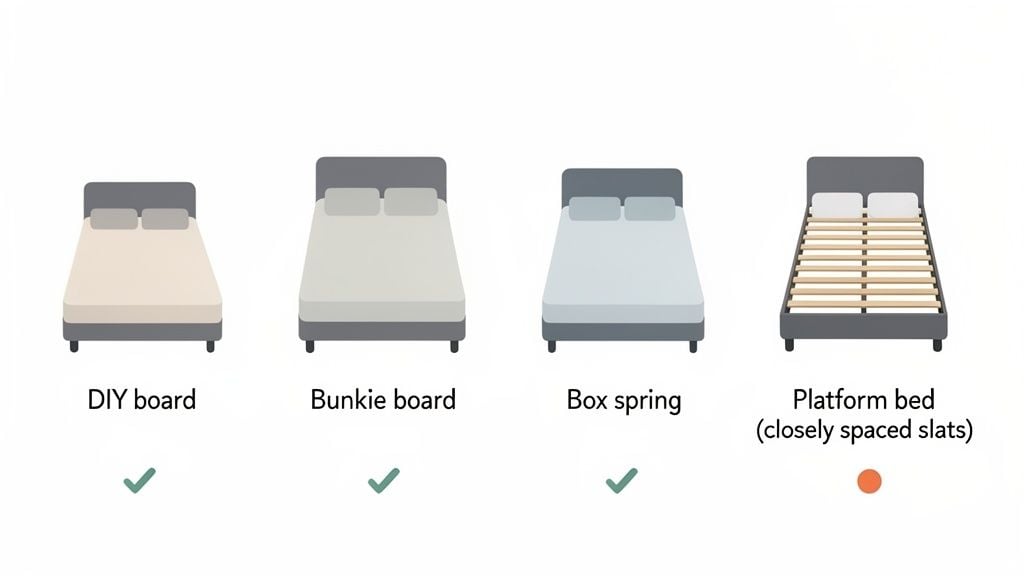
Not every bed setup requires a separate box spring. Many modern bed frames offer equal or better support through alternative designs.
Platform Beds with Built-in Slats
Most platform beds feature built-in slats spaced no more than 3 inches apart. These provide full support for memory foam, latex, and hybrid mattresses.
This design eliminates the need for a box spring entirely. Ensure the slats are solid wood or reinforced metal to prevent bowing under weight.
Slatted Foundations and Bunkie Boards
Adjustable slat systems distribute weight evenly across the mattress surface. If your slats are in good condition and properly spaced, a box spring is unnecessary.
Add a bunkie board if your slats are widely spaced. This thin plywood layer adds firmness and protects foam mattresses from damage.
Solid Foundations as Alternatives
A solid wood or MDF platform offers a flat, stable base ideal for foam mattresses. These are often lighter and cheaper than traditional box springs.
Ensure the surface is smooth and well-ventilated. Proper airflow prevents moisture retention that can damage the mattress bottom.
Avoid Common Mistakes When Buying
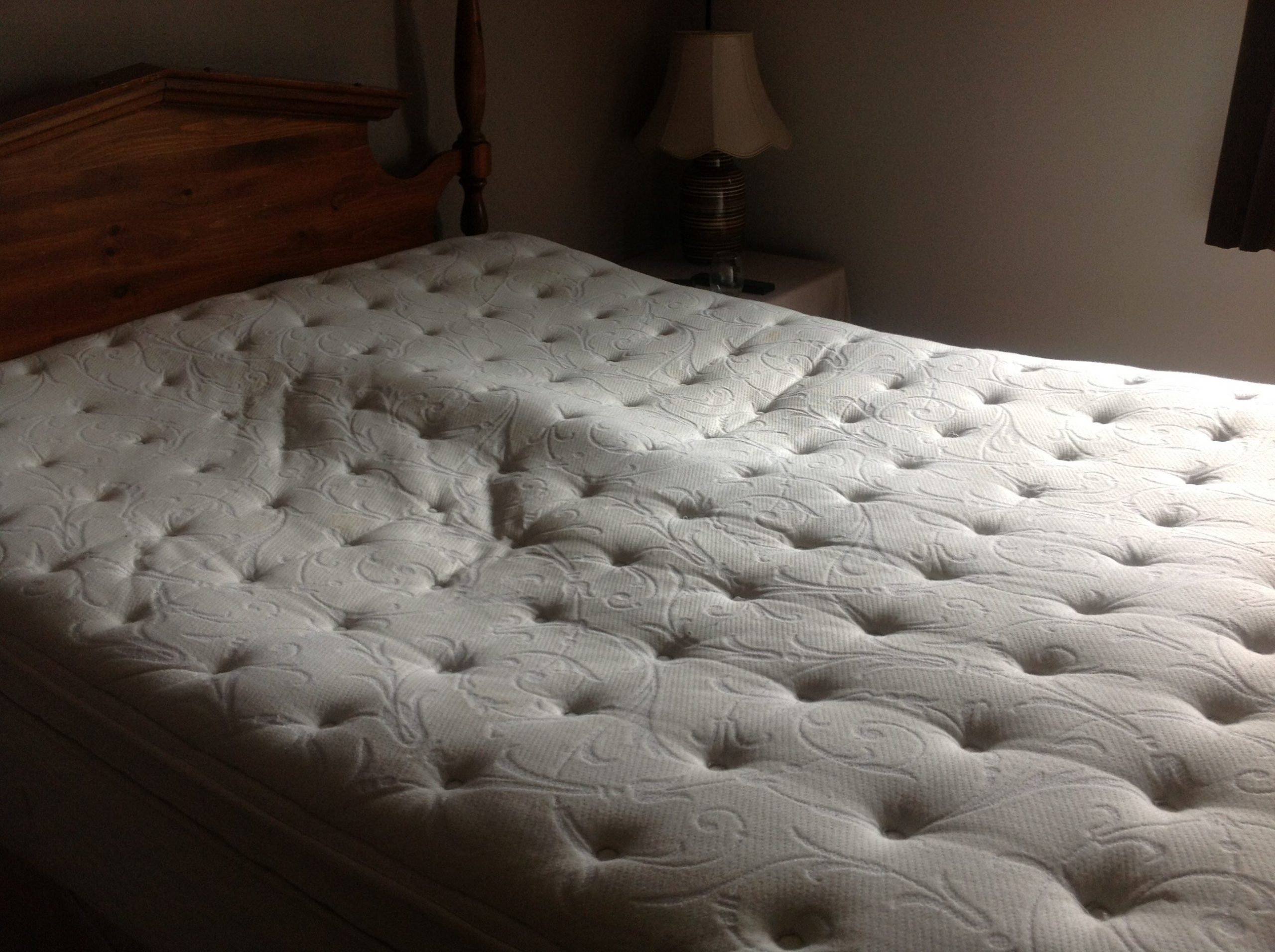
Even with the right size and type, poor choices can shorten your bed’s lifespan. Avoid these frequent errors to protect your investment.
Risks of Using an Old Box Spring
Never pair a new mattress with an old box spring. Over time, box springs lose their structural support, leading to uneven wear on the new mattress.
Most manufacturers recommend replacing both components together. Inspect your current base for sagging, squeaking, or broken slats before deciding to reuse it.
Skipping Warranty Verification Steps
Many mattress warranties require a suitable foundation. Using the wrong box spring or skipping it entirely can void your coverage completely.
Always read the fine print in your warranty document. Some brands specify platform beds, solid foundations, or low-profile box springs only.
Ignoring Center Support Requirements
For Queen, King, and California King sizes, center support is critical. Larger box springs should have a center beam or leg that attaches securely to the bed frame.
Without this support, the middle of the bed sags. This creates a dip that transfers directly to your mattress, causing premature failure.
Consider Cost Versus Longevity
Box springs range from $80 to over $300 depending on size, material, and brand. Understanding value helps you make a smart financial choice.
Budget Options for Short-Term Use
Inexpensive models costing $80 to $120 often use softwood and thin fabric. They may have minimal bracing and are suitable for short-term use or guest rooms.
Expect these models to last only 3 to 5 years. They may not support heavy weights or frequent use as well as premium options.
Mid-Range to Premium Investment Pieces
Models priced between $150 and $250 typically use hardwood and reinforced corners. These feature better ventilation and stronger construction overall.
These units typically last 7 to 10 years and support heavier weights effectively. Invest in quality if you have a high-end mattress, as your foundation should last as long as your sleep surface.
Cost-Saving Alternatives to Traditional Springs
If your bed frame provides solid support, skip the box spring entirely. Use a bunkie board instead to save money.
A bunkie board costs between $30 and $80. It adds minimal height while protecting foam mattresses from slat damage.
Frequently Asked Questions About Choosing a Box Spring
Can I use an old box spring with a new mattress?
No, you should not use an old box spring with a new mattress. Old foundations lose support over time, causing uneven wear and potentially voiding your new mattress warranty.
What height box spring should I choose for a low bed?
Choose a low-profile box spring, which is typically 4 to 6 inches tall. This adds support without making the total bed height too high for easy access.
Do memory foam mattresses need a box spring?
Most memory foam mattresses do not need a traditional box spring. They require a solid, flat surface like a platform bed or solid foundation to prevent sagging.
How do I know if my box spring is bad?
Look for visible sagging, hear squeaking noises, or feel broken slats. If the center dips or the frame feels unstable, it is time to replace the unit.
Will using the wrong foundation void my warranty?
Yes, using the wrong foundation can void your mattress warranty. Many manufacturers specify exact support requirements, so always check your warranty guidelines first.
Key Takeaways for How to Choose a Box Spring
Selecting the right foundation ensures your mattress performs as designed and lasts for years. Match the box spring type to your specific mattress construction, verify the exact size dimensions, and prioritize build quality over the lowest price.
Always consult your mattress warranty before purchasing to ensure compliance. Taking these steps protects your investment and guarantees a comfortable, supportive sleep experience.