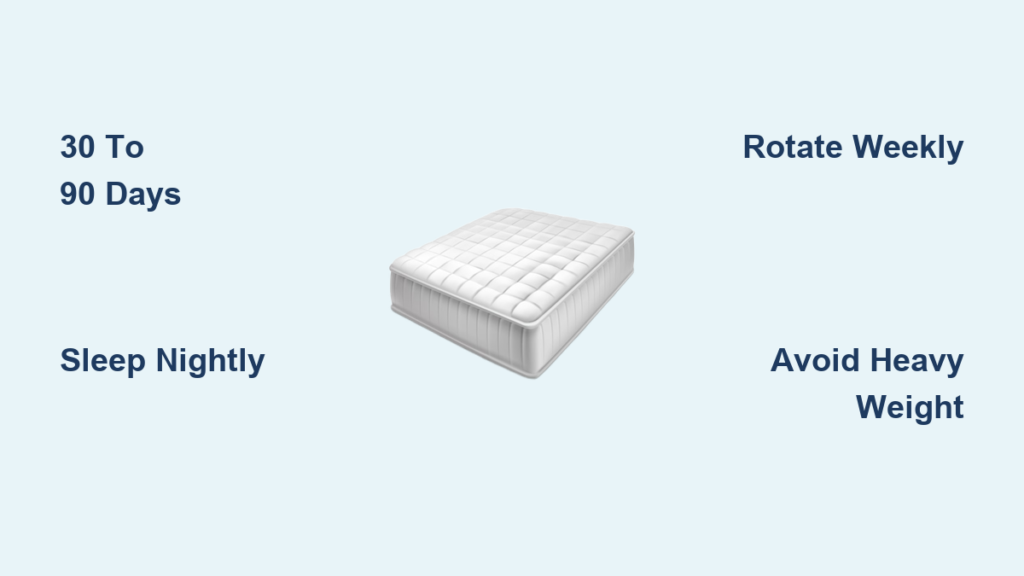
You just unboxed your new mattress, but it feels stiff, smells a little off, and is not delivering the comfort you expected. Do not panic. This is completely normal. Breaking in a mattress is a natural process that allows both the materials and your body to adapt. Most sleepers need 30 to 90 days to fully adjust, with many noticing real improvements only after 6 to 8 weeks. During this time, foam softens, coils settle, and your spine relearns proper alignment.
The break-in phase is not a flaw. It is part of how your mattress reaches its true feel. Rushing to return it after just a few nights could mean missing out on long-term comfort. This guide breaks down exactly how long different mattresses take to break in, what changes to expect, how to speed up the process safely, and when it is time to consider a swap. Whether you own memory foam, hybrid, innerspring, or latex, you will learn how to get the most from your investment starting tonight.
Break-In Time by Mattress Type
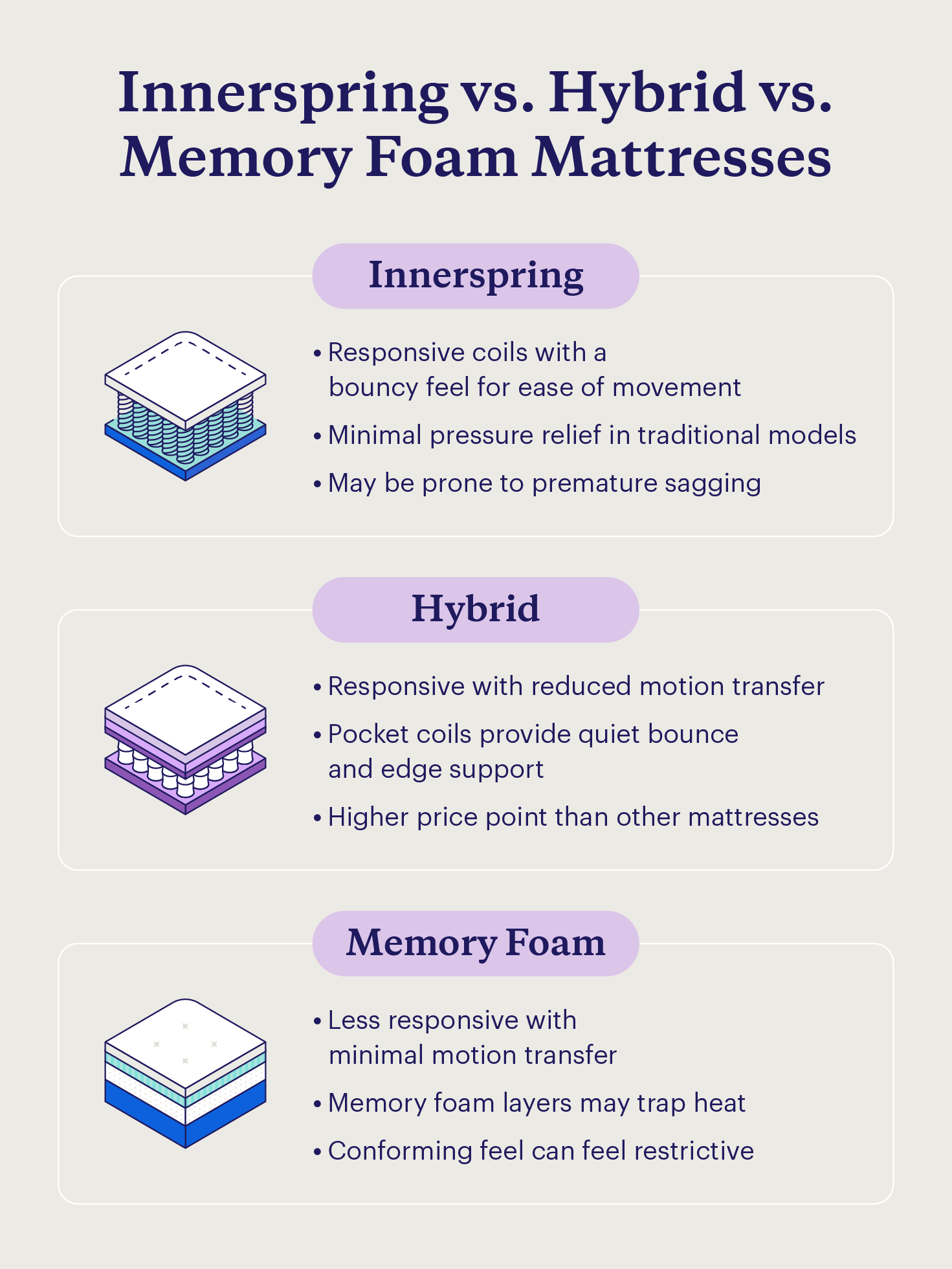
Different materials respond to body weight and use in unique ways. Knowing your mattress type helps set realistic expectations for comfort and adjustment during the break-in period.
Memory Foam: 30 to 60 Days
Memory foam feels firm at first because the dense cells have not compressed yet. Body heat gradually softens the material, improving contouring over 4 to 8 weeks. High-density foams take longer to break in but also last longer. Off-gassing may occur in the first few days but fades quickly with proper ventilation.
Pro Tip: Sleep on your memory foam mattress every night, even if it feels uncomfortable at first. Skipping nights delays the adaptation process.
Hybrid: 30 to 90 Days
Hybrid mattresses combine coil support with foam or latex comfort layers. The top layer behaves like memory foam and needs time to conform to your body. Full break-in often takes 60 to 90 days, especially for models with heavier comfort layers. Lighter users may need closer to the full three months to experience optimal comfort.
Innerspring: 2 to 4 Weeks
These models use tightly wound coils that loosen quickly with movement. Most people adjust within 14 to 30 days. The main change comes from the padding above the coils softening, not the springs themselves. Faster adaptation makes innersprings ideal for those who dislike long break-in periods.
Latex: Minimal Break-In
Natural latex is resilient and responsive, so it feels consistent from day one. There is little softening involved, meaning comfort is immediate. Adjustment is more about your body adapting than the mattress changing. Talalay latex offers more cushioning, while Dunlop is firmer and more supportive.
Pillow Top and Euro Top: 3 to 4 Weeks
Plush layers made of foam, fibers, or cotton compress with use. Most settle within a month, but lighter individuals weighing under 130 pounds may take 6 or more weeks due to less downward pressure. These models are prone to early body impressions, which is normal if under 1.5 inches deep.
Poly Foam: 4 to 8 Weeks
Less temperature-sensitive than memory foam, polyurethane foam softens steadily with consistent use. Expect gradual improvement over one to two months. Lower-density versions may degrade faster under heavy use.
Brand-Specific Timelines
Some manufacturers provide specific break-in guidance for their products.
Purple Mattress claims a 21-day break-in thanks to its grid design, which does not compress like traditional foam. Leesa recommends 30 or more nights of nightly use before judging comfort. Texas Mattress Makers offers 90-night trials, with some models suggesting up to 6 months for full adaptation.
Signs Your Mattress Is Still Breaking In
If you are unsure whether your mattress is still adjusting, look for these physical and sensory cues that indicate the break-in process is ongoing.
Firmness Fades Gradually
A new mattress often feels too firm at first. This stiffness comes from uncompressed foam, padding, or tight coils. As you sleep, body weight and movement open up the material structure. The softening is subtle. Do not expect a dramatic shift. Most users report noticeable changes after 2 to 3 weeks, with peak comfort around 60 days.
Think of it like breaking in a new pair of leather shoes. Stiff at first, then it molds to you over time.
Off-Gassing Dissipates in Days
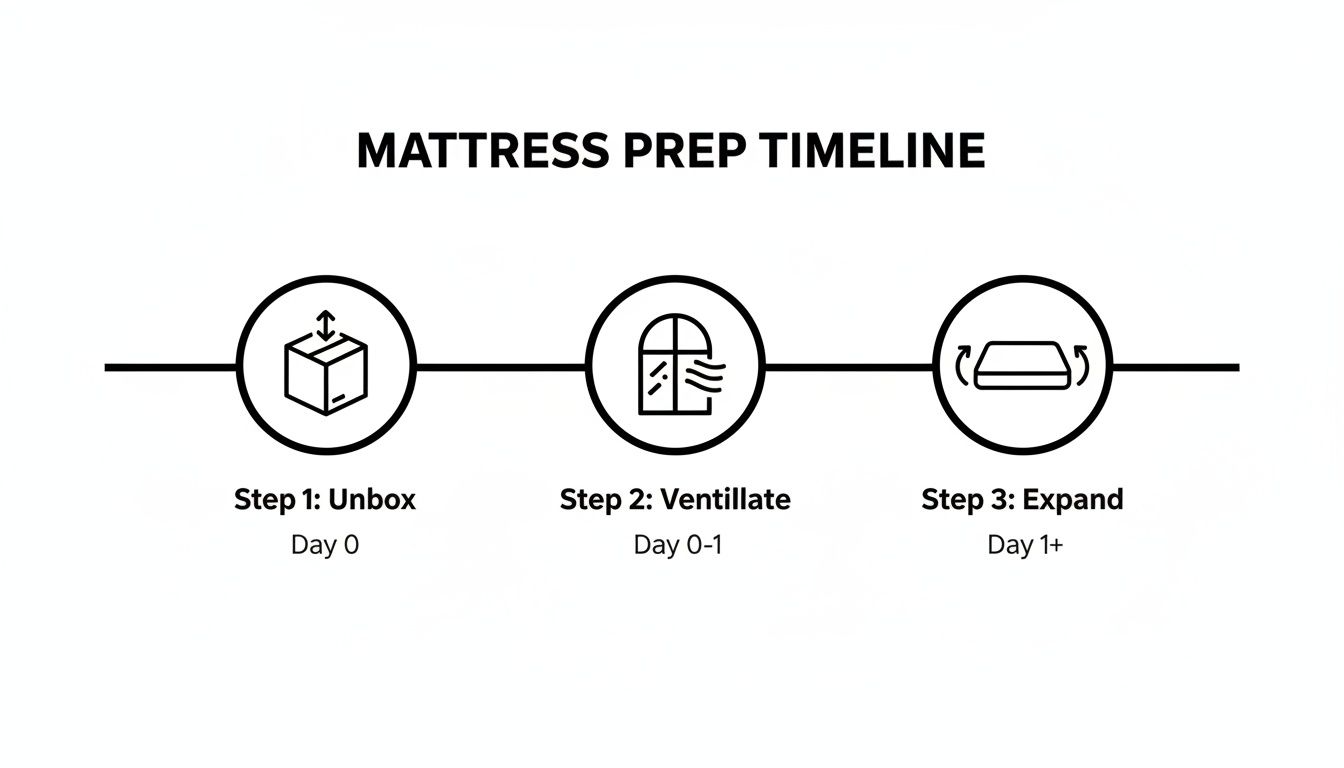
Bed-in-a-box models release a chemical smell known as off-gassing from volatile organic compounds in foams and adhesives. This odor usually fades within 3 to 5 days, though some people detect it up to 2 weeks. To speed removal, unbox the mattress in a well-ventilated room, use fans, and open windows. Let it air out for 24 hours before sleeping on it. Natural latex and organic materials produce little to no odor.
Decompression Takes 12 to 72 Hours
After unboxing, compressed mattresses need time to expand to full thickness. Most recover within 24 hours, but thicker models of 12 inches or more can take up to 72 hours. Do not rush. Sleeping too soon can trap odors and delay recovery. Always wait at least one full day before adding sheets or sleeping on it.
How to Break In a Mattress Faster
You cannot skip the break-in period entirely, but you can accelerate material softening and body adaptation with smart techniques that help the mattress reach its true feel more quickly.
Sleep on It Every Night
Consistent use is the most effective method for breaking in a mattress. Aim to sleep on the mattress nightly, even if it feels odd at first. Avoid alternating with an old bed because this resets the adjustment clock. For those struggling with discomfort, start with naps or partial nights and gradually increase usage over 1 to 2 weeks. Stick with it for at least 30 nights before deciding whether to keep or return it.
Apply Controlled Pressure
Help open up foam cells by applying extra weight safely. Walk barefoot across the surface daily to distribute pressure evenly. Rolling or crawling on the mattress also helps. Avoid jumping, especially on hybrids or innersprings, because this can damage coils. Many manufacturers endorse walking on the mattress to speed softening.
Rotate Every 1 to 2 Weeks
Rotating head-to-foot prevents uneven compression and balances wear during the break-in phase. Do this every 7 to 14 days during break-in. Flip the mattress only if it is double-sided, which is rare in modern beds. This practice prevents one-sided body impressions from forming prematurely.
Change Sleep Positions and Sides
Sleeping in the same spot every night creates deep impressions fast. Mix it up by alternating between side, back, and stomach positions. Occasionally switch sides of the bed to let different zones respond to pressure. This promotes even settling and improves long-term durability.
Use Heat to Soften Foam
Temperature-sensitive foams like memory foam and gel-infused varieties respond well to warmth. Raise room temperature during the day, not at bedtime. Your body heat naturally softens the surface each night. Avoid using heaters or hair dryers because excessive heat damages foam.
Add a Mattress Topper If Too Firm
A 2 to 4 inch topper made of latex, wool, or memory foam adds cushioning during the break-in period. This is ideal for side sleepers or those with joint pain because it removes pressure while the base softens. Remove the topper after 60 days to assess the true feel of your mattress. Choose breathable materials like wool or Talalay latex to avoid overheating.
Ensure Proper Foundation Support
An unsuitable base can mimic discomfort and void your warranty. Use a solid platform, foundation, or box spring as recommended. For slatted frames, ensure gaps are no wider than 3 inches. Never use old box springs unless approved by the brand. Using the wrong foundation can make your mattress feel saggy even if it is not.
Common Break-In Mistakes to Avoid
Even with good intentions, many sleepers sabotage the break-in process by making these common errors.
Choosing the Wrong Firmness
Break-in does not fix a poor fit. A mattress softens slightly, but not enough to turn a firm bed into a plush one. Side sleepers and lightweights under 130 pounds need softer to medium feels. Back and stomach sleepers and those over 230 pounds require firm support. Combo sleepers do best with medium-firm options. If your body type does not match the firmness, no amount of break-in will help.
Using Static Weight to Speed Up
Placing books, furniture, or sandbags on the bed will not help and can actually cause damage. Mattresses are designed for dynamic body movement, not static loads. Heavy objects can crush foam or misalign coils, resulting in permanent damage rather than faster softening.
Expecting Instant Comfort
Discomfort in the first 3 to 14 nights is normal. Your spine is adjusting to new alignment, especially if you are coming from a sagging or worn bed. Manufacturers universally recommend giving a mattress 30 to 60 days before making a judgment. Returning too early means missing out on a bed that would have improved with time. Most sleep trials are 100 to 160 nights for a reason.
Skipping Rotation and Movement
Failing to rotate or shift sleep zones leads to uneven wear. One side compresses faster, deep impressions form prematurely, and the break-in becomes lopsided. Rotate every two weeks and move around during the night to prevent this.
When Is a Mattress Fully Broken In
You will know the break-in phase is complete when these signs appear consistently.
Consistent Comfort Across Positions
You feel supported whether sleeping on your back, side, or stomach. No position feels jarringly firm or sinky. The mattress responds predictably to your body.
Morning Aches Disappear
Initial stiffness or joint pain, common during adjustment, fades away. If you wake up feeling more rested than before, the mattress is working. Note that persistent pain after 8 weeks may indicate a poor fit rather than normal break-in.
Contouring Feels Natural
The mattress molds smoothly to your curves without excessive sinkage. Hips and shoulders nestle in while the spine stays neutral.
No Further Softening
After 60 to 90 days, firmness stabilizes. If the mattress still feels like it is changing weekly, it may be degrading rather than breaking in.
Sleep Quality Improves
You fall asleep faster, stay asleep longer, and wake up refreshed. This is the ultimate sign your mattress has settled and your body has adapted.
When to Return or Exchange Your Mattress

Even after proper break-in, some mattresses simply do not work. Consider returning if you experience these issues.
Firmness Is Fundamentally Wrong
After 60 or more nights, the mattress still feels too hard or too soft for your weight and sleep style. A topper is not fixing the fundamental mismatch.
Persistent Pain Occurs
Back, hip, or shoulder pain develops or worsens, unrelated to injury or medical condition. This suggests the mattress does not properly support your body.
Structural Issues Appear
Look for sagging deeper than 1.5 inches, coil noise or poking, or foam cracking or delamination. These qualify for warranty claims and indicate a defective product.
Sleep Trial Allows It
Most brands require a minimum of 30 nights of use, a clean and unstained mattress, and proper foundation use. Check your policy before initiating a return. If unsure, contact customer service because many companies offer comfort exchanges to switch firmness levels.
Special Considerations
Certain sleepers need extra time or adjustments during the break-in period.
Fibromyalgia and Chronic Pain
Sensitive sleepers benefit from soft wool or latex toppers for pressure relief. Allow at least 6 to 8 weeks for full adjustment. Materials like Talalay latex or adaptive memory foam work best. Patience is key because rushed decisions lead to dissatisfaction.
Body Weight Impact
Lighter individuals break in more slowly due to less compression. Heavier individuals soften foam faster but need high-density materials to prevent sagging. Match your weight to the right build for the best results.
Showroom Versus Home Mattress
Floor models feel softer because they have been pre-broken in by countless testers. Your brand-new version will feel firmer. Do not expect the same feel out of the box. The showroom bed has been sat on, rolled on, and played on all day, every day.
Warranty and Return Tips
Maximize your trial period with these smart moves.
Know Your Trial Length
Average sleep trials last 160 nights, which is about 5.3 months. The range spans 30 to 365 nights. Most require 30 to 90 nights of use before accepting a return. Do not return too early. Wait until the end of the trial period.
Use Comfort Exchange Programs
Many brands let you swap for a different firmness after the break-in period. This is cheaper than returning and buying a new mattress.
Keep It Clean and Supported
Use a mattress protector to avoid stains, which void return eligibility. Use the recommended foundation to ensure proper support. One spilled drink could cost you hundreds in restocking fees.
Frequently Asked Questions About Breaking In a Mattress
How long does it typically take to break in a new mattress?
Most mattresses require 30 to 90 days to fully break in. Memory foam and hybrid models typically take 60 to 90 days, while innerspring mattresses often adapt within 2 to 4 weeks. Latex mattresses require minimal break-in time.
Why does my new mattress feel firmer than the one in the store?
Showroom mattresses are pre-broken in from constant use by shoppers. Your brand-new mattress has not been compressed yet, so it feels firmer. This is completely normal and resolves as you use it.
Can I speed up the mattress break-in process safely?
Yes. Sleep on the mattress every night, walk barefoot across the surface daily, and rotate it every 1 to 2 weeks. These techniques accelerate material softening without causing damage. Avoid placing heavy objects on the mattress.
What if my mattress still feels uncomfortable after 60 days?
If firmness is fundamentally wrong for your body type or sleep position, contact the manufacturer about a comfort exchange. Most brands allow swapping for a different firmness level. Persistent pain after 8 weeks may indicate a poor fit.
Is off-gassing normal and how long does it last?
Off-gassing is normal for bed-in-a-box mattresses. The chemical smell dissipates within 3 to 5 days for most people, though some detect it up to 2 weeks. Air out the room with fans and open windows to speed up the process.
Key Takeaways for Breaking In Your Mattress
Breaking in a mattress takes patience, consistency, and proper care. Most sleepers need 30 to 90 days to fully adapt, with memory foam and hybrid models taking the longest. Use techniques like walking on the mattress, rotating regularly, and adding a breathable topper to speed comfort, but never skip time. If pain persists beyond 8 weeks or structural issues appear, act before your sleep trial ends. Done right, your new mattress will deliver years of restful, pain-free sleep.