You change your sheets weekly, but what about the layer beneath your mattress? That protective cover quietly absorbs sweat, body oils, dead skin cells, and allergens every single night. Over time, this buildup can compromise your sleep hygiene and shorten your mattress lifespan. So how often should you wash a mattress cover? Most sleep experts recommend cleaning it once every 4 to 6 weeks to maintain freshness and protection. The exact frequency depends on your sleep habits, health conditions, and the type of cover you own.
This guide covers the optimal washing schedule for different lifestyles, step-by-step cleaning instructions, proper drying techniques, and clear signs indicating when it’s time to replace your cover. You’ll also learn how to spot-clean between washes, remove stubborn stains safely, and avoid common mistakes that damage protective layers.
Monthly Washing Is Ideal
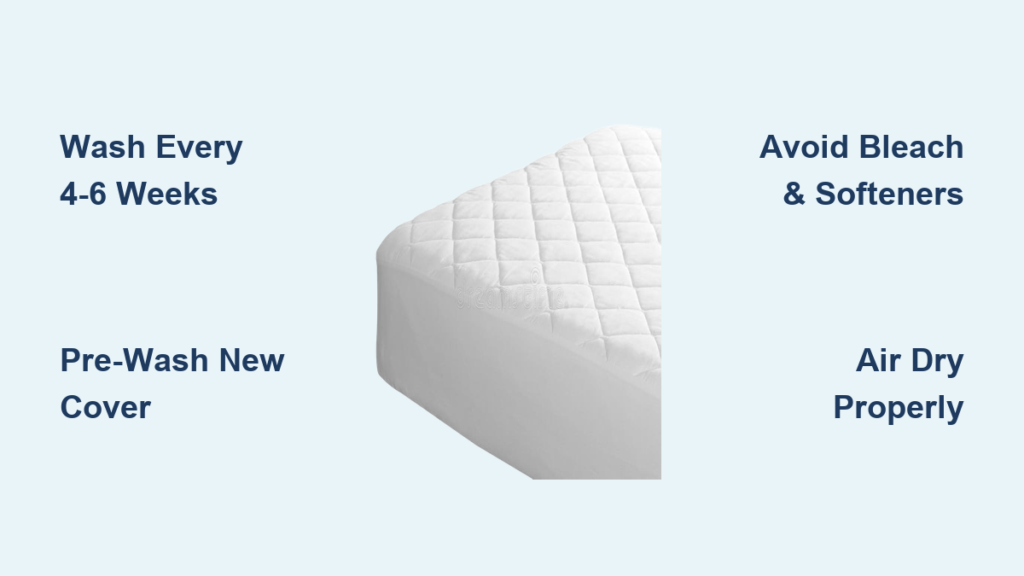
Washing your mattress cover once a month strikes the perfect balance between hygiene and fabric longevity for most sleepers.
Why Clean Every 4 to 6 Weeks
During 6 to 8 hours of nightly sleep, your body releases up to a liter of moisture through sweat and sheds millions of skin cells. Even with clean sheets, these substances seep through and accumulate in the mattress cover. Within weeks, this creates an ideal environment for dust mites, bacteria, and mildew to thrive.
Monthly washing removes absorbed sweat and oils, reduces allergen load, maintains breathability and comfort, and preserves the waterproof barrier integrity. Setting a monthly reminder alongside your mattress rotation schedule helps build a consistent care routine.
Adjust Frequency Based on Your Needs
While monthly washing works for average use, certain conditions demand more frequent cleaning to maintain optimal hygiene.
Wash Every 2 to 4 Weeks If You Have These Conditions
Heavy night sweats require biweekly washing to prevent moisture buildup and odor. Allergy or asthma sufferers benefit from more frequent cleaning, which significantly reduces dust mite populations and airborne allergens. Spills and accidents need immediate washing to prevent stains from setting. Sharing the bed means double the moisture and skin contact, warranting more frequent laundering. Sleeping nude or without a top sheet increases direct skin contact and accelerates soiling.
Washing more than once every two weeks can wear out elastic hems and degrade waterproof layers, especially with hot water or harsh detergents. Balance cleanliness with material preservation.
Always Wash Before First Use
Never place a new mattress cover directly on your bed without washing it first.
Remove Chemical Residues
Factory-made covers often contain formaldehyde-based wrinkle-resistant treatments, dyes and finishing agents, and dust from packaging and shipping. These substances can irritate sensitive skin or trigger allergic reactions.
A pre-use wash eliminates these residues and ensures a clean, safe sleeping surface. Use a mild, fragrance-free detergent for the first wash to minimize skin irritation risk.
Check Care Labels First
Not all mattress covers are created equal, and always reading the manufacturer’s instructions before washing prevents costly mistakes.
Know Your Material Type
Different materials require different care approaches. Waterproof covers with polyurethane or TPU backing need cold water and gentle cycles without bleach. Bamboo or TENCEL covers require mild detergent and low heat drying. Cotton or cotton blends tolerate warm water but should avoid high heat. Vinyl-backed covers need hand washing or delicate cycles only.
Ignoring care labels can result in shrinkage, melting of waterproof layers, or damaged elastic corners. Look for care tags stitched into the hem showing icons for water temperature, drying, and ironing.
Machine Wash Safely and Effectively

Most modern mattress covers are machine-washable, but proper technique determines whether your cover lasts years or months.
Step-by-Step Washing Guide
Remove the cover and inspect it for stains or damage before washing. Zip up all fasteners to prevent snagging. Use cold or lukewarm water, as hot water damages waterproof membranes. Select the gentle cycle to reduce stress on fabric and seams. Add mild detergent and avoid bleach and fabric softeners. Do not overload the washer, as adequate space allows thorough agitation and rinsing.
Using fabric softener coats fibers and reduces breathability, which is especially harmful for moisture-wicking models.
Dry Properly to Prevent Damage
Improper drying is the number one cause of premature mattress cover failure, so follow these guidelines carefully.
Air Dry When Possible
Lay the cover flat on a clean surface or hang it on a clothesline. Air drying preserves fabric shape and protects elastic while preventing heat damage to waterproof backing. If using a dryer, choose low heat or air-dry setting. Remove the cover while slightly damp to reduce creasing. Never use high heat, as this melts polyurethane layers.
Ensure the cover is completely dry before reapplying it to the mattress. Dampness trapped under sheets invites mold and mildew growth.
Spot-Clean Between Washes
Extend the time between full washes with targeted cleaning for minor spills and localized soiling.
Quick Spot-Cleaning Steps
Blot spills immediately using a dry towel, never rub the area. Mix one teaspoon of mild dish soap per cup of water. Dab the stained area gently using a soft cloth in circular motions. Rinse with a damp cloth to remove all soap residue. Blot dry and allow to air out completely before remaking the bed.
Avoid harsh scrubbing or soaking, which weakens fabric bonds and can damage protective barriers.
Remove Stains Fast and Safely

Different stains require different treatments, and using the right method prevents setting discoloration permanently.
Best Stain Solutions
For urine stains, apply an enzymatic cleaner that breaks down proteins and let it sit for 15 to 30 minutes. For wine or juice, use a vinegar and water solution mixed at a 1:1 ratio, apply, blot, then rinse. For sweat or oil stains, create a baking soda paste, rub it in, wait 10 minutes, then wipe clean. For blood stains, use cold water and hydrogen peroxide after testing first.
Always rinse treated areas thoroughly and allow full drying before reusing the cover.
Never Iron or Dry Clean
Heat is the enemy of most mattress covers, especially those with waterproof backing.
Why Ironing Damages Covers
Ironing melts waterproof backing, warps elastic bands, and causes permanent wrinkling or bubbling. Even steam irons can degrade protective layers. If wrinkles appear after drying, smooth them by hand rather than applying heat.
Dry cleaning is unsafe because the solvents and high heat used break down coatings and adhesives, rendering the cover ineffective.
Avoid Fabric Softeners
Fabric softeners may make fabrics smell pleasant, but they significantly harm mattress cover performance.
Problems Caused by Softeners
Softeners coat fibers, reducing breathability and clogging moisture-wicking membranes. They also attract more dirt over time, defeating the purpose of regular washing. Instead of softeners, add one-half cup of white vinegar to the rinse cycle as a natural softener and deodorizer.
Inspect and Rotate Regularly
Even hidden wear affects your cover’s protective performance, so inspect it every time you wash.
Signs of Wear to Watch For
Thinning fabric or small tears indicate compromised protection. Loose stitching or unraveling seams allow allergens and liquids to pass through. Elastic corners losing stretch mean the cover no longer fits securely. Persistent musty odor after washing suggests mold or bacterial growth. Discoloration, especially yellow stains, indicates deep-set contamination.
Rotate your cover 180 degrees every three months to ensure even wear across all areas.
Replace Every 1 to 2 Years
No matter how well you care for it, a mattress cover has a finite lifespan and needs eventual replacement.
When to Replace
Replace the cover after 24 months even if no visible damage exists. Replace immediately if waterproofing fails and liquid soaks through. Replace if elastic no longer holds tight to the mattress. Replace if odors persist despite deep cleaning. Replace if fabric feels stiff or brittle.
Microscopic breakdown of barrier layers reduces allergen and fluid protection long before visible wear appears, so proactive replacement protects your mattress investment.
Mattress Protector vs. Pad
These terms are often used interchangeably, but they serve different purposes and have different care requirements.
Key Differences
A protector’s main role is shielding against spills and allergens. It is thin and fitted, typically made with waterproof membranes. Wash a protector every 4 to 8 weeks. A pad’s main role is adding comfort with light protection. It is quilted and padded, made with cotton, foam, or gel. Wash a pad every 4 to 8 weeks as well.
Using both together provides maximum benefit: a pad for cushioning and a protector on top for hygiene.
Full Bedding Care Schedule
Putting mattress cover washing into context with your entire sleep system helps prioritize all bedding hygiene tasks.
Recommended Washing Frequency by Item
Sheets and pillowcases need weekly washing because they accumulate bacteria, oils, and allergens fastest. Pillows need washing every two months because dust mites thrive in warm, dark environments. Mattress covers need washing every 4 to 6 weeks to prevent deep mattress contamination. Duvets and comforters need washing 3 to 4 times per year because bulky items trap allergens over time. The mattress itself needs vacuuming twice per year with baking soda deodorizing.
Most Americans wash bedding every 3 to 6 weeks, leaving significant room for improvement in sleep hygiene.
Choose the Right Cover for Easy Care
Not all covers clean the same, and material choice significantly impacts maintenance requirements.
Easy-Care Features to Look For
Select machine-washable designs for convenient cleaning. Choose hypoallergenic and antimicrobial fabrics for better hygiene. Pick breathable, quick-drying materials like bamboo for faster washing and drying. Look for secure elastic skirts or zippered enclosures that maintain fit after multiple washes.
High-quality brands like Bedgear and Protect-A-Bed receive praise for durability and simple care routines. Users with eczema or sensitive skin report fewer flare-ups when using regularly washed, hypoallergenic covers.
Frequently Asked Questions About Washing Mattress Covers
How often should I wash my mattress cover if I sweat heavily at night?
If you experience night sweats or sleep hot, wash your mattress cover every 2 to 4 weeks. Heavy sweating accelerates moisture and oil buildup, creating conditions favorable to dust mites and odor. More frequent washing maintains the protective barrier and prevents contamination from reaching your mattress.
Can I wash my mattress cover with my regular sheets?
Yes, you can wash mattress covers with regular bedding, but avoid overloading the machine. Use cold or lukewarm water on a gentle cycle with mild detergent. Ensure adequate space for thorough cleaning and rinsing. Check care labels first to confirm compatible water temperatures and cycle settings.
What happens if I never wash my mattress cover?
Neglecting your mattress cover leads to accumulated sweat, body oils, dead skin cells, and allergens. This creates a breeding ground for dust mites and bacteria. The cover loses its protective qualities, allowing fluids and allergens to reach and damage your mattress. Persistent odors develop, and the mattress warranty may be voided by staining.
Can I use bleach on my mattress cover?
Avoid bleach unless the care label explicitly permits it. Bleach damages fabric integrity, discolors materials, and degrades waterproof coatings. Most manufacturers recommend mild, non-bleach detergents. For tough stains, use targeted treatments like enzymatic cleaners for urine or vinegar solutions for wine.
How do I know if my mattress cover is no longer waterproof?
Place a small amount of water on the cover surface and observe how it behaves. If water beads up and stays on surface, waterproofing is intact. If water soaks through quickly, the barrier has failed. You might also notice liquids reaching your sheets or mattress more easily. Replace the cover when waterproofing diminishes.
Key Takeaways for Washing Your Mattress Cover
Your mattress cover is more than just a shield against spills. It is a critical component of a healthy sleep environment that protects your mattress investment and supports better respiratory and skin health. Washing it every 4 to 6 weeks keeps your bed fresh, extends mattress life, and reduces allergen exposure.
Adjust your washing frequency based on personal factors like night sweats, allergies, or shared bed use. Always pre-wash new covers, follow care labels strictly, and avoid damaging practices like ironing or dry cleaning. Spot-clean between full washes to maintain freshness, and replace covers every 1 to 2 years or when waterproofing fails.
Stay consistent with your cleaning schedule, follow manufacturer guidelines, and replace covers proactively. A clean mattress cover means a cleaner, safer, longer-lasting mattress and better sleep for years to come.