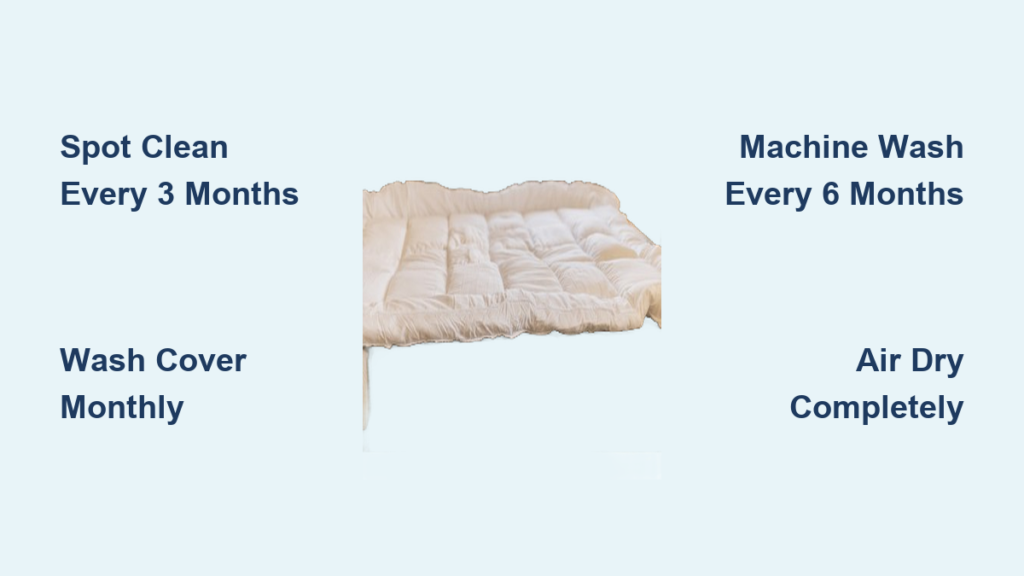
You spend a third of your life in bed, and your mattress topper plays a key role in comfort and support. But how often to wash mattress topper surfaces is a question many overlook until they notice odors, stains, or worsening allergies. Over time, your topper collects sweat, dead skin, dust mites, and allergens, creating a breeding ground for bacteria and mold. Regular cleaning is not just about freshness, it is essential for hygiene, durability, and better sleep.
Most experts recommend cleaning your mattress topper every 3 to 6 months, but the exact frequency depends on the material, usage, and lifestyle factors. Memory foam, latex, and fiberfill each have different care needs. Some can be machine washed while others require only spot cleaning. Using a protector helps reduce cleaning frequency, but even then, buildup happens. This guide breaks down exactly when and how to clean every type of topper, with actionable steps to keep your sleep surface fresh, safe, and long-lasting.
Cleaning Frequency by Mattress Topper Type

Your topper’s material determines how often and how you should clean it. Washing the wrong way can ruin the structure or void the warranty. Follow these guidelines based on the most common mattress topper types.
Foam and Memory Foam Topper Care
Foam and memory foam toppers are popular for pressure relief but are highly sensitive to water. These materials trap moisture easily, increasing the risk of mold and mildew if not dried completely.
Spot Clean Every 3 Months
Foam toppers should never be machine washed unless the manufacturer explicitly allows it. Instead, spot clean every 3 months or whenever you notice stains, odors, or spills. Use a mix of mild detergent and lukewarm water. Dip a soft cloth in the solution, wring it out well, and gently blot the affected area. Never soak the foam because excess water breaks down the cell structure.
After cleaning, let the area air dry for at least 6 to 8 hours. Use a fan to speed up drying, but avoid direct heat or sunlight which can cause cracking. For deeper deodorizing, sprinkle baking soda over the surface, wait 1 to 2 hours, then vacuum thoroughly with an upholstery attachment.
Wash Removable Cover Monthly
If your foam topper has a removable cover, wash it every 1 to 2 months in cold water on a gentle cycle. Air dry or tumble dry on low. No cover? Use a waterproof mattress protector to block sweat and spills, and clean it as often as your sheets.
Fiberfill Topper Washing Schedule
Fiberfill polyester toppers are among the easiest to maintain because most are machine washable. They offer a plush feel and good breathability, making them ideal for hot sleepers.
Machine Wash Every 3 to 6 Months
Check the care label first. If machine washable, use a large-capacity front-loading washer on a gentle cycle with cold water. Use a small amount of mild, bleach-free detergent. Fabric softeners can coat fibers and reduce fluffiness, so skip them.
Never overload the machine. Wash the topper alone to ensure even water distribution. After washing, tumble dry on low heat with 2 to 3 clean tennis balls or dryer balls to prevent clumping and restore loft.
Dry Completely to Prevent Mildew
Drying can take 2 to 3 cycles. Stop and fluff the topper midway to check for damp spots. Any remaining moisture can lead to mildew. Only return it to the bed when 100% dry.
Down Topper Care Guidelines
Down toppers provide luxury softness and excellent temperature regulation but require careful cleaning to preserve the natural fill.
Deep Clean Every 6 to 12 Months
Wash down toppers only every 6 to 12 months unless soiled. Use a large front-loading washer. Top-loading agitators can damage the fabric and compress the down. Wash on a delicate cycle with cold water and a mild, down-specific detergent.
Never use regular laundry detergent because it strips natural oils from the feathers, causing brittleness. Wash alone to avoid imbalance and ensure proper rinsing.
Low-Heat Drying with Tennis Balls
Tumble dry on low heat with 2 to 3 clean tennis balls to break up clumps. Pause every 30 minutes to manually redistribute the down. Drying may take several hours. Squeeze sections to test for dampness and continue drying if needed. A damp topper can develop odor and mildew.
Store loosely in a breathable cotton bag. Never compress the topper during storage.
Latex Topper Maintenance
Natural and synthetic latex resist dust mites and mold but still need surface cleaning to remove oils and debris.
Spot Clean Only, Never Submerge
Latex toppers should not be machine washed or soaked. Water saturation can degrade the material over time. Instead, spot clean stains with a mild detergent solution and a soft sponge. Blot dry with a clean towel.
For general cleaning, wipe the entire surface with a damp cloth. Avoid bleach, ammonia, or harsh chemicals because they break down latex polymers.
Deodorize with Baking Soda
Sprinkle baking soda lightly, wait 1 to 2 hours, then vacuum. This removes odors and surface grime without moisture. Air dry for 12 to 24 hours in a well-ventilated room. Never place in direct sunlight because UV rays cause damage and cracking.
When to Clean Your Mattress Topper Immediately
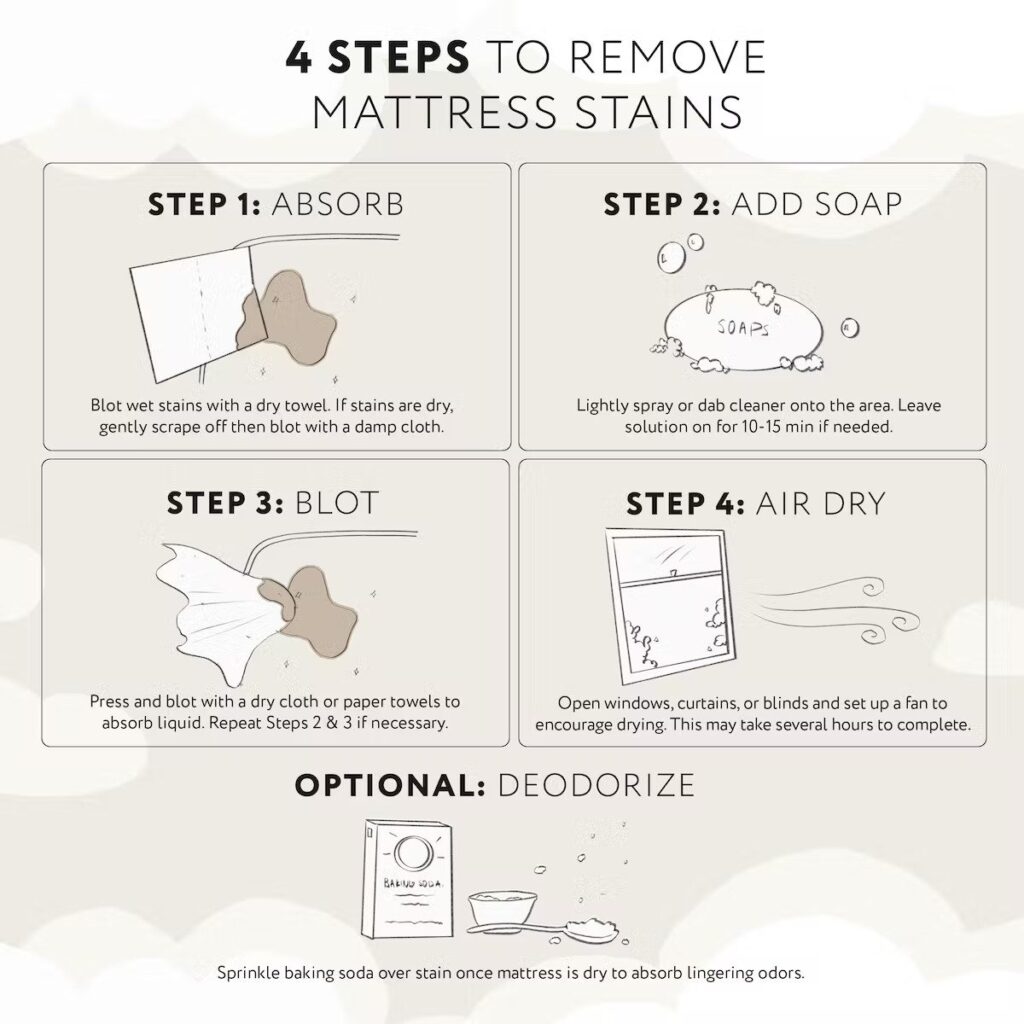
Even with a regular schedule, certain situations demand urgent cleaning to protect your health and topper lifespan.
Spills and Accidents
Clean spills immediately. Use a dry towel to blot liquids. Do not rub because this spreads the stain. Follow with a mild detergent solution for spot cleaning. The faster you act, the less likely the liquid is to seep into deeper layers.
Allergy Flare-Ups
If you or a family member experiences increased sneezing, congestion, or skin irritation, your topper may be harboring allergens. Deodorize with baking soda and vacuum thoroughly. Consider replacing an old topper over 5 years old if symptoms persist.
Pet Access to Bed
Pets bring dander, fur, and occasional accidents. If your pet sleeps on the bed, increase spot cleaning to every 4 to 6 weeks and vacuum monthly. Use a high-quality, washable protector designed for pet resistance.
Heavy Sweating or Hot Climate
Hot sleepers or those in humid environments should clean every 3 months. Sweat breaks down foam and feeds dust mites. Use a breathable, cooling protector to reduce moisture buildup.
After Illness
If someone has been sick, deodorize the topper with baking soda and clean all bedding. This reduces the risk of germ transmission, especially with flu or stomach viruses.
Essential Maintenance Between Washes
Full cleaning is not the only way to keep your topper fresh. These routine habits extend time between deep cleans and improve longevity.
Use a Mattress Protector
A waterproof or water-resistant protector is the best defense. It blocks sweat, spills, and allergens. Wash the protector every 1 to 2 months, or weekly with heavy use. Replace it every 1 to 2 years when seams weaken or waterproofing fails.
Vacuum Every 1 to 3 Months
Use a handheld vacuum or upholstery attachment to remove dust, hair, and debris. This is especially important for non-washable toppers like memory foam and latex. Vacuum both sides if reversible.
Rotate Every 3 to 6 Months
Rotate your topper 180 degrees every few months to prevent uneven wear. This is crucial for foam and latex models. Most toppers are not designed to be flipped unless labeled double-sided.
Air Out Regularly
Every 3 to 6 months, let your topper breathe. Place it in a shaded, well-ventilated area for a few hours. This reduces moisture and refreshes the material. Avoid direct sun because UV rays damage foam and latex.
Common Cleaning Mistakes to Avoid
Even with good intentions, mistakes can ruin your topper or create health risks.
Never Use a Dryer on High Heat
High heat melts fibers, shrinks fabric, and cracks foam. Always use low or no heat when drying. For non-machine-washable types, air drying is the only safe option.
Do Not Skip the Care Label
Manufacturers provide care instructions for a reason. Washing a spot clean only topper can void the warranty. If you no longer have the label, search the model online or contact the brand.
Avoid Harsh Chemicals
Bleach, ammonia, and strong cleaners degrade materials. Stick to mild detergents and natural deodorizers like baking soda. Never use essential oils because they can break down foam or leave residues.
Do Not Rush Drying
Incomplete drying is the leading cause of mold and odor. Even if the surface feels dry, moisture may linger inside. Allow 24 to 48 hours for air drying and check multiple spots before reuse.
Professional Cleaning Options
For non-washable toppers or deep-set stains, professional cleaning may be an option. Some services offer dry cleaning for mattress toppers, but verify they use safe, non-toxic solvents.
However, most experts advise against dry cleaning foam or latex because chemicals can leave residues and degrade materials. If considering this route, confirm the method is approved by your topper’s manufacturer.
For most users, DIY spot cleaning and deodorizing are safer and more cost-effective.
How to Extend Your Mattress Topper Lifespan
Extend your topper’s life with these simple habits.
Choose Washable Models If Possible
If you have allergies, pets, or kids, consider a hypoallergenic, machine-washable topper like fiberfill or a washable down blend. These are easier to maintain and more hygienic over time.
Replace Every 3 to 5 Years
Even with proper care, toppers wear out. Signs it is time to replace include visible sagging or lumps, persistent odors after cleaning, increased allergies or discomfort, and torn or worn cover fabric. Most toppers last 3 to 5 years with regular use.
Store Properly When Not in Use
If storing a spare topper, keep it in a cool, dry place. Use a breathable cotton bag. Avoid plastic which traps moisture. Store flat or rolled loosely. Never fold sharply because this can crease foam or compress fiberfill.
Frequently Asked Questions About Washing Mattress Toppers
How often should I wash my mattress topper?
Most experts recommend cleaning your mattress topper every 3 to 6 months. However, the exact frequency depends on your topper’s material, usage intensity, and lifestyle factors like pets or allergies.
Can I machine wash all mattress toppers?
No. Foam, memory foam, and latex toppers should never be machine washed unless the manufacturer explicitly allows it. These materials trap water easily and can be damaged by submerging. Fiberfill and some down toppers are machine washable, but always check the care label first.
What happens if I do not wash my mattress topper?
Over time, toppers accumulate sweat, dead skin cells, dust mites, and allergens. This buildup can cause unpleasant odors, skin irritation, respiratory issues, and reduced comfort. It also shortens the topper’s lifespan and compromises its hygiene.
How do I know if my mattress topper is dry enough?
Touch multiple areas of the topper to check for dampness. Squeeze sections firmly to feel for moisture inside. For foam and latex, wait 24 to 48 hours after air drying. For fiberfill and down, run a tumble dry cycle until no dampness remains.
Can I use a dryer for my mattress topper?
Only use a dryer for machine-washable toppers like fiberfill or down, and always on low heat. Never use high heat. For foam, memory foam, and latex toppers, air drying is the only safe option.
How does a mattress protector help reduce cleaning frequency?
A waterproof protector creates a barrier against sweat, spills, allergens, and dust mites. It keeps the topper itself clean longer and can be washed easily every 1 to 2 weeks. This reduces how often you need to clean the topper itself.
Key Takeaways for Washing Your Mattress Topper
Knowing how often to wash a mattress topper depends on material, use, and lifestyle. Foam and memory foam require spot cleaning every 3 months with removable cover washing monthly. Fiberfill toppers can be machine washed every 3 to 6 months, while down toppers need deep cleaning only every 6 to 12 months. Latex toppers should be spot cleaned only and never submerged.
While full washing is not always possible, consistent spot cleaning, deodorizing with baking soda, and using a quality mattress protector keep your sleep surface fresh and safe. Prioritize complete drying because incomplete drying leads to mold and odor. Follow manufacturer guidelines and avoid harsh chemicals to maintain your topper’s warranty and longevity. A clean topper means better sleep, fewer allergens, and longer-lasting comfort.