Blowing up an air mattress without electricity might seem like a challenge, but with the right techniques, it is entirely doable and even efficient. Whether you are camping off-grid, dealing with a power outage, or traveling where outlets are scarce, knowing how to inflate an air mattress without electricity ensures comfort wherever you go. From battery-powered pumps to simple DIY tricks using just a trash bag, multiple reliable methods exist. This guide breaks down every practical option, ranks them by effort and speed, and shows you exactly how to succeed without plugging in.
You will learn which tools save time and energy, how to avoid dangerous last-resort methods, and how to prep your gear so inflation goes smoothly when it matters most. Whether you are a weekend camper or building an emergency kit, this is everything you need to get your bed ready fast.
Battery-Powered Pumps: Fast and Portable

Battery-powered air pumps are the top choice for hassle-free inflation without wall power. These compact devices run on rechargeable lithium-ion batteries and deliver performance close to electric pumps.
Why Choose a Battery Pump
Battery pumps inflate a queen mattress in 2 to 5 minutes. They charge via USB, power bank, solar panel, or car outlet. The lightweight design fits easily in most camping gear, and you can reuse them for 3 to 8 inflations per charge. These pumps connect directly to standard air mattress valves, making setup simple.
Maximize Battery Life
Cold weather reduces battery efficiency. To prevent failure, warm the pump with body heat for 15 to 30 minutes before use. Store it inside your sleeping bag or jacket overnight. Use a power bank to recharge during extended trips. Charge every 3 to 6 months during storage to preserve battery health. Avoid full discharges and extreme temperatures.
Foot Pumps: Low Effort, High Efficiency
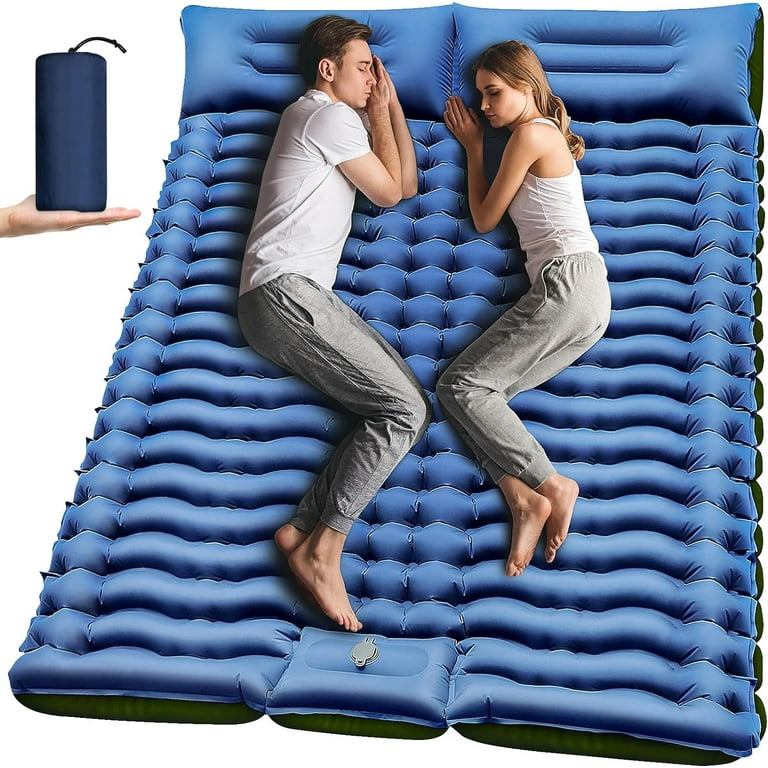
Foot pumps are one of the best manual options, especially for car camping or frequent outdoor use. They use your body weight instead of arm strength, reducing fatigue significantly.
Double-Action vs Single-Action
Double-action pumps move air on both down and up strokes, making them twice as fast as single-action models. A double-action pump inflates a full-size mattress in 5 to 10 minutes. The stable base prevents tipping, and the large chamber moves more air per pump. This makes foot pumps far less tiring than hand pumps.
Proper Inflation Technique
Place the pump on flat, solid ground. Stand with one foot on the pedal and the other for balance. Use smooth, full strokes and do not rush. Inflate to 90 percent firmness, then wait 5 to 10 minutes for the material to stretch. Top off to final firmness to avoid over-inflation.
Hand Pumps: Compact Backup Option
Hand pumps are smaller and lighter than foot pumps but require more physical effort. They are best used as backups or for emergency kits.
Choose a Double-Action Model
A double-action hand pump moves air on push and pull strokes, reducing total pumping time by up to 50 percent. Look for ergonomic handles and wide cylinders for better airflow. Even with efficiency, expect 10 to 20 minutes of pumping for a queen mattress.
Reduce Arm Fatigue
Use full-range strokes to maximize air transfer. Alternate hands or take short breaks every few minutes. Inflate in stages if needed, especially for larger mattresses. Priced at 10 to 15 dollars, these are affordable and space-saving additions to any travel or survival kit.
Use a 12V Car Inflator: Plug and Play
If you have vehicle access, a 12V DC inflator is one of the fastest ways to inflate without household electricity.
How It Works
The inflator plugs into your car cigarette lighter or power outlet. It delivers electric-level speed, inflating a queen mattress in 2 to 4 minutes. It works with standard air mattress valves, so no special adapters are needed.
Avoid Draining Your Battery
Run the engine during inflation to prevent battery drain. Limit use to under 5 minutes at a time without the engine on. Turn off other electronics to reduce load. This method is perfect for car campers, road trips, or emergency shelter setups.
Portable Jump Starter with Pump
Multi-functional devices combine jump-start capability, tire inflation, and air mattress support. This eliminates the need for separate jumper cables and a pump.
Key Benefits
These all-in-one devices have built-in lithium batteries that power multiple inflations. Prices range from 50 to 150 dollars depending on features. Some models include pressure gauges and LED lights, which are great for nighttime use.
Best for Preparedness
This option is ideal if you want one tool that handles emergencies beyond camping. It is heavier than standalone pumps but invaluable for roadside breakdowns or blackout scenarios.
DIY: Inflate with a Garbage Bag
No pump? No problem. The garbage bag method uses common camping items to trap and force air into your mattress.
What You Need
You need a large 30-plus gallon trash bag and an air mattress with an openable valve.
Step-by-Step Process
Open the mattress valve. Hold the bag open facing the wind or walk quickly to fill it with air. Twist the top to seal in the air. Press the sealed end over the nozzle and keep it tight. Squeeze the bag firmly to push air into the mattress. Repeat 20 to 40 times depending on mattress size. Close the valve when done.
Pro Tips
Use a larger bag for faster results. Work with a partner to create airflow. Combine with a foot pump for partial inflation. This method is labor-intensive but effective when tools are not available.
Built-In Pump Mattresses: Manual Workarounds
Many air mattresses come with built-in electric pumps, but you can still inflate them without power.
Use the Manual Valve
Most models have a secondary valve designed for deflation. This can also accept external air. Locate the valve by checking your manual. Open it and attach a hand pump, foot pump, or battery-powered unit. Inflate as normal.
Attach an External Pump
Even if the built-in pump is not working, connect any compatible pump to the main or backup valve. Use universal adapters if needed. This turns an electric-only mattress into a versatile option.
Avoid Lung Power: Health Risks
Blowing up an air mattress with your mouth may seem simple, but it is risky and inefficient.
Why It Is Dangerous
Hyperventilation can cause dizziness, tingling, or fainting. Increased heart rate and blood pressure is risky for those with heart conditions. Moisture buildup from breath leads to mold and mildew inside the mattress.
Time and Effort Required
A twin mattress requires 15 to 30 minutes of nonstop effort. A queen mattress takes 30 to 45 minutes or more. Even a 10 dollar foot pump is safer, faster, and less exhausting.
One Exception
Only consider lung inflation in true emergencies, and stop immediately if you feel lightheaded.
Solar Recharging: For Long Off-Grid Trips
If you are camping for days or weeks without access to power, solar charging keeps your battery pump alive.
What You Need
You need a portable solar panel with 10 to 20 watts and USB output, plus a battery-powered pump or power bank.
How It Works
Charge your pump during the day using the solar panel. Use it at night to inflate your mattress. Repeat daily for unlimited off-grid use.
Is It Worth It?
The initial cost is 50 to 200 dollars or more. This is best for frequent or extended backcountry trips. Weekend campers usually do not need solar; just pre-charge your pump before leaving.
Prevent Over-Inflation Damage
Pumping without electricity does not mean guessing firmness. Over-inflating stresses seams and can ruin your mattress.
Know the Right Firmness
The mattress should compress 1 to 2 inches under firm hand pressure. It should feel supportive but not rock-hard. Bulging edges or a stiff surface means too much air.
Adjust for Temperature
Air contracts in cold weather. If camping overnight, inflate slightly firmer than usual. Top off in the morning as air warms. Use pumps with digital pressure gauges on high-end models for precision.
Troubleshoot Inflation Problems
Even with the right method, things can go wrong. Here is how to fix common issues.
Slow or Incomplete Inflation
Loose valve caps, poor pump seals, or small punctures cause slow inflation. Reattach the nozzle securely. Test for leaks with soapy water; bubbles show where air escapes. Carry a repair kit with patches and glue.
Air Leaks After Inflation
The valve may not be fully closed. Temperature drops overnight can cause softening. Hidden punctures are also common. Double-check the valve closure mechanism. Re-inflate in the morning. Submerge sections in water to find leak sources. Always inspect your mattress before packing it away.
Maintain Your Inflation Tools
Proper care extends the life of your pumps and prevents failures when you need them most.
General Pump Maintenance
Wipe down nozzles and hoses after use. Store in a dry, cool place. Check for cracks or worn parts before each trip.
Battery-Powered Pump Care
Remove batteries during long storage. Charge every 3 to 6 months. Avoid exposure to heat, cold, or moisture. Well-maintained gear lasts years, so do not skip this step.
Best Method by Situation
Choosing the right inflation method depends on your situation.
For camping without a car, use a battery-powered pump or foot pump. These are lightweight, fast, and reliable without electricity.
For car camping, use a 12V DC inflator or jump starter. This is the fastest method, and you have unlimited power with the engine running.
For emergency kits, keep a hand pump or foot pump. These are durable and require no charging.
When no tools are available, use the garbage bag method. It uses common items and works in a pinch.
Only use lung power as a true last resort. It is possible but risky, so avoid it if possible.
Final Tips for Success
Never rely on lung inflation. It is unsafe and exhausting. Invest in a foot pump or battery-powered pump for reliability. Test all gear at home before your trip. Check valve fit, pump function, and seal quality. Practice inflation to reduce setup time at camp. Keep a repair kit handy because punctures happen.
With the right tools and technique, inflating an air mattress without electricity is quick, safe, and stress-free. Whether you are off-grid, in a blackout, or sleeping under the stars, you can have a comfortable bed without needing an outlet.
Frequently Asked Questions About Inflating Air Mattresses Without Electricity
How long does it take to inflate an air mattress manually?
Manual inflation takes 5 to 45 minutes depending on the method. A battery-powered pump inflates a queen mattress in 2 to 5 minutes. A foot pump takes 5 to 10 minutes. Hand pumps require 10 to 20 minutes. The garbage bag method takes 20 to 40 repetitions.
Can I use a car air compressor for an air mattress?
Yes, a 12V DC inflator that plugs into your car cigarette lighter works perfectly. It inflates a queen mattress in 2 to 4 minutes. Just run the engine while using it to avoid draining your car battery.
What is the easiest manual method for inflating an air mattress?
Foot pumps are the easiest manual option. They use your body weight rather than arm strength, so you tire less quickly. Double-action models move air on both strokes, cutting inflation time in half.
Why should I avoid inflating with lung power?
Lung inflation causes hyperventilation, which leads to dizziness and fainting. It raises heart rate and blood pressure, posing risks for people with heart conditions. Breath moisture also causes mold inside the mattress. It takes 30 to 45 minutes for a queen mattress, making it inefficient compared to even the cheapest pump.
Do battery-powered pumps work in cold weather?
Cold temperatures reduce battery efficiency significantly. Warm the pump with body heat for 15 to 30 minutes before use. Store it inside your sleeping bag or jacket overnight. For best results, keep batteries at room temperature until you need them.
Can I inflate a mattress that has a built-in electric pump?
Yes, most air mattresses with built-in pumps have a secondary manual valve. You can attach an external pump, foot pump, or hand pump to this valve. Check your manufacturer instructions to locate the manual valve and confirm compatibility.
Key Takeaways for Inflating Your Air Mattress Without Electricity

The most reliable methods are battery-powered pumps and foot pumps. Battery pumps offer the fastest inflation at 2 to 5 minutes and work well for camping and emergencies. Foot pumps require no charging and cost only 10 to 15 dollars, making them excellent for long-term preparedness.
Always test your equipment before heading out. Check valve compatibility, charge batteries, and practice inflation at home. Carry a repair kit because punctures happen unexpectedly.
Avoid lung inflation except in true emergencies. The health risks and time investment are not worth it when a 10 dollar foot pump solves the problem safely. With proper preparation, you can enjoy comfortable sleep anywhere without relying on electricity.