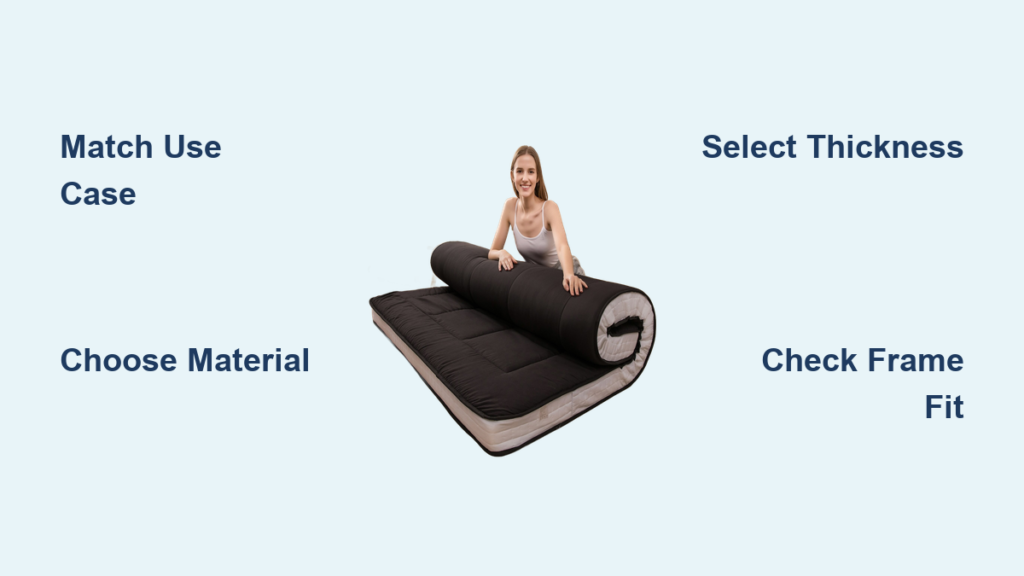
If you’re trying to choose a futon mattress, you’re making a decision that affects both your comfort and how you use your space. Futons are more than just space-saving sofa-beds. They are daily sleep solutions, guest accommodations, and design elements rolled into one. But not all futon mattresses are created equal. Picking the right one means balancing sleep quality, durability, material safety, space needs, and lifestyle habits.
Whether you’re furnishing a studio apartment, dorm room, or guest space, the wrong futon can lead to back pain, poor sleep, or constant replacements. The right one, matched to your body type, sleep position, and usage, can last decades. This guide cuts through the noise to give you a clear, step-by-step framework for selecting the best futon mattress based on real-world performance, health impact, and long-term value.
Match Your Use Case to the Right Mattress Type
Your futon’s primary role determines everything from thickness to material. Choosing without this clarity leads to discomfort or wasted money.
Occasional Use vs. Daily Sleeping
If your futon is mainly a sofa by day and only becomes a bed for rare guests, you can prioritize affordability and foldability. A 3-inch cotton or foam blend model works well and stores easily.
But if you sleep on it nightly, treat it like a primary bed. Opt for 6 inches or more of supportive material such as organic cotton, latex, or high-density foam. These provide spinal alignment and pressure relief essential for long-term comfort.
Pro Tip: A $200 foam futon might save money upfront, but if it sags in two years, you will replace it three times in a decade, costing more than a $600 organic cotton futon lasting 15 years or longer.
Firmness by Sleeping Position
Your sleep posture dictates the firmness level you need:
| Sleep Position | Ideal Firmness | Best Materials |
|---|---|---|
| Side sleeper | Softer to medium-firm (5 to 6 out of 10) | Latex, 5-inch organic cotton |
| Back sleeper | Medium-firm (6 out of 10) | 4-inch cotton, foam hybrids |
| Stomach sleeper | Firm to very firm (7 to 8 out of 10) | 3-inch cotton, coconut coir |
| Combination sleeper | Medium-firm (6 to 7 out of 10) | Latex, foam and cotton blend |
Body Weight Matters: Heavier individuals over 220 pounds need firmer support to avoid sinking. Lightweight sleepers under 150 pounds may find standard firmness too hard.
Pick the Right Core Material for Comfort and Health
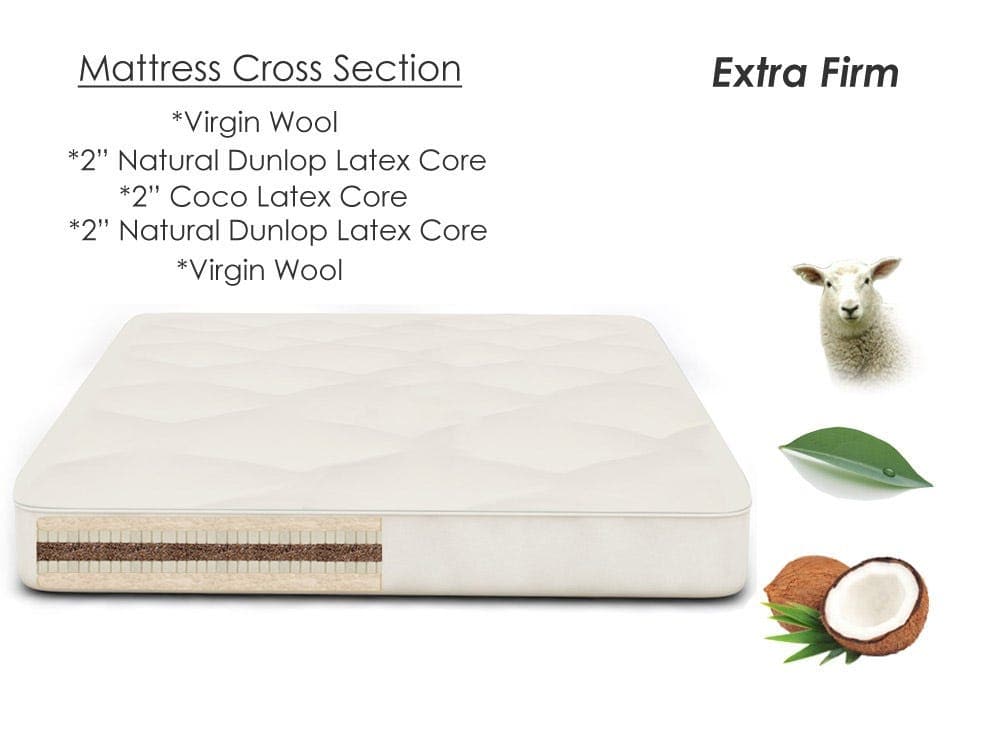
The internal material defines comfort, breathability, lifespan, and health impact. Avoid guessing. Know what each option offers.
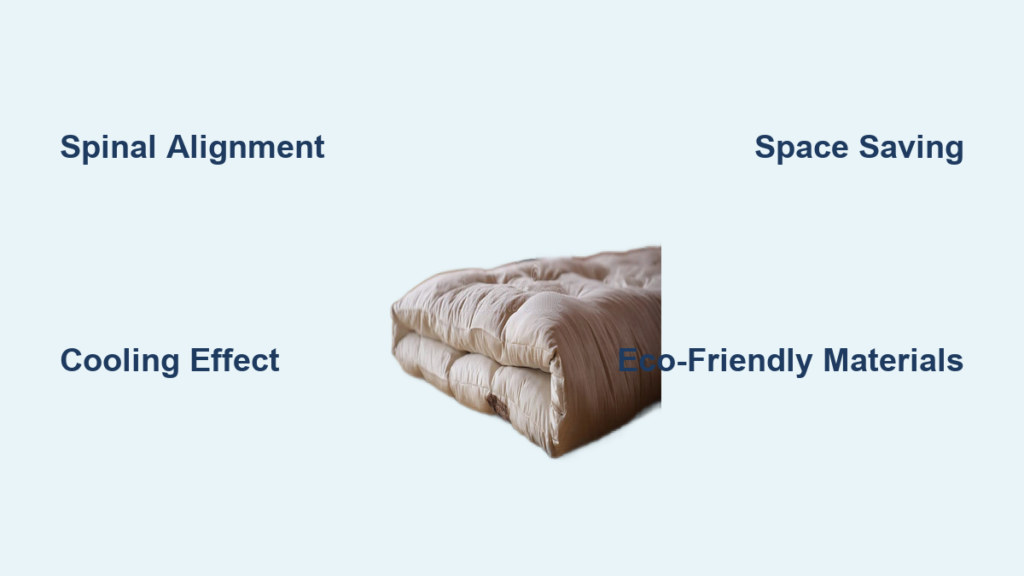
Organic Cotton Shikifuton
A premium, eco-friendly choice for daily users. Made with 100% American-grown organic cotton and natural wool for fire resistance without boron or chemicals. Breathable, biodegradable, and designed to last 15 to 20 years or longer with airing and rotation.
Best for:
– Eco-conscious buyers
– Traditional floor sleeping
– Long-term daily use
Thickness options include 3, 4, or 5 inches. The drawback is that the firm feel may not suit side sleepers without a topper.
Natural Latex
Offers responsive support, excellent pressure relief, and natural resistance to dust mites and mold. Lasts 10 to 15 years and stays cool throughout the night.
Best for:
– Allergy sufferers
– Combination sleepers
– Hot sleepers
Look for GOLS-certified latex to ensure no synthetic additives.
Coconut Coir
Extremely firm, made from coconut husks, and ideal for spinal alignment. Naturally breathable and mold-resistant.
Best for:
– Stomach sleepers
– Minimalist setups
– Tropical climates
Not ideal for side sleepers or those wanting plush comfort.
Memory Foam
Contouring comfort comes with trade-offs. Standard memory foam releases VOCs, contains chemical flame retardants like methyl benzene and dimethylformamide, retains heat, and is heavy to fold.
Best for:
– Occasional use
– Side sleepers who prioritize softness
Upgrade to plant-based memory foam with CertiPUR-US certification to reduce toxins.
Innerspring Futons
Bouncy, familiar feel with decent airflow. However, coils can sag within 3 to 5 years. Often paired with chemical-treated foam. Heavy and hard to fold smoothly.
Best for:
– Those who dislike foam but want a Western-style bed feel
Foam and Cotton Hybrid
Balances natural feel with durability. A foam core with a cotton top layer offers better support than all-cotton models.
Best for:
– Mid-range buyers wanting comfort and longevity
Avoid low-density foam versions that compress quickly.
Choose the Right Thickness for Your Needs

Thickness affects support, comfort, and foldability. Do not guess. Match it to your needs.
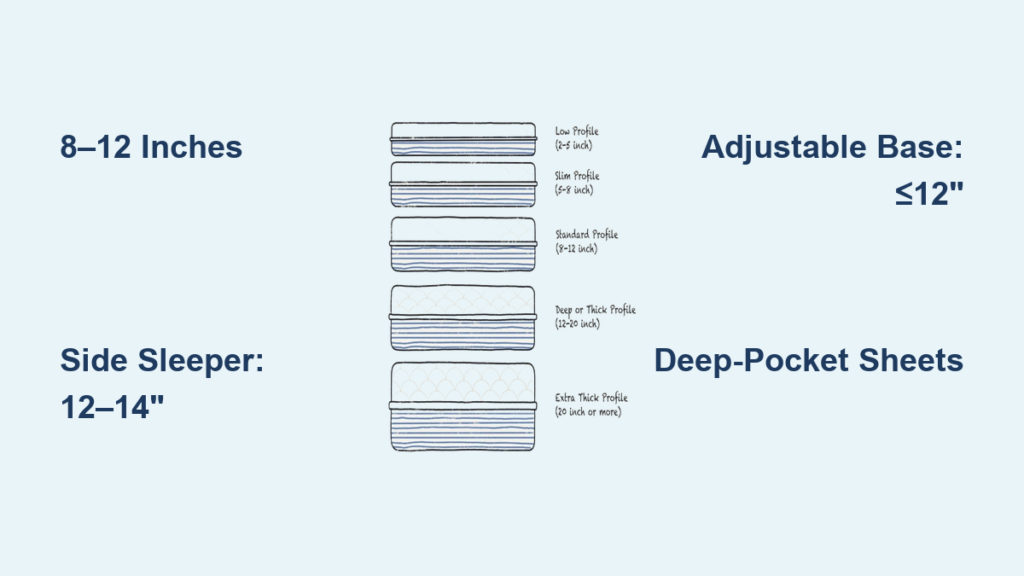
2 to 3 Inches
Firm, traditional Japanese floor-mat feel. Easy to roll and store daily. Best for back or stomach sleepers on tatami or hard floors.
4 Inches
The most popular thickness. Medium-firm and suitable for most sleep positions. Works well on frames and floors.
5 Inches
Thickest cotton option, softer than 3 or 4 inches. Better cushioning for side sleepers. Still rollable but bulkier.
6 to 8+ Inches
Western-style plush comfort. Best for daily use as a primary bed. Less portable and may not fold well on bifold frames.
Pro Rule: For adult sleepers, 6 inches is the minimum for proper spinal support. Below that, it is only suitable for short-term or floor use.
Select the Correct Size for Your Space and Users
A futon that is too big overwhelms a small room. Too small, and it is uncomfortable for adults.
Japanese Sizes
| Size | Dimensions | Notes |
|---|---|---|
| Single | 39.5 by 82.5 inches | Longer than Western twin |
| Double | 55 by 82.5 inches | Similar to Western Queen |
Western Sizes
| Size | Dimensions | Best For |
|---|---|---|
| Twin | 39 by 75 inches | Dorms, single sleepers |
| Twin XL | 39 by 80 inches | Taller individuals |
| Full | 54 by 75 inches | One adult or two kids |
| Queen | 60 by 80 inches | Two adults comfortably |
| King | 78 by 80 inches | Rare, made by pairing two Twin XLs |
Space-Saving Hack: Measure your room and tape out the futon’s footprint when open and folded. See how much space it consumes in both modes.
Prioritize Health and Safety in Your Choice
Your mattress should not poison you. Many futons contain hidden toxins.
Materials to Avoid
- Polyurethane foam: Releases VOCs and is linked to respiratory irritation
- Chemical flame retardants: Formaldehyde, chlorinated tris, and boron
- Synthetic adhesives and dyes: Can trigger allergies
Fact: Off-gassing from memory foam or innerspring futons can last for weeks, especially in poorly ventilated rooms.
Safer Alternatives
- Organic cotton with wool fire barrier
- GOTS-certified cotton or OEKO-TEX and GOLS-certified latex
- Coconut coir and natural wool
For sensitive individuals, opt for organic cotton, latex, or coir. All are hypoallergenic and chemical-free.
Ensure Frame Compatibility Before Buying
A great mattress fails if it does not work with your frame.
Bifold vs. Trifold Frames
Bifold frames are the most common and fold once. Best for mattresses up to 6 inches thick.
Trifold frames fold twice, are bulklier, and less stable. They allow thicker mattresses but are harder to convert.
Warning: A thick memory foam or innerspring futon may crack or crease when folded on a bifold frame.
Frame Materials
| Type | Pros | Cons |
|---|---|---|
| Solid Wood | Durable, elegant | Expensive, heavy |
| Metal/Steel | Affordable, modern | Can squeak, feels cold |
| Composite | Budget-friendly | Less durable, may warp |
Critical Check: Ensure seat and back slats are reinforced, especially if you weigh over 200 pounds. Weak slats break under pressure.
Evaluate Durability and Expected Lifespan
A cheap futon costs more in the long run if it degrades quickly.
| Material | Lifespan | Maintenance Needs |
|---|---|---|
| Organic Cotton | 15 to 20+ years | Air monthly, rotate, store dry |
| Latex | 10 to 15 years | Minimal, spot clean |
| Coconut Coir | 10 to 12 years | Keep dry, avoid moisture |
| Memory Foam | 7 to 10 years | Ventilate to reduce off-gassing |
| Innerspring | 5 to 7 years | Prone to sagging and coil failure |
| Low-Density Foam | 3 to 5 years | Compresses quickly with use |
Warranty Tip: Look for 5-year or longer warranties, a sign of manufacturer confidence.
Value Insight: A $500 organic futon used for 15 years costs $33 per year. A $200 model replaced every 5 years costs $40 per year and feels worse.
Optimize Aesthetics and Cover Options
Your futon is furniture. It should look good and stay clean.
Cover Materials
| Type | Durability | Care | Best For |
|---|---|---|---|
| Cotton/Twill | Moderate | Machine washable | Casual, traditional |
| Micro-Suede | High | Spot clean | Soft feel, pets |
| Leather/PU Leather | High | Wipe clean | Modern, easy care |
| Polyester/Acrylic | Very High | Fade-resistant | High-traffic areas |
Pro Tip: Use removable, washable covers to extend mattress life and refresh decor.
Design Hack: Buy two covers. Switch between seasons or moods. A $50 cover can transform a $500 futon’s look.
Maximize Foldability and Storage
If you convert daily, foldability is non-negotiable.
Highly Foldable Options
- Cotton shikifutons at 2 to 4 inches: Roll or fold into thirds
- Lightweight foam blends: Easy to handle
- Designed for daily storage in closets or cabinets
Less Foldable Options
- Innerspring and thick memory foam: Heavy and resist folding
- May develop permanent creases or damage hinges
Japanese Method: Fold or roll your futon each morning to prevent moisture buildup, extend lifespan, and free up living space.
Storage Tip: Store in a dry, ventilated area. Avoid damp basements or sealed plastic bags.
Balance Price and Long-Term Value
Futon prices range from $100 to $1,200. Know what you are paying for.
| Type | Price Range | Best For |
|---|---|---|
| Cotton (non-organic) | $100 to $250 | Occasional use, budget buyers |
| Organic Cotton | $300 to $600 | Daily use, eco-buyers |
| Memory Foam | $200 to $500 | Comfort seekers |
| Latex | $500 to $1,200 | Premium support, allergies |
| Coconut Coir | $350 to $700 | Firm support, sustainability |
| Foam/Polyester Blend | $150 to $300 | Light use, affordability |
Value Rule: Higher upfront cost often means longer life and better health. A $600 futon lasting 15 years beats replacing a $200 model every 5 years.
Match Mattress to Your Lifestyle
Use this quick guide to find your best fit:
| You Are… | Best Mattress Choice |
|---|---|
| Studio dweller | 4-inch organic cotton shikifuton with washable cover |
| Guest room host | 5-inch foam/cotton hybrid, easy to fold |
| Eco-conscious buyer | GOTS-certified organic cotton or natural latex |
| Back pain sufferer | 4 to 5-inch latex or firm coir for spinal alignment |
| Allergy sensitive | Wool, latex, or organic cotton, all hypoallergenic |
| Hot sleeper | Cotton, coir, or wool, naturally breathable |
| Budget buyer | 3-inch cotton or foam/polyester blend for light use |
| Daily sleeper | 6-inch-plus organic cotton, latex, or high-density foam |
Frequently Asked Questions About Choosing a Futon Mattress
What thickness of futon mattress is best for daily sleeping?
For daily sleeping, a minimum of 6 inches is recommended for proper spinal support. If you prefer a traditional Japanese feel or sleep on your back, 4 inches may suffice. Side sleepers typically need 5 to 6 inches for adequate cushioning.
Are memory foam futon mattresses safe to use?
Standard memory foam contains polyurethane and chemical flame retardants that release VOCs, causing off-gassing odors that can last for weeks. For safer options, look for plant-based memory foam with CertiPUR-US certification, or choose natural materials like organic cotton, latex, or coconut coir.
How long does an organic cotton futon mattress last?
Organic cotton shikifutons can last 15 to 20 years or longer with proper care. This includes monthly airing, regular rotation, and dry storage. They significantly outlast conventional mattresses that typically need replacing every 5 to 7 years.
Can I use a futon mattress on any frame?
Not all futons work with all frames. Check the thickness compatibility. Thicker mattresses over 6 inches may not fold properly on bifold frames. Ensure your frame has reinforced slats, especially if you weigh over 200 pounds. Buying mattress and frame together or confirming exact compatibility before purchase is recommended.
What is the best futon mattress for side sleepers?
Side sleepers need softer to medium-firm surfaces to allow shoulders and hips to sink in while maintaining spinal alignment. A 4 to 5-inch organic cotton futon or a latex mattress provides the best balance of comfort and support for side sleeping positions.
Key Takeaways for Choosing Your Futon Mattress
The best futon mattress is not the cheapest or the thickest. It is the one that fits your body, your space, and your life. Start by defining your primary use case. Is this a daily bed, an occasional guest mattress, or a sofa that occasionally becomes a bed? This single question shapes every other decision.
Prioritize natural materials like organic cotton, latex, or coconut coir for better health and longer lifespan. Avoid polyurethane foam and chemical flame retardants that off-gas toxins into your home. Match thickness to your sleeping position, with 6 inches being the minimum for adult sleepers.
Measure your space carefully and test the footprint before buying. Consider foldability if you convert daily. Invest in quality if you use the futon nightly. A $500 organic futon lasting 15 years costs less per year than replacing a $200 model every five years.
With the right choice, your futon can deliver comfort, versatility, and value for years, possibly decades. Take the time to match your needs to the right material, thickness, and size, and you will enjoy better sleep and a more functional living space.