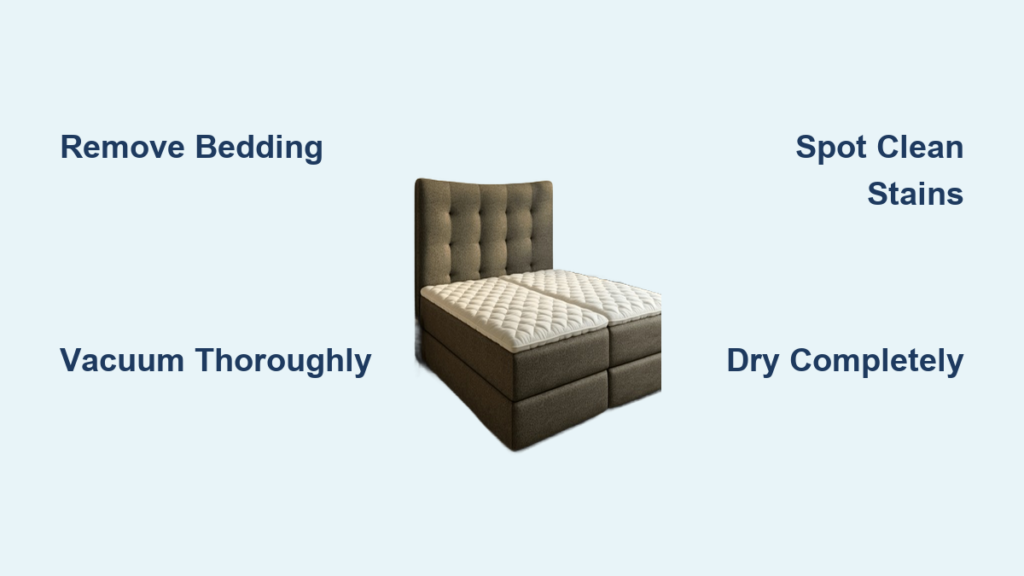
You cannot see it under your mattress, but your box spring collects dust, sweat, allergens, and odors over time. Ignoring it can lead to musty smells, mold, and poor indoor air quality. The good news is that cleaning a box spring mattress does not require harsh chemicals or professional help in most cases. This guide walks you through a complete step-by-step process to deep clean your box spring, prevent future buildup, and maintain a healthier sleep foundation.
Remove Bedding and Mattress First
Before cleaning, clear the area completely. Strip off all sheets, pillowcases, mattress protectors, and bedspreads. Wash these items in hot water at 60°C to kill dust mites and bacteria. If you use a mattress topper, remove it and follow the care instructions. Most topper covers can be washed but should not be tumble dried.
Then, carefully lift the mattress off the box spring. Most box springs are not designed to support direct pressure, so moving the mattress first gives full access and prevents accidental damage. Set the mattress aside on clean towels or a protected surface. Now you can see the full top, sides, and edges of the box spring, which are areas that trap dust and spills over months of use.
Pro Tip: Do this during daylight hours to spot stains or discoloration more easily. Check for sagging, tears, or musty smells as early signs of wear or moisture damage.
Vacuum All Surfaces Thoroughly

Dust, dead skin, and pet dander build up quickly in fabric and seams. Use a vacuum with an upholstery attachment and set suction to low or medium to avoid tearing the cover. Start on the top surface, moving slowly in overlapping strokes.
Focus extra attention on these areas:
- Seams and stitched edges where debris commonly traps
- Corners and side panels
- The underside if accessible through breathable fabric or removable panels
Tilt or stand the box spring if possible to reach the bottom. Even models with solid backs often have mesh sections that allow partial cleaning. Vacuuming removes up to 90% of surface contaminants and is the most critical step in regular maintenance.
Frequency Tip: Vacuum every 3 to 6 months, even if no stains are visible. Regular suction prevents deep-set allergens and extends the unit is life.
Spot Clean Stains Safely
For spills, sweat marks, or accidents, spot clean only the affected area. Never soak the fabric. Choose one of these safe methods.
Use Mild Detergent Solution
Mix 1 teaspoon of mild liquid detergent with 1 cup of cool water. Dip a white cloth, wring until barely damp, and blot the stain. Do not scrub because scrubbing pushes dirt deeper and can fray fibers. After blotting, press a dry towel over the area to absorb moisture. Repeat if needed.
Apply Baking Soda Paste
For light stains or odors, mix 2 tablespoons of baking soda with 1 tablespoon of water. Apply with a soft brush, let sit 15 to 30 minutes, then wipe with a damp cloth. Blot dry immediately. This method gently lifts residue without moisture risk.
Try Upholstery Cleaner
Use a pH-neutral fabric foam. Test on a hidden edge first to check for color bleeding. Apply with a sponge, following product directions. Avoid overspray because excess liquid can seep inside and cause mold.
Warning: Never use bleach, ammonia, or steam cleaners. These can weaken adhesives, rot padding, and warp wooden frames.
Deodorize With Baking Soda
Even after cleaning, odors may linger from sweat, pets, or storage. Baking soda is the safest and most effective deodorizer. Sprinkle a generous layer over the entire surface, focusing on high-contact zones. Let it sit for at least 30 minutes. For strong smells like urine or smoke, leave it overnight.
For added freshness and antimicrobial action, mix in 5 to 10 drops of essential oil such as tea tree for disinfecting or lavender for scent. After sitting, vacuum thoroughly to remove all powder. No residue should remain.
Alternative: Fabric Deodorizer Spray
If baking soda is not available, use a non-toxic fabric spray. Apply evenly and let dry completely before proceeding. These are useful between deep cleanings but should not replace dry methods.
Expert Note: Baking soda also helps draw out residual moisture, acting as a mild drying agent during the cleaning process.
Dry Completely Before Reassembly

This step is non-negotiable. Moisture trapped inside can cause mold, warping, and foul odors within days. To dry fast and safely, stand the box spring upright on its side to expose more surface area. Place fans around it to circulate air on all sides. Open windows or run a dehumidifier in humid climates. Use a wet or dry vacuum on suction-only mode to pull moisture from seams.
Avoid direct sunlight or space heaters because they can fade fabric or crack glue joints. Drying takes 4 to 12 hours depending on humidity and how much liquid was used.
Visual Cue: Touch the fabric. It should feel completely dry, not cool or damp. If in doubt, wait longer.
Prevent Future Buildup
Keep your box spring clean between deep sessions with these habits.
Ventilate Daily
Each morning, fold back the bedding and remove pillows for 15 to 30 minutes. This lets the mattress and box spring breathe, releasing trapped moisture from night sweat. Open bedroom windows to improve airflow.
Use a Mattress Protector
A high-quality, breathable protector blocks spills, sweat, and dust mites. Choose waterproof or water-resistant models with hypoallergenic certification. Wash it every 1 to 3 months and replace annually.
User Insight: 89% of owners say protectors reduce stains and simplify cleaning.
Rotate Mattress Regularly
Turn your mattress head-to-foot every 3 to 6 months if not one-sided. This evens out wear and prevents localized soiling on the box spring below.
Avoid Damaging Mistakes
Even with good intentions, common errors can ruin a box spring.
- Steam cleaning adds too much moisture. Never use a steam cleaner.
- Pushing instead of lifting causes leg or frame damage. Always lift when moving.
- Using bleach or ammonia degrades fabric and padding. Stick to mild cleaners.
- Skipping the dry step leads to mold in as little as 48 hours.
Manufacturer Warning: Never immerse or machine-wash any part of the box spring.
Handle Special Situations
After Long-Term Storage
Inspect for mold, pests, or musty smells. Sanitize with a fabric-safe disinfectant spray. Vacuum, then deodorize with baking soda. Dry fully before use.
For Heavy Soiling or Odors
Combine methods. First, vacuum thoroughly. Second, spot clean with detergent. Third, apply baking soda plus essential oil paste. Fourth, let sit overnight. Fifth, vacuum again. Sixth, spray with fabric deodorizer. If stains or smells persist, consider professional cleaning.
When to Call a Pro
Some brands offer professional textile cleaning for skirtings, covers, or custom fabrics. Professionals use low-moisture extraction and sanitizing treatments safe for delicate materials. This is ideal for high-end or non-removable fabric components.
Know Your Box Spring Materials
Cleaning methods vary by fabric type.
| Fabric Type | Safe Cleaning Method |
|---|---|
| Cotton blend | Mild detergent, upholstery foam |
| Polyester | Most cleaners, test first |
| Non-woven textile | Dry methods only, vacuum plus baking soda |
| Upholstered finish | Foam cleaners, light blotting |
Skirtings and headboard covers are often custom-made and prone to shrinking. Never machine wash unless labeled safe.
Troubleshoot Common Problems
Musty Smell Returns
Cause: Incomplete drying or hidden mold. Solution: Dry longer, use fans, apply baking soda. Check for water leaks nearby.
Stain Reappears
Cause: Wicking, residue rises from inner layers. Solution: Blot from the back if accessible. Repeat cleaning and extend drying time.
Sagging After Cleaning
Cause: Water damage from oversaturation. Solution: Replace the unit. Never soak a box spring.
Allergy Flare-Ups
Cause: Dust mite buildup. Solution: Vacuum monthly, use allergen-proof covers, and deep clean every 6 months.
Discoloration
Cause: Harsh cleaners or sun exposure. Solution: Avoid bleach. Clean gently. Rotate position to prevent uneven fading.
Maintain a Long-Lasting Foundation
Follow this care schedule to keep your box spring in top condition.
| Frequency | Task |
|---|---|
| Weekly | Air out bedding each morning |
| Monthly | Vacuum surface and edges |
| Every 3 months | Inspect for wear, check for odors |
| Every 6 months | Deep clean: vacuum, spot treat, deodorize |
| Annually | Full inspection and cleaning, especially after storage |
Real-World Insight: Users who vacuum every 3 months report box springs lasting 5 to 10 years, double the lifespan of neglected units.
Frequently Asked Questions About Cleaning a Box Spring Mattress
Can I steam clean my box spring?
No, never use a steam cleaner on a box spring. Steam adds too much moisture that cannot escape, leading to mold, warping, and damage to internal components. Stick to dry or lightly damp cleaning methods only.
How often should I vacuum my box spring?
Vacuum your box spring every 3 to 6 months, even if no stains are visible. Regular vacuuming prevents allergen buildup and extends the life of your box spring significantly.
What is the best way to remove odors from a box spring?
Sprinkle generous amounts of baking soda over the entire surface and let it sit for at least 30 minutes. For strong odors, leave it overnight. Vacuum thoroughly to remove all residue. Adding essential oils like tea tree or lavender provides extra freshness.
Can I wash my box spring in a washing machine?
No, never immerse or machine-wash a box spring. Most manufacturers explicitly warn against this because water damages the wooden frame, adhesive joints, and padding. Use spot cleaning with damp cloths instead.
How do I know if my box spring is dry enough after cleaning?
Touch the fabric. It should feel completely dry, not cool or damp. If you are unsure, wait longer. Moisture trapped inside can cause mold within 48 hours.
What should I do if stains keep coming back?
Stains may reappear due to wicking, where residue rises from inner layers. Try blotting from the back if accessible. Repeat the cleaning process and extend drying time to ensure all moisture is removed.
Key Takeaways for Cleaning Your Box Spring Mattress
A clean box spring supports better sleep, reduces allergens, and protects your mattress investment. By stripping bedding, vacuuming thoroughly, spot cleaning gently, deodorizing with baking soda, and drying completely, you can maintain a hygienic foundation with minimal effort. Always use gentle methods, avoid moisture buildup, and protect your box spring with a quality mattress cover. With regular care following the schedule outlined above, your box spring will stay fresh, supportive, and odor-free for years.