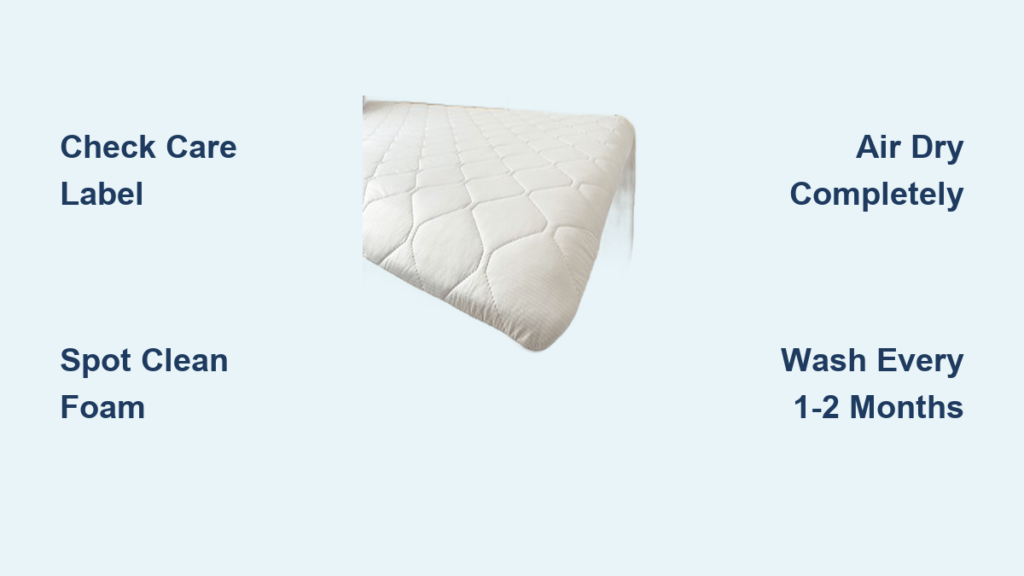
You lie on it every night, but how often do you clean your mattress pad? Over time, it collects sweat, dead skin, oils, and allergens, making regular cleaning essential for hygiene, comfort, and longevity. Whether you have a cotton, foam, down, or waterproof pad, knowing how to clean a mattress pad properly prevents damage, preserves performance, and protects your mattress underneath.
This guide delivers step-by-step instructions tailored to each material type, including stain removal tips, drying best practices, and signs it is time to replace your pad. By the end, you will know exactly how to keep your sleep surface fresh and safe without shrinking, warping, or ruining your investment.
Check the Care Label Before Cleaning
The care label is your most important resource when learning how to clean a mattress pad. It overrides general advice and specifies whether your pad can be machine washed, hand cleaned, or spot treated only. Ignoring it risks shrinking cotton, melting foam, or destroying waterproof barriers.
Labels typically reveal water temperature limits, cycle type, detergent restrictions, and drying method. If the label says spot clean only, respect that, especially for memory foam or wool pads. When labels are missing, search the brand and model online or default to spot cleaning and air drying to be safe.
Wash Every 1 to 2 Months
For most people, washing every 4 to 8 weeks keeps the pad hygienic and odor-free. Regular cleaning removes buildup from nightly sweating, skin shedding, and dust mites.
Wash more often if you sleep hot or sweat heavily, eat or drink in bed, have kids or pets using the bed, suffer from allergies or asthma, or there has been a spill, urine, or vomit. Even with a protector, monthly checks help catch early stains.
Wool needs less washing thanks to natural antibacterial and moisture-wicking properties. Air monthly and spot clean as needed. Over-washing damages fibers and causes clumping.
Clean a Cotton Mattress Pad
Cotton pads are machine washable and relatively easy to maintain. Use cool or warm water on a gentle cycle with mild detergent. Avoid bleach and fabric softener, as they degrade fibers and reduce absorbency.
Tumble dry on lowest heat with dryer balls to prevent matting. If air drying, lay flat or hang. Never wring out wet cotton. Pause the dryer every 20 minutes to fluff the pad manually. This keeps cotton evenly distributed and soft.
Clean a Vinyl-Backed Mattress Pad
Vinyl-backed pads require special care to protect the waterproof layer. Use a gentle cycle with cold or warm water and low-sudsing detergent. Never use bleach, as it eats away at the vinyl backing.
Let the washer fill with water, add detergent, mix well, then add the pad to ensure even dispersion. If machine drying is allowed, use low heat only. High temperatures can warp or melt the backing.
If air drying, hang outdoors with vinyl side up first. Flip to cotton side up after 2 to 3 hours. This prevents moisture trapping and mildew. Always confirm full dryness before reapplying to the mattress.
Clean a Foam Mattress Pad
Foam pads, including memory foam and egg crate varieties, should not go in the washer or dryer. Agitation tears foam, and heat melts it. Stick to spot cleaning unless the label explicitly allows full washing.
Vacuum both sides to remove debris first. Mix a solution of 1 part mild detergent to 2 parts water, or equal parts water, vinegar, and lemon juice. Apply with a sponge, starting at the stain edge and working inward. Blot with a clean, damp cloth to rinse.
Press with a dry towel to remove moisture. Use a wet or dry vac if available for faster extraction. Lay the pad on a clean surface in a well-ventilated area and turn every few hours. Drying takes 24 to 48 hours. Never rush with a hairdryer or heater.
Clean a Down Mattress Pad
:max_bytes(150000):strip_icc()/how-to-wash-down-filled-bedding-350482-81ec2947d5144bdca738bcefa5eb1fa9.png)
Down pads require gentle handling to protect feathers. Always use a front-loader with a delicate cycle and cool water. Top-loaders with agitators can tear seams and release feathers.
Check for rips or loose stitching before washing. Washing a damaged pad may scatter feathers inside your machine. Use a low-sudsing, gentle detergent or one labeled for down. Avoid bleach and softeners.
Double rinse to remove all soap residue. Leftover detergent attracts odors. Tumble dry on no heat or lowest setting with dryer balls. Every 15 minutes, stop the dryer and break up clumps by hand. Continue until bone dry. Damp down breeds mildew fast.
Clean a Wool Mattress Pad
Wool is naturally self-cleaning and rarely needs full washing. Untreated wool felts and shrinks when washed. Only machine wash if the label says it is safe, using cool water and gentle cycle with wool-safe detergent.
For routine care, turn monthly, especially new pads. Flip twice a year. Air every 3 months in sunlight or fresh air. Sunlight naturally disinfects and deodorizes wool.
For stains, blot immediately with a towel. Use a cold, damp cloth. Never use hot water, as it sets protein stains. Press, do not rub. For stubborn stains, apply baking soda and salt paste, let dry, then brush off.
Never beat, soak, or steam clean wool pads. These actions damage fibers and cause clumping.
Clean Memory Foam Layers

Most memory foam layers, like Sleep Number VariaCool, have removable, washable covers only. Wash the cover on gentle cycle in cold water and line dry. Never machine dry the cover.
Clean the foam with spot treatment using mild soap and water on a cloth. Never soak the foam. Let dry completely before reattaching the cover.
Clean DualTemp and True Temp Layers
DualTemp layers require spot cleaning only. Use a warm, mild soap and water solution on a cloth. Wipe gently and air dry. Do not machine wash or submerge.
True Temp layers are not washable. Spot clean with a damp cloth only. Never immerse. Fiber may settle over time, so rotate and fluff regularly to maintain comfort.
Clean a Warming Layer
Warming layers are machine washable. Wash cold on gentle cycle and tumble dry low. Do not bleach, dry clean, iron, or steam. Follow these rules to avoid damaging heating elements or fabric.
Remove Stains Without Full Washing
When full washing is not possible, spot clean with a cloth dampened in warm water and mild detergent. Dab gently. Do not scrub.
Blot dry with a clean towel. Sprinkle baking soda over the area and let sit 4 to 8 hours or overnight. Vacuum thoroughly to remove odors and light grime.
Remove Blood Stains
Flush with cold water immediately. Hot water sets the stain. Soak in cold water and detergent for 30 minutes. Wash per care label. Never apply heat until the stain is gone.
Remove Urine Stains
Soak in cool water with enzyme-based cleaner for 30 minutes. Wash in cool or warm water. Add oxygen bleach if the label allows. Dry fully. Avoid heat until the stain is removed.
Remove Sweat Stains
Soak in cool water with gentle detergent for 30 minutes. Wash in cool or warm water. Use oxygen bleach if permitted. Air dry or tumble dry low.
Dry the Right Way
Air drying is safest for foam, wool, vinyl-backed, and memory foam pads. Lay flat on a clean surface or hang outside. Flip every few hours for even drying.
Tumble drying is acceptable for cotton, down, and vinyl-backed pads if allowed. Use lowest heat setting and add dryer balls to reduce time and prevent clumping. Check every 20 minutes and fluff by hand.
Never store a damp pad. Even slight moisture leads to mold, mildew, and musty odors. If in doubt, air dry longer.
Wash With Sheets
You can wash a mattress pad with sheets if both items have matching care instructions, the washer is not overloaded, and the pad fits without cramming.
Do not wash together if the pad is too large, is foam, wool, or delicate material, or requires different water temperature or cycle settings.
Replace When Worn Out
Replace your mattress pad if you notice tears or holes, loss elasticity causing slips or bunching, persistent stains despite cleaning, water soaks through during the drop test, or worsening allergies from dust mites and allergens passing through.
With proper care, most pads last 2 to 3 years. Cheap models may fail in under 12 months. Replace proactively to maintain mattress protection.
Frequently Asked Questions About Cleaning a Mattress Pad
Can I machine wash a foam mattress pad?
Most foam pads should not go in the washing machine. The agitation can tear the foam, and heat from the dryer can melt it. Spot clean foam pads instead, unless the care label explicitly states machine washing is safe.
How often should I wash my mattress pad?
Wash most mattress pads every 4 to 8 weeks under normal use. Wash more frequently if you sweat heavily at night, have pets or children in the bed, eat or drink in bed, or suffer from allergies or asthma.
Can I use bleach on a vinyl-backed mattress pad?
Never use bleach on a vinyl-backed pad. Bleach damages and degrades the vinyl waterproof layer. Use a mild, low-sudsing detergent instead.
How do I dry a down mattress pad without damaging it?
Tumble dry on lowest heat or no heat setting. Add dryer balls to keep feathers loose. Stop every 15 minutes to manually break up clumps by hand. Continue until completely dry. Damp down attracts odors and mildew.
What is the fastest way to freshen a mattress pad without washing it?
Spot clean the stained area with warm water and mild detergent. Blot dry, then sprinkle baking soda over the area. Let sit for several hours or overnight, then vacuum thoroughly to remove odors and surface grime.
Key Takeaways for Cleaning Your Mattress Pad
Always check the care label before cleaning. The manufacturer instructions override all general advice and prevent permanent damage to your pad. Match your cleaning method to the material type. Cotton and down pads tolerate machine washing, while foam, wool, and vinyl-backed pads require gentler handling or spot cleaning only.
Wash every 1 to 2 months for hygiene, and more frequently for heavy use or allergies. Ensure complete drying before returning the pad to your mattress to prevent mold and mildew. Replace pads when worn, typically every 2 to 3 years with proper care. By following these material-specific guidelines, you keep your mattress pad clean, functional, and effective for years to come.