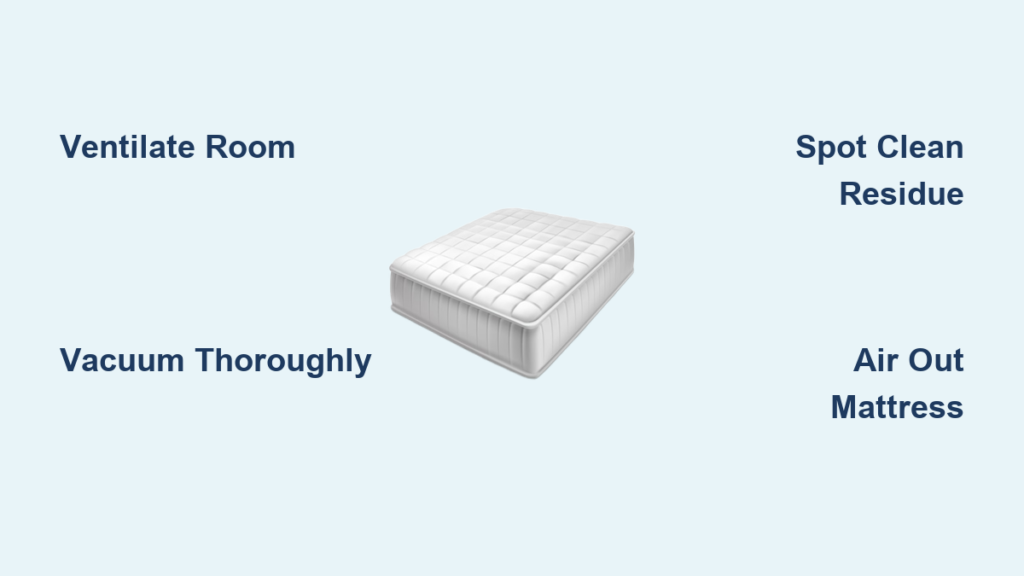
You’ve just finished a flea bomb treatment, and now your mattress smells like chemicals, feels sticky, or just doesn’t seem safe to sleep on. You’re not alone. Many homeowners face this exact problem after using foggers to eliminate infestations. Cleaning your mattress after a flea bomb is essential to remove toxic residues, lingering odors, and potential allergens that can cause skin irritation or respiratory issues.
This guide walks you through every step, from proper ventilation to deep deodorizing, using safe and effective methods that protect your health and extend your mattress lifespan. You’ll learn exactly what to do if your mattress was accidentally exposed, how to prevent damage before future treatments, and when replacement might be necessary.
Why Proper Ventilation Is Essential After a Flea Bomb
Flea bombs release pesticide mists that continue circulating in your home long after the fog visibly clears. These microscopic chemical particles settle on surfaces throughout the room, including your mattress. Before you touch anything, you must clear the air to reduce inhalation risks and speed up odor dissipation.
Open all windows in the treated room and position box fans near openings to push contaminated air outside. Run these fans continuously for at least 4 to 6 hours, though longer is always better. If possible, create a cross breeze by opening windows on opposite sides of the room.
Most manufacturers recommend staying out of the home for 2 to 4 hours after activating a flea bomb. Respect this waiting period completely, then ventilate for the full additional time before starting any cleanup. Rushing this step puts you at risk of inhaling residual chemicals.
Safety Gear You Need Before Cleaning Your Mattress
Pesticide residues are invisible but genuinely dangerous. Direct skin contact can cause rashes, headaches, or breathing problems, while inhaling particles can irritate your lungs.
Before touching your mattress, equip yourself with nitrile gloves and an N95 mask or respirator. Wear long sleeves and closed-toe shoes for additional protection. These simple precautions prevent chemicals from absorbing through your skin or entering your respiratory system.
Keep children and pets completely out of the treated room until the mattress is fully cleaned and aired. Their developing immune systems are far more sensitive to toxin exposure than adults.
How to Vacuum Away Chemical Residue from Your Mattress

Vacuuming is the single most important step for removing chemical residue and any dead pests. Without thorough vacuuming, residues remain embedded in fabric fibers where they continue off-gassing harmful fumes.
Set your vacuum to the highest suction setting and attach the upholstery tool. Work methodically over every inch of the mattress surface, paying special attention to seams, tufts, stitching lines, zippered vents, corners, and edges where residue collects most heavily. If your mattress is flippable, vacuum both sides completely. Spend at least 10 to 15 minutes on each side for thorough residue removal.
Immediately after vacuuming, remove the bag or empty the canister outside your home. Seal all debris in a plastic bag and dispose of it in an outdoor trash bin to prevent recontamination of your living space.
Spot Cleaning Sticky Residue from Mattress Fabric
Some pesticide residues won’t budge with vacuuming alone. Sticky or oily films can remain on the surface, especially if the flea bomb was used in close proximity to your mattress.
Create a safe cleaning solution by mixing 1 tablespoon of mild dish soap with 1 cup of warm water. Avoid bleach, ammonia, or harsh cleaners, as these can damage fabric or react dangerously with pesticide residues.
Dip a clean cloth into the solution, wring it until damp, and gently blot any stained or suspect areas. Never saturate the mattress with liquid. Excess moisture seeps into padding and creates mold problems. After blotting, use a second cloth dampened with plain water to rinse away soap residue, then blot dry with a towel.
Removing Pesticide Odors with Baking Soda

Chemical smells can persist for days or even weeks without intervention. Baking soda naturally neutralizes odors without adding more chemicals to your sleeping surface.
Sprinkle a thick, even layer of baking soda across the entire mattress surface. Focus extra on the center and seams where odors concentrate most heavily. Allow the baking soda to work for 6 to 12 hours. For fastest results, place the mattress in sunlight, which enhances deodorizing and helps dry any remaining moisture.
After the waiting period, vacuum thoroughly to remove all powder. Repeat this process if any odor remains.
Drying and Airing Out Your Mattress Completely
Time is your strongest ally in eliminating residual fumes. Even after cleaning, trace chemicals can continue off-gassing.
If you can move your mattress outdoors, do so. Sunlight and fresh air accelerate chemical breakdown naturally. Leave the mattress outside for several hours, flipping it once midway for full exposure on both sides.
If outdoor airing isn’t possible, position indoor fans to blow continuously across the mattress surface. Rotate the mattress every few hours to ensure even airflow. Aim for 24 to 48 hours of continuous air circulation before remaking the bed with fresh sheets.
Protecting Your Mattress Before Future Flea Treatments
Prevention is far easier than cleanup. Before your next flea treatment, take steps to shield your mattress from chemical exposure.
The best approach is removing the mattress from the treated room entirely. If that’s not possible, wrap the mattress completely in heavy-duty plastic sheeting (6-mil thickness or thicker). Seal all edges with duct tape to create an airtight barrier.
Alternatively, invest in a zippered, pesticide-resistant mattress encasement designed specifically to block bed bugs and chemical penetration. These covers allow you to leave the mattress in place safely during future treatments.
Signs Your Mattress Needs Replacement After Flea Bomb Exposure
Sometimes cleaning simply isn’t enough. Certain conditions indicate your mattress has absorbed too many toxins to be safely salvaged.
Replace your mattress if a strong chemical smell persists after 48 or more hours of continuous airing. Replace it if the surface feels oily or sticky even after thorough cleaning. Replace it if you experience headaches, rashes, or breathing difficulties whenever you’re near it. Also consider replacement if the mattress is older than 7 to 8 years, as older materials absorb more chemicals and are less effective to clean.
A contaminated mattress isn’t worth the health risk. When in doubt, err on the side of replacement.
Key Takeaways for Safely Cleaning Your Mattress After a Flea Bomb
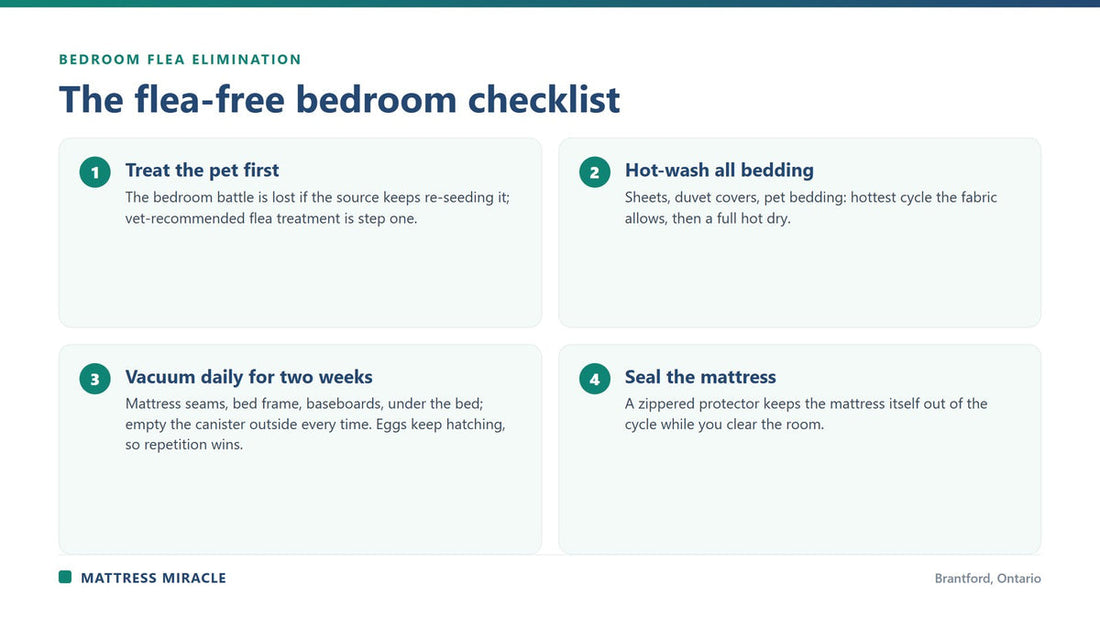
Cleaning your mattress after a flea bomb isn’t optional, it’s a health necessity. Start with 4 to 6 hours of room ventilation before any contact, then vacuum thoroughly using an upholstery attachment on both sides. Spot clean with mild soap solution, then apply baking soda for deodorizing, allowing 6 to 12 hours of sit time before vacuuming again. Air out the mattress for 24 to 48 hours before replacing bedding.
Next time, protect your mattress in advance by moving it, covering it with plastic sheeting, or using a chemical-resistant encasement. Monitor your health afterward, and don’t hesitate to replace the mattress if odors or symptoms persist.
Your bed should be a sanctuary, not a chemical hazard. Take these steps seriously, and sleep easy.
Frequently Asked Questions About Cleaning Mattress After Flea Bomb
Can you use a flea bomb without removing the mattress?
Yes, but only with precautions. Flea bombs release aerosolized pesticides that settle on all surfaces, including porous materials like foam and fabric. If you must leave the mattress in place, cover it completely with heavy-duty plastic sheeting sealed with duct tape. Consider using targeted sprays specifically labeled safe for mattresses instead of foggers.
How long should you wait before sleeping on the mattress after cleaning?
Wait at least 24 hours after completing the full cleaning process. Follow this safety timeline: 4 to 6 hours for initial room ventilation, 1 to 2 hours for vacuuming and spot cleaning, 6 to 12 hours for baking soda treatment, and 6 or more hours for final air-out. Only remake the bed when the mattress is completely dry and odor-free.
Does baking soda actually neutralize flea bomb chemicals?
Baking soda neutralizes odors effectively but does not chemically break down pesticide residues. It absorbs moisture and smells, making the mattress more pleasant to sleep on, but thorough vacuuming remains essential for removing actual chemical residue.
Can you wash a mattress cover after flea bomb exposure?
Yes. Remove any mattress cover or protector and wash it separately in hot water with detergent. Hot water helps eliminate pesticide residues. Dry it on high heat before reinstalling, and consider using a fresh cover afterward.