Waking up to an old, set-in stain on your mattress is more than just an eyesore. It can harbor bacteria, attract dust mites, and leave lingering odors that disrupt your sleep and health. Whether it is a yellowed sweat mark, a forgotten urine accident, or a dried coffee spill, old mattress stains do not have to be permanent. With the right techniques and common household ingredients, you can restore your mattress to a cleaner, fresher state without expensive professional services.
The key lies in using targeted cleaning agents that break down the specific type of stain while protecting the mattress material. Hydrogen peroxide lifts protein-based stains like blood and urine, vinegar neutralizes odors and dissolves tannins from coffee or wine, and baking soda absorbs oils and deodorizes deeply. This guide walks you through proven, step-by-step methods to safely and effectively remove even the most stubborn old stains.
Identify the Stain Type Before Cleaning
Before applying any cleaner, determine what caused the stain. Different substances require different treatments. Using the wrong method can set the stain deeper or damage the fabric.
Protein-Based Stains: Urine, Blood, Vomit
These stains contain organic compounds that bind tightly to fibers over time. They often yellow and develop strong odors.
Best treatments: Hydrogen peroxide, enzyme cleaners, or vinegar-baking soda reactions.
Avoid hot water because it cooks proteins into the fabric, making them harder to remove.
Organic/Oily Stains: Sweat, Lotions, Sebum
Body oils and sweat build up over months, causing yellowing, especially under sheets.
Best treatments: Undiluted hydrogen peroxide on light-colored mattresses, baking soda absorption, or dish soap emulsifiers.
Tannin-Based Stains: Coffee, Tea, Wine
Dark liquids leave behind pigments that seep into fibers. The longer they sit, the more they oxidize and darken.
Best treatments: Cold water, vinegar, salt, or commercial tannin removers.
Act fast but know that old stains still respond well to acidic solutions.
Ink or Dye Stains
These are less common but stubborn. They often come from pens or clothing dyes.
Best treatment: Isopropyl alcohol 70% or higher.
Always test first because alcohol can lift color from printed or dyed fabrics.
General Discoloration or Odor
No visible stain but a musty or stale smell?
Best treatment: Baking soda deep deodorizing, sunlight exposure, or enzyme sprays.
Gather Essential Cleaning Agents and Tools

Use only safe, effective ingredients that will not degrade your mattress. All are household staples.
Core Cleaning Ingredients
| Ingredient | Use Case | Why It Works |
|---|---|---|
| 3% Hydrogen Peroxide | Urine, blood, sweat | Oxidizes organic matter, disinfects, gently bleaches yellowing |
| White Vinegar | Odors, coffee, mildew | Acid dissolves residues, kills mold spores, neutralizes alkaline buildup |
| Baking Soda | Oils, odors, residue lift | Absorbs moisture and grease, deodorizes, enhances cleaning reactions |
| Dish Soap (Dawn) | Oil-based stains | Breaks down sebum, lotions, food residues without harshness |
| Isopropyl Alcohol | Ink, dye | Dissolves pigments, evaporates fast, sanitizes |
| Salt | Coffee, wine, dried stains | Mild abrasive, draws out liquid, boosts scrubbing power |
Must-Have Tools
Spray bottle with removable nozzle for clog-free application of baking soda mixes.
Opaque spray bottle to preserve hydrogen peroxide from UV degradation.
Clean white microfiber cloths to prevent dye transfer during blotting.
Soft-bristle brush or toothbrush for gentle agitation of crusty residues.
Vacuum with upholstery attachment to remove debris before and after cleaning.
Fan or dehumidifier to speed drying and prevent mold.
Avoid steam cleaners unless your mattress label explicitly allows it, especially for memory foam.
Follow the Universal Six-Step Cleaning Process
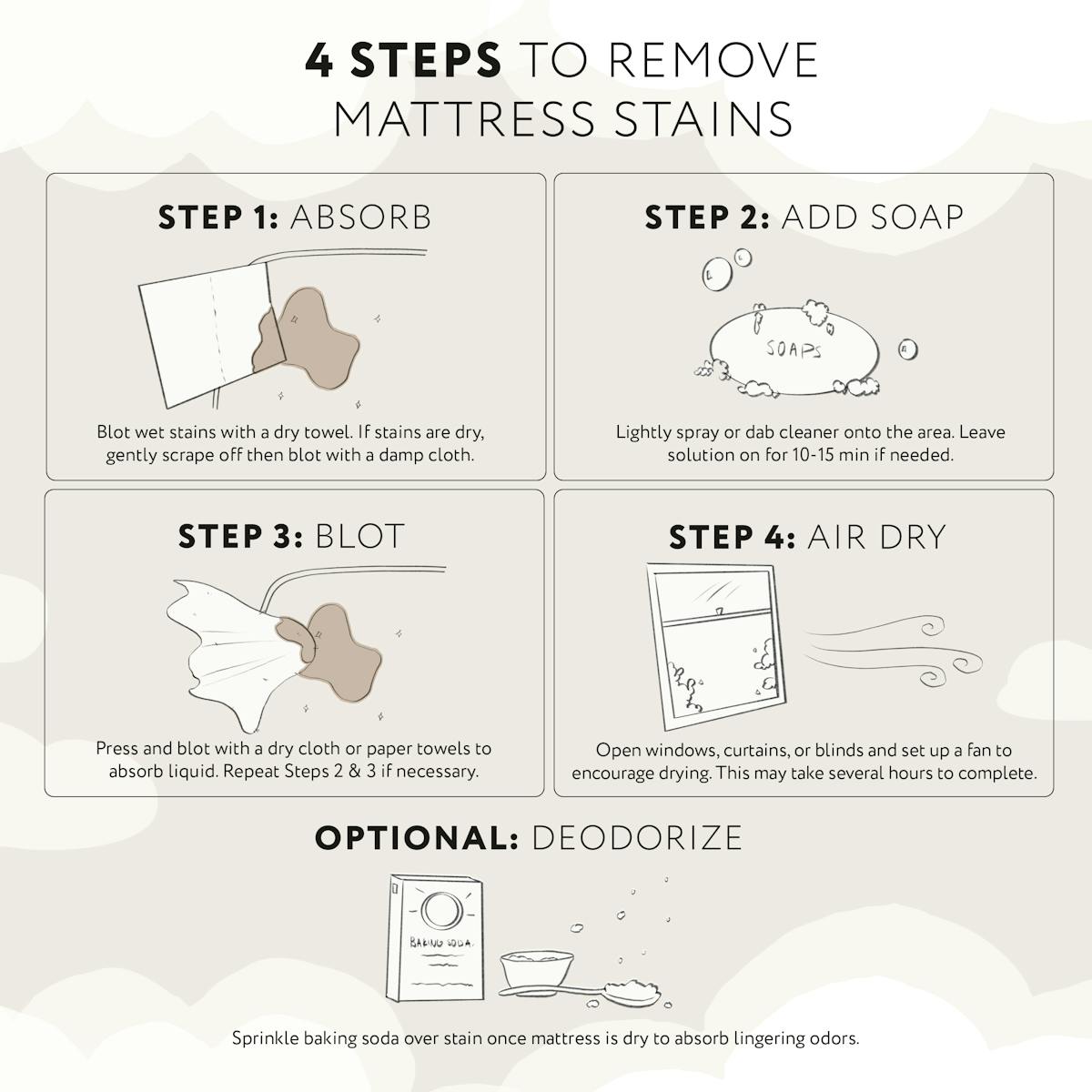
Follow this six-step process for any old stain. It maximizes effectiveness while minimizing moisture risks.
Step 1: Remove Solids and Blot Liquids
Start by scraping off dried residue with a spoon or dull knife. For old urine or vomit spots, vacuum loose particles first. If the stain is still damp, blot aggressively with dry towels. Press down, do not rub, to lift moisture without spreading it.
Key tip: The drier the stain before treatment, the better the cleaner penetrates.
Step 2: Apply the Right Cleaning Solution
Mix or apply your chosen agent based on stain type. Always spray or dab lightly because saturation is the enemy. Mattresses trap moisture, which breeds mold and weakens internal materials.
Step 3: Let It Sit for Optimal Dwell Time
Allow the solution to work. Hydrogen peroxide mixes need 15 to 30 minutes. Vinegar-baking soda needs 1 to 12 hours, overnight for odors. Enzyme cleaners need 5 to 15 minutes. Alcohol for ink needs 1 to 2 minutes. Watch for bubbling, which means chemical action is lifting the stain.
Step 4: Blot, Do Not Scrub
After dwell time, press clean cloths into the area to absorb the loosened grime. Replace cloths as they get dirty. Repeat until no more transfer occurs. Rubbing damages fibers and spreads stains, so always blot.
Step 5: Dry Completely Before Use
This is non-negotiable. Use fans, open windows, or a dehumidifier. Place the mattress near an air vent or in indirect sunlight. Wait at least 6 to 8 hours; thick or memory foam may need 12 to 24 hours. Sleeping on a damp mattress invites mold and odor return.
Step 6: Deodorize with Baking Soda
Even after stain removal, odors can linger. Sprinkle a thin layer of baking soda over the area. Let sit 30 minutes to 24 hours, then vacuum thoroughly. For full-mattress freshness, do this after every deep clean.
Remove Old Urine Stains Effectively
Old urine stains are among the most challenging but not impossible to treat.
Hydrogen Peroxide, Baking Soda, and Dish Soap Method
This is best for yellowed, smelly stains on white or light-colored mattresses.
Recipe:
– 1 cup (8 oz) 3% hydrogen peroxide
– 2 tablespoons baking soda
– 1 to 2 drops clear dish soap
Mix in a bowl. Foaming is normal. Use immediately, do not store.
Steps:
1. Apply with a cloth or filtered spray bottle.
2. Let sit 15 to 30 minutes while bubbles lift the stain.
3. Blot dry with clean towels.
4. Air dry completely, 4 to 8 hours.
5. Vacuum any dried powder.
Pro tip: One user found reducing baking soda to 2 tablespoons eliminated visible residue without losing cleaning power.
Enzyme Cleaner for Persistent Odor
For persistent urine smell, enzyme cleaners outperform all others. They digest the proteins and ammonia that cause odor. Saturate the area, wait 10 to 15 minutes, blot, and dry. Repeat if needed. This method is ideal for pet accidents or incontinence.
Vinegar and Baking Soda for Sensitive Fabrics
For light stains or sensitive fabrics:
1. Spray 50/50 vinegar-water solution.
2. Wait 15 minutes, then blot.
3. Cover with baking soda.
4. Let sit overnight.
5. Vacuum thoroughly.
This method is great for odor control when discoloration is minimal.
Treat Yellow Sweat and Body Oil Stains
Sweat, sebum, and dead skin build up over time, especially under pillows and shoulders.
Use Undiluted Hydrogen Peroxide
Only on white or light-colored mattresses.
Steps:
1. Pour 3% hydrogen peroxide into an opaque spray bottle because light breaks it down.
2. Lightly mist the yellowed area, never soak.
3. Let air dry naturally.
4. Repeat if needed.
5. Finish with baking soda deodorizing.
Sunlight boost: After drying, place the mattress in indirect sunlight. UV rays enhance fading and kill odor-causing microbes.
Baking Soda Absorption for Colored Mattresses
This method avoids bleaching while still lifting oil buildup.
Steps:
1. Sprinkle a thick layer of baking soda over the oily area.
2. Let sit 30 or more minutes to absorb grease.
3. Vacuum thoroughly.
4. Dampen a cloth with diluted dish soap (1 teaspoon in 1 cup water).
5. Dab gently, then wipe with a clean damp cloth.
6. Dry completely.
Eliminate Old Blood Stains
Hydrogen peroxide works on old blood thanks to its oxidative power.
Hydrogen Peroxide Cleaning Paste
Recipe:
– 2 oz hydrogen peroxide
– 1 tbsp dish soap
– 1 tbsp salt
Mix into a paste.
Steps:
1. Spread directly on the stain.
2. Let sit 10 to 30 minutes.
3. Spoon off excess.
4. Dab remaining discoloration with additional peroxide.
5. Allow full drying.
Critical: Never use hot water because it sets blood proteins permanently. Always use cold or room temperature liquids.
Warning: Hydrogen peroxide bleaches fabric. Only use on white or off-white areas.
Clean Dried Vomit Stains
Old vomit leaves both stain and odor but responds well to chemical reactions.
Baking Soda and Vinegar Method
Steps:
1. Scrape off solids with a dustpan or stiff card.
2. Blot any moisture with a dry rag.
3. Sprinkle generous baking soda over the area.
4. Spray distilled white vinegar until fizzing occurs.
5. Let sit several hours or overnight.
6. Vacuum thoroughly.
The acid-base reaction breaks down proteins and neutralizes smell. For strong odors, follow with an enzyme cleaner.
Pro tip: Combine this method with sunlight exposure post-cleaning for maximum odor elimination.
Remove Old Coffee and Wine Spills
Both are tannin-based and darken over time, but vinegar cuts through them.
Coffee Stain Removal
Solution:
– ¾ cup warm water
– ¼ cup white vinegar
– 1 tbsp dish soap
Mix and lightly spray on the stain. Blot gently with a microfiber cloth. Repeat until gone. Dry completely before deodorizing with baking soda.
Wine Stain Removal
For old wine:
1. Dab with cold water and vinegar (1:1).
2. Blot thoroughly.
3. Sprinkle salt to lift residual pigment.
4. Let sit 10 to 15 minutes, then vacuum.
5. Use a commercial product like Wine Away if stain persists.
Never use hot water because it sets wine stains permanently.
Clean Oily Residues from Lotions or Sebum
Body oils soak in and create greasy, yellow marks.
Baking Soda and Dish Soap Method
Steps:
1. Sprinkle baking soda over the stain.
2. Let sit 30 or more minutes to absorb oil.
3. Vacuum thoroughly.
4. Mix 1 teaspoon dish soap in 1 cup warm water.
5. Dab onto the area with a cloth.
6. Wait 5 to 10 minutes.
7. Wipe with a damp (not wet) cloth.
8. Dry completely.
This two-step process removes the oil first, then cleans the residue, preventing re-deposition.
Remove Ink or Dye Stains
Ink is localized but can bleed if mishandled.
Isopropyl Alcohol Method
Steps:
1. Test on an inconspicuous area first.
2. Dab 70% or higher isopropyl alcohol onto a cotton pad.
3. Press, do not rub, onto the stain.
4. Blot as ink transfers.
5. Repeat until gone.
6. Wipe with a damp cloth to remove residue.
7. Allow to dry, 1 to 2 hours.
Warning: Alcohol is flammable, so use in a ventilated area. Keep away from open flames.
Avoid on printed or colored mattress covers unless tested.
Adjust Your Approach for Different Mattress Types
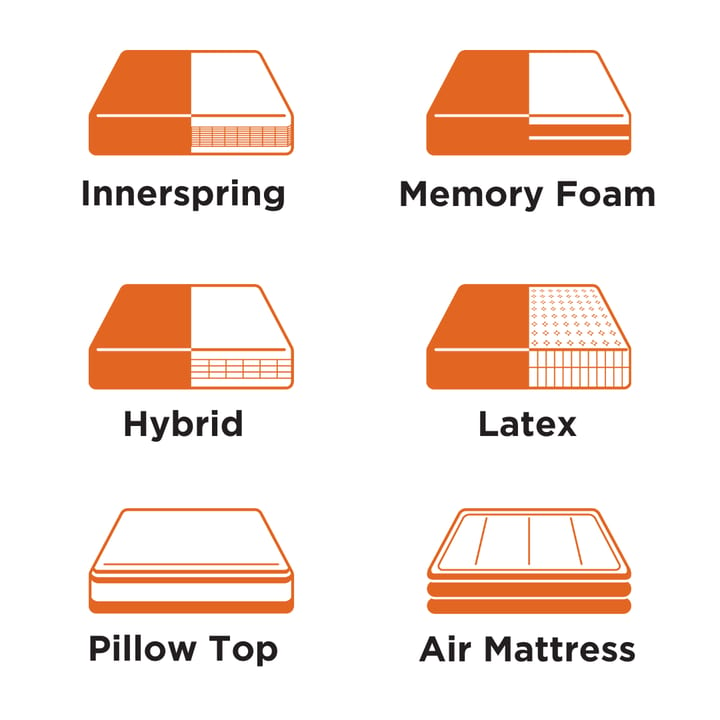
Your cleaning method must match your mattress material.
Memory Foam: Use Minimal Moisture
Memory foam is highly absorbent and slow to dry, so over-wetting risks mold. Spot clean only, never spray large areas. Use diluted vinegar or dish soap with a cloth. Prefer dry methods like baking soda, vacuuming, and sunlight. Never steam clean because trapped moisture ruins foam.
Innerspring or Hybrid: Protect Seams and Edges
These are less absorbent than foam, but liquids can seep into seams. Focus on surface cleaning. Avoid soaking edges or stitching. They can tolerate slightly more moisture but must dry fully.
Latex: Gentle and Natural
Latex is naturally resistant to mold and mites. Clean with mild soap and water. Avoid bleach, ammonia, or strong solvents. Dry immediately because latex can degrade if left damp.
Always check the manufacturer tag before cleaning. Some warranties void if liquid is applied improperly.
Prevent Future Stains and Odors
The best cleaning is the one you never have to do.
Use a Waterproof Mattress Protector
A cotton-backed with breathable membrane blocks liquids but allows airflow. It is easy to remove and wash monthly. This is essential for children, pets, or incontinence.
Single best investment for extending mattress life.
Deep Clean Every 6 to 12 Months
Vacuum with upholstery tool every 1 to 2 weeks. Perform full stain check and spot treatment twice a year. Air the mattress annually by opening windows or placing it outside for a few hours.
Rotate Annually
Flip head-to-toe to distribute wear. This prevents sagging and localized staining. Some brands recommend every 3 to 6 months, so check your manual.
When to Replace, Not Clean
Sometimes cleaning is not enough.
Replace your mattress if:
– Odors persist after multiple treatments
– Mold or mildew is visible (black or green spots)
– Multiple large stains overlap or penetrate deeply
– Material feels damp or spongy after drying
– Allergy symptoms worsen despite cleaning
Pro tip: If stains keep returning, pair a new mattress with a high-quality protector to solve the problem permanently.
Frequently Asked Questions About Cleaning Old Mattress Stains
Can old mattress stains be removed completely?
Yes, old mattress stains can be removed completely with the right approach. Hydrogen peroxide works best for organic stains like urine and blood. Vinegar and baking soda tackle odors effectively. Multiple applications may be needed for deeply set stains, but most respond well to treatment within 2 to 3 attempts.
What is the best homemade solution for old urine stains?
The best homemade solution combines 1 cup of 3% hydrogen peroxide, 2 tablespoons of baking soda, and 1 to 2 drops of clear dish soap. Mix immediately and apply to the stain. Let sit 15 to 30 minutes, then blot dry. This combination oxidizes the proteins causing both the stain and the odor.
How do I clean a memory foam mattress without damaging it?
Clean memory foam with minimal moisture. Use diluted vinegar or dish soap applied with a cloth, never a spray bottle. Spot clean only and avoid soaking. Prefer dry methods like baking soda and vacuuming. Never use steam cleaners because they trap moisture inside the foam.
Why do old stains keep returning after cleaning?
Old stains return when moisture remains trapped deep in the mattress. Always dry completely, 6 to 24 hours depending on thickness. Using a waterproof protector prevents new stains. If odors persist, the underlying material may be contaminated, requiring replacement.
How long does it take for a mattress to dry after cleaning?
Mattresses need at least 6 to 8 hours to dry. Memory foam and thick hybrid mattresses may need 12 to 24 hours. Use fans, dehumidifiers, or indirect sunlight to speed drying. Do not replace bedding until the mattress is fully dry to the touch.
Key Takeaways for Removing Old Mattress Stains
Old mattress stains are treatable with the right approach. Use hydrogen peroxide for organic stains like urine, blood, and sweat. Use vinegar and baking soda for odors and tannin-based stains like coffee or wine. Use isopropyl alcohol for ink stains. Always blot, never scrub, and dry completely before using the mattress again.
Match your cleaning method to your mattress type. Memory foam needs minimal moisture. Innerspring and hybrid mattresses tolerate slightly more but still require thorough drying. Latex responds well to mild soap and water.
The single best investment is a waterproof mattress protector. It prevents new stains, extends mattress life, and makes future cleaning easier. With these steps, you can restore cleanliness, comfort, and confidence in your sleep environment, naturally and affordably.