Spilled tea on your mattress? You’re not alone. Tea stains, especially those left unattended, can leave behind stubborn yellowish-brown marks that seem impossible to remove. The good news is that with the right method, even set-in tea stains can be lifted safely using common household items. Since tea contains tannins, natural pigments that bind to fabric, treating the spot quickly and correctly is key.
This guide walks you through proven, step-by-step techniques for every type of tea spill, whether it’s fresh, dried, or milky. You’ll learn how to choose the best cleaning solution, avoid costly mistakes, and keep your mattress fresh long-term.
Immediate Spill Response: Act Fast
Blot, Never Rub
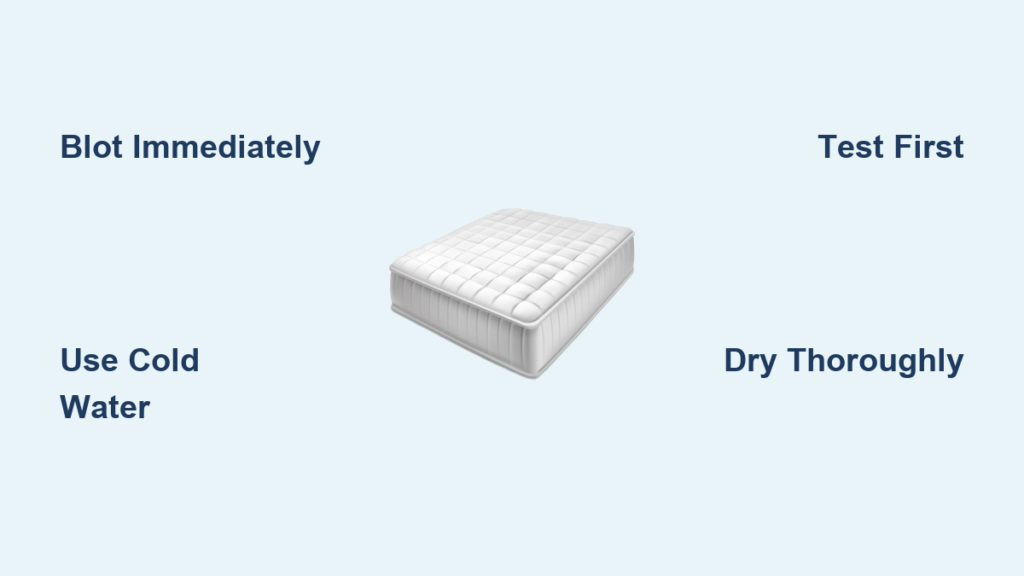
The first 60 seconds after a spill are critical. Blotting with a clean white cloth or paper towel removes up to 80% of the liquid before it soaks deep into foam layers. Press down firmly and repeatedly, using fresh sections of the cloth as it becomes saturated. Never scrub because the motion pushes tea deeper into fibers and spreads the stain.
Remove Excess Liquid First
Before applying any cleaner, use dry cloths to absorb as much tea as possible. Place a stack of towels over the spot and apply light pressure with a book. Change towels until no more moisture transfers. This step is essential for preventing permanent discoloration and reducing drying time later.
Act Within Minutes
Tannins in tea begin oxidizing immediately, forming stronger bonds with fabric. A stain treated within 5 to 30 minutes lifts easily. After 1 hour, it becomes progressively harder to remove. For best results, start cleaning before the spill dries.
Test Cleaning Solutions First
Patch Test in Hidden Area
Even gentle cleaners can damage certain fabrics or foams. Always test any solution on a discreet edge or corner of the mattress. Mix your cleaning agent and apply a small amount with a cotton ball. Wait 10 to 15 minutes and check for color fading, foam softening, or odor. If no reaction occurs, proceed safely.
Common Mistakes to Avoid
Using hot water sets tannin and protein stains permanently. Scrubbing aggressively damages fabric and pushes the stain deeper. Over-wetting the mattress risks mold, mildew, and rusted coils. Skipping the test patch may cause irreversible discoloration. Sleeping on a damp bed promotes microbial growth and odor. Only use cold water in every step because heat locks in stains.
Best Cleaning Agents for Tea Stains
Vinegar Breaks Down Tannins
Distilled white vinegar is ideal for tea stains because it dissolves tannin bonds, neutralizes odors, and is safe on most fabrics when diluted. Use a 1 to 1 mix of vinegar and cold water. Spray lightly and never soak the mattress.
Baking Soda Absorbs and Deodorizes
Baking soda acts as a mild abrasive to lift surface stains, a moisture absorber, and an odor neutralizer. Apply it after cleaning or as a paste for older stains.
Hydrogen Peroxide Removes Yellowing
Three percent hydrogen peroxide lifts discoloration through oxidation. It is effective on white or light-colored mattresses only. Always test first because it can bleach dyes.
Dish Soap Emulsifies Oils
Even clear tea may contain natural oils. Flavored or milky tea has fats. A drop of clear liquid dish soap helps break these down without residue.
Enzymatic Cleaners for Milky Tea
When milk or creamer is involved, enzymatic cleaners digest proteins that cold water alone cannot remove. Look for products with protease enzymes.
Never mix vinegar and hydrogen peroxide in the same solution. They form peracetic acid, which can irritate skin and lungs. Use them in separate steps instead.
Fresh Tea Spill: Step-by-Step Fix
Best for Spills Under 1 Hour
For clear tea with no milk, act fast with this simple method.
Supplies needed include clean white cloths, cold water, 1 to 2 drops dish soap, a spray bottle, a dry towel, and a fan.
Cleaning steps are as follows:
- Blot the spill aggressively with dry cloths.
- Mix 1 to 2 drops of dish soap into 1 cup cold water.
- Lightly spray or dab the solution onto the stain without soaking.
- Wait 2 to 5 minutes for the soap to penetrate.
- Blot again with a damp cloth to lift residue.
- Rinse by dabbing with a cold water-dampened cloth.
- Blot dry with a clean towel.
- Place a fan nearby to speed drying.
- Wait 4 to 6 hours before remaking the bed.
Cold water prevents setting while dish soap lifts tannins and oils.
Set-In or Dried Tea Stain Removal
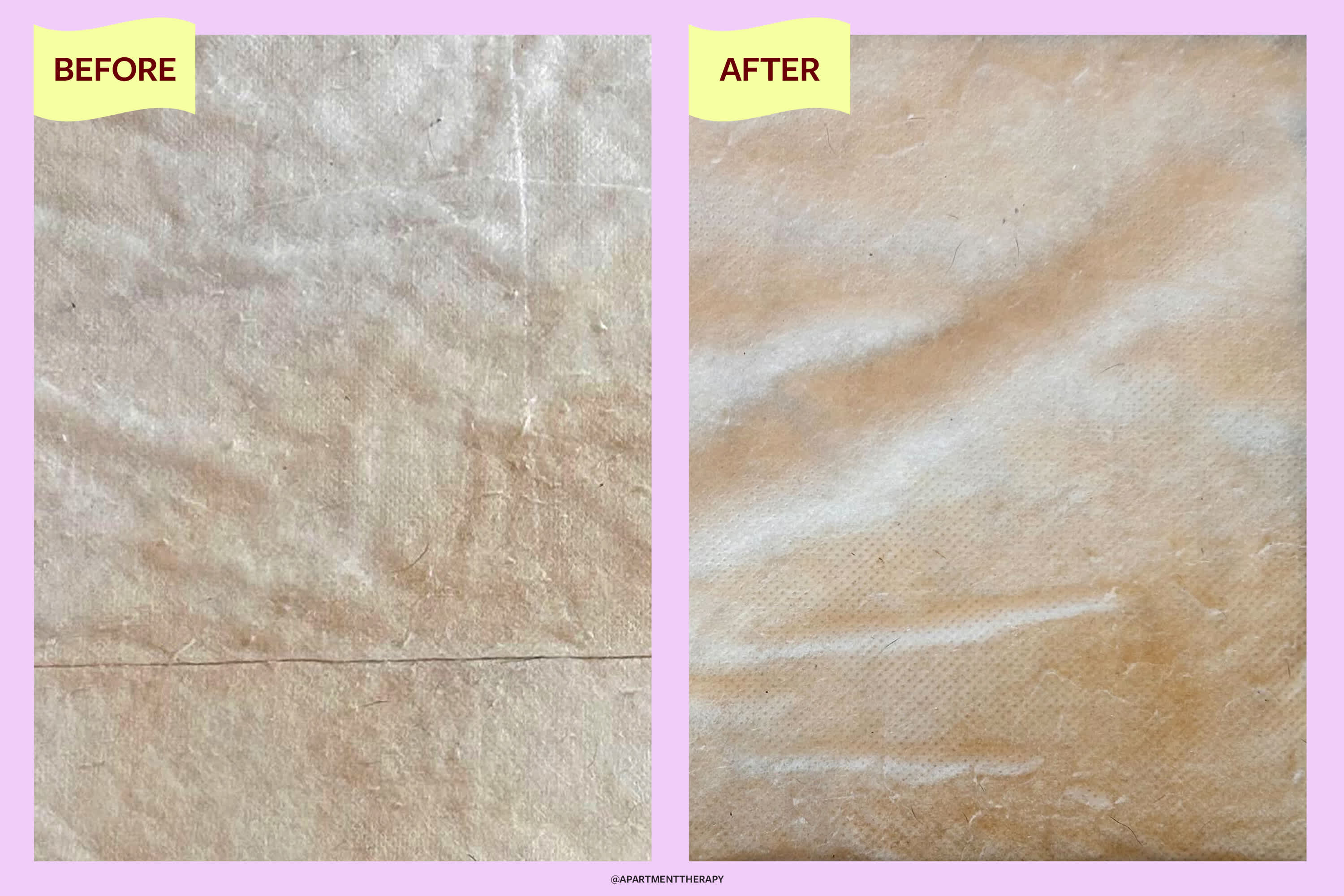
Rehydrate and Dissolve Old Stains
Stains older than 24 hours need reactivation before cleaning.
Supplies needed include white vinegar, cold water, baking soda, a spray bottle, a microfiber cloth, and a vacuum.
Treatment process:
- Spray warm water lightly over the stain to rehydrate dried tannins.
- Wait 5 to 10 minutes.
- Apply a 1 to 1 vinegar-water mix.
- Let sit 10 to 15 minutes.
- Blot thoroughly with a damp microfiber cloth.
- Sprinkle a thick layer of baking soda over the area.
- Let sit 8 to 12 hours, overnight preferred.
- Vacuum completely with an upholstery attachment.
Vinegar breaks down tannin polymers while baking soda absorbs moisture and neutralizes odors. Repeat if discoloration remains.
Hydrogen Peroxide Paste for Stubborn Stains

For Yellowed or Deep Stains on White Mattresses
This method tackles old, discolored tea stains on light-colored beds.
Supplies needed include 60 ml of 3% hydrogen peroxide, 1 tbsp clear dish soap, a small bowl, a soft sponge, baking soda, and a vacuum.
Application steps:
- Mix peroxide and dish soap into a solution.
- Dab directly onto the stain without scrubbing.
- Wait 10 to 30 minutes. Bubbling indicates oxidation.
- Blot with a cold water-dampened cloth.
- If odor lingers, apply baking soda, wait 6 plus hours, then vacuum.
- Allow 6 to 12 hours of drying time.
Hydrogen peroxide can bleach fabric. Test first and avoid direct sunlight during drying.
All-in-One Stain Removal Paste
:max_bytes(150000):strip_icc()/how-to-get-blood-out-of-mattress-5217132-2b75569f16d34b3383e5bf4c3b63d165.png)
For Tough, Recurring, or Failed Treatments
This powerful paste combines three agents for maximum stain-lifting power.
Ingredients needed include 3 tbsp baking soda, 4 to 5 tbsp 3% hydrogen peroxide, and 1/2 tsp liquid dish soap. Optional 1 to 2 tsp water only if paste is too thick.
How to use:
- Mix into a thick paste.
- Apply directly to the stain with a spoon or soft brush.
- Lightly mist more peroxide if needed.
- Gently agitate with a foam sponge in small circles.
- Let sit 20 minutes. Reapply if it dries.
- Wipe off with a damp microfiber cloth.
- Rinse by dabbing with cold water.
- Blot dry, then use a fan or dehumidifier.
Add a few drops of white vinegar to the paste to neutralize bacteria and eliminate odors.
Milky Tea Stain Protocol
Remove Protein and Tannin Combo Safely
Milky tea leaves dual stains: tannin pigments and milk proteins. Heat sets proteins permanently, so cold treatment is non-negotiable.
Supplies needed include cold water, dish soap, white vinegar, enzymatic cleaner, baking soda, and clean cloths.
Cleaning procedure:
- Blot excess liquid.
- Dab with a cold water-dampened cloth to dilute proteins.
- Mix 1 tbsp dish soap, 2 tbsp vinegar, and 1 cup cold water.
- Apply to stain and wait 15 to 20 minutes.
- Blot and rinse with cold water.
- If odor persists, apply an enzymatic cleaner.
- Finish with a baking soda treatment for deodorization.
Use Vanish Oxi Action Multi Power Gel, which is effective on organic stains. Always test first.
Drying: Prevent Mold and Odors
Critical for Long-Term Mattress Health
Incomplete drying causes mold, mildew, and musty smells within 24 to 48 hours.
Drying steps:
- Blot aggressively with a dry towel after cleaning.
- Point a fan across the surface, not into it.
- Open windows or use a dehumidifier.
- Flip the mattress if possible to air the underside.
- Wait 6 to 12 hours minimum before remaking the bed.
- Perform a smell test. No dampness should remain.
Sprinkle baking soda after cleaning and vacuum after drying. It absorbs residual moisture and odors.
Mattress Type-Specific Tips
Memory Foam
Memory foam is highly absorbent, so avoid soaking it. Use dabbing, not spraying. Allow 12 to 24 hours to dry. Never steam clean unless manufacturer-approved.
Innerspring
Moisture can cause rust and structural damage. Clean only the outer fabric layer. Blot from the surface without letting liquid seep into seams.
Hybrid and Latex
Treat these like memory foam. Use vinegar, baking soda, or mild soap only. Latex is naturally mold-resistant, so focus on surface cleaning.
Organic or Natural Fiber Mattresses
Use only non-toxic cleaners like vinegar, baking soda, and mild soap. Avoid commercial chemicals that may degrade natural materials.
Avoid steam cleaners unless explicitly allowed by the manufacturer.
Commercial Product Options
Safe, Effective Alternatives
For those who prefer ready-made solutions, consider these options:
Dr Beckmann Carpet Stain Remover works well on fabric surface stains. Test first and apply lightly. Vanish Oxi Action Multi Power Gel is ideal for organic stains with milk. It is safe for wool and silk when diluted. OxiClean works on deep-set stains on washable covers. Dilute it and avoid foam core contact.
Always follow label instructions and never soak the mattress interior.
Prevention: Keep Your Mattress Stain-Free
Use a Waterproof Mattress Protector
The single best defense is a zippered, breathable, hypoallergenic model. It is machine-washable for easy maintenance and blocks spills, sweat, allergens, and bed bugs.
No Drinks in Bed Rule
Eliminate risk entirely by using spill-proof travel mugs if drinking in bed is unavoidable. Keep beverages away from the sleeping area.
Regular Maintenance Routine
Vacuum every 3 to 6 months to remove debris. Spot clean spills immediately. Rotate or flip the mattress as recommended. Sprinkle baking soda treatments every 3 months to keep your mattress fresh and odor-free.
Key Takeaways for Removing Tea Stains from Your Mattress
Successfully removing tea stains from a mattress comes down to acting fast and using the right solution for your stain type. Always blot immediately and never rub, use cold water exclusively to prevent setting, and test any cleaner on a hidden area first. For fresh spills, dish soap and cold water work quickly. For dried or set-in stains, vinegar and baking soda provide powerful tannin-fighting action. Milky tea requires enzymatic cleaners to address the protein component. Complete drying is essential to prevent mold and odors, and investing in a quality mattress protector eliminates future spills from becoming stains. With these methods, you can restore your mattress to like-new condition without professional cleaning.