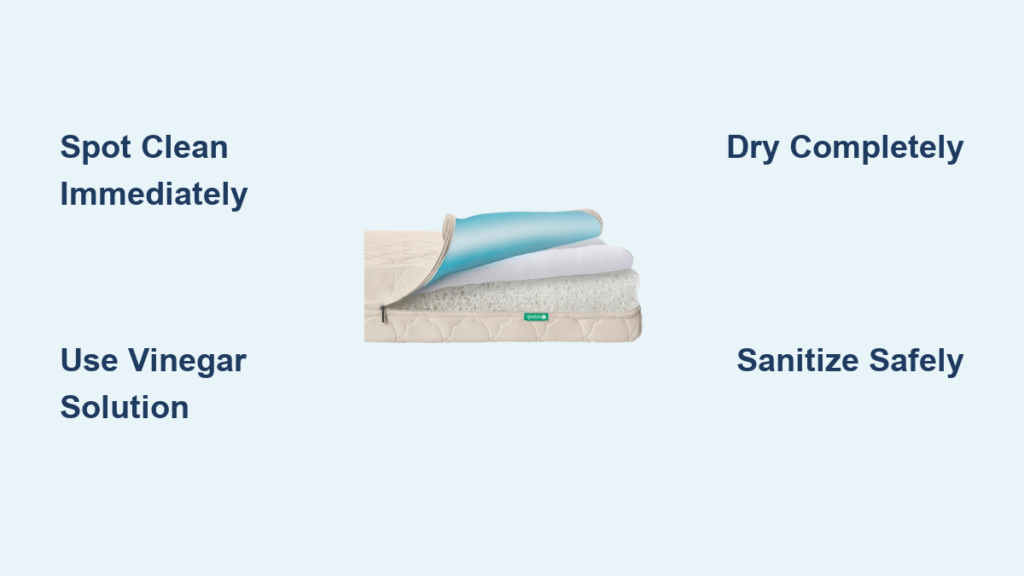
If your baby has had a nighttime accident or spit-up on the crib mattress, you are not alone. Messes happen daily, and even though your waterproof crib mattress is designed to resist liquid absorption, it still needs regular cleaning to stay hygienic and safe. A clean mattress is critical for your baby’s health, since infants spend 12 to 16 hours a day in the crib, and even invisible residues can harbor bacteria, allergens, or odors that affect their developing immune system.
The good news? Cleaning a waterproof crib mattress is simple when you follow the right steps. In this guide, you will learn how to safely deep clean, sanitize, and dry your mattress using baby-safe methods. You will also discover how to tackle stubborn stains, eliminate odors, and protect your investment with preventative care.
Strip Bedding and Check Manufacturer Guidelines First
Before cleaning your waterproof crib mattress, strip all layers from the crib. Remove sheets, blankets, stuffed animals, and any waterproof protectors. Wash removable bedding in hot water with a fragrance-free, hypoallergenic detergent to remove allergens and bacteria and reduce cross-contamination during the cleaning process.
Check the care label on your mattress or visit the manufacturer’s website for specific instructions. Some models, like the Newton Baby mattress, have removable machine-washable covers, while most require only surface cleaning. Confirm whether vinegar, hydrogen peroxide, or alcohol-based disinfectants are safe for your particular model.
Never submerge or machine wash a crib mattress, even if it is labeled waterproof. Doing so risks internal damage and trapped moisture that can lead to mold growth along seams. Always use gentle, non-abrasive tools and test any cleaner on a small, hidden area first.
Vacuum the Mattress Surface and Crevices Weekly
Dust, dander, and allergens accumulate quickly, even on waterproof surfaces. Use a vacuum with an upholstery attachment and HEPA filter to remove particles from the top, sides, edges, and seams. Focus on corners and zipper areas where debris collects.
Vacuuming weekly helps maintain hygiene between deep cleans and improves air quality in the nursery. A HEPA filter traps microscopic allergens like dust mites and pet dander instead of recirculating them into the room. If your mattress has detachable side panels or removable parts, take them off to clean underneath. After vacuuming, inspect for signs of wear, such as cracks, tears, or soft spots, which may signal it is time for replacement.
Spot Clean Spills Immediately
Act fast when accidents happen. Blot liquids like urine, spit-up, or milk with a dry towel. Do not rub, as this spreads the mess and may push it under the waterproof layer. For solids like vomit or food, gently scrape them off first.
Use the right solution based on the type of spill. For urine or diaper leaks, spray a 50/50 mix of distilled white vinegar and water, then wipe with a microfiber cloth. For spit-up or vomit, clean with vinegar solution or a drop of mild baby detergent on a damp cloth. For milk or formula, dab with cool water first, since hot water sets protein stains, then use diluted detergent. For food residue, gently rub with a damp cloth and a tiny amount of soap.
Avoid scrubbing, which can damage the surface. Always rinse with a slightly damp cloth after using soap to prevent residue buildup.
Deep Clean the Entire Surface Every 1 to 3 Months
Perform a full surface clean every few months, or more often after illness or major spills. Choose one of two safe methods.
Method One: Mild Detergent Solution
Mix one-quarter cup of baby-safe liquid detergent into 1 gallon of warm water. Dip a soft sponge or brush into the solution and gently wipe the entire surface, working in sections to avoid oversaturating. After scrubbing, rinse by wiping with a clean, damp microfiber cloth to remove soap. Leftover detergent can irritate your baby’s skin or attract more dirt.
Method Two: Vinegar-Water Mix
For a natural alternative, mist the mattress with a 50/50 white vinegar and water solution using a spray bottle. Wipe down with a microfiber cloth, re-dampening as needed. Vinegar disinfects, deodorizes, and leaves no toxic residue.
For cloth-covered waterproof mattresses, treat the surface like delicate clothing. Dab or lightly rub stained areas. Never soak, as moisture can seep into the core and degrade materials like foam or organic latex.
Sanitize to Kill Germs Safely
After cleaning, disinfect the surface to eliminate bacteria, viruses, and fungi. Choose a method compatible with your mattress type.
Apply 70% isopropyl alcohol evenly across the surface. It kills 99.9% of germs in about 10 seconds and evaporates completely, so no rinsing is needed. This method is safe for vinyl and polyethylene covers, but avoid on fabric surfaces.
Wipe with 3% hydrogen peroxide on non-fabric waterproof models. Apply with a cloth, let sit for 1 to 2 minutes, then wipe dry. This is effective against mold and mildew but not recommended for organic or fabric-covered mattresses.
Use no-rinse disinfectants like Lysol Disinfectant Spray or Force of Nature. These are EPA-registered and kill germs without harsh residues. Spray and let sit for 3 minutes, then allow to air dry. Ensure the mattress is fully dry before reassembling the crib.
Avoid bleach, ammonia, or undiluted essential oils. They can damage materials or pose respiratory risks to babies.
Remove Stubborn Stains and Eliminate Odors

Set-in stains from urine, milk, or blood need extra attention. Create a safe, effective paste using ingredients you likely already have.
Mix baking soda with just enough white vinegar to form a thick, fizzing paste. Alternatively, use water for a lower-moisture option. Apply directly over the stain, cover completely, and let sit 15 to 60 minutes depending on severity. Blot gently with a damp microfiber cloth. Do not scrub. Rinse the area with a slightly damp cloth to remove residue. Always test first on a hidden corner to ensure no discoloration.
For lingering smells, sprinkle baking soda or cornstarch generously over the entire surface. Let it sit for 8 to 12 hours, preferably overnight. Vacuum thoroughly with the upholstery attachment to pull out absorbed odors.
For natural disinfection, place the bare mattress in direct sunlight for 1 to 2 hours. UV rays kill bacteria and neutralize smells. Pair with a fan to speed drying and improve airflow.
Dry Completely Before Reuse
This is the most critical step. Any remaining moisture, especially along seams, can lead to mold, mildew, and bacterial growth, even in waterproof models.
Blot the surface with dry, absorbent towels immediately after cleaning. Then, lay the mattress flat in a well-ventilated room or stand it upright against a wall to expose both sides to air. Use a fan to accelerate drying. If possible, place it outside in sunlight for several hours. UV light helps kill germs and deodorize.
Wait at least 4 to 6 hours, or until no dampness remains. Perform the press test. Press a dry paper towel firmly onto the surface. If it comes away damp, continue drying.
Never use a hairdryer or space heater. Excessive heat can warp or crack the waterproof layer.
Protect With a Waterproof Mattress Cover
Even with a waterproof mattress, add a protective layer to reduce direct contact with messes and extend time between cleanings.
Choose a fitted protector with elastic edges for quick changes, or a zippered encasement for 360-degree protection against fluids, dust mites, and bed bugs. Opt for vinyl-free, breathable materials like TPU or polyurethane laminate. These are quiet, soft, and allow airflow, unlike crinkly vinyl covers that restrict breathability.
Use a double-layer system for maximum protection. Place the waterproof protector directly on the mattress, then add a fitted sheet, then a second waterproof protector, and finally a second fitted sheet. After an accident, simply remove the top two layers for an instantly clean sleeping surface, with no full mattress cleaning required.
Prevent Mold and Maintain Freshness
Daily habits keep your mattress clean and safe long-term. Change bedding every 3 to 7 days to reduce bacteria. Vacuum the mattress surface weekly, even if it looks clean. Open windows daily to air out the nursery and reduce humidity.
Avoid placing humidifiers or vaporizers near the crib. Excess moisture can damage mattress materials and promote mold.
Store spare mattresses in a clear, phthalate-safe zippered bag in a dry, cool place. Sunlight can penetrate clear bags, naturally disinfecting the surface during storage.
Handle a Soaked Mattress Emergency
If a large spill pools or seeps into edges, act quickly. Remove all bedding and blot aggressively with dry towels. Press down firmly to extract as much liquid as possible.
Apply a thick layer of baking soda or cornstarch over the wet area. It absorbs moisture and odors. Leave it for several hours or overnight. Vacuum thoroughly, then stand the mattress upright in a warm, dry, sunny, or well-ventilated area. Use a fan to speed drying. Perform the press test before reuse.
Never use a hairdryer. High heat can damage materials.
Replace the Mattress When Safety Is Compromised
Even with excellent care, crib mattresses wear out. Replace if there are sagging areas deeper than 1 inch. Replace if the surface feels uneven or soft. Replace if stains or odors persist despite cleaning. Replace if the waterproof layer is cracked, torn, or peeling. Replace if it has been used for over 2 to 3 years.
A deteriorating mattress poses suffocation and hygiene risks. Follow manufacturer guidelines and prioritize safety over longevity.
Avoid Common Cleaning Mistakes
Many parents unknowingly damage their mattresses or create health risks. Avoid these errors.
Do not soak or submerge the mattress. Always use damp cloths, not soaking wet ones. Do not use hot water on protein stains. It sets urine, milk, or spit-up into the surface. Do not scrub aggressively. This can scratch or degrade the waterproof layer. Do not use bleach, ammonia, or undiluted essential oils. They are toxic and potentially harmful to infants. Do not skip the drying step. Moisture leads to mold, even in waterproof models. Do not return baby to a damp mattress. Always confirm it is 100% dry first.
Stick to baby-safe, non-toxic cleaners and gentle techniques for best results.
Choose Breathable, Washable Models for Easier Cleaning
Consider upgrading to a high-performance, breathable mattress like the Newton Baby Mattress. Its removable, machine-washable cover makes cleaning effortless, and the internal polymer fibers allow airflow while staying firm.
It passes the paper lift test. A strong fan underneath lifts paper instantly, proving unrestricted airflow, which is critical if a baby rolls face-down.
Breathable waterproof protectors also offer superior performance. Test them by pouring 1 cup of water on the surface. No leaks or damp spots should appear.
Avoid vinyl-covered models. They crack over time, trap moisture, and restrict airflow, increasing suffocation risk.
Complete Cleaning Checklist for Your Waterproof Crib Mattress
Use this step-by-step checklist for a thorough, safe clean.
Remove all bedding and protectors. Check manufacturer’s care instructions. Vacuum entire mattress, including top, sides, and seams. Spot clean stains with vinegar, detergent, or baking soda paste. Wipe entire surface with 50/50 vinegar-water or mild soapy water. Rinse with a damp cloth if soap was used. Sanitize with alcohol, hydrogen peroxide, or no-rinse disinfectant. Blot dry with clean towels. Air dry completely by laying flat or standing upright, using a fan or sunlight, and performing the press test. Apply baking soda for odor removal if needed, and vacuum after 8 or more hours. Reassemble the crib by installing a clean waterproof protector and adding a fresh fitted sheet.
Frequently Asked Questions About Cleaning a Waterproof Crib Mattress
How often should I deep clean my waterproof crib mattress?
Deep clean every 1 to 3 months under normal conditions. Clean more frequently if your baby has been ill, there has been a major spill, or it is summer with high humidity. Spot clean immediately after every mess.
Can I use a steam cleaner on a waterproof crib mattress?
Yes, with caution. Use a low moisture setting and keep the steamer moving. Do not linger in one spot. Wipe the surface afterward to remove excess moisture and dry completely before use.
Are essential oils safe for deodorizing the mattress?
Use with extreme caution. Babies have sensitive respiratory systems. Never apply undiluted oils. If you choose to use them, dilute 1 to 2 drops in a full spray bottle of vinegar-water solution and consult your pediatrician first. Baking soda and sunlight are safer alternatives.
Can I wash the waterproof crib mattress in a washing machine?
No. Never machine wash or submerge any crib mattress. Only spot clean or wipe down with a damp cloth. The exception is removable covers, like those on the Newton mattress, which can be machine-washed.
What is the fastest way to sanitize after cleaning?
Spray 70% isopropyl alcohol evenly across the surface. It kills 99.9% of germs in about 10 seconds and evaporates completely with no rinsing needed. This is the fastest method for sanitizing your waterproof crib mattress.
How do I know if the mattress is completely dry?
Perform the press test. Press a dry paper towel firmly onto the surface. If it comes away damp, continue drying. The mattress must be 100% dry before returning your baby to the crib.
Key Takeaways for Cleaning Your Waterproof Crib Mattress
A clean waterproof crib mattress is essential for your baby’s health and safety. By following these proven steps, you ensure a hygienic, long-lasting sleep environment. Spot clean spills immediately to prevent staining and odors. Deep clean every 1 to 3 months using baby-safe solutions like vinegar-water or mild detergent. Sanitize after cleaning with alcohol or hydrogen peroxide, then dry completely using the press test as your guide. Pair regular maintenance with a breathable protector and proper storage to maximize performance. When in doubt, choose non-toxic cleaners and always prioritize complete drying to prevent mold. With the right care, your baby’s mattress stays fresh, safe, and ready for every peaceful night is sleep.